
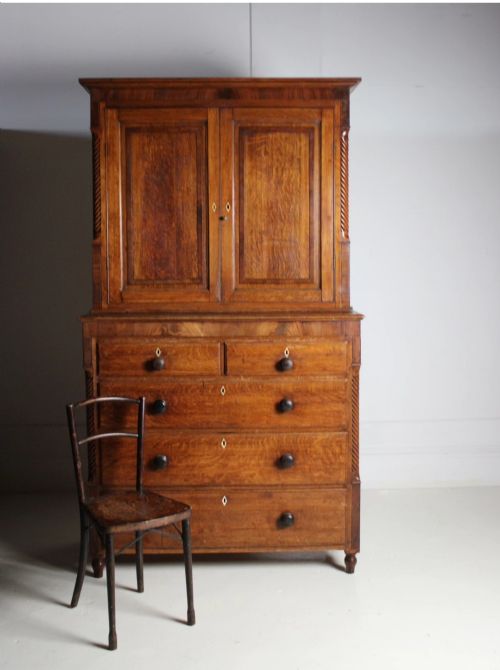
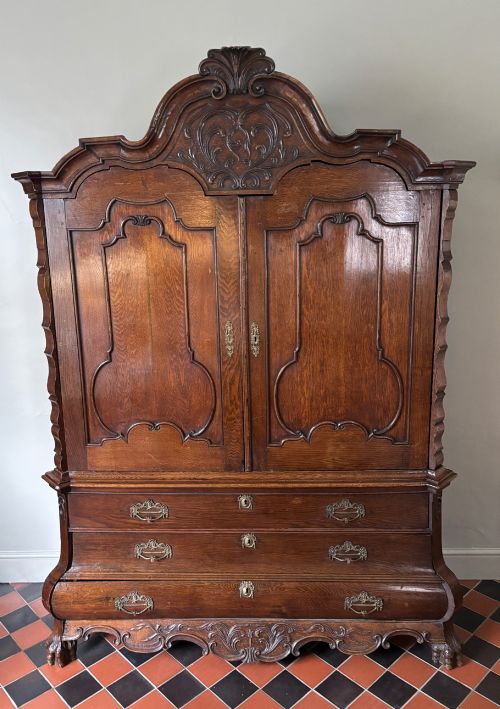
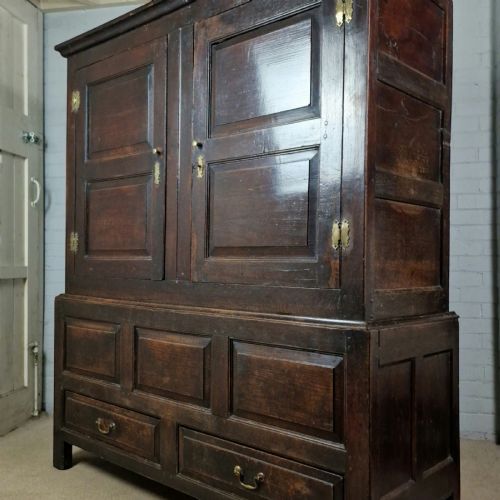
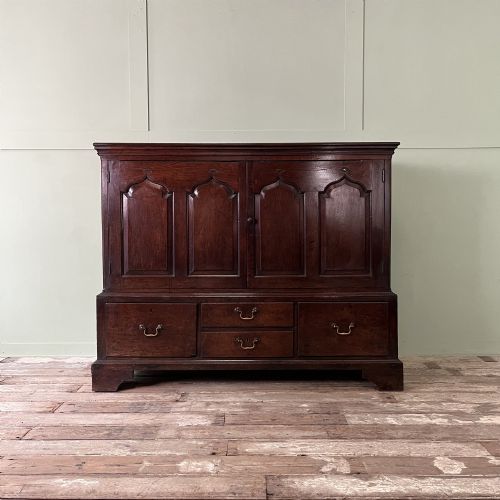



Dark Oak Housekeeper Press
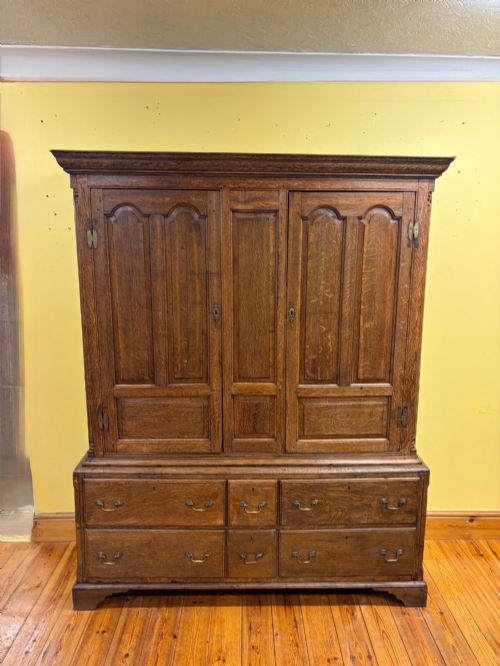
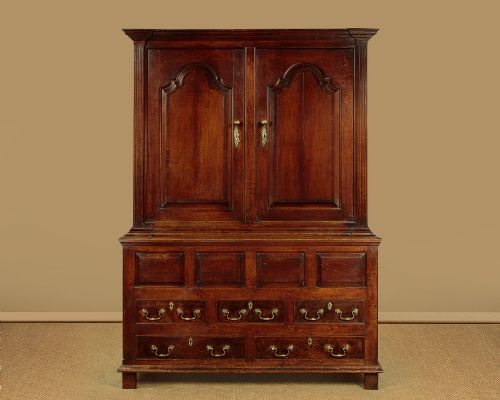
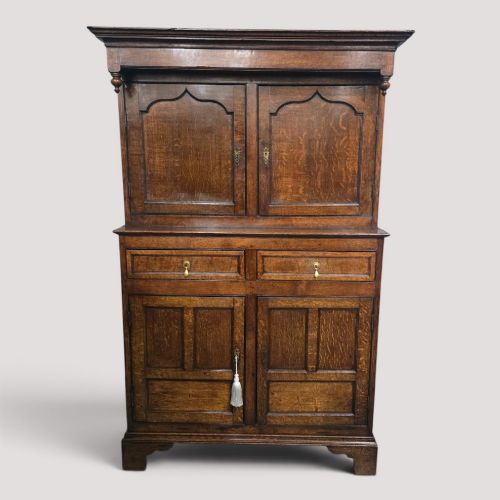
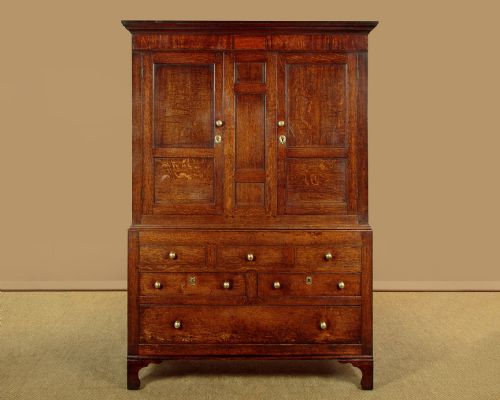
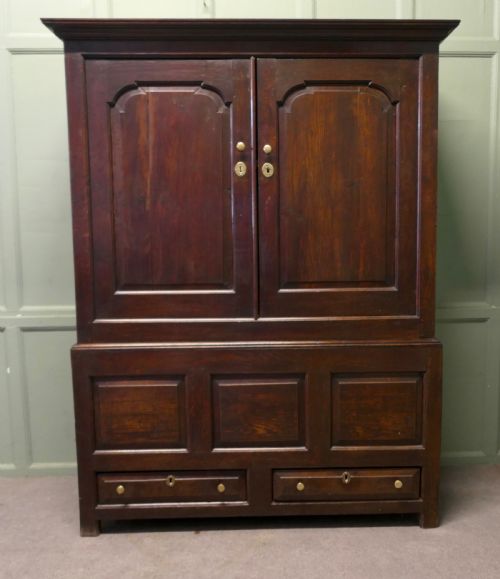
A dark oak housekeeper press brings sturdy utility and rich timber grain to an interior, built for storing household linen and provisions.
Dark Oak Housekeeper Press
A dark oak housekeeper press serves as a substantial storage solution originating primarily from the eighteenth and nineteenth centuries. These pieces combine lower drawer sections with upper cupboard doors designed for orderly domestic organisation.
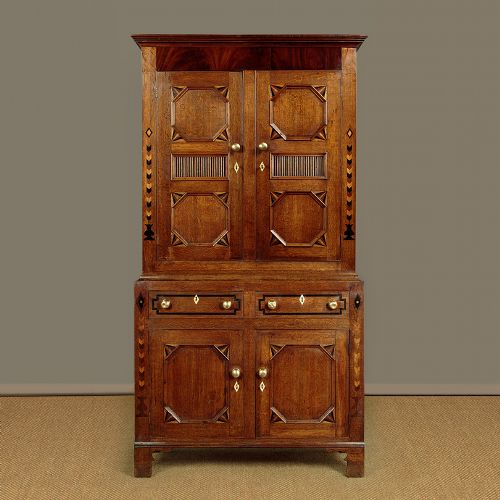
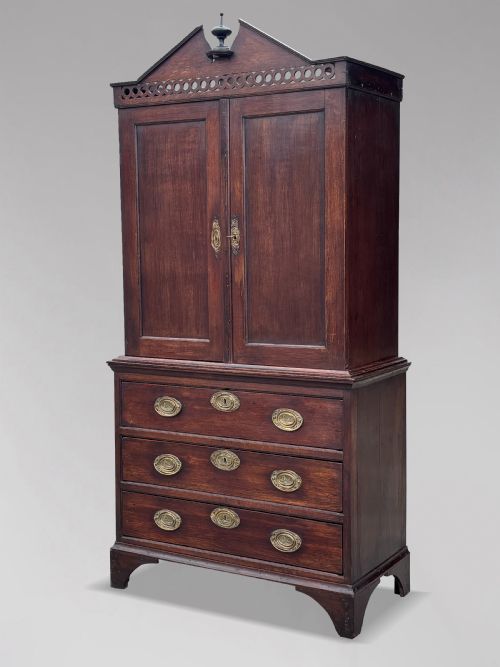
The selections span regional vernacular pieces, including Welsh country examples alongside formal Georgian designs. Buyers frequently encounter low press cupboards, tall livery cupboards, and two-stage press configurations in these listings.
Makers utilised dense native timber to construct pieces that stood up to heavy daily use in large country houses and farmhouses. The resulting furniture displays deep patination developed over centuries of domestic service.
Materials and construction methods
Joiners built these presses using solid oak planks, often augmented with brass or iron hardware for hinges and escutcheons. Regional workshops sometimes incorporated secondary elements like marquetry inlay, bone inlay, ebony, and holly for decorative contrast.
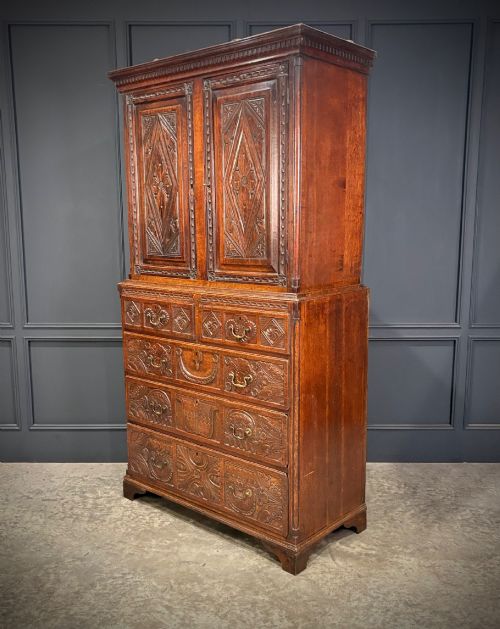
Traditional framing techniques involved panelled doors and pegged joints to accommodate the natural expansion and contraction of timber. Carved details and moulded cornices appear on formal Georgian iterations, while Welsh country pieces often rely on robust proportions and pegged construction.
Several survivalist tack cupboards preserve traces of harness storage from centuries past.
Distinctions in craftsmanship and survival
Quality separates pieces by the crispness of their mouldings, the selection of figured timber, and the integrity of their original hardware. Finer examples retain their deep, warm surface patination without excessive restoration or replaced panels.
Proportion and scale dictate the desirability of a press, ranging from petite dwarf cupboards to tall, imposing multi-stage units. The balance between the base drawers and the upper cabinet doors defines the architectural success of each individual piece.
The Dark Oak Housekeeper Press Glossary
- Livery Cupboard
- A traditional storage cabinet used originally for food and household provisions before evolving into general linen storage. These pieces typically feature panelled doors and internal shelving.
- Deuddarn
- A traditional Welsh two-stage cupboard featuring an enclosed upper section supported by posts or a recessed middle. This regional form provides substantial storage capacity within a distinctive architectural silhouette.
- Tack Cupboard
- A utilitarian storage piece traditionally utilised in stables or country houses for harnesses and riding equipment. Surviving examples often display compact dimensions and rugged, functional iron hardware.
- Press Cupboard
- A piece of furniture combining deep hanging or shelving space with sliding trays or drawers. The lower section usually incorporates a bank of functional drawers beneath the main doors.
- Patina
- The surface sheen and deep colour developed by timber over centuries through handling, polishing, and exposure to light. This quality distinguishes genuine period pieces from modern reproductions.
Dark Oak Housekeeper Press: Frequently Asked Questions
What is a housekeeper press used for?
These large cupboards served country houses and farmhouses for storing household linens, blankets, and dry provisions. The upper sections held folded textiles while the lower drawers accommodated smaller items.
Modern owners utilise them in hallways, kitchens, and bedrooms for substantial storage while displaying the rich texture of period timber.
How do I date an oak press?
Dating relies on examining construction methods, timber selection, and hardware styles across the piece. Eighteenth-century examples often feature pegged panelled doors and hand-planed surfaces.
Later Victorian interpretations tend to display heavier mouldings or Gothic revival details that reflect the design preferences of the nineteenth century.
Are these presses suitable for modern homes?
Their generous proportions require adequate wall space and careful ceiling height measurement before placement. Low press variants offer practical solutions where vertical clearance is limited.
Internal configurations vary, meaning some pieces suit linen storage while others adapt easily to general wardrobe use.