

Antique Neoclassical Seating
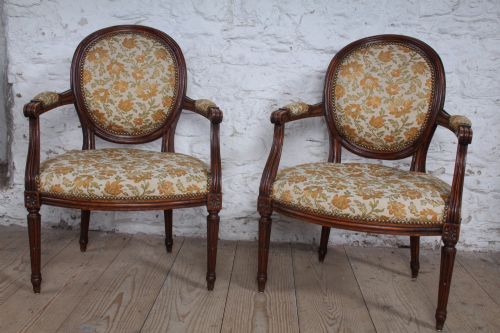
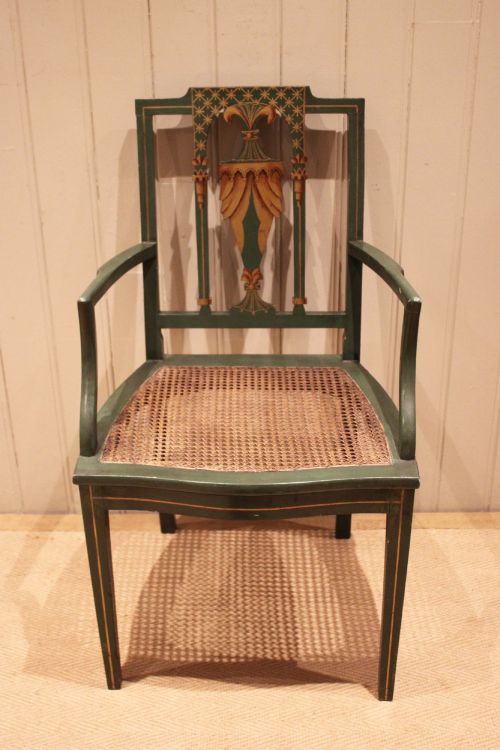
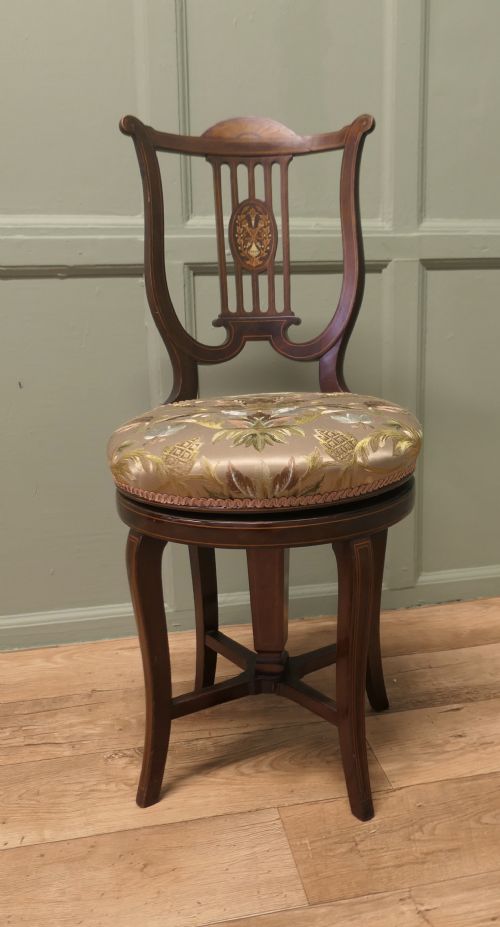
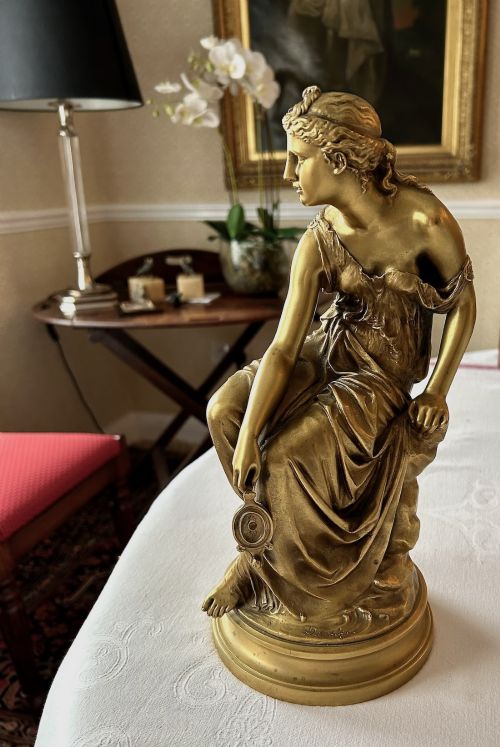
These pieces of antique neoclassical seating bring classical restraint and carved proportion into a room, drawing on eighteenth and nineteenth-century forms.
Antique Neoclassical Seating
When a buyer searches for antique neoclassical seating, they encounter items shaped by eighteenth and nineteenth-century design vocabulary, spanning armchairs, dining chairs, stools, benches, and settees.
The pieces appearing on this page originate from English, French, Swedish, and Italian workshops, reflecting regional interpretations of classical symmetry and ancient motifs.
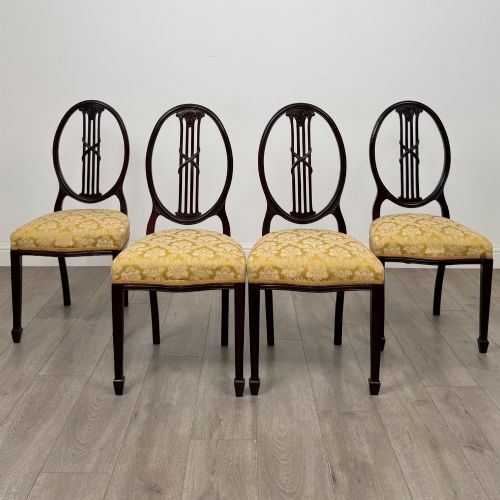
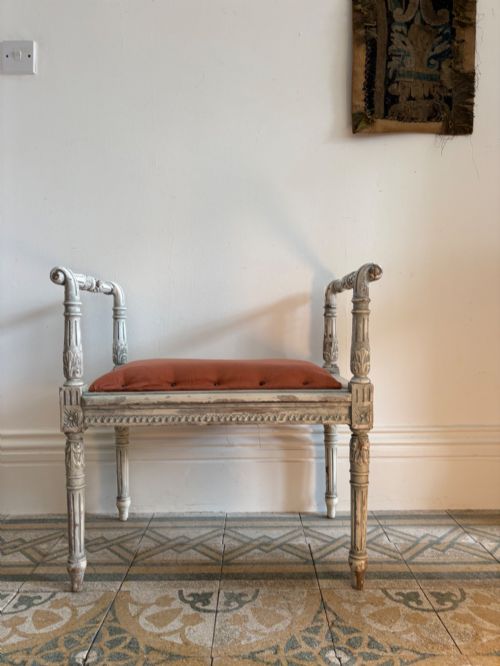
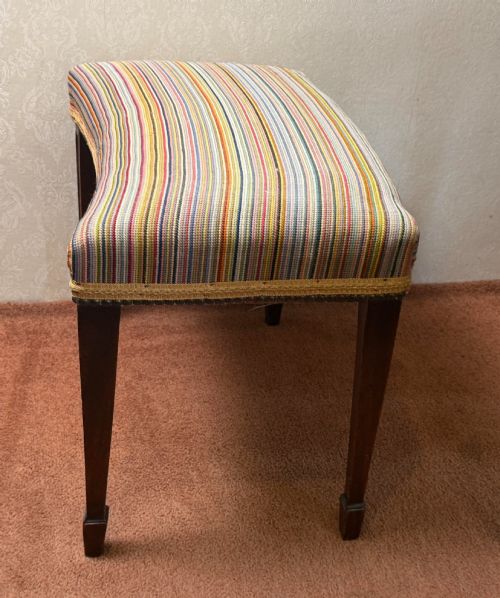
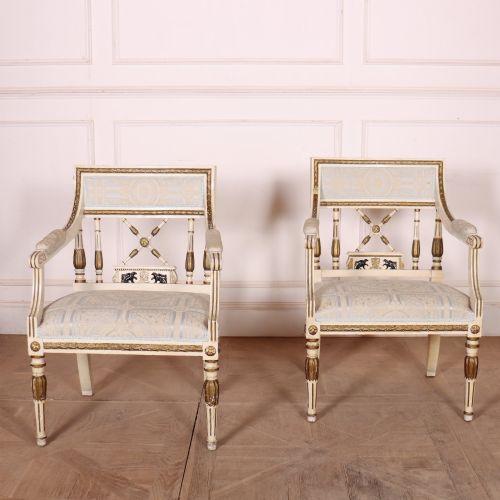
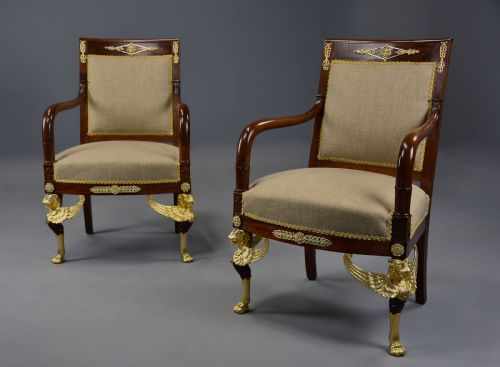
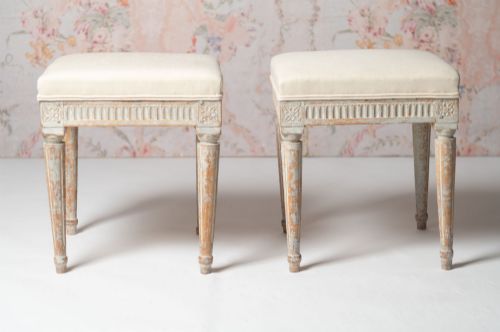
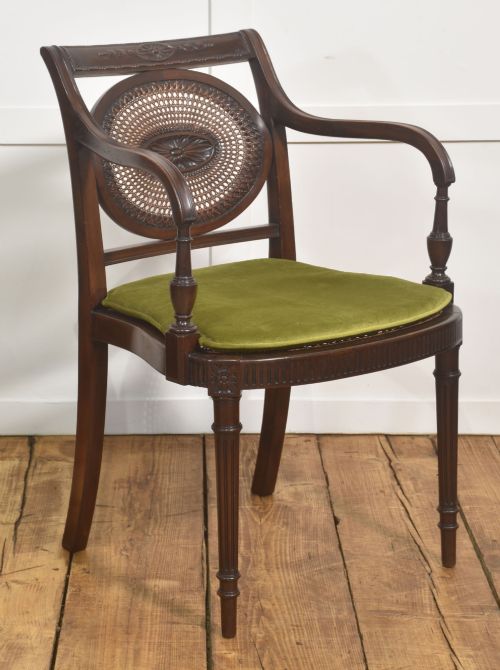
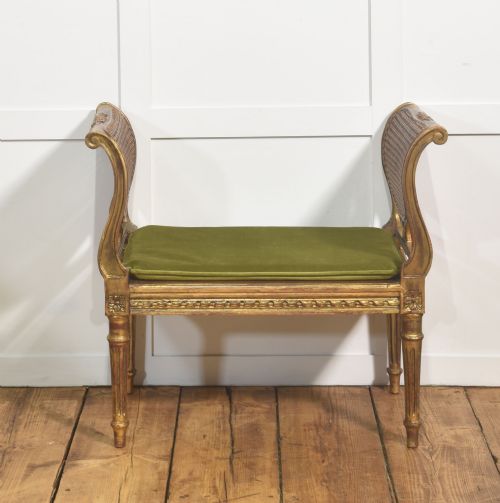
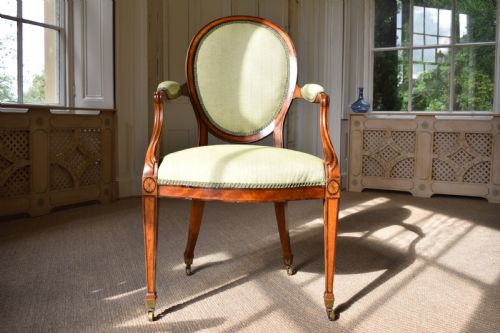
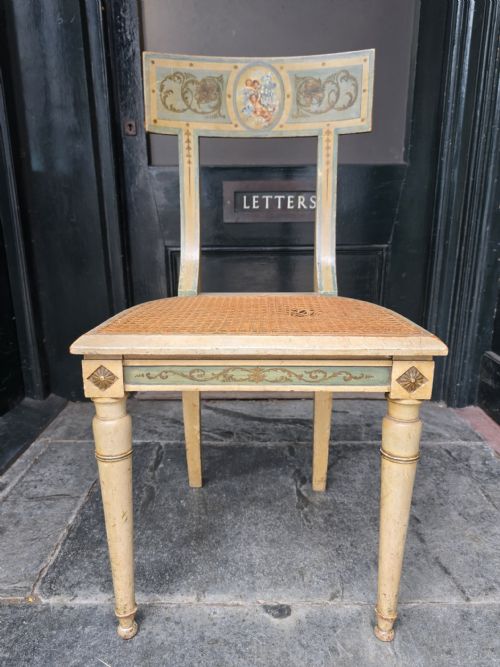
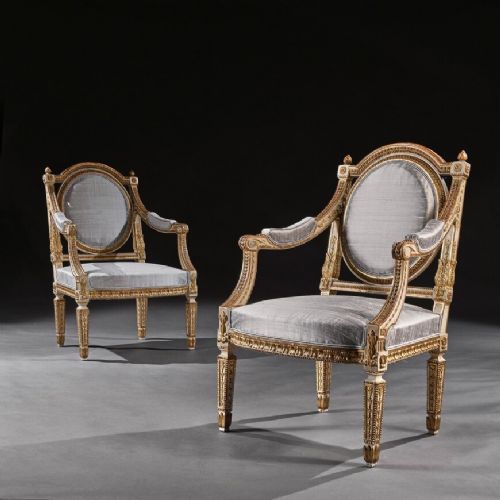
The forms range from Hepplewhite and Sheraton dining chairs to Gustavian painted stools, French giltwood armchairs, and Empire mahogany settees.
Standards of Execution
Quality rests in the crispness of the carving, the integrity of the timber frame, and the fidelity of the classical proportions.
Pieces retaining their original painted or gilt surfaces, alongside period upholstery or correct canework, command higher regard than heavily altered examples.
The listings feature mahogany, giltwood, painted wood, and satin birch, spanning the eighteenth, nineteenth, and early twentieth centuries.
Etienne-Henri Dumaige·Henri Jacob·Charles Nosotti
The Antique Neoclassical Seating Glossary
- Gustavian
- A Swedish neoclassical style characterised by restrained classical carving, light painted finishes, and functional elegance.
- Giltwood
- Timber coated with a thin layer of gold leaf, often found on decorative frames and high-status chairs.
- Canework
- Woven cane material utilised for chair seats and backs, offering a light texture.
- Ormolu
- Gilded bronze mounts applied to furniture pieces, frequently seen on Empire style items.
- Klismos chair
- An ancient Greek chair form with curved legs and a concave backrest, revived in neoclassical design.
Antique Neoclassical Seating: Frequently Asked Questions
What defines neoclassical seating?
Neoclassical seating draws inspiration from classical antiquity, featuring straight tapered legs, symmetry, and restrained ornamentation.
Makers utilised motifs like urns, fluting, and laurel leaves derived from Greek and Roman architecture.
How do I identify a Gustavian piece?
Gustavian pieces originate from Sweden and typically display lighter painted finishes, often in white or pale greys.
Their design is simpler and more restrained than contemporary French Louis XVI furniture.
Where were these chairs used?
These chairs and settees furnished formal reception rooms, salons, and libraries in grand houses.
Lighter stools and armchairs were also positioned near windows or used as music chairs.
Can I use antique chairs daily?
Many solid mahogany and elm chairs remain structurally robust for regular seating if joinery is sound.
Fragile giltwood pieces or delicate canework require more careful treatment in modern interiors.