



Hand Painted Cane Chair
A hand painted cane chair brings lightness and decorative character to a room, offering woven texture paired with painted timber.
Hand Painted Cane Chair
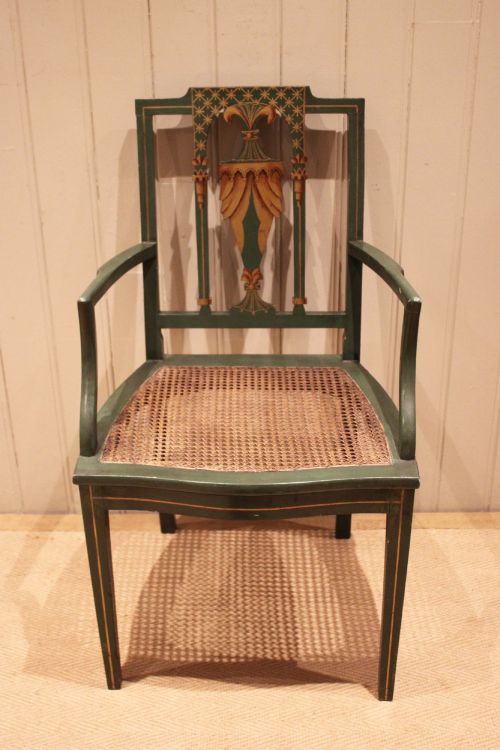
When you search for a hand painted cane chair, you encounter seating that bridges structural timber framing with woven natural cane panels. The selections span Regency, Victorian, and early twentieth-century periods, alongside Hepplewhite style revivals and Chinoiserie interpretations.
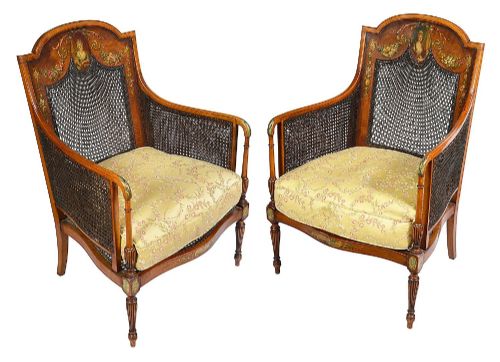
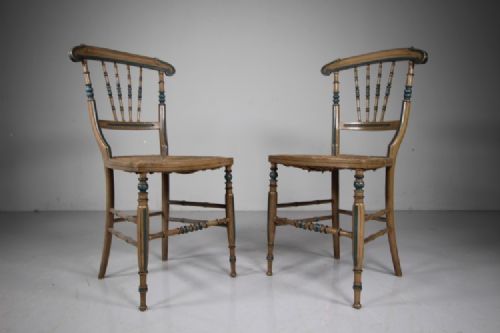
Most examples found here function as side chairs, armchairs, and dining chairs, often appearing in pairs or small sets rather than isolated pieces. You will meet formats ranging from simple bedroom chairs to elaborate lacquered bergere armchairs and papier mâché children's chairs.
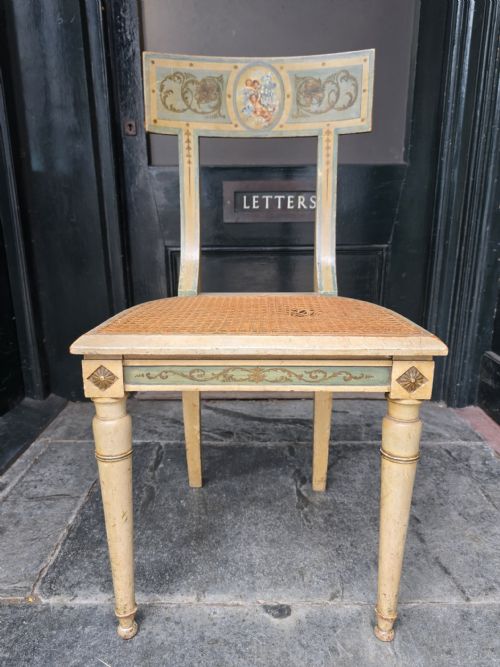
Originating across the nineteenth and twentieth centuries, these chairs combine traditional wood-working with decorative paintwork. The forms reflect historical revivals, incorporating French neoclassical lines and Regency taste into domestic seating.
How they were made
Construction relies upon seasoned timber frameworks shaped into side chairs, elbow chairs, and armchairs. Artisans integrated woven cane into the seats or back panels to provide flexible, lightweight support.
Surfaces received decorative treatments including hand-painted details, lacquer, and ebonised finishes. Some pieces utilise Chinoiserie motifs and Japanned techniques to build up layered, decorative pictorial scenes upon the painted wood.
Hand Painted Cane Chair Retail Price Guide 2026
Typical asking prices for hand painted cane chair among the pieces listed under this phrase on Sellingantiques today, from the lower quarter to the upper quarter. They describe what is for sale here now, not the wider market.
Children's papier mâché chairs prove that even nineteenth-century toddlers required properly decorative seating.
What varies in quality
The sophistication of the painted decoration dictates the visual appeal of each piece, distinguishing simple floral highlights from detailed Chinoiserie scenes. The crispness of the hand-painted motifs and the preservation of the original surface finish elevate certain examples above standard production.
Structural integrity depends upon the tightness and condition of the cane work alongside the stability of the timber frame. Matching sets or pairs demonstrate greater uniformity in design and execution than individual scatter chairs.
The Hand Painted Cane Chair Glossary
- Cane
- A woven material derived from the peeled outer bark of rattan palms, utilised to form flexible, breathable seats and back panels. It offers lightweight durability and a distinctive patterned texture.
- Bergere
- An enclosed upholstered or caned armchair with wooden framing, originating in France. This form provides a deep, comfortable seat often accompanied by low armrests.
- Chinoiserie
- A European decorative style employing whimsical, imitation Chinese motifs and motifs inspired by East Asian art. It appears frequently on lacquered furniture surfaces.
- Japanned
- A European form of decorative finishing that emulates East Asian lacquerware through the application of layered varnishes and metallic dust. It creates a dark, glossy surface often adorned with raised pictorial details.
- Regency
- An English design period spanning the early nineteenth century, characterised by classical revival motifs and refined neoclassical lines. Furniture from this era often incorporates painted finishes and simulated bamboo or sabre legs.
Hand Painted Cane Chair: Frequently Asked Questions
How do I care for a cane seat?
Keep cane seats clean by gently dusting them with a soft brush and maintaining moderate indoor humidity levels to prevent the natural fibres from becoming brittle. Avoid placing heavy, concentrated loads directly onto the woven surface.
Occasionally dampen the underside of dry cane with a sponge to restore slight moisture and elasticity. Protect the painted wood frames by polishing only with appropriate, non-abrasive products.
What is a bergere armchair?
A bergere is a French-style armchair featuring enclosed sides filled with cane or upholstery within a wooden frame. These chairs provide a wider, deeper seat compared to standard dining or side chairs.
They emerged as comfortable parlour seating and often appear in matched pairs from the early twentieth century. Their decorative frames frequently showcase painted or lacquered finishes.
How do I identify Regency style chairs?
Regency style chairs reflect the classical architecture of the early nineteenth century with clean lines and delicate painted ornamentation. They frequently feature curved top rails, sabre legs, and classical motifs.
Look for hand-painted decorative accents or classical proportions that echo ancient Greek and Roman furniture. These pieces often appear as elbow chairs, dining sets, or decorative single chairs.