
Antique Metal Vases
Solid bronze vessels and patinated urns make up these antique metal vases, offering substantial weight and classical form for interior schemes.
Antique Metal Vases
Antique metal vases encompass heavy cast bronze vessels, decorative urns, and patinated copper pieces originating from nineteenth-century workshops in Britain, France, China, and Japan. Buyers exploring this category encounter Neoclassical Grand Tour reductions alongside intricate Meiji period bronzes and Qing dynasty cloisonné enamel works.
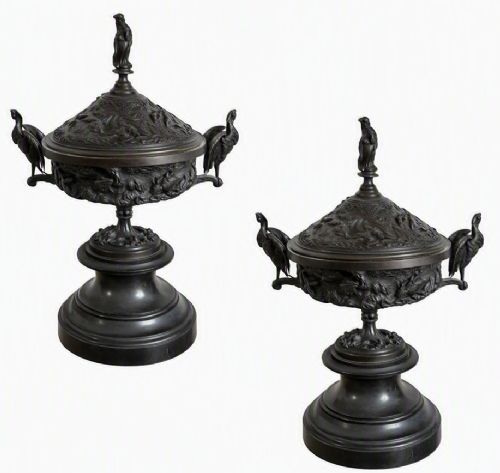
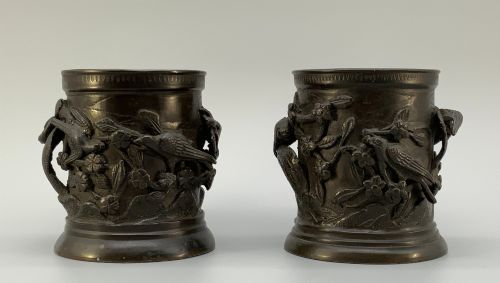
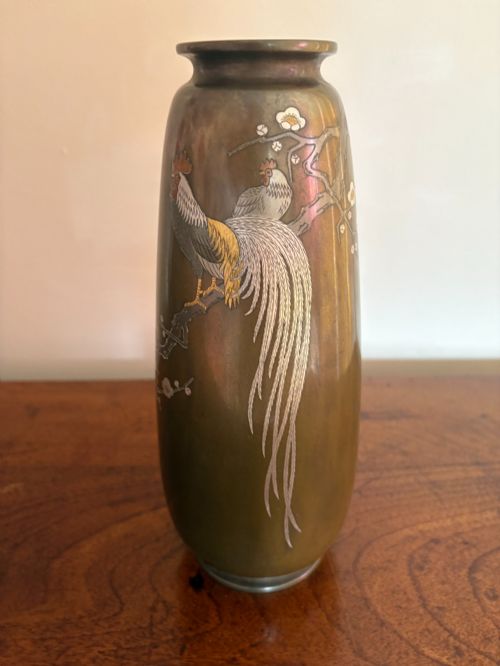
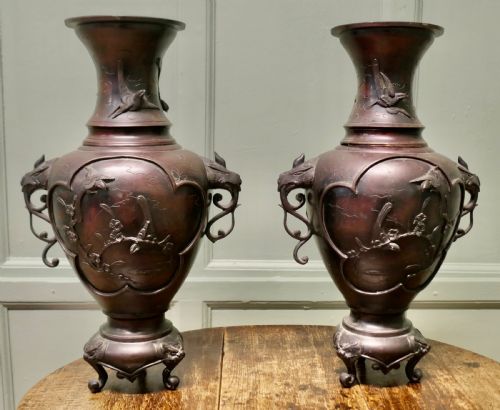
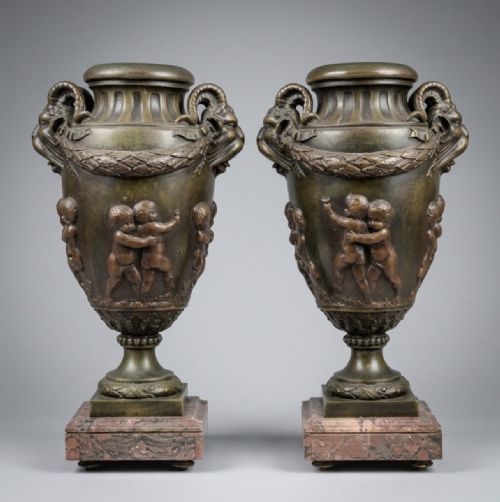
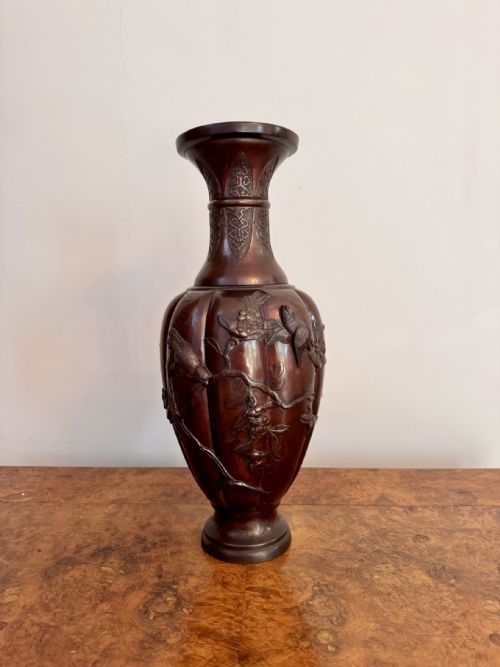
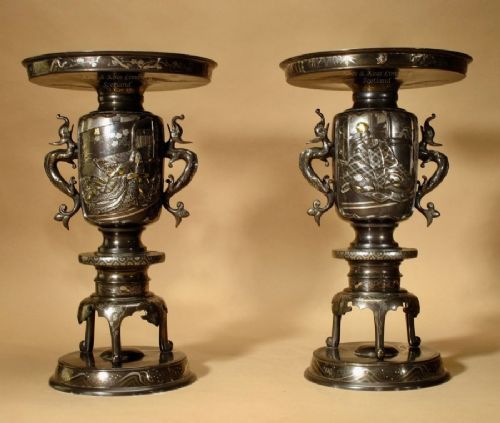
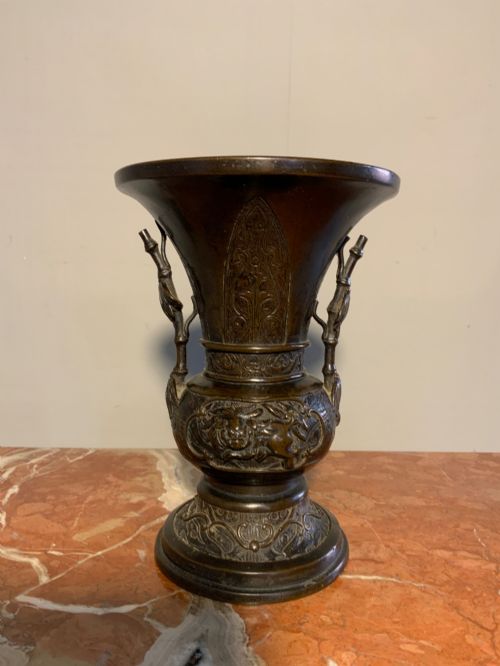
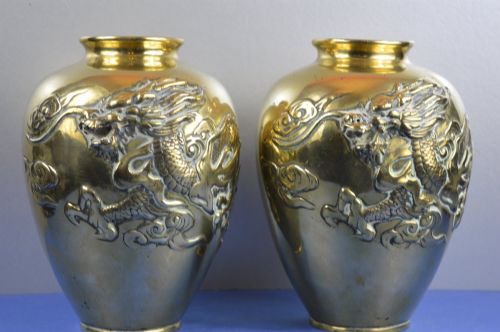
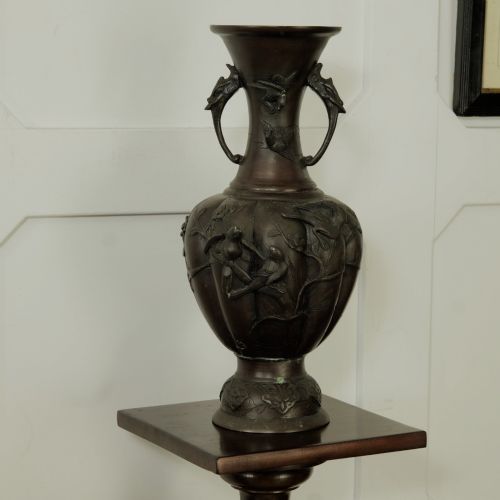
The most common examples on this page are nineteenth-century Japanese bronze vases featuring inlaid details or high-relief motifs of birds and blossom, alongside French and Italian cast bronze Campana urns. Domestic English brass altar garniture and copper wall pockets also appear regularly among the decorative vessels.
Forms range from small cabinet pieces and twin-handled baluster vases to large garden urns mounted on marble bases. Many items serve secondary functions as table lamps, pedestal bowls, and wine coolers while retaining their classical metal bodies.
Materials and methods
Foundry workers utilised traditional lost-wax casting for bronze and brass vessels, yielding solid metal bodies with crisp surface details. Copper and white metal items frequently display hand-beaten repoussé work or applied patination to achieve varied dark and golden surface tones.
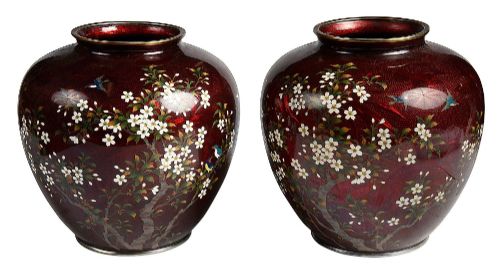
Enamel techniques such as cloisonné and champlevé involve soldering delicate wire partitions onto copper or bronze bases before filling the cells with coloured vitreous pastes and firing. Ormolu mounts and gilt bronze highlights are then applied to complement the dark patinated metal surfaces.
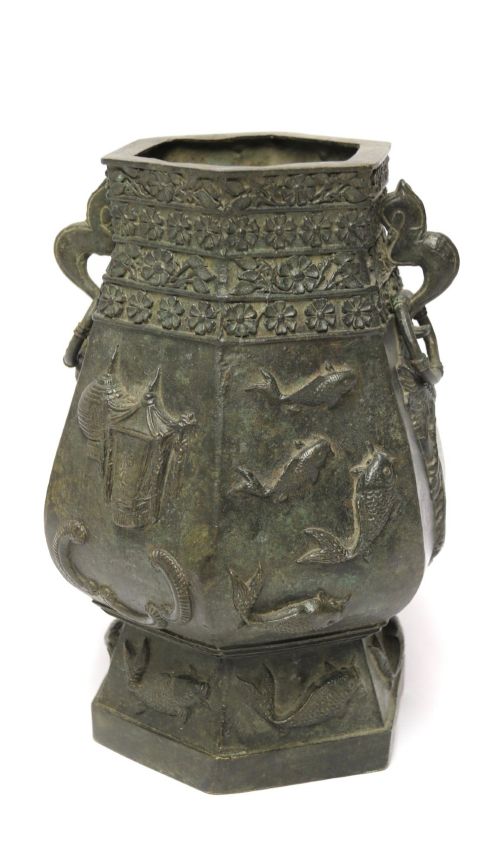
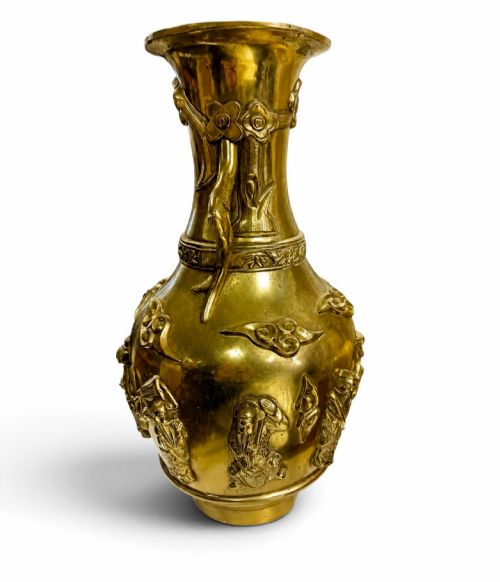
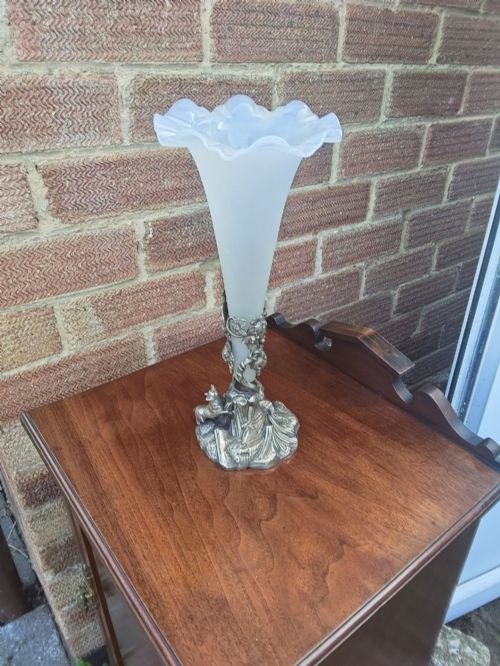
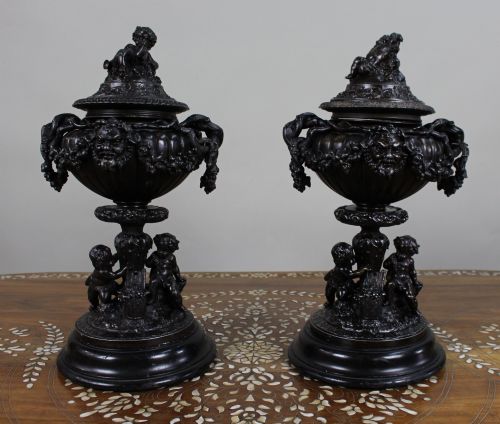
Several heavy bronze vessels manage to star Daoist immortals, bacchic putti, and foxes with grapes all on the same mantelpiece.
Assessing quality
Excellence in these metal pieces rests upon the crispness of the chased or cast detail and the depth of the patination. Superior examples display sharply defined relief work, secure joins on handles and mounts, and harmonious proportions derived from classical prototypes.
Lesser items show soft casting lines, superficial surface colouring that lacks longevity, and clumsy repairs to structural mounts or marble bases. The integration of hand-inlaid metals and complex enamel work distinguishes finer studio pieces from standard production wares.
KANASAWA
The Antique Metal Vases Glossary
- Campana urn
- A bell-shaped classical vessel with an everted rim and a footed base. These forms were popular during the Grand Tour period.
- Cloisonné
- An enamelling technique where metal wire forms compartments on a bronze or copper body to hold coloured glass paste. Artisans fire the piece multiple times to fuse the enamel before polishing the surface smooth.
- Repoussé
- A metalworking method where an artisan hammers a sheet of copper or brass from the reverse side to form a raised design. Fine chasing tools then refine the details on the front.
- Ormolu
- Finely ground high-carat gold applied to a bronze base using a mercury amalgamation process. This technique creates a rich golden finish found on decorative French mounts.
- Spelter
- A zinc alloy frequently utilised as a substitute for bronze in nineteenth-century decorative figures and urns. It is typically painted or bronzed to simulate heavier metals.
Antique Metal Vases: Frequently Asked Questions
What periods do these metal vases date from?
The pieces span the eighteenth, nineteenth, and early twentieth centuries, with a heavy concentration originating from the Victorian era and the Meiji period.
Grand Tour items reflect classical revivals, while Asian bronzes demonstrate traditional casting methods from the same decades.
How were antique bronze urns used originally?
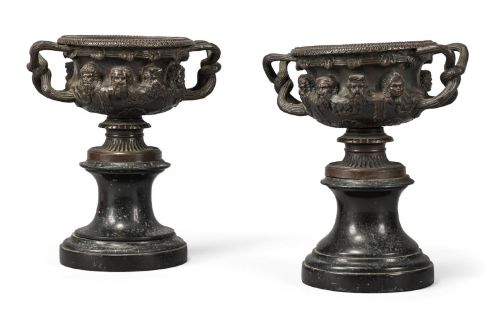
Many large urns served as decorative architectural ornaments in grand European gardens or interiors, modeled after famous archaeological discoveries like the Warwick vase.
Smaller vessels functioned as display pieces, table lamps, or ritual containers in Eastern export markets.
How do I distinguish bronze from spelter?
Bronze possesses a heavy, dense weight and a warm resonance when struck, developing a natural patination over time. Spelter is noticeably lighter, softer, and often reveals a greyish metal underneath worn surface paint.
Examining the base and interior usually clarifies the material composition.
Are cloisonne vases fragile?
Cloisonne vessels feature fused glass enamel set within metal wire compartments, making them durable for display but vulnerable to sharp impacts. Dropping or striking the surface can chip the vitreous enamel.
Normal handling and dusting require no special precautions beyond avoiding abrasive cleaners.