

English Regency Urns
English regency urns gather classical form and fine porcelain or bronze into decorative centrepieces designed to anchor a room.
English Regency Urns
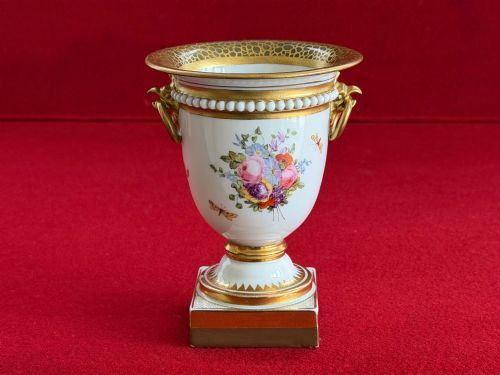
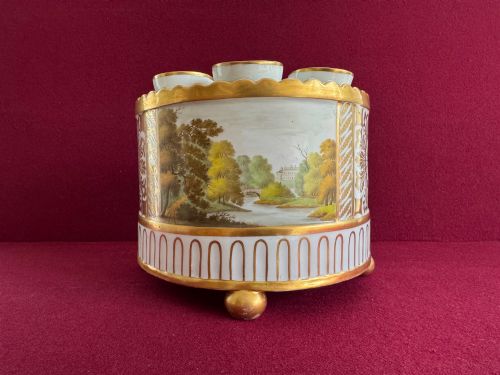
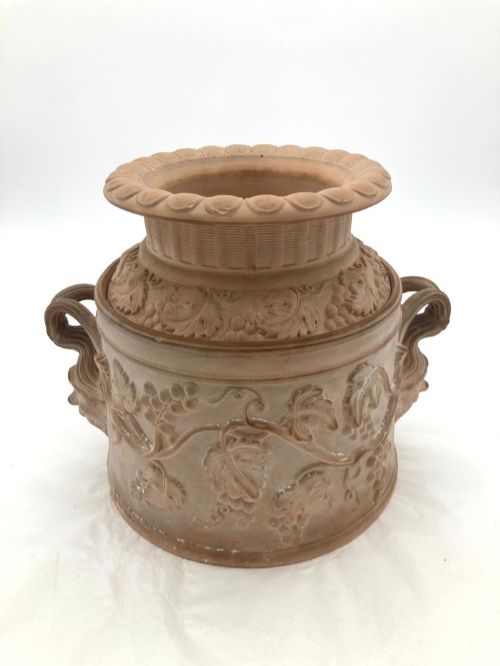
English regency urns encompass decorative vessels, wine coolers, ice pails, and jardinières drawing heavily upon neoclassical motifs from the early nineteenth century. These objects bridge the gap between classical antiquity and domestic Georgian or Regency interiors, functioning primarily as ornamental focal points rather than utilitarian vessels.
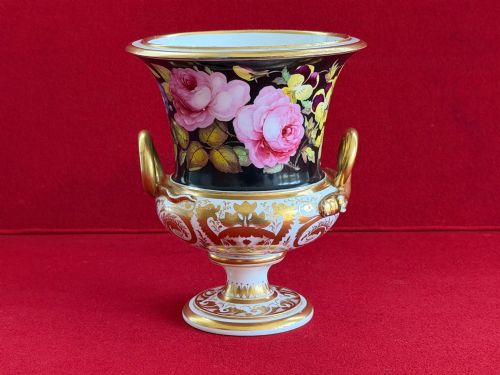
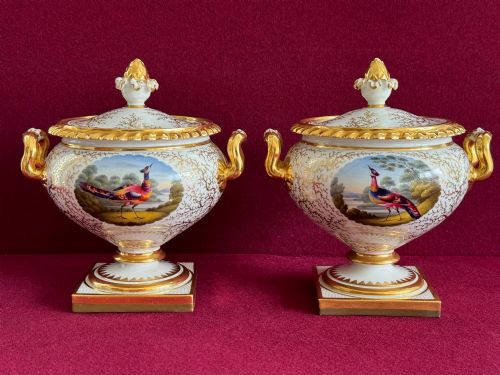
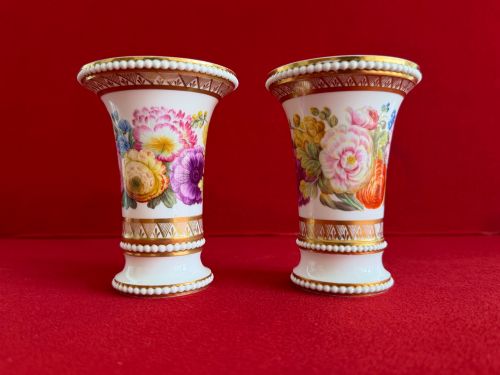
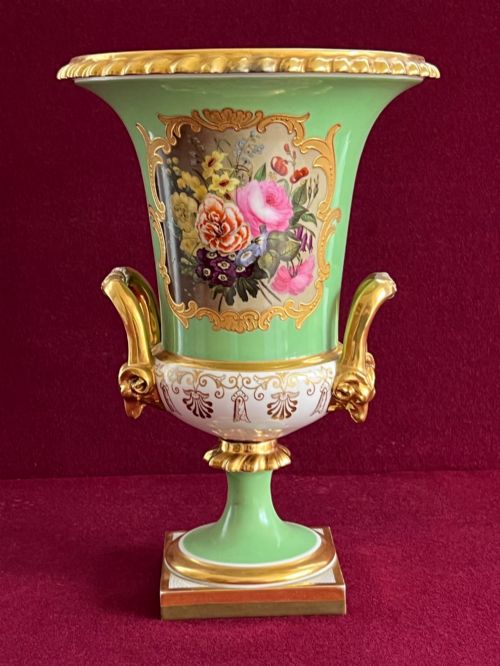
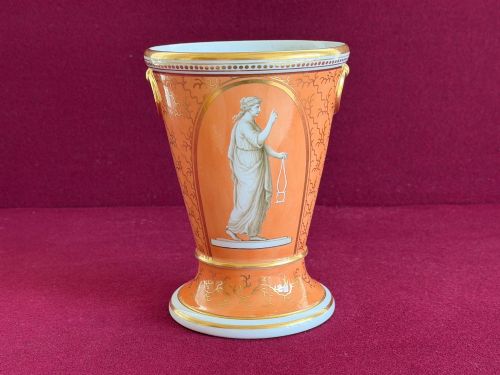
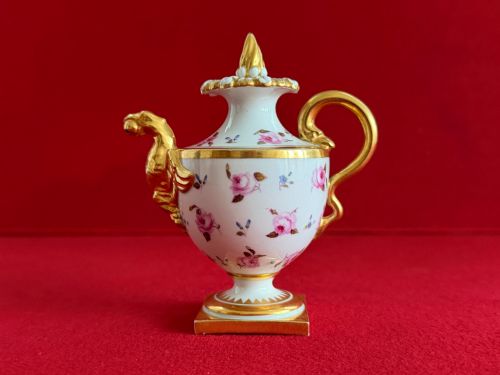
The most common forms encountered within these selections include porcelain campana urns, ironstone hall vases, and bronze or ormolu vessels from the Regency and Georgian periods. Makers often utilised shapes derived from ancient Greek and Roman pottery, adapting them for nineteenth-century drawing rooms and dining spaces.
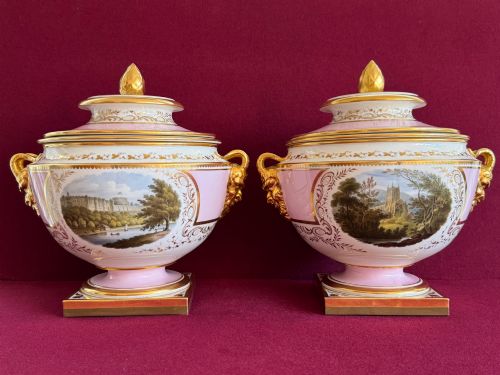
Beyond standard porcelain and ironstone, the inventory includes specialised forms such as creamware ice pails, copper samovars, and Blue John mineral specimens mounted in ormolu. These variations demonstrate the broad scope of ornamental vessel production during the early eighteen-hundreds and subsequent revival periods.
Materials and Manufacture
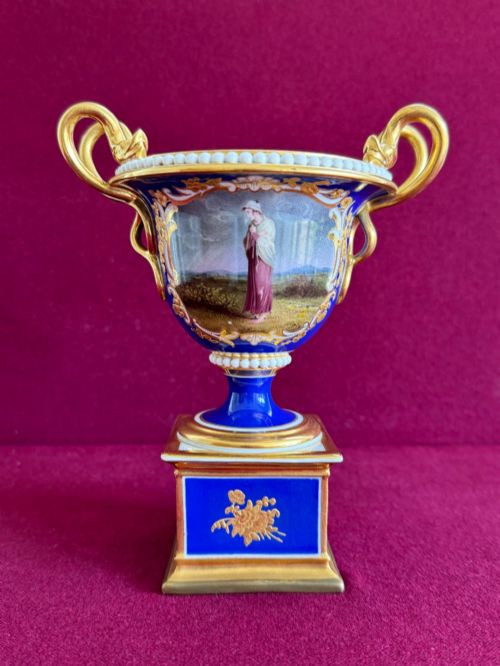
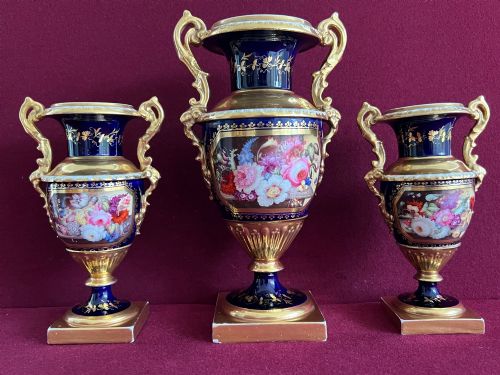
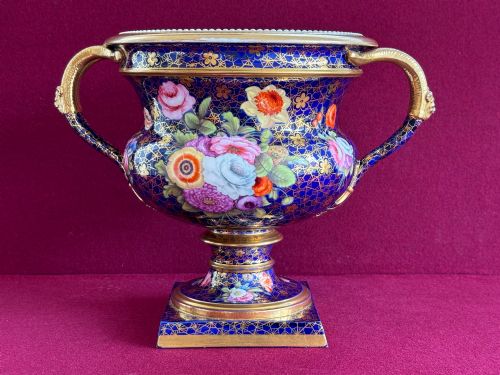
Porcelain and ironstone bodies form the structural foundation for the majority of these vessels, shaped through traditional potting techniques before receiving hand-painted enamels, gilding, and topographical or Chinoiserie decoration. Factories applied gold leaf and rich cobalt blue grounds to porcelain surfaces, often firing them multiple times to achieve vibrant colour contrast.
Metal vessels rely upon bronze, ormolu, brass, and copper, cast and chased with classical details such as rams' heads, loop handles, and acanthus leaf borders. Artisans combined cast bronze with gilt or patinated finishes to mimic excavated archaeological artefacts popular during the Regency taste.
Mineral materials like Blue John spar required careful turning and polishing, set into metal mounts with precision. Earthenware and creamware bodies used in ice pails and wine coolers involved refined clay mixtures fired at lower temperatures, finished with lead glazes.
English Regency Urns Retail Price Guide 2026
Typical asking prices for english regency urns among the pieces listed under this phrase on Sellingantiques today, from the lower quarter to the upper quarter. They describe what is for sale here now, not the wider market.
Several ironstone and porcelain urns abandoned their original decorative duties entirely, finding a second career as electrified table lamps.
Distinctions in Quality
The standard of painting and gilding distinguishes ordinary factory production from exceptional studio output, particularly on porcelain surfaces where hand-pencilled topographical views or intricate Imari patterns demonstrate superior artisan skill. Crisp detail in modelled elements, such as handles cast as serpents or rams' heads, separates master bronzework from simpler commercial castings.
Coherence of design, adherence to strict neoclassical proportions, and documented factory provenance elevate specific vessels. Pieces bearing identifiable signatures or patterns from established porcelain manufactories hold distinct visual and historical weight compared to unmarked domestic wares.
Flight Barr And Barr·Chamberlain Worcester·Hicks And Meigh·H And R Daniel·Miles Mason·Spode
The English Regency Urns Glossary
- Campana urn
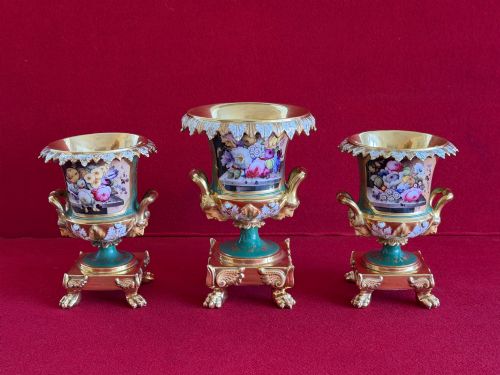
- A bell-shaped vessel with a flared rim and footed base, mimicking ancient Roman garden vases. This silhouette remains central to Regency decorative arts.
- Ormolu
- Finely powdered gold applied to a bronze base, creating a rich golden finish characteristic of Regency metalwork. It provides contrast against patinated bronze and dark wood furniture.
- Garniture
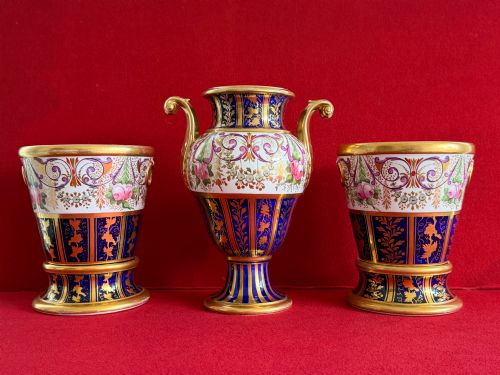
- A set of three or more matching vases or urns designed to be displayed together on a mantelpiece or sideboard. They typically feature a central tall vase flanked by smaller matching vessels.
- Jardiniere
- An ornamental pot or stand designed to hold growing plants or cut flowers. These often feature waterproof ceramic or metallic interiors.
- Imari
- A decorative style inspired by Japanese export porcelain, utilising cobalt blue, iron red, and gilt accents on a white ground. British factories frequently adopted this palette during the early nineteenth century.
English Regency Urns: Frequently Asked Questions
How were antique urns used?
Most Regency urns served primarily as decorative ornaments on mantelpieces, sideboards, or console tables, often arranged in matched pairs or garnitures. Larger vessels made from ironstone or metal occasionally functioned as wine coolers or ice pails during formal dining.
Interior spaces in the nineteenth century relied on these classical shapes to project scholarly taste and refinement. Smaller porcelain examples also doubled as rose water sprinklers or potpourri containers for perfuming rooms.
How do I distinguish Regency from Victorian pieces?
Regency urns produced between eighteen-hundred and eighteen-thirty typically exhibit strict neoclassical restraint, drawing directly from Greek and Roman archetypes with clean lines and balanced proportions. Decoration often favours delicate Chinoiserie, topographical scenes, or austere bronze patination.
Later Victorian and revival pieces manufactured toward eighteen-eighty frequently display heavier ornamentation, denser gilding, and more eclectic stylistic mixtures. Victorian interpretations of earlier styles tend toward busier surface decoration and bulkier proportions than their Regency predecessors.
Can I use antique porcelain urns for fresh flowers?
Historic porcelain and ironstone urns can occasionally hold water, but thermal shock and moisture seepage through older bodies or hairline fractures pose risks to the glaze. Using a discrete inner glass or plastic liner protects the fragile ceramic interior from mineral deposits and staining.
Metal urns made from bronze or brass accommodate floral arrangements more safely if lined properly to prevent corrosion. Careful handling ensures that delicate gilt handles and painted surfaces remain undamaged during use.