




Gold Chinoiserie Urns
Gold chinoiserie urns bring decorative lacquer, gilt and porcelain into a room, offering striking Asian-inspired motifs.
Gold Chinoiserie Urns
The forms vary widely across the inventory, ranging from massive temple vases and coffee urns to chestnut urns and converted porcelain table lamps. Many items display distinct regional interpretations, such as Dutch Regency, French Chinoiserie, and Chinese Export designs.
Porcelain and toleware dominate the physical forms, often paired with lacquered papier mache or ironstone bases. These objects bridge the gap between functional vessels and ornamental lighting, serving as focal points in period interiors.
How they were made
The construction of these pieces relies heavily on durable base materials like porcelain, ironstone, and papier mache, shaped into urns and vases before receiving surface decoration. Lacquer and toleware provide smooth substrates suited for detailed painting and gilt application.
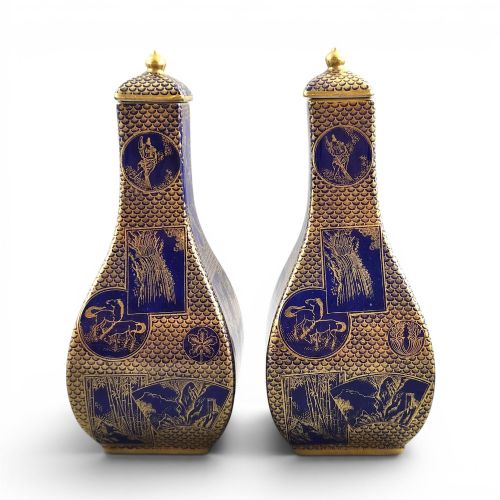
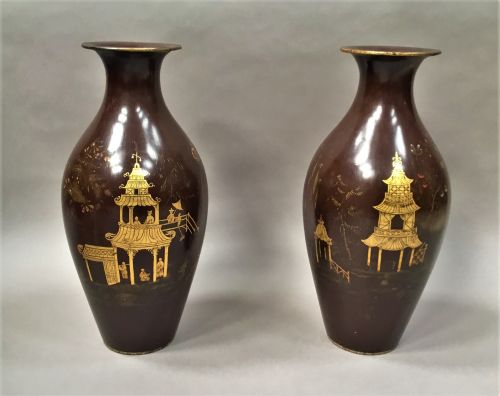
Gilding and gold leaf give the objects their characteristic metallic sheen, applied over dark grounds such as mazarine blue, powder blue, and black lacquer. Ormolu mounts and brass fixtures frequently complete the construction of the larger nineteenth-century examples.
Gold Chinoiserie Urns Retail Price Guide 2026
Typical asking prices for gold chinoiserie urns among the pieces listed under this phrase on Sellingantiques today, from the lower quarter to the upper quarter. They describe what is for sale here now, not the wider market.
One towering pair stands at an impressive eighty-six inches tall, easily outshining the household pets.
What varies in quality
The fineness of the hand-painted chinoiserie detailing dictates much of the distinction between standard and superior pieces. Skilled execution in the gold leaf and lacquer work produces depth and clarity in the Asian-inspired motifs.
The integration of secondary elements, such as cast ormolu mounts and maker stamps, separates ordinary production from notable workshop output. Preservation of the original gilt and lacquer surfaces also plays a significant role in determining the character of each piece.
Mason's·Carlton Ware·Jennens & Bettridge
The Gold Chinoiserie Urns Glossary
- Chinoiserie
- European decorative style reflecting Chinese artistic influences, characterised by painted landscapes, figures, and pavilions. It appeared across furniture, porcelain, and lacquerware during the Georgian and Victorian periods.
- Toleware
- Painted or enamelled metalware, usually tinplate, shaped into domestic items like coffee urns and tea canisters. Jennens and Bettridge produced similar decorative metal and papier mache goods in the nineteenth century.
- Ormolu
- Gilded bronze mounts used to decorate porcelain vases and furniture. French and Dutch makers frequently employed these metal fittings to enhance the status of decorative urns.
- Ironstone
- A type of durable heavy earthenware patented in the nineteenth century by makers such as Mason's. It served as a robust alternative to porcelain for large vases and table wares.
Gold Chinoiserie Urns: Frequently Asked Questions
What periods do these gold chinoiserie urns cover?
The pieces span from the Georgian era through the nineteenth century, Edwardian period, and into the 1930s.
Maker styles include Dutch Regency, French Chinoiserie, and Art Deco interpretations.
What materials are used in these items?
Common materials include porcelain, ironstone, toleware, and lacquered papier mache.
Surfaces are frequently embellished with gold leaf, gilding, enamel, and brass or ormolu mounts.
How were these urns originally used?
Many functioned as decorative table or floor vases, while others served as chestnut or coffee urns.
Several examples have since been adapted into table lamps for modern interiors.
How do I identify different regional styles?
Dutch and French pieces often incorporate specific ormolu mount designs and distinct lacquer palettes.
Chinese Export and Victorian Chinoiserie items emphasise hand-painted motifs on porcelain or black lacquer grounds.