
Patinated Metal Urns
Patinated metal urns bring sculptural weight and classical dignity to a room, offering centuries of craftsmanship in bronze, cast iron, and ormolu.
Patinated Metal Urns
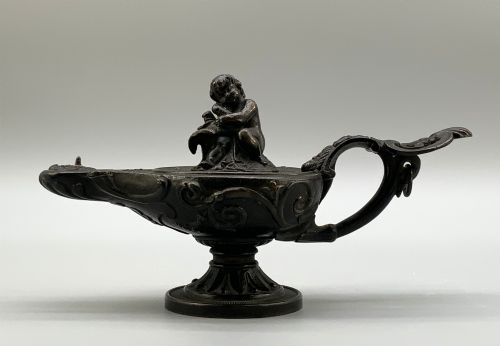
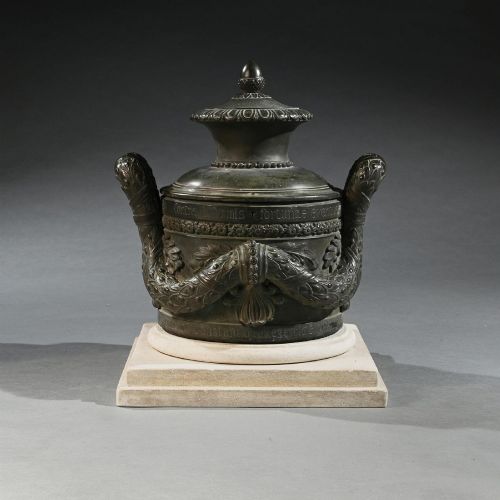
Patinated metal urns encompass decorative vessels, vases, incense burners, and garniture sets shaped from bronze, brass, spelter, and cast iron. These objects draw heavily on Neoclassical, Regency, and Oriental traditions, originating from European Grand Tour workshops, French foundries, and Japanese Meiji period kilns.
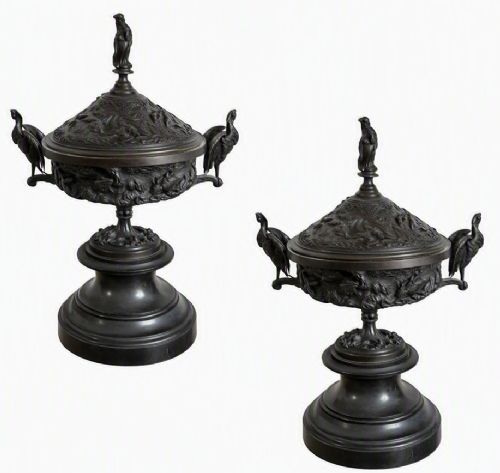
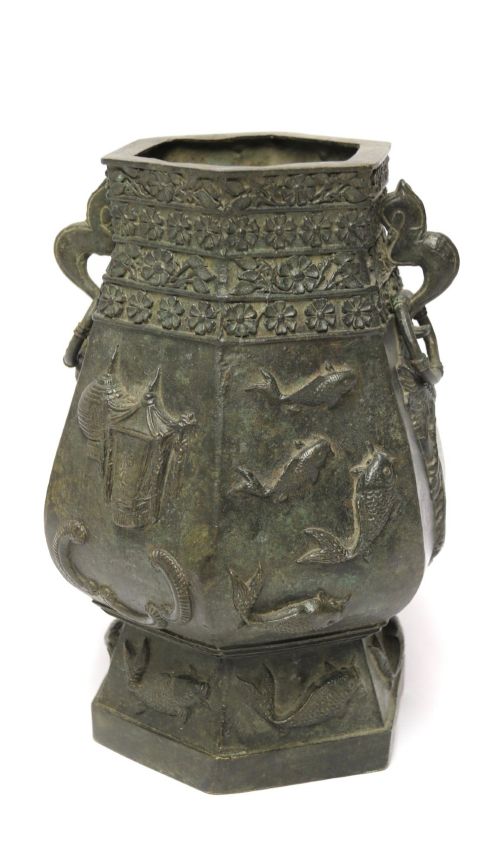
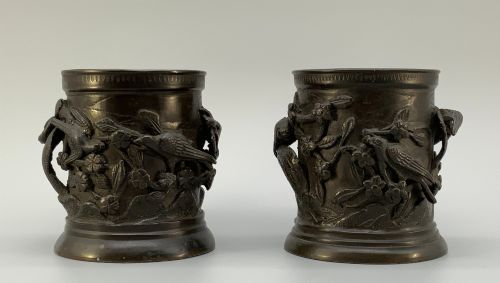
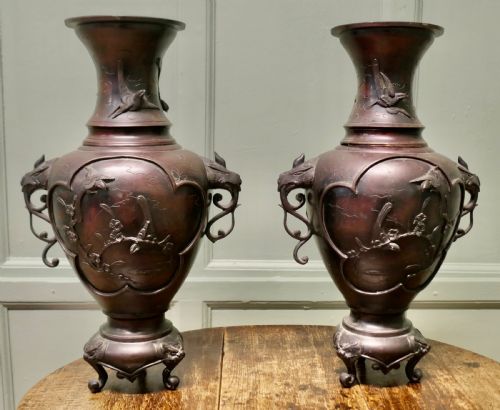
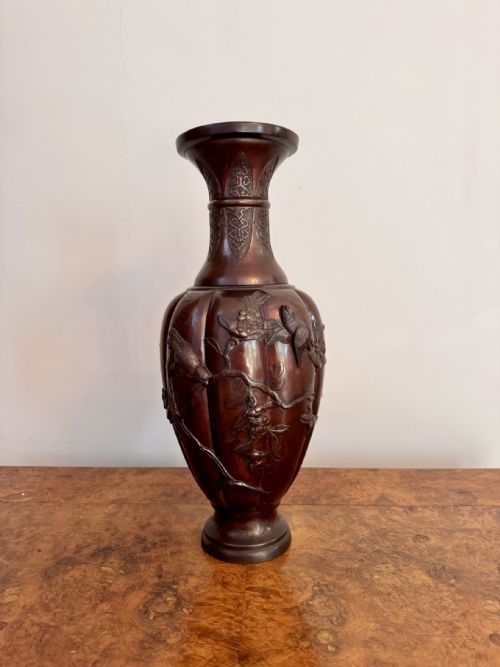
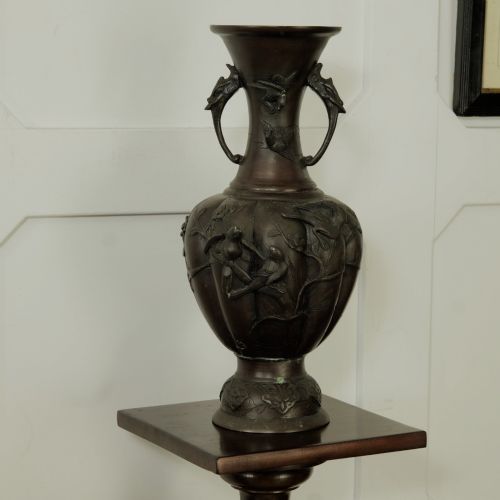
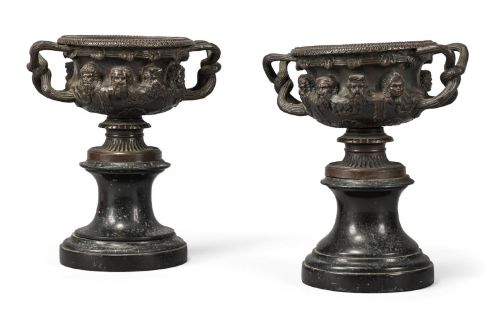
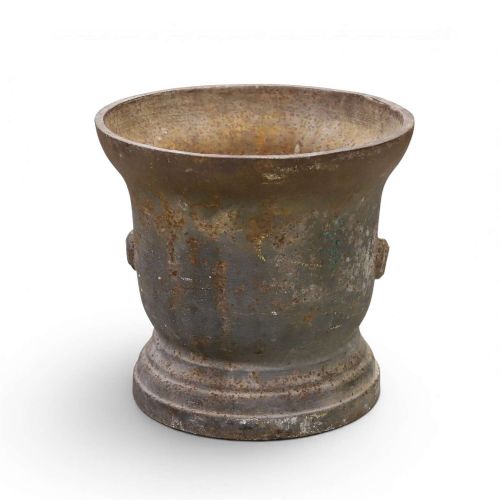
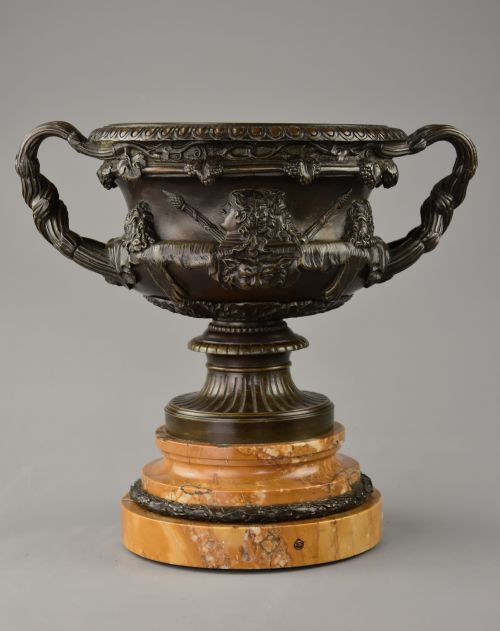
Buyers encountering this selection will most frequently find 19th-century French bronze reductions of classical antiquities, alongside Japanese Meiji period bronze vases decorated with birds, blossom, and dragons. Cast iron planters and heavy apothecary mortars also appear, alongside Chinese archaic-style ritual bronze vessels.
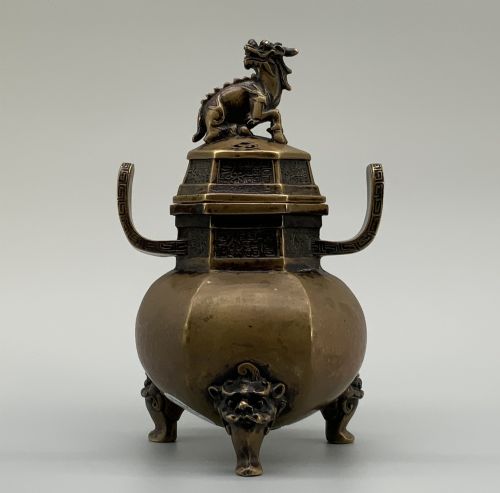
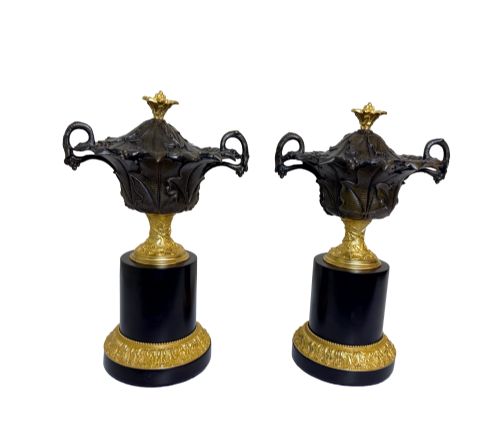
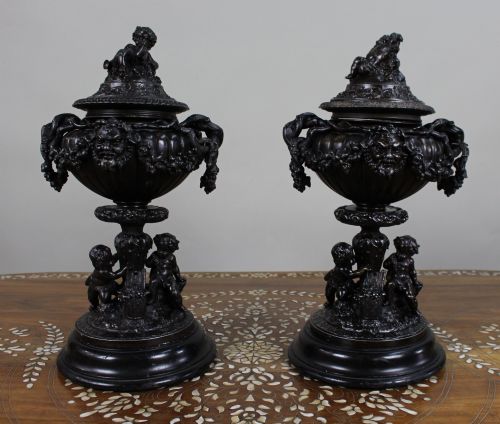
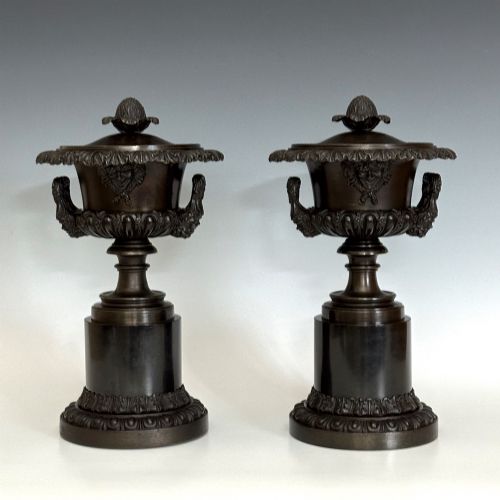
Forms range from campana-shaped garden vessels and lidded urns on marble pedestals to ritual vessels and tripod censers. The finishes vary from deep brown chemical patination and gilt highlights to champleve enamel and mixed metal details.
How they were made
Foundries utilised traditional lost-wax casting and sand-casting techniques to shape solid bronze, brass, and spelter into intricate vessels and decorative handles. Artisans then applied chemical patination treatments to the metal surface, creating aged brown, green, or dark bronze finishes that mimic ancient burial patinas.
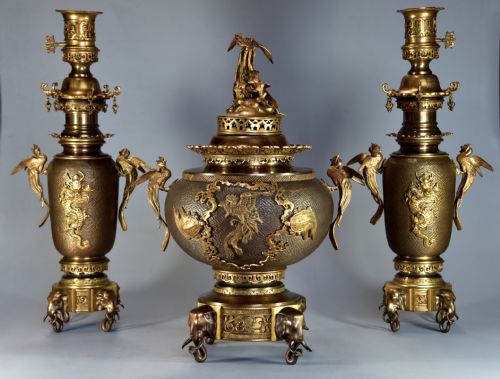
Gilt bronze and ormolu pieces received targeted mercury gilding or fire-gilding to add bright golden highlights against dark patinated grounds. Japanese Meiji period pieces often incorporated mixed metal alloys and applied bronze details, whilst French cast iron examples were moulded for garden use.
Materials range from solid bronze, gilt bronze, and spelter to cast iron, marble, and mixed metal alloys.
What varies in quality
The precision of the chasing and hand-finishing after the casting process separates standard commercial foundry work from exceptional pieces. Crisp rendering of feathers, floral motifs, and classical figures indicates superior workshop standards.
The depth, stability, and uniformity of the chemical patination dictate the visual richness of the surface. Integrated mounting on quality marble pedestal bases and heavy overall weight further distinguish the finest examples.
Jules Moigniez
The Patinated Metal Urns Glossary
- Patination
- The chemical or natural alteration of a metal surface over time, producing a stable coloured layer that protects the metal and adds depth. This ageing process can also be accelerated artificially by workshops.
- Ormolu
- Finely ground high-carat gold applied to a bronze base using a mercury amalgamation technique, yielding a bright golden finish. This decorative treatment appears frequently on Regency and French pieces.
- Campana
- A bell-shaped vessel design with an everted rim and a footed base, heavily favoured in classical antiquity and later Grand Tour revivals. These forms often feature Bacchic masks or foliate handles.
- Spelter
- A zinc-based alloy used as a cost-effective substitute for bronze, frequently painted or patinated to simulate heavier metals. It appears in Victorian decorative urns and figural pieces.
- Champleve
- An enamelling technique where troughs or cells are hollowed out in the metal surface and filled with vitreous enamel before firing. This method decorates several Oriental bronze vases in the collection.
- Grand Tour
- The cultural journey undertaken by wealthy young Europeans in the eighteenth and nineteenth centuries, bringing home small-scale bronze copies of classical monuments. These reductions form a major category of decorative urns.
Patinated Metal Urns: Frequently Asked Questions
How do I care for patinated bronze?
Patinated bronze requires only gentle dusting with a soft, dry cloth to remove surface particles. Avoid chemical polishes, which strip away the historical patination and damage the underlying metal finish.
Are cast iron urns for gardens?
Cast iron urns and planters were engineered for heavy outdoor use on terraces and lawns, developing a stable rusted or painted patination over decades. Indoor cast iron pieces, such as apothecary mortars, were historically used in domestic or medical dispensaries.
Both types offer substantial weight and structural durability, making them suitable for heavy planting or architectural display.
What is Meiji bronze?
Meiji bronze refers to metalwork produced in Japan during the Meiji period, celebrated for extraordinary technical skill in casting and patination. These pieces frequently feature naturalistic motifs like birds, blossoms, and dragons.
Japanese bronze vessels often employ mixed metals or intricate applied details that contrast sharply with European classical forms.