





Pair Classical Planters
Pair classical planters bring formal symmetry to terraces and gardens, taking the form of cast iron urns, stone vessels and terracotta cachepots.
Pair Classical Planters
When you search for pair classical planters, you encounter matching garden vessels rooted in traditional forms such as the Campana urn, the tazza and the cachepot. These objects appear frequently in cast iron, stone, terracotta and marble, spanning periods from the eighteenth century through the Victorian era into the twentieth century. The selection on this page relies heavily on heavy metal and weathered mineral substances designed for outdoor placement.
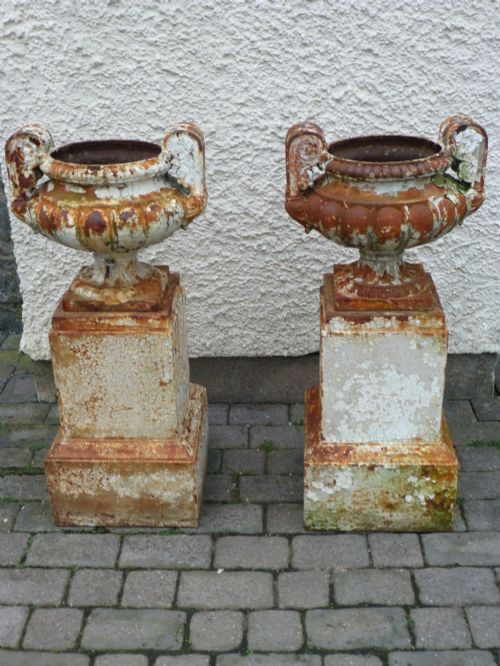
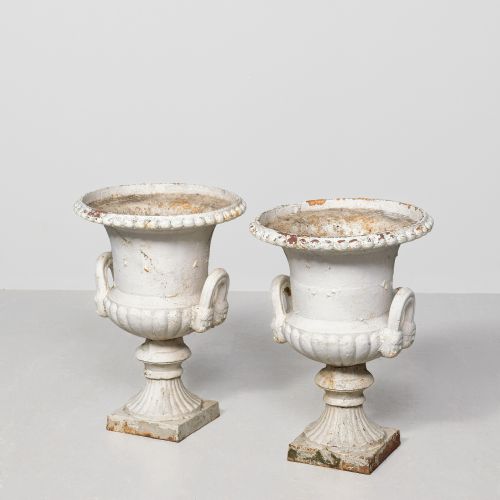
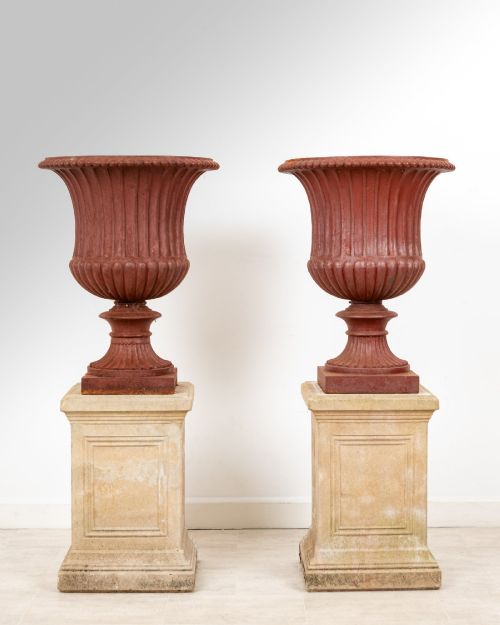
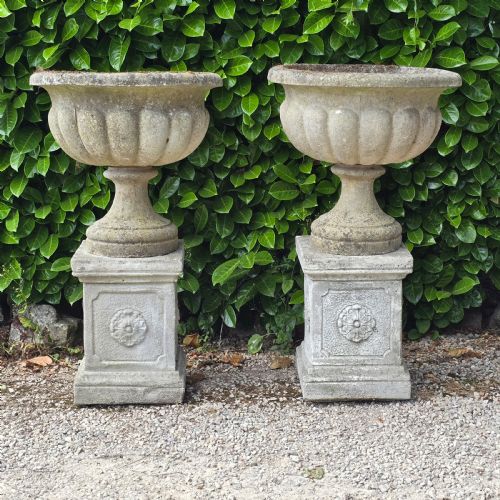
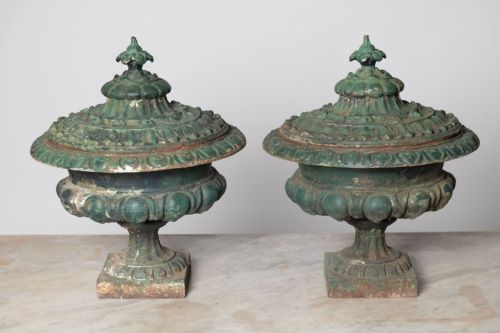
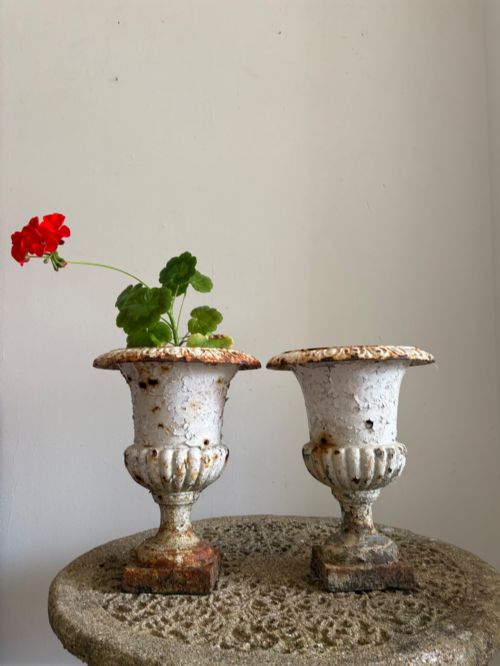
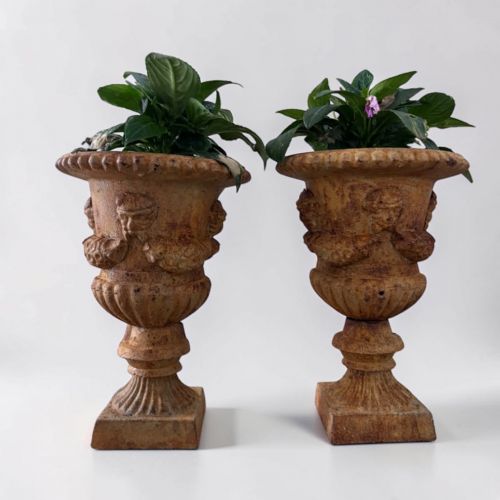
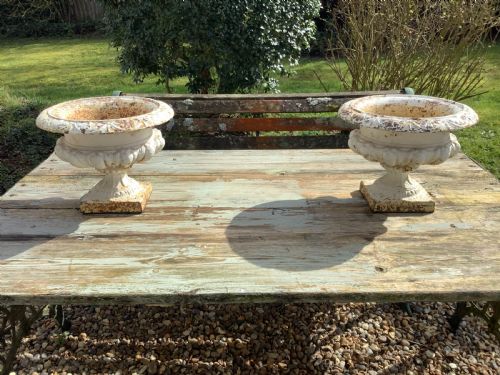
The most common form on this page is the cast iron garden urn, often raised on a matching plinth or pedestal. These metal pieces mirror classical architecture, showing fluted bodies, egg-and-dart rims and handles shaped as scrolls or serpents. Alongside them stand terracotta and stone versions, ranging from buff clay pots to carved limestone baskets.
Materials and construction methods
Foundries produced the metal vessels in this collection by pouring molten iron into sand moulds, a technique that allowed crisp detailing on bodies and bases alike. Makers such as the Carron foundry utilised this method to create robust garden ornaments that stood up to seasonal frost. Painters then applied protective coats, leaving remnants of original distressed paint on nineteenth-century examples.
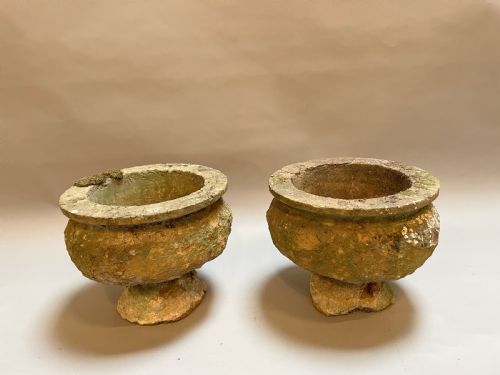
Masons carved the stone, marble and limestone variants by hand from solid blocks, producing heavy garden ornaments with deep relief work. Terracotta planters emerged from moulded clay fired in kilns, yielding porous vessels that absorb moisture and weather over decades. Bronze additions, such as champleve enamel mounts, involved intricate metalwork and fused glass pastes.
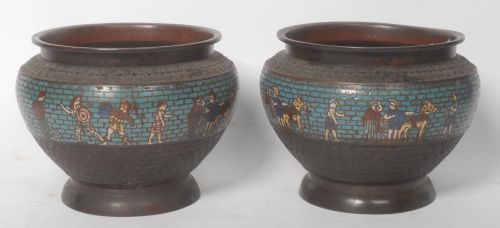
Listings feature materials including cast iron, limestone, terracotta, white marble, reconstituted stone, and bronze with champleve enamel.
Distinctions in quality and execution
The division between standard commercial garden items and superior works lies in the crispness of the cast and the depth of the modelled ornament. Heavy metal castings with sharp relief lines and original matching plinths represent the upper tier of production. Finer examples retain their original lids, cast-in foundry marks or intact patination developed through a century of exposure.
Carved stone and marble pieces show quality through the confidence of the chisel work on drapery, acanthus leaves and handles. Mass-produced terracotta sits at one end of the scale, while hand-carved limestone baskets and ormolu-mounted jardinieres occupy the other. Completeness, such as surviving original bases and matching lids, elevates the standing of any matched set.
Falkirk Carron foundry·Coalbrookdale
The Pair Classical Planters Glossary
- Campana
- A bell-shaped garden urn with a flared rim and a footed base. This form dates back to antiquity and forms the backbone of Victorian garden ornamentation.
- Tazza
- A shallow cup or bowl set on a pedestal and foot. These open vessels often feature classical handles and cast iron construction.
- Cachepot
- An ornamental flowerpot container designed to conceal a plain inner pot. Examples include bronze and enamel pieces intended for indoor or sheltered placement.
- Champleve
- An enamelling technique where troughs are carved into a metal surface and filled with vitreous paste before firing. This method decorates bronze cachepots from the early twentieth century.
- Plinth
- A heavy stone or iron base block that elevates an urn. Matching plinths provide stability and lift garden ornaments to a commanding height.
Pair Classical Planters: Frequently Asked Questions
How do I care for cast iron planters?
Cast iron garden vessels require minimal maintenance beyond checking for blocked drainage holes and reapplying protective paint when the metal shows bare patches. Lifting the base off damp ground using slate or bricks prevents moisture retention during winter months.
Heavy iron urns withstand frost well, but trapped water freezing inside narrow stems can cause cracking. Emptying loose soil or tilting the vessels during freezing periods protects the material.
Are these planters suitable for indoor use?
While most items on this page spent their lives outdoors on stone terraces or garden lawns, smaller cachepots and table urns suit indoor placement. Marble tazza urns and bronze cachepots fit well on sturdy tables or pedestals inside an orangery or hallway.
Placing a waterproof liner inside antique metal or stone vessels protects interior surfaces from moisture seepage. Heavy cast iron pieces require substantial floor support if brought indoors.
How do I date a cast iron urn?
Dating relies on surface patination, foundry marks, bolt construction and stylistic cues drawn from the Victorian, Regency or Edwardian periods. Nineteenth-century examples often display multi-layered paint finishes and sand-cast textures distinct from twentieth-century production.
Matching plinths and original lids offer further clues to the manufacturing decade. Comparing the weight and crispness of relief decoration against known foundry catalogues helps narrow the date.
Do stone planters crack in winter?
Porous materials like terracotta and soft stone absorb water, which expands upon freezing and can cause surface spalling or structural cracks. Lining terracotta pots with plastic and wrapping them in breathable horticultural fleece during hard frosts reduces damage.
Limestone and reconstituted stone handle cold weather better than soft clay, but keeping them elevated on feet prevents moisture absorption from frozen soil below.