


Antique Metal Horse Statue
An antique metal horse statue brings the power and line of the animal into a room through centuries of foundry work.
Antique Metal Horse Statue
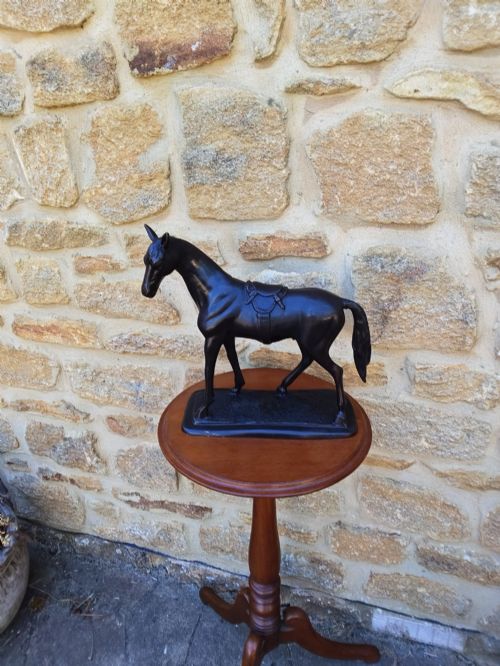
When you search for an antique metal horse statue, you encounter figures spanning from the seventeenth century through to the mid-twentieth century. The pieces take many forms, from cabinet sculptures and desk tidies to doorstops, hitching posts, and architectural fragments. Bronze and brass dominate the selections, often mounted on marble or olive wood bases.
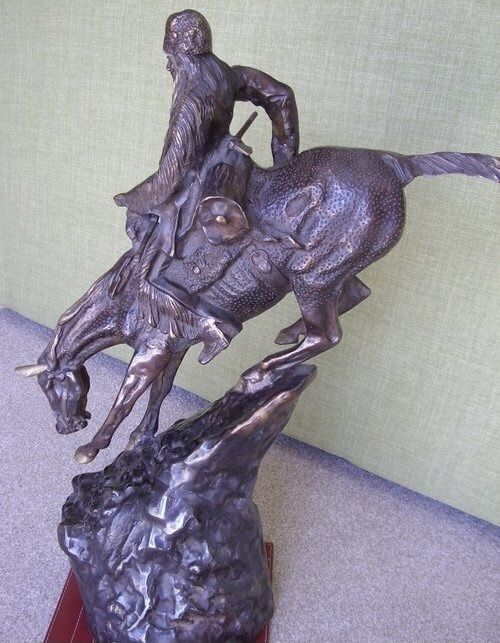
You are most likely to meet nineteenth-century bronze and brass castings on this page, reflecting the heavy output of European animalier and neoclassical makers. These range from small desk accessories to substantial pairs of horses, alongside specific cultural works like Chinese bronzes and Austrian cold-painted pieces.
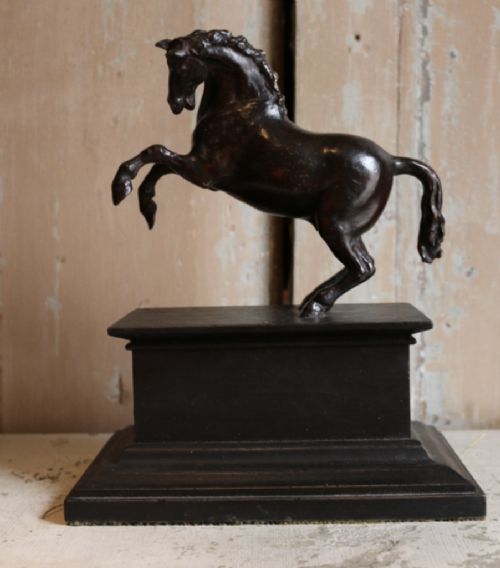
The historical spread includes Victorian and Edwardian items, Art Deco interpretations, and grand tour souvenirs. Certain works capture action, such as rearing horses or racing winners, while others serve utilitarian roles like doorstops and desk tidies.
Materials and casting methods
Foundries utilised bronze, brass, and cast iron, pouring molten metal into moulds to capture muscle and movement. Many figures received surface treatments, such as cold-painting in polychrome hues or gilding over bronze.
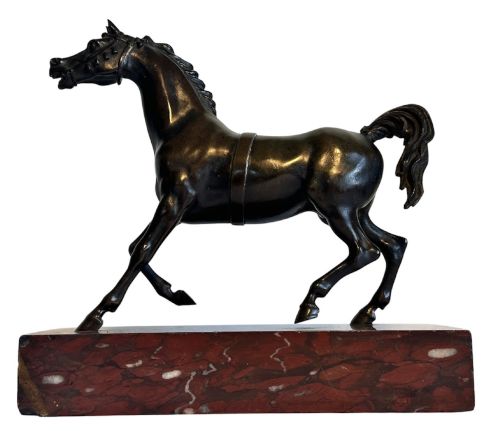
Mounting formed a significant part of production, with sculptors setting metal figures onto heavy bases of marble, onyx, or olive wood to provide stability and presence.
Materials span bronze, brass, cast iron, marble, onyx, and olive wood, reaching from the seventeenth century to 1940.
Standards of execution
Quality rests in the crispness of the casting and the fidelity of the anatomical detail in the metal. A superior piece retains sharp muscle definition and clean finishing in areas like the mane and legs, whereas lesser examples show softness and surface pitting.
The integration between the metal figure and its base separates standard production from finer output. Better statues feature secure, balanced mounting and materials that complement the metal work without distraction.
The Antique Metal Horse Statue Glossary
- Animalier
- A nineteenth-century artistic movement focused on the realistic portrayal of animals. Sculptors in this tradition studied anatomy closely to capture creatures in motion.
- Cold Painted Bronze
- A technique where bronze figures receive paint layers that are not fired in a kiln. This method allowed for high detail in decorative items like desk tidies.
- Grand Tour
- A traditional trip through Europe undertaken by upper-class young men in the eighteenth and nineteenth centuries. Travellers frequently collected small bronzes and antiquities as souvenirs.
- Marley Horses
- Large sculptural groups depicting rearing horses restrained by handlers. The originals were commissioned for Louis XV and inspired numerous smaller metal copies.
- Desk Tidy
- A utilitarian desk accessory designed to hold stationery or small items. In metalwork, these often incorporated sculptural figures into the design.
Antique Metal Horse Statue: Frequently Asked Questions
What metals were used for these statues?
The listings show a primary reliance on bronze and brass, alongside cast iron for utilitarian items like hitching posts and doorstops. Some pieces feature gilt bronze or cold-painted bronze surfaces.
Foundries selected these metals for their durability and ability to hold fine detail during the casting process.
How do I date an antique metal horse?
Dating relies on stylistic clues, mounting materials, and manufacturing techniques recorded across periods from the seventeenth to the mid-twentieth century. Early works often show distinct patination and hand-finishing methods.
Later pieces align with movements like Art Deco or the Edwardian era, incorporating specific bases such as marble or onyx.
Were these statues purely decorative?
Many pieces served practical functions while incorporating animal forms. Examples include desk tidies, doorstops, and hitching posts designed for everyday use.
Other items functioned as cabinet sculptures, Grand Tour souvenirs, or architectural elements.
What is an animalier bronze?
Animalier refers to a nineteenth-century style dedicated to the realistic depiction of animals. Sculptors focused on capturing the natural movement and anatomy of horses and other beasts.
These pieces often highlight musculature and tension in the metal casting.