





Grand Tour Horse Sculpture
These grand tour horse sculpture pieces are classic souvenir bronzes and marbles brought back from continental travels, prized for bringing classical sculpture into the home.
Grand Tour Horse Sculpture
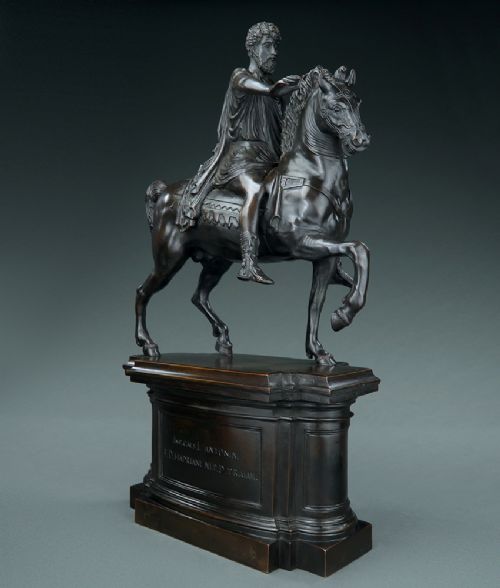
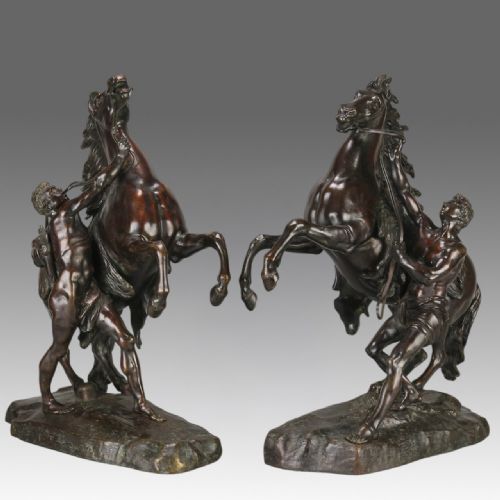
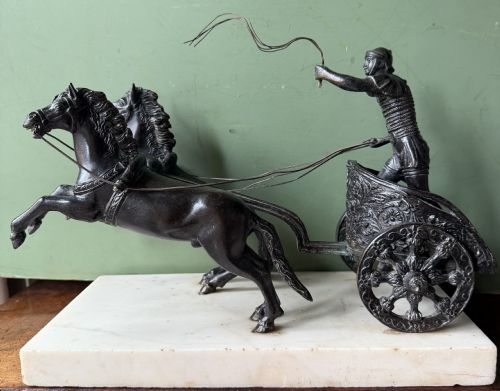
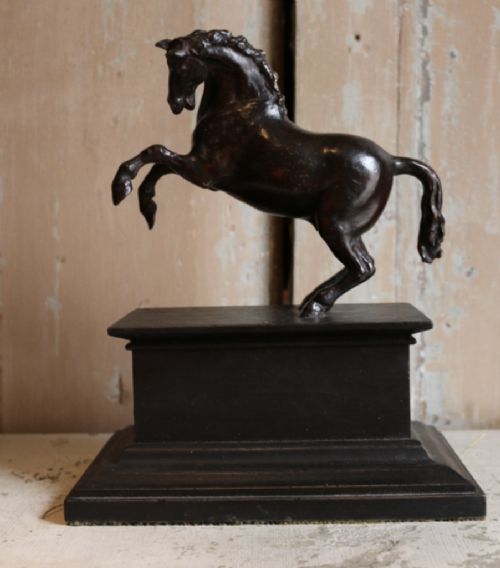
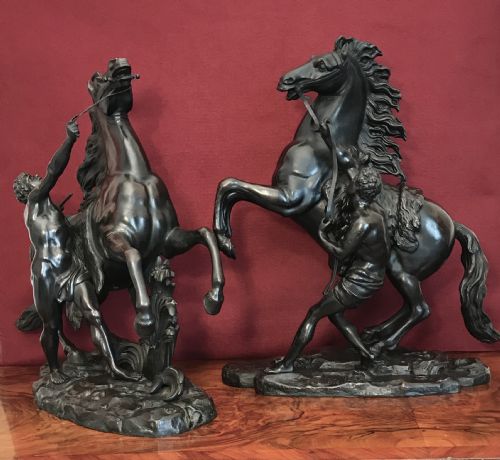
When you search for a grand tour horse sculpture, you are looking at miniature bronzes, marbles and reliefs inspired by famous monuments and classical antiquities seen by travellers abroad. The versions most commonly met here include Victorian-era bronze castings of the Marly horses after Coustou, Italian chariot groups and individual animal studies.
The objects range from nineteenth-century souvenirs mounted on marble or olive wood plinths to earlier seventeenth-century figures and twentieth-century reproductions. Alongside freestanding sculptures and pairs of horses, the selection includes wall plaques and sculptural fragments such as a bronze nostril from a larger statue.
Origins span France, Italy and Germany, reflecting the wide itinerary of the historical traveller. Styles draw heavily on French Neoclassical, Baroque and Classical traditions, often copying monumental outdoor sculptures into cabinet-sized bronzes.
How they were made
Makers utilised bronze, gilded bronze and gilt bronze cast from classical models, frequently mounting the metal figures onto heavy bases of white marble or olive wood. Some twentieth-century pieces employ marble dust for relief plaques rather than traditional metal casting.
Surface finishes vary from dark patination to rich gilding, designed to emulate the aged appearance of ancient excavated statuary. Bases are fitted precisely to the sculptures, sometimes incorporating architectural plinths for the charioteer and animal groups.
Listings feature bronzes, marbles and wood bases across Victorian, seventeenth-century and twentieth-century dates.
What varies in quality
Quality in a grand tour horse sculpture rests upon the crispness of the metal chasing and the fidelity of the cast to the original monumental source. Finer pieces retain sharp musculature, clean harness details and careful hand-finishing on both horse and groom.
The choice and material of the base also influence the overall character, with dense white marble and figured olive wood providing stability and visual weight to the bronze figures above.
Coustou·Charles Crozatier·Verrocchio
The Grand Tour Horse Sculpture Glossary
- Grand Tour
- A traditional journey through Europe, chiefly France and Italy, undertaken by upper-class European young men as a part of their education. Souvenirs purchased along the route form the basis of this collecting category.
- Marly Horses
- Two monumental marble groups commissioned by Louis XV for the Watering Place at Marly. Numerous scaled-down bronze copies were produced during the nineteenth century.
- Gilt Bronze
- Metal decorated with a thin layer of gold applied to its surface. It provides a bright finish distinct from dark brown bronze patination.
- Plinth
- A heavy block or base upon which a statue or sculpture is mounted. Many nineteenth-century souvenirs use white marble or olive wood for this purpose.
Grand Tour Horse Sculpture: Frequently Asked Questions
What is a grand tour horse sculpture?
These pieces are miniature metal or stone replicas of famous European sculptures, collected as souvenirs during nineteenth-century travels abroad. They translate monumental public monuments into cabinet-sized decorative objects.
Most examples depict rearing horses, chariot groups or equestrian figures cast in bronze and mounted on stone or wooden bases.
How old are these sculptures typically?
The majority of pieces date from the Victorian period in the nineteenth century, reflecting the height of continental travel. Earlier seventeenth-century examples and twentieth-century reproductions also appear.
Dates are determined by the casting style, the material of the base and the patination of the bronze.
What are the Marly horses?
The Marly horses are famous sculptural groups depicting restrained horses and their grooms, originally created for a French royal residence. Nineteenth-century cast reductions of these figures became exceptionally popular souvenir items.
Pairs of these horses are frequently found mounted on marble plinths or wood bases.
How should I display them at home?
These sculptures suit tabletops, mantelpieces and desks where their patinated surfaces and detailed casting can be appreciated up close. Their compact size allows them to sit easily among books or other decorative objects.
Ensure they rest on stable, level surfaces that can support the weight of the marble or bronze bases.