




Antique Metal Candelabra
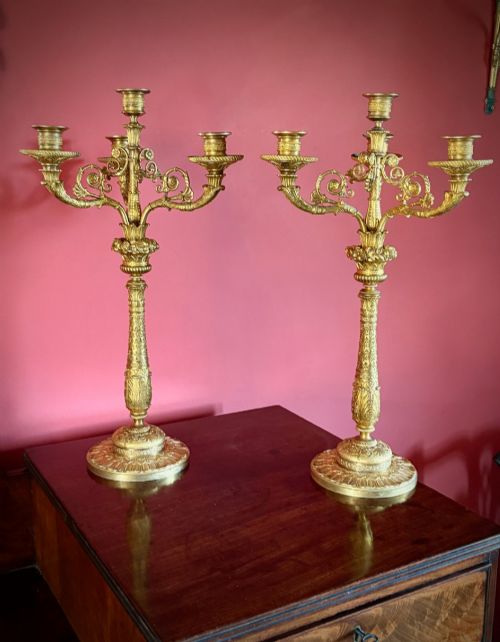
These antique metal candelabra bring structured light and sculptural weight to a room, ranging from grand French ormolu pairs to sturdy wrought iron standards.
Antique Metal Candelabra
When searching for antique metal candelabra, buyers encounter multi-branched lighting fixtures designed for tables, walls, and floor standing displays. These pieces bridge decorative art and practical illumination, originating from various European workshops across the eighteenth, nineteenth, and early twentieth centuries.
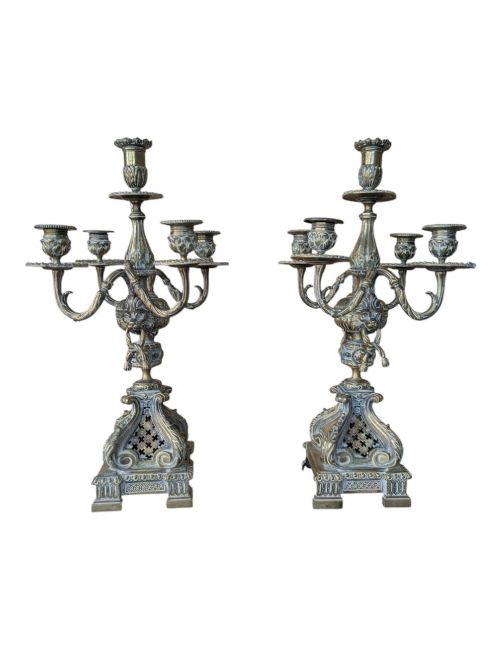
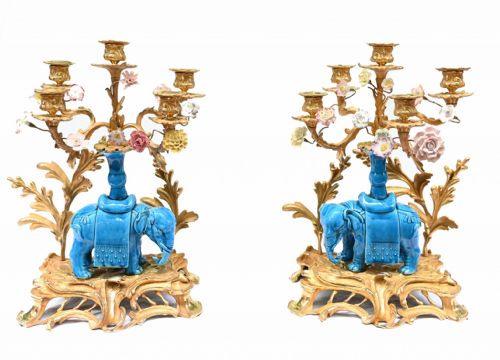
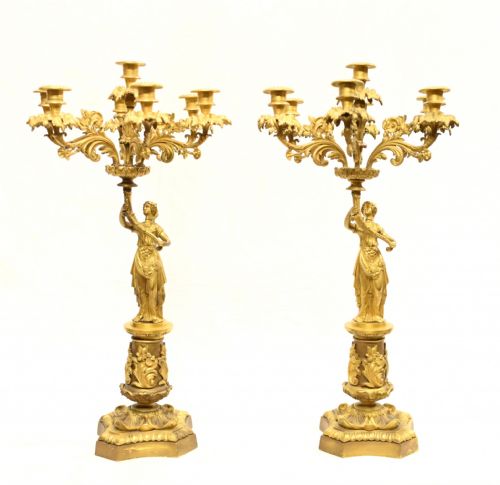
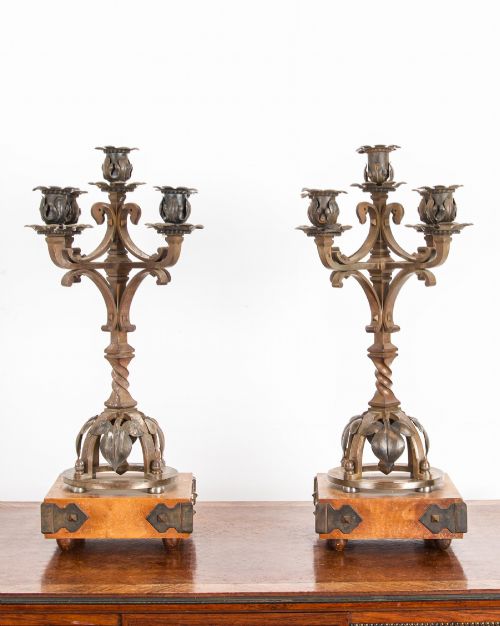
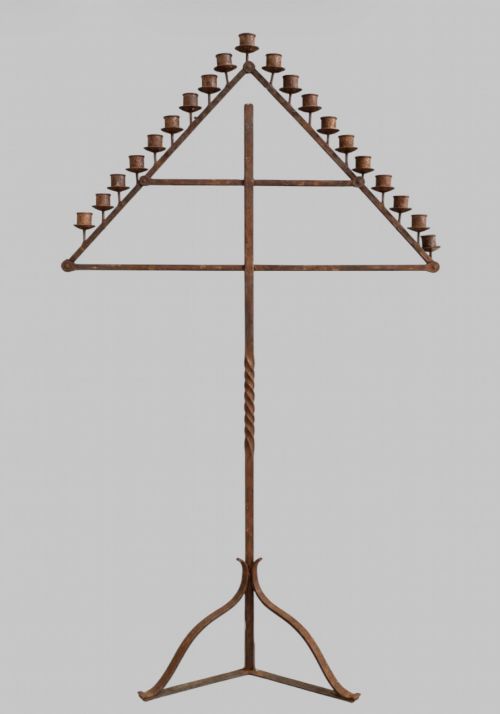
The selections available span formal French Empire and Rococo Revival table candelabra, Gothic Revival branch designs, and architectural wrought iron floor pieces. Pairs dominate the offerings, frequently incorporating figural elements such as cherubs, maidens, and mermans alongside traditional candle arms.
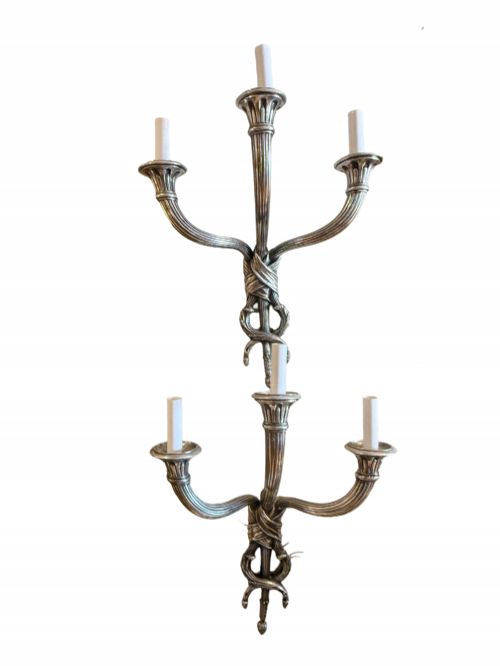
Many specimens show later adaptation into table lamps or wiring for electricity, reflecting their transition from candleholders to versatile interior lighting. Buyers also find clock garnitures and wall sconces integrated into broader matching suites.
How They Were Made
Foundry work relied on bronze casting, brass fabrication, and iron forging to shape the structural bodies and branch arms. Ormolu and gilt metal finishes were applied through mercury gilding or electroplating, providing a durable golden surface layer.
Artisans combined metals with contrasting materials like white marble, slate, and porcelain to add visual weight and colour variety to the bases and central columns. Detailed surface ornamentation often involved chased detailing, silver plating, and enamel work.
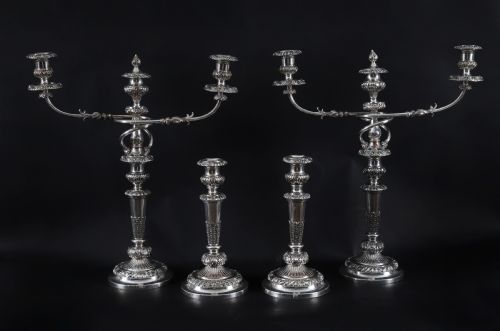
Listings feature brass, gilt bronze, ormolu, bronze, silver plate, marble, wrought iron, and gilt metal across the nineteenth and early twentieth centuries.
What Varies in Quality
The integrity of the gilding and the quality of the secondary materials, such as solid marble bases or heavy bronze rather than lighter spelter, determine the overall substance and longevity of the piece.
Blagden Hodgson And Co·WMF
The Antique Metal Candelabra Glossary
- Ormolu
- A method of applying finely ground high-carat gold to a bronze object using a mercury amalgam. This technique produces a rich golden finish characteristic of luxury French decorative arts.
- Clock Garniture
- A matching set consisting of a central mantel clock flanked by matching candelabra or urns. These ensembles formed unified decorative displays on nineteenth-century mantelpieces.
- Torchère
- A tall ornamental stand or candelabrum designed to hold lights high above floor or table level. They often take the form of figural standards bearing torches or multiple candle arms.
- Champlevé
- An enamelling technique where troughs or cells are sunk into the metal surface and filled with vitreous enamel before firing. It appears frequently on decorative nineteenth-century mounts.
- Spelter
- An alloy of zinc and lead used as a less expensive alternative to bronze for cast figures. It accepts metallic paints and platings to simulate bronze or silver finishes.
Antique Metal Candelabra: Frequently Asked Questions
How do I clean antique ormolu safely?
Dust surfaces gently with a soft dry brush to remove loose particles without scratching the metal. Avoid harsh commercial polishes and abrasive cloths, which can strip the thin gold layer from the underlying bronze.
Moisture should be kept away from gilded surfaces and any integrated marble or slate bases. Professional conservation is recommended if deeper cleaning is required to restore the original lustre.
Were these candelabra originally wired for electricity?
Most of these pieces were manufactured exclusively for wax candles during the eighteenth and nineteenth centuries. The branch sockets and drip pans were designed entirely for manual flame lighting.
Many examples were converted during the twentieth century to function as table lamps or electric fixtures. Such alterations are common and do not diminish the decorative utility of the piece.
What is a clock garniture set?
A clock garniture is a decorative ensemble featuring a central mantel clock accompanied by matching side pieces. In these listings, the matching side pieces typically take the form of multi-arm candelabra.
Such sets were manufactured to create a symmetrical display across a fireplace mantel or sideboard. The shared materials and motifs tie the clock and candelabra into a single visual composition.
How can I distinguish French styles like Empire and Rococo?
French Empire pieces, dating from the early nineteenth century, display symmetrical neoclassical restraint, military motifs, and classical figures. They favour dark patinated bronze contrasted with bright ormolu mounts.
In contrast, Rococo Revival works embrace asymmetrical scrollwork, flowing natural forms, and exuberant plant motifs. These later nineteenth-century interpretations prioritise dynamic movement over classical geometry.