

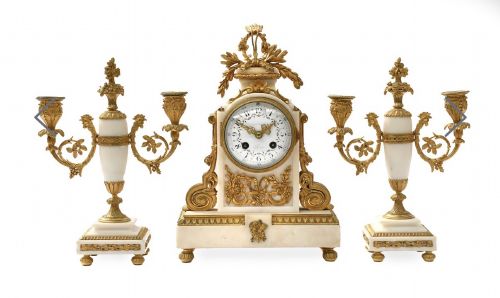


Tabletop Bronze Candelabra
Tabletop bronze candelabra bring genuine presence to a room, and the pairs here show the classic forms you want for a sideboard or mantelpiece.
Tabletop Bronze Candelabra
When you search for tabletop bronze candelabra, you find multi-light candleholders designed for surface display rather than floor standing. The selection spans the eighteenth, nineteenth, and early twentieth centuries, with a strong showing of nineteenth-century French and English pieces.
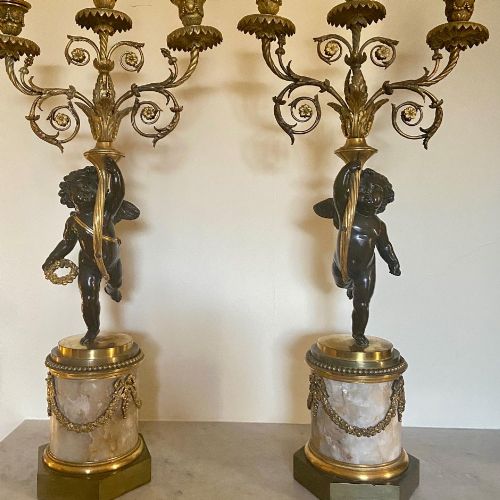
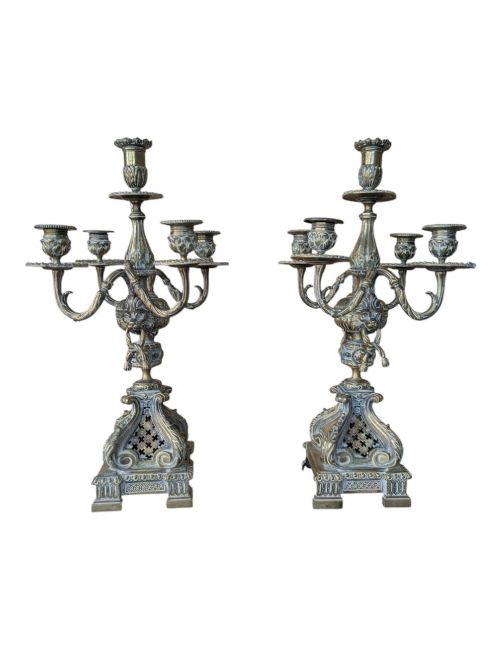
You frequently encounter pairs arranged with four or five lights, often incorporating figural elements such as putti, cherubs, or winged figures. Certain examples arrive paired with mantel clock garnitures, while others stand alone as sculptural candle holders.
The stylistic range draws heavily on established decorative vocabularies, including French Empire, Louis XVI, Regency, and Egyptian Revival. These designs utilise classical proportions and figurative motifs to create a striking decorative impact on furniture.
Materials and construction
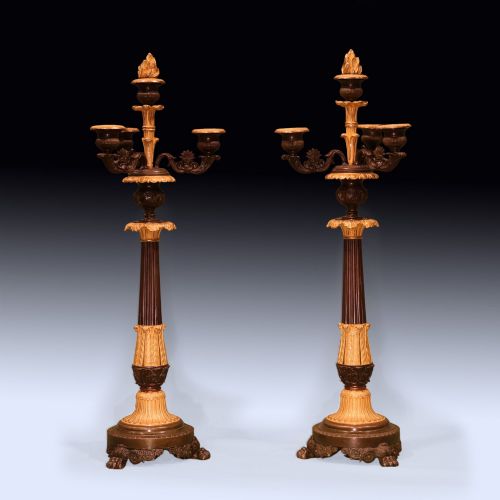
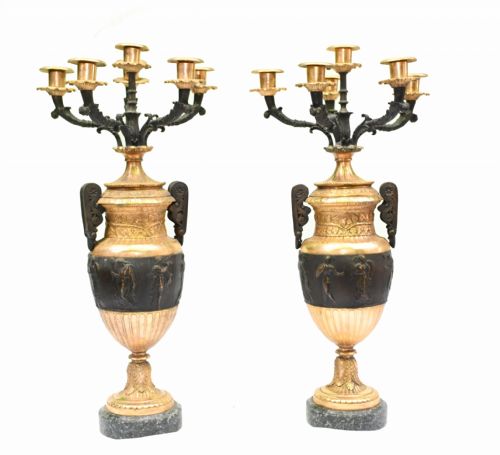
The primary material is cast bronze, utilised either in a dark patinated finish or treated with fire gilding to produce rich ormolu highlights. Many nineteenth-century workshops combined patinated bronze with gilt bronze to create tonal contrast across the figures and arms.
Marble and fluorspar frequently form the bases for these pieces, providing a solid counterweight and a contrasting textural element to the metalwork. White marble plinths lift the bronze work, while mineral bases like fluorspar introduce subtle colour variations.
Listings feature items from the eighteenth, nineteenth, and twentieth centuries, incorporating materials such as marble, fluorspar, and gilt bronze.
Assessing quality and execution
The quality of the gilding and the weight of the marble base indicate the standing of the original maker. Substantial bronze thickness and well-finished patination signal careful workshop production.
Francois Redmond·Thomas Hope
The Tabletop Bronze Candelabra Glossary
- Ormolu
- Gilded bronze, where finely ground gold is applied to a bronze base using a mercury amalgam. This technique creates a durable, warm metallic lustre characteristic of luxury objects from the eighteenth and nineteenth centuries.
- Patinated bronze
- Bronze treated with chemical solutions to produce a controlled surface colour, usually dark brown or green. This finish protects the metal and accentuates the sculptural contours.
- Fluorspar
- A colourful mineral occasionally used for decorative bases in high-end cabinet work and ornamental metal objects. It adds distinctive natural veining beneath metal mounts.
- Garniture
- A set of matching decorative objects, typically comprising a mantel clock and a pair of matching candelabra or vases. These sets were designed to sit together symmetrically on a fireplace mantel.
- Putti
- Depictions of chubby male infants, often winged, derived from classical art and frequently cast in bronze for decorative supports. They appear widely on French and English pieces from the period.
Tabletop Bronze Candelabra: Frequently Asked Questions
Are these candelabra wired for electricity?
Most antique pieces retain their original configuration for wax candles rather than electrical fittings. You can burn standard taper candles, provided you monitor them closely during use.
Converting them requires careful consideration, as permanent alterations can affect the historical integrity of the object. Many collectors prefer to use them strictly with traditional candles.
How do I spot a Regency period piece?
Regency items often feature classical Greek and Roman motifs, heavy use of ormolu, and solid architectural forms. Look for balanced proportions and restrained ornamentation compared to later Victorian exuberance.
The materials typically include dark patinated bronze contrasted against bright gilt highlights, reflecting early nineteenth-century English taste.
What is an Egyptian Revival style?
This design movement draws direct inspiration from ancient Egyptian iconography, including sphinxes, scarabs, and distinct architectural columns. It gained popularity during the nineteenth century following major archaeological discoveries.
In these pieces, the motifs integrate into standard candelabra forms, adding exotic visual weight.