

Antique Bronze Garniture
An antique bronze garniture brings symmetry and striking presence to a mantelpiece, pairing a central clock with matching urns or candelabra.
Antique Bronze Garniture
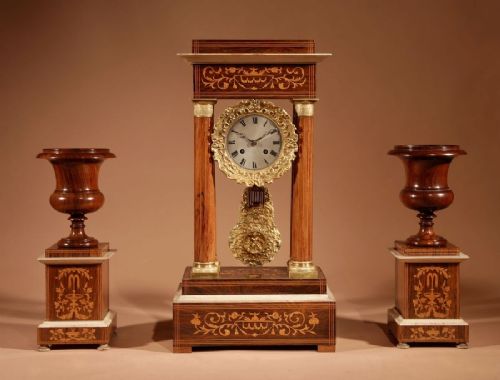
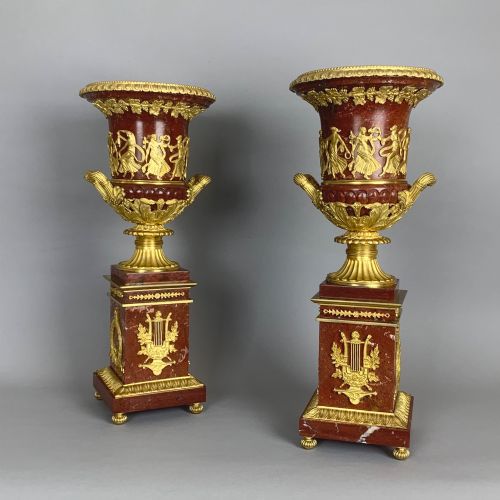
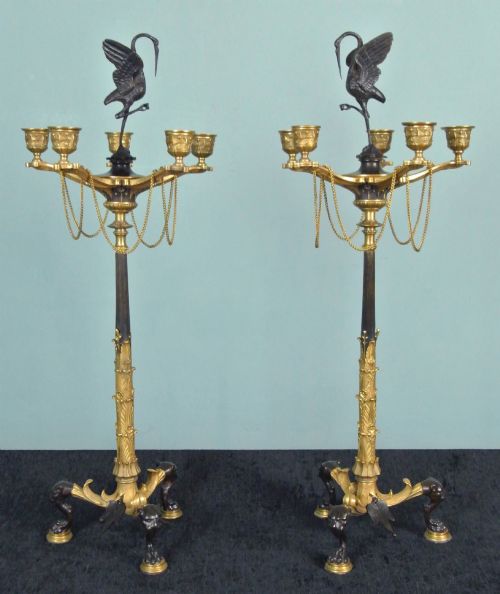
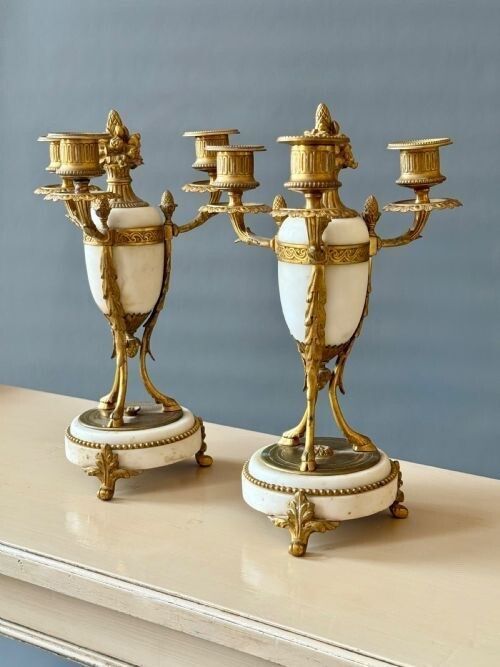
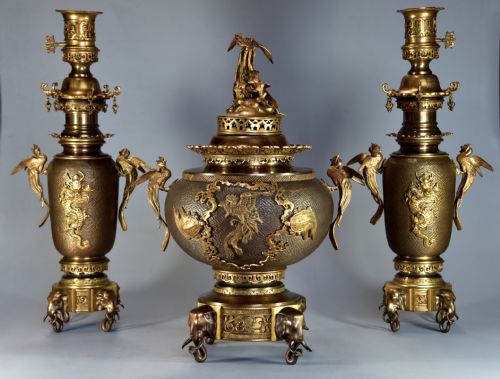
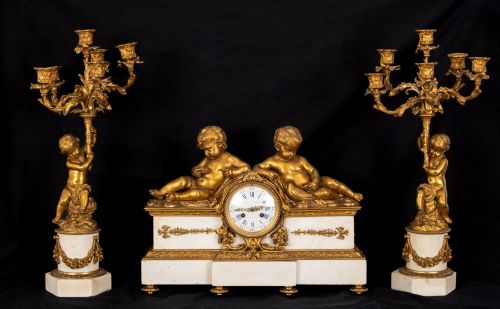
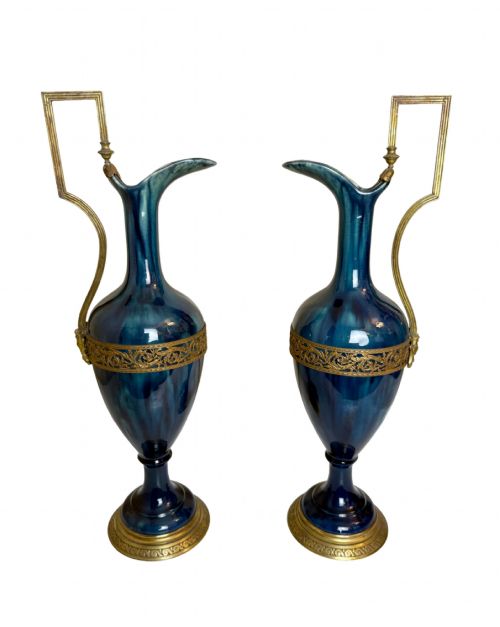
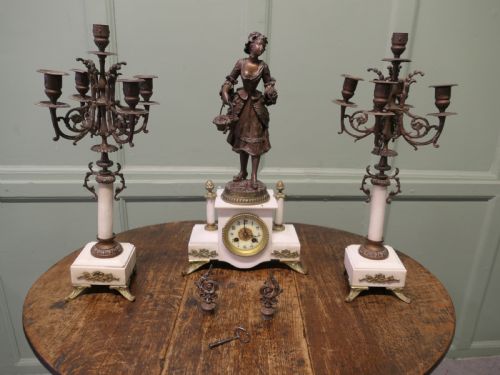
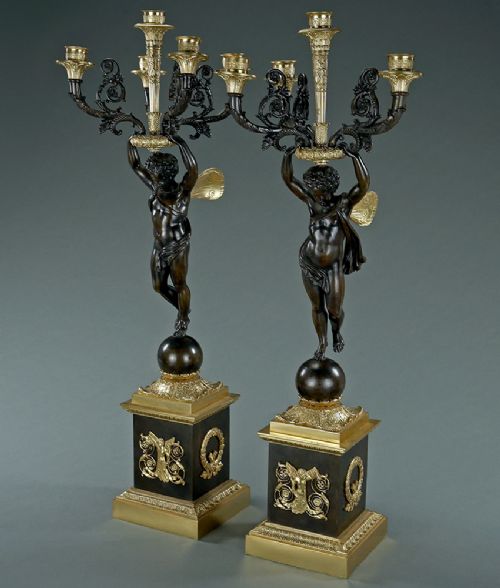
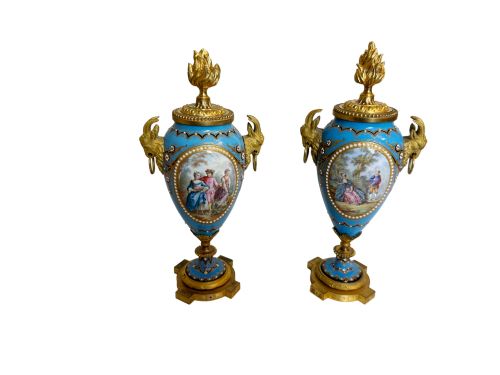
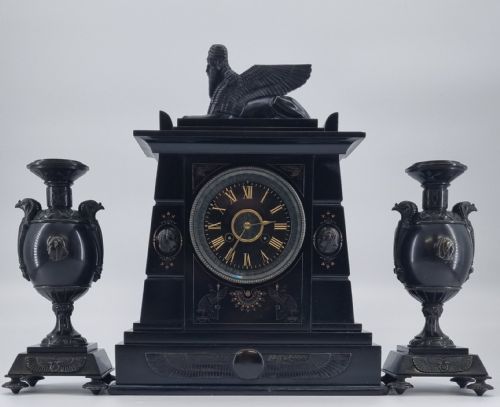
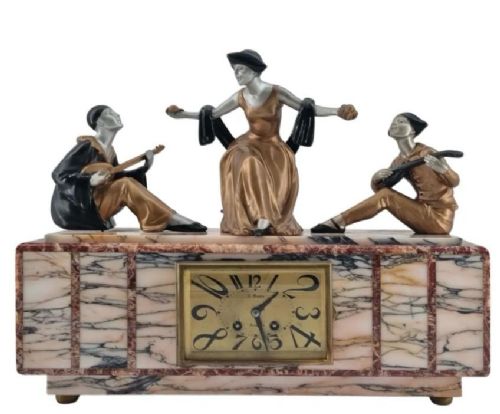
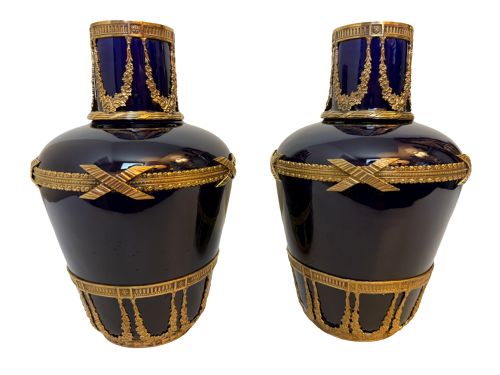
An antique bronze garniture comprises a central mantel clock flanked by a matching pair of side pieces, such as candelabra, urns, or vases. These matched three-piece or multi-piece sets emerge frequently from nineteenth-century French workshops, styled in revived classical, Louis XVI, or Empire tastes.
The materials span gilt bronze, patinated bronze, and ormolu combined with contrasting white marble, onyx, or porcelain bases. Buyers encounter complete sets arranged to sit harmoniously upon a drawing room mantel or side cabinet, creating a balanced focal point.
Distinctions in quality
The crispness of the bronze casting dictates the overall calibre of the set, separating sharp, hand-chased relief work from softer, mass-produced mouldings. Superior sets display meticulous hand-finishing on every leaf, cherub, and scroll.
The integration of the materials marks high-tier pieces, where marble bases are substantial and fitted flush with heavy bronze mounts rather than lightweight substitutes. Clock movements signed by notable makers or housed in fully original, un-cannibalised sets retain greater historical integrity.
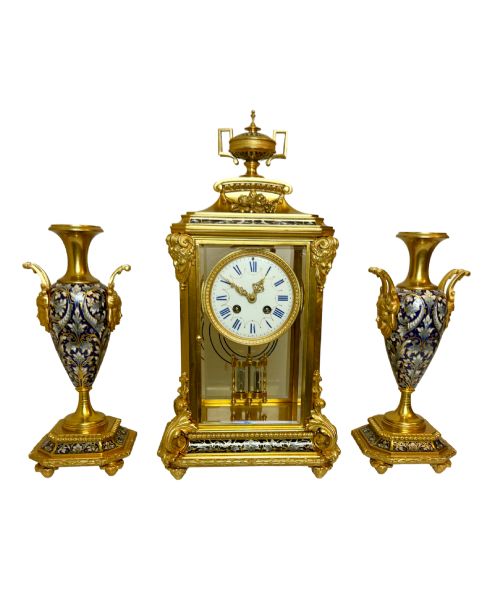
Listings feature nineteen-century periods including Victorian, Charles X, and Louis Philippe eras, alongside materials such as champlevé enamel and white marble.
Barbedienne·Henry Dasson·MOUGIN
The Antique Bronze Garniture Glossary
- Garniture
- A set of matched ornamental objects designed to be displayed together on a mantelpiece or sideboard. A typical configuration includes a central clock accompanied by two matching vases, urns, or candelabra.
- Ormolu
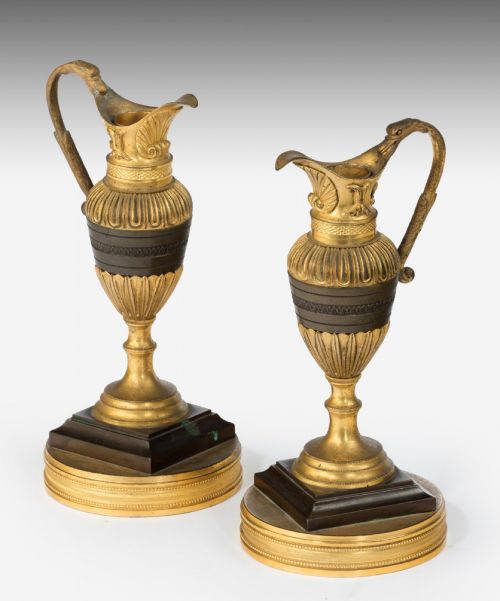
- Gilded bronze, produced by applying a mixture of gold and mercury to a bronze base and heating it to fuse the gold to the metal. Later pieces relied on electroplating instead of mercury gilding.
- Cassolette
- A decorative vase or urn featuring a reversible lid that transforms the piece from a closed vessel into a candleholder or incense burner. They appear frequently in neoclassical garniture sets.
- Champlevé
- An enamelling technique where troughs or cells are hollowed out of the metal surface and filled with vitreous enamel paste before firing. This method creates colourful geometric or floral patterns within the bronze framework.
- Portico clock
- A mantel clock housed within a architectural frame supported by four or more columns. These architectural clocks form the central element of grand nineteenth-century garniture sets.
Antique Bronze Garniture: Frequently Asked Questions
What is included in a bronze garniture set?
A complete garniture set consists of a central mantel clock accompanied by a matching pair of side ornaments, usually taking the form of candelabra, urns, or vases.
These pieces share identical decorative motifs, metals, and stone bases to create a cohesive display across a mantelpiece.
Where were most antique bronze garnitures made?
The vast majority of surviving antique garnitures originated in French workshops and foundries during the nineteenth century, particularly in Paris.
French artisans produced these elaborate sets for an international clientele, drawing on neoclassical, Empire, and Louis XVI design revivals.
How do I care for marble and gilt bronze?
Gilt bronze and ormolu require gentle dusting with a soft, dry brush to prevent the accumulation of dirt in recessed crevices.
Harsh commercial metal polishes must be avoided entirely, as they strip the original gold gilding. Marble bases tolerate a damp cloth followed by immediate drying.
How can I tell the period of a garniture?
Stylistic clues such as Egyptian revival motifs, Japonisme engraving, or heavy siena marble bases provide strong indicators of nineteenth-century production dates.
Clock movements, dial signatures, and casting techniques offer further physical evidence to narrow down the decade of manufacture.