




French Bronze Ewers
French bronze ewers bring monumental classical form and rich metalwork into a room, offering striking decorative presence for any interior.
French Bronze Ewers
French bronze ewers are ornamental vessel forms that draw on classical, Renaissance and neoclassical traditions. When searching for french bronze ewers, buyers encounter decorative display pieces, lamp conversions and paired mantle objects from the nineteenth century.
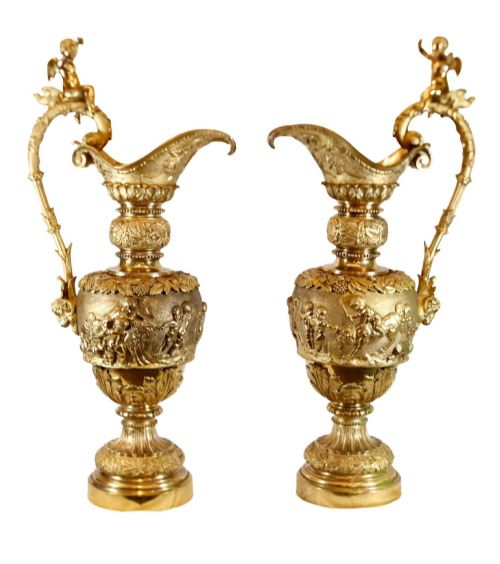
The pieces listed here showcase distinct historical revivals, most notably Rococo, Renaissance and Neo-classical styles. These vessels often appear in matched pairs, utilising sculptural handles and classical proportions designed purely for visual display.
Materials and construction
Maker workshops utilised traditional metalcasting techniques to produce these heavy decorative vessels. Bronze and patinated bronze form the primary bodies, frequently combined with cast or gilt ormolu mounts.
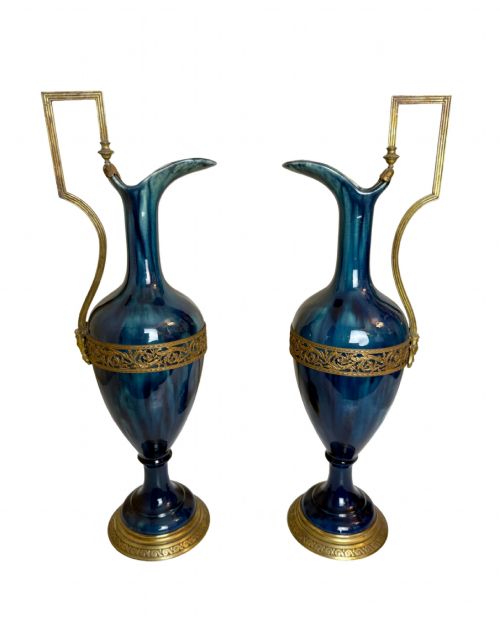
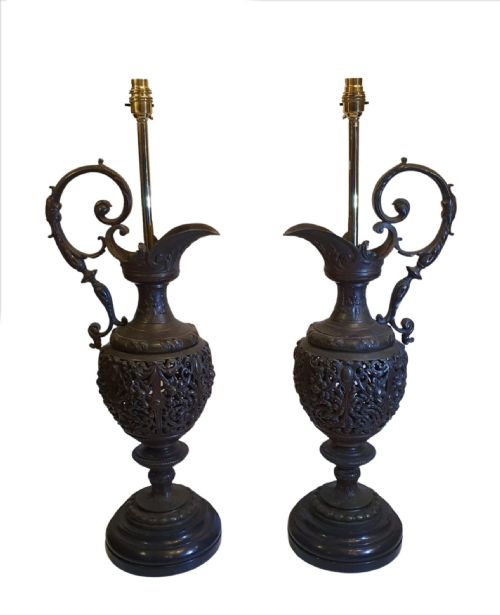
Many examples incorporate contrasting media such as porcelain, blue glass, or gilt metal trim. Surface finishes range from dark patinated surfaces to bright gilt applications, often highlighting intricate sculptural details.
French Bronze Ewers Retail Price Guide 2026
Typical asking prices for french bronze ewers among the pieces listed under this phrase on Sellingantiques today, from the lower quarter to the upper quarter. They describe what is for sale here now, not the wider market.
Several heavy decorative ewers have spent their later years moonlighting as heavy-duty table lamps.
Assessing quality and execution
Quality in these decorative vessels rests upon the crispness of the metalcasting and the depth of the chasing. Superior examples display sharply defined sculptural motifs and harmonious proportions across handles, spouts and bodies.
The integration of secondary materials like porcelain and glass also dictates the tier of the piece. Fine pairings of gilt bronze with high-grade patination represent the upper end of nineteenth-century production.
Clodion
The French Bronze Ewers Glossary
- Ewer
- A large jug with a wide spout and elaborate handle, historically used for pouring water but made in the nineteenth century purely for display. These ornamental vessels form the core of the items seen here.
- Ormolu
- Finely ground high-carat gold applied to a bronze base using a mercury amalgamation process, or later via electroplating. This technique provides a bright golden surface finish.
- Patinated Bronze
- Bronze treated with chemical solutions to produce a darkened or coloured surface layer. This finish accentuates sculptural relief and detail.
- Neoclassical
- A style drawing inspiration from the classical art and architecture of ancient Greece and Rome. Pieces in this manner feature restrained symmetry and classical motifs.
French Bronze Ewers: Frequently Asked Questions
Were french bronze ewers used?
These nineteenth-century decorative ewers were created entirely for display on sideboards, mantels and tables. Their grand scale and sculptural handles made them status symbols in period interiors.
Some examples were later converted into table lamps during the nineteenth or twentieth centuries, adapting ornamental vessels for domestic lighting.
How do I style french bronze ewers?
Place matched pairs on large mantels, sideboards or pedestals where their vertical proportions and metallic finishes can catch the light. They anchor traditional or eclectic room schemes as focal decorative objects.
Ensure stable placement due to the substantial weight of cast bronze and integrated metal or glass components.
How to tell periods apart?
Dating relies on stylistic revival cues, material combinations and manufacturing techniques recorded across the nineteenth century. Rococo revival pieces show asymmetrical scrollwork, while neoclassical items display strict symmetry and classical drapery.
Later nineteenth-century examples often combine cast bronze with blue glass or porcelain inserts, reflecting shifting Victorian decorative tastes.