




Bronze Decorative Ewers
Bronze decorative ewers bring classical form and heavy cast metalwork into a room, offering striking silhouettes from the nineteenth century.
Bronze Decorative Ewers
Bronze decorative ewers comprise cast metal pitchers and vessel forms rooted in historical revival styles. These objects draw heavily on Neoclassical and Renaissance design idioms.
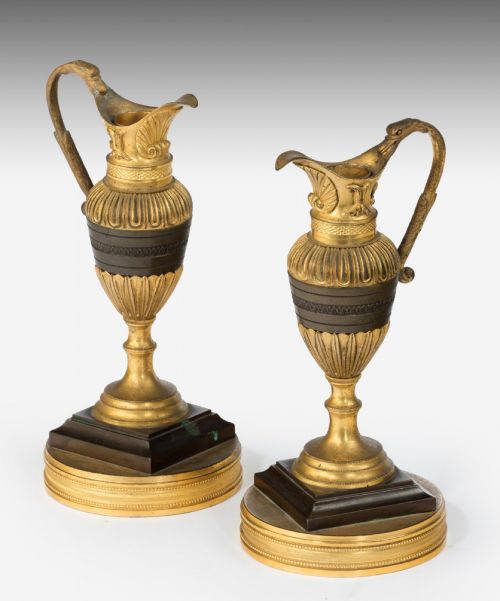
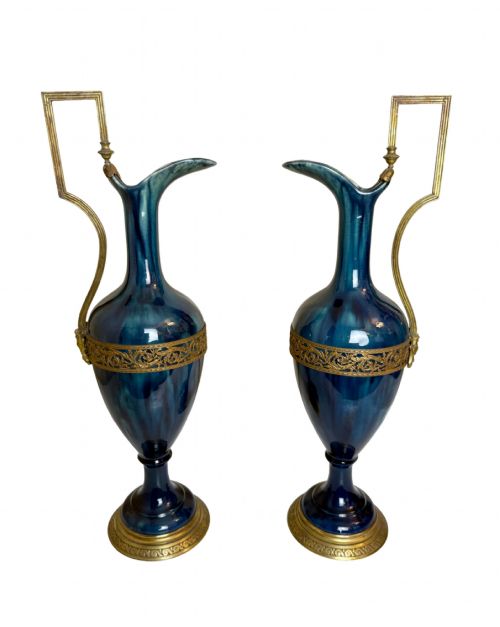
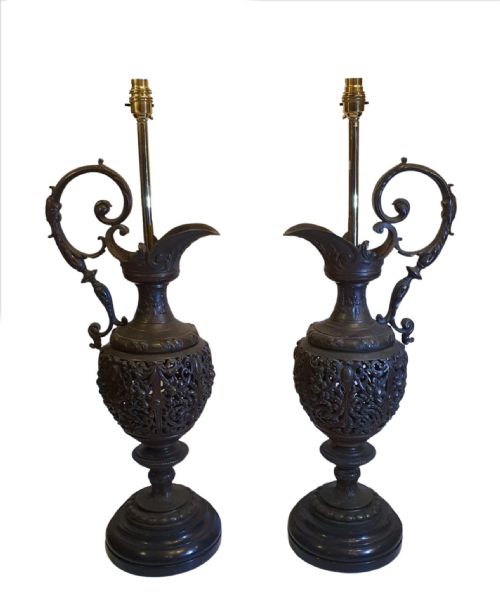
The selections available here lean towards nineteenth-century production, frequently appearing as matched pairs or converted table lamps. Collectors encounter works finished with patinated surfaces, or combined with porcelain and glass bodies.
Materials and Casting
Maker techniques rely upon bronze casting, often supplemented by ormolu and gilt bronze highlights. Surface treatments range from dark patination to deliberate verdigris effects.
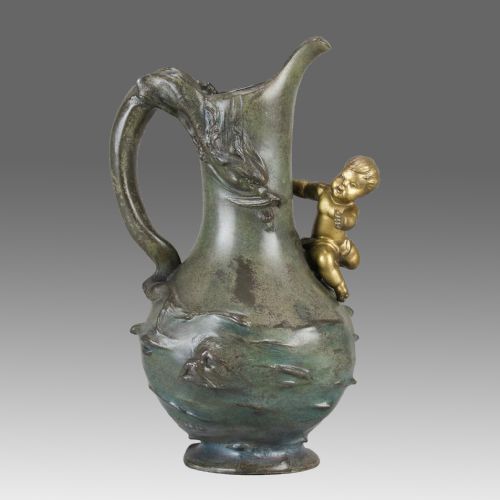
Many examples incorporate figural handles depicting mythological figures such as Bacchus, Dionysus, and putti. Assemblages frequently pair the cast metal bodies with blue porcelain, glass, or stone elements.
Several ewers feature mischievous putti and wine deities gripping the handles, ensuring Dionysus oversees the mantelpiece.
Execution and Detail
Quality rests in the crispness of the cast ornament and the nuance of the figural handle. Softer details indicate secondary casting runs or worn moulds.
The richness of the gilding and the depth of the bronze patina distinguish superior examples. Surface integrity and the integration of mixed materials determine the overall visual success.
Georges Van De Voorde
The Bronze Decorative Ewers Glossary
- Ewer
- A large jug with a wide spout and handle, historically used for pouring water but valued here for decorative display.
- Ormolu
- Finely ground high-carat gold applied to a bronze object, creating a bright metallic finish.
- Patina
- The surface sheen or colour developed on bronze over time, either naturally or through chemical treatment by the maker.
- Neoclassical
- A style drawing inspiration from the classical art and culture of ancient Greece and Rome, prominent in nineteenth-century decorative arts.
- Grand Tour
- Souvenirs and decorative objects acquired by wealthy travellers touring European cultural centres during the nineteenth century.
Bronze Decorative Ewers: Frequently Asked Questions
What were bronze decorative ewers used for?
Despite originating from vessel forms designed for pouring liquids, nineteenth-century decorative ewers served primarily as ornamental display pieces. Wealthy households placed them on mantelpieces, sideboards, or pedestals as part of formal interior schemes.
Over time, some examples were adapted for domestic utility, including conversion into table lamps while retaining their sculptural handles and classical proportions.
How do I identify Neoclassical ewers?
Neoclassical ewers display restrained classical motifs, urn-shaped bodies, and architectural lines inspired by ancient archaeological finds. Look for symmetrical handles, foliate scrolls, and friezes depicting mythological figures.
These pieces typically date from the nineteenth century, often reflecting the revival movements popular during the Victorian era and the Grand Tour period.
Are these ewers made of solid bronze?
Many ewers utilise cast bronze for the main body and handle, sometimes enhanced with gilt bronze or ormolu mounts. Other examples combine metal casting with contrasting materials such as blue porcelain, glass, or decorative stone.
Surface finishes vary from dark patinated bronze to heavily patinated treatments, highlighting the sculptural details modelled by the maker.
How should I clean patinated bronze?
Bronze surfaces require minimal intervention to preserve their historic patina and surface character. Dusting gently with a soft, dry cloth prevents the accumulation of grime without disturbing the metal finish.
Avoid chemical polishes and abrasive cleaners, as these strip away original patination and gilt highlights, permanently altering the appearance of the piece.