




Antique Putti Vases
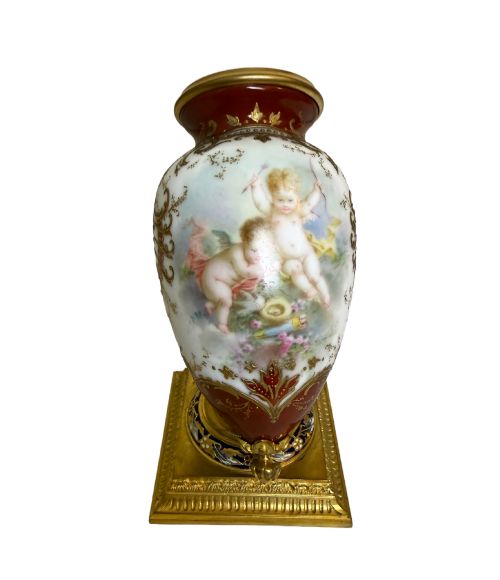
These antique putti vases bring sculptural charm to a room, featuring winged figures and cherubs modelled in porcelain, bronze, and terracotta.
Antique Putti Vases
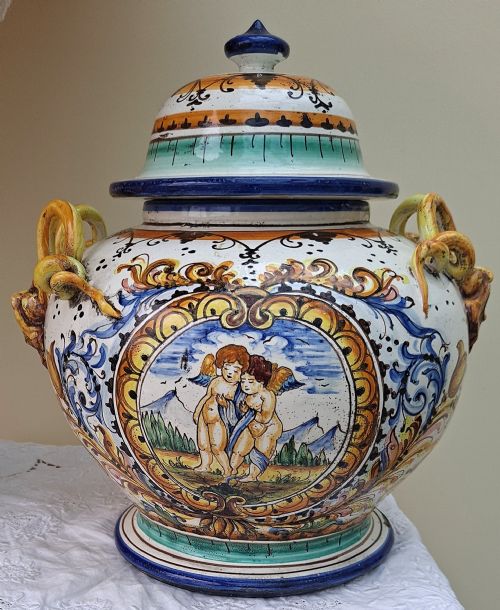
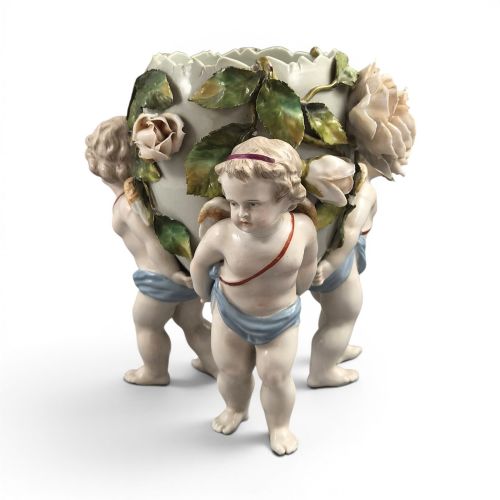
When you search for antique putti vases, you encounter decorative vessels populated by sculpted cherubs, putti, and winged infants. These pieces span the eighteenth and nineteenth centuries, taking forms such as campana-shaped urns, lidded jars, and centrepiece vases.
The nineteenth-century examples dominate, drawing on Victorian tastes, Neoclassical symmetry, and Renaissance Revival motifs. French and Italian influences appear frequently, often pairing figurative sculpture with functional vessel designs.
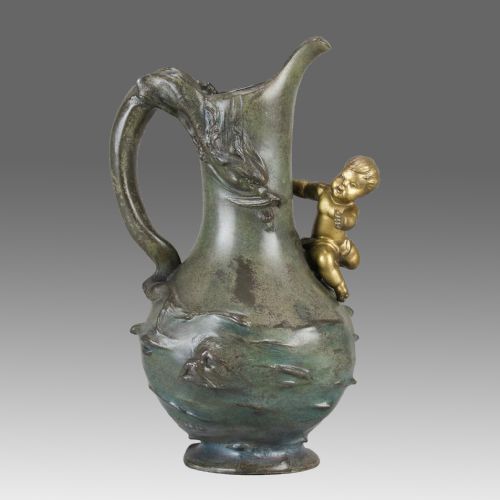
Makers and factories across Europe produced these items using diverse mediums, from gilt bronze and spelter to fine porcelain and tin-glazed earthenware. You will find matched pairs as well as singular statement pieces designed for display.
Materials and construction
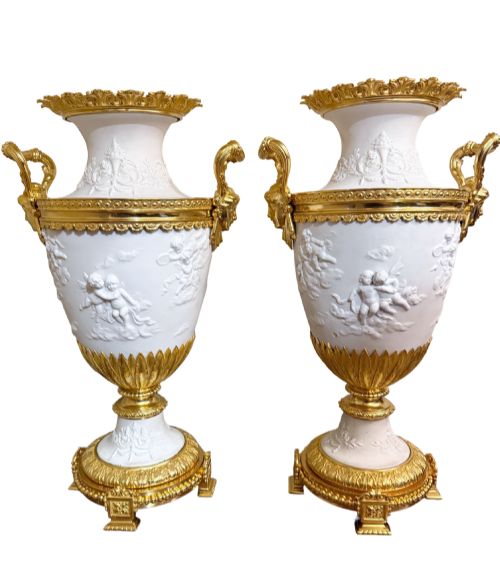
Craftsmen shaped these vessels using traditional ceramic and metalworking methods. Porcelain bodies were moulded, glazed, and painted, sometimes incorporating applied figures of cherubs alongside hand-gilt details.
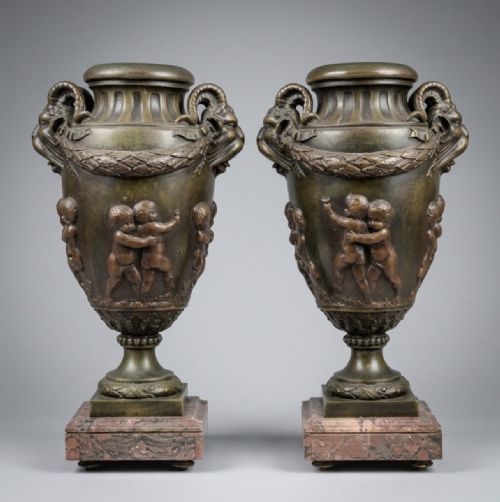
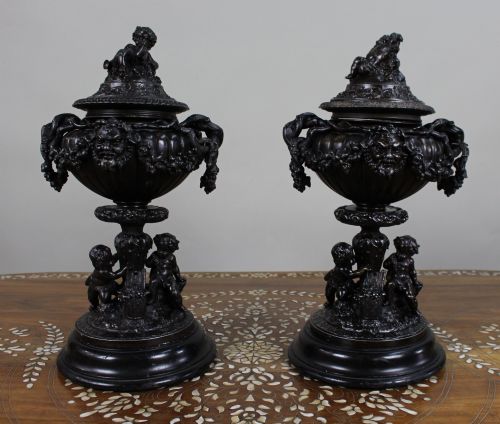
Metal versions rely on cast bronze, spelter, and brass, often finished with gilt or dark patination. Stoneware and terracotta pieces utilise earthenware clays, sometimes finished with tin glazes or intricate hand-painted decoration.
Mounts and bases frequently combine disparate materials, anchoring porcelain vessels in cast bronze or setting spelter urns upon heavy marble plinths.
Several pieces feature mischievous cherubs hiding behind baskets and grapevines, caught mid-antics on the side of a wine-cooler.
Assessing quality and execution
The distinction between standard production and superior work lies in the crispness of the modelling and the finesse of the surface finish. Fine examples display sharply defined facial expressions on the putti and meticulous hand-painting on the porcelain.
Weight and structural integrity also separate tiers of quality, particularly in cast metal pieces where thick bronze and precise chasing indicate superior manufacture. Inferior items often show softer details in the figures and simpler, unrefined mounting.
Bernhard Bloch·Georges Van De Voorde
The Antique Putti Vases Glossary
- Putto
- A plump, naked male infant, frequently winged, appearing in classical and Renaissance art. They are central decorative elements on these vases.
- Spelter
- A zinc alloy commonly used as a substitute for bronze in nineteenth-century casting. It is often given a bronze or dark patinated finish to mimic heavier metal.
- Campana
- A bell-shaped vessel form originating in antiquity. These urns feature flared rims and tapering bodies.
- Gilt bronze
- Bronze that has been coated with a thin layer of gold. It provides a durable, lustrous surface finish.
Antique Putti Vases: Frequently Asked Questions
What are putti vases?
Putti vases are decorative vessels adorned with sculpted figures of winged cherubs or infants. They gained immense popularity during the nineteenth century across European workshops.
These pieces combine functional vessel forms with figurative sculpture, drawing heavily on classical and Renaissance revival styles.
How do I date an antique vase?
Dating relies on examining the materials, manufacturing techniques, and stylistic markers present in the piece. Nineteenth-century examples often utilise specific porcelain bodies and metal casting styles.
Factory marks, where present, help pinpoint the exact period and place of manufacture.
Where should I display these vases?
These decorative urns and vases suit prominent positions on mantelpieces, sideboards, or dedicated display tables. Their sculptural figures invite viewing from multiple angles.
Ensure they rest on stable, level surfaces that can support the combined weight of porcelain and metal components.
Are these vases functional?
While many were designed strictly for display or as centrepieces, some larger urns and pitchers could hold water or floral arrangements. However, historical porcelain and metal mounts require careful handling.
Many collectors prefer to exhibit them as standalone sculptures rather than functional vessels.