



French Style Metal Vases
French style metal vases bring classical weight and rich ornamentation to a room, ranging from grand bronze ewers to delicate ormolu-mounted porcelain.
French Style Metal Vases
French style metal vases encompass decorative urns, ewers, and campana-shaped vessels produced across the nineteenth century and later periods. These pieces often draw on classical, Renaissance, and Empire designs, reflecting historic European aesthetic movements.
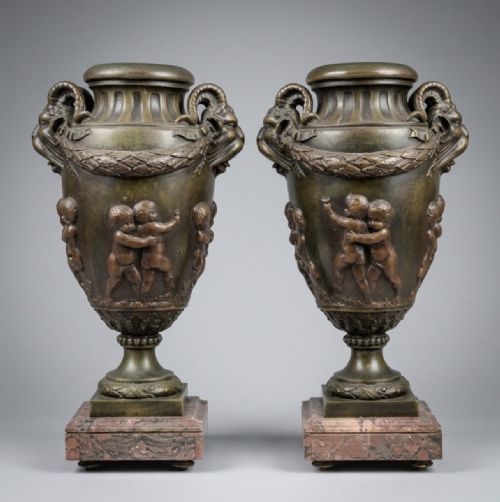
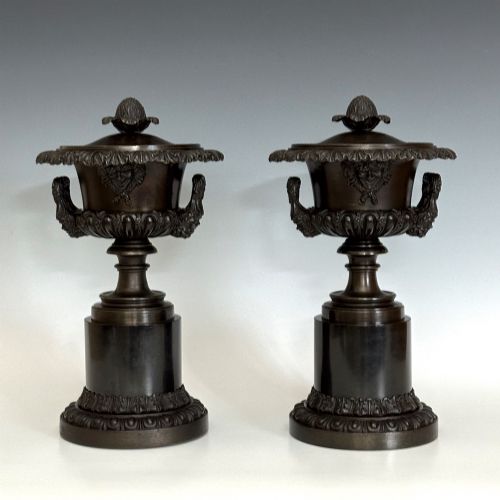
Buyers will most frequently encounter nineteenth-century bronze and gilt-metal examples, including Grand Tour pieces and decorative pairs mounted on marble bases. Forms range from monumental wine-coolers and covered urns to slender pitchers and table lamps.
How they were made
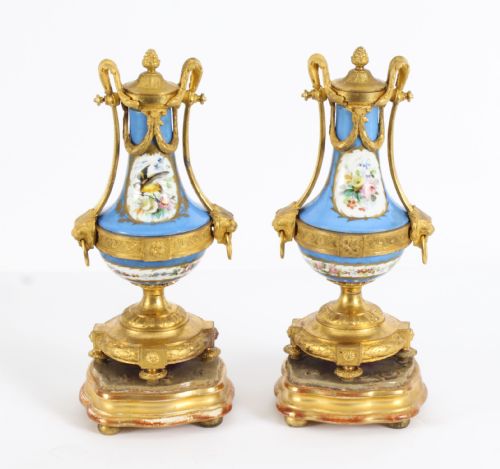
Makers utilised cast bronze, patinated bronze, and spelter as structural metals, frequently applying mercury gilding or ormolu to create contrasting golden highlights. Marble bases and porcelain bodies, such as Sevres-style inserts, were integrated with cast metal mounts.
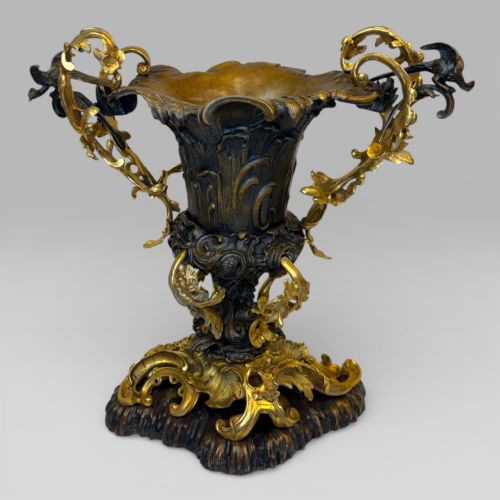
Casting techniques allowed for intricate relief work in the neoclassical and rococo revival styles, sometimes following models by known sculptors. Surface finishes relied on careful patination of the bronze or the application of toleware enamel.
Styles span neoclassical, French Empire, Renaissance Revival, and both French and Victorian rococo revival.
What varies in quality
The refinement of the casting and chiseled detail separates standard decorative items from superior works, particularly in the crispness of acanthus leaves, classical figures, and floral garlands. Heavier bronze compositions and finely finished ormolu indicate a higher grade of production than lighter spelter alternatives.
The integration of materials also defines the tier of the piece, where precise joints between marble, porcelain, and metal mounts demonstrate superior workshop execution. Original patination and intact mercury gilding preserve the visual integrity intended by the maker.
Clodion·Henry Dasson·Samson
The French Style Metal Vases Glossary
- Ormolu
- Gilt bronze, typically created by applying a mixture of gold and mercury to a bronze base and firing it to leave a golden finish. This technique was widely utilised in French decorative arts.
- Spelter
- A zinc alloy used as a cheaper substitute for bronze, often painted or bronzed to simulate heavier metal. It is softer and lighter than cast bronze.
- Campana-shaped
- Formed in the shape of an inverted bell with an everted rim, typical of classical antiquity and neoclassical garden or table urns.
- Ewer
- A large pitcher with a wide spout and a looped handle, traditionally used for holding water but frequently produced as a decorative ornamental piece in metal or porcelain.
- Grand Tour
- A cultural journey undertaken by wealthy young Europeans in the eighteenth and nineteenth centuries, bringing home classical art and souvenir bronzes.
French Style Metal Vases: Frequently Asked Questions
What is the difference between bronze and spelter?
Bronze is a heavy, durable copper alloy that accepts fine detail and rich patination, making it the preferred material for high-end nineteenth-century French decorative objects. Spelter is a softer, lighter zinc-based metal that was often painted or bronzed to mimic genuine bronze at a lower cost.
Buyers can usually distinguish them by weight and by examining areas of wear where a greyish metal might show beneath the surface of a spelter piece.
Where were these metal vases placed in a home?
In nineteenth-century interiors, large urns and ewers were designed as centrepieces for mantelpieces, sideboards, and entrance halls, often displayed in symmetrical pairs. Grander examples served as decorative wine-coolers or garden ornaments.
Today, they function as focal points in traditional or eclectic rooms, sometimes adapted as table lamps while retaining their classical silhouette.
How do I identify a Grand Tour piece?
Grand Tour pieces were acquired by travellers in Italy and France during the nineteenth century, typically reproducing famous classical antiquities in miniature bronze or marble. They are characterised by their academic fidelity to ancient Greek and Roman forms.
These pieces often feature rich dark patinas and are mounted on stepped marble or slate bases suited for export and display.
How do I care for antique gilt metal and bronze?
Dust bronze and gilt metal gently with a soft, dry cloth to prevent the accumulation of dirt in intricate cast recesses. Avoid commercial metal cleaners or polishes, as these can strip away historic patination and delicate ormolu gilding.
Stable indoor humidity and protection from direct sunlight will preserve the surfaces of both the metal mounts and any integrated porcelain or marble elements.