


Patinated Bronze Decorative Vases
Patinated bronze decorative vases bring classical form and dark metallic texture into a room, offering centuries of sculptural craftsmanship.
Patinated Bronze Decorative Vases
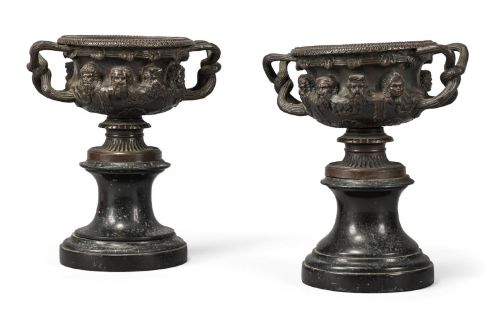
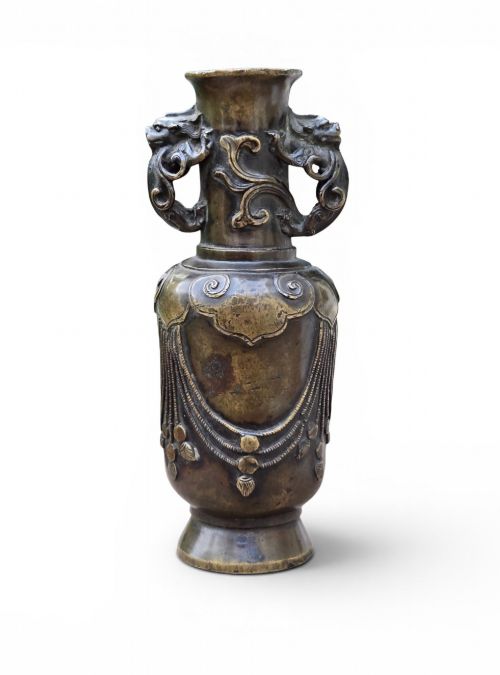
Patinated bronze decorative vases comprise sculptural vessels and urns shaped in cast metal, often finished with chemical treatments that produce deep brown, green or black surface tones. These items range from classical campana shapes to slender Japanese baluster forms and architectural grand tour souvenirs.
The versions most commonly met on this page originate in the nineteenth century, reflecting French classical revivals, Japanese Meiji period metalwork, and Italian grand tour production. Makers frequently utilised related copper alloy variants including bronzed spelter and ormolu alongside standard bronze.
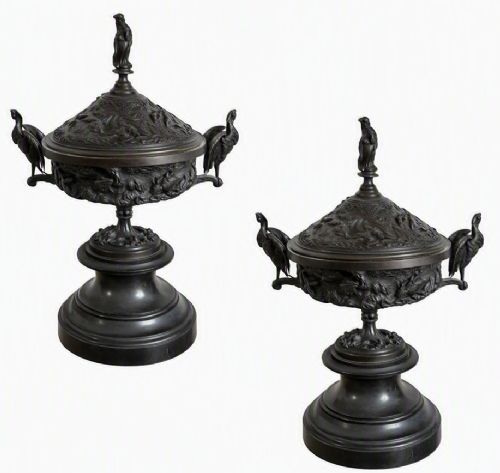
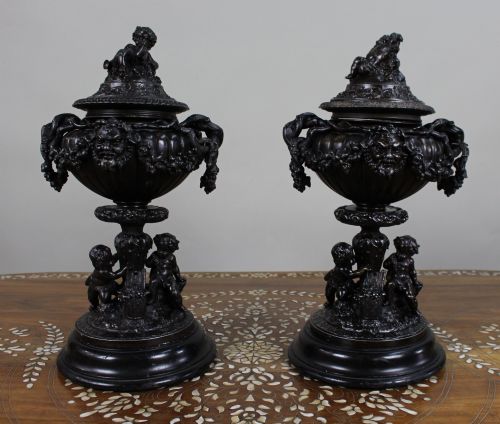
Buyers encounter forms designed specifically for display, including lidded urns, ewers, amphorae, and altar vessels. Many pieces stand upon dedicated plinths or marble bases, emphasising their role as focal ornaments within nineteenth-century interiors.
How they were made
Foundries produced these vessels primarily through traditional lost-wax casting or sand-casting methods, which allowed for intricate relief details such as bacchic masks, dragons, and botanical motifs. Molten metal poured into moulds captured sharp contours before artisans refined the surfaces.
Post-casting work involved extensive chasing, engraving, and hand-carving to sharpen details like feathers, foliage, and figures. Chemical patination was then applied to the metal surface, creating the characteristic aged dark tones that highlight the relief ornamentation.
Listings span periods from the seventeenth century to the twentieth century, featuring works in bronze, ormolu, and bronzed spelter.
What varies in quality
The sophistication of the patination and the integrity of the base metal also distinguish standard production from exceptional pieces. Heavier bronze alloys and signed works by established foundries demonstrate a higher degree of sculptural ambition.
Jules Moigniez·Charles Korschann·Jean Dunand·Georges Van De Voorde·Barbedienne·Henry Dasson·Clodion
The Patinated Bronze Decorative Vases Glossary
- Patination
- The artificial or natural oxidation of a metal surface that produces a specific coloured film. This process protects the metal while giving the object its characteristic antique tone.
- Campana urn
- A bell-shaped vessel with a flared rim, frequently supported on a circular foot and plinth base. Classical models of this type draw inspiration from ancient Roman stone prototypes.
- Grand tour
- A cultural journey undertaken by wealthy Europeans to study classical antiquities, which generated a strong market for souvenir bronzes and reduced architectural replicas.
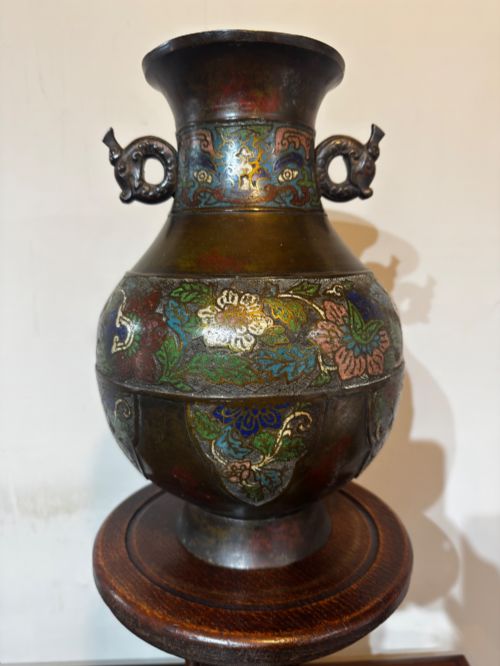
- Champlevé
- An enamelling technique where troughs are dug into the metal surface and filled with vitreous paste before firing. This method creates colourful decorative patterns across the bronze body.
Patinated Bronze Decorative Vases: Frequently Asked Questions
What is a grand tour vase?
Grand tour vases are nineteenth-century bronze souvenirs modelled after famous ancient ruins and classical sculptures discovered in Italy. Travellers collected these miniature reductions to commemorate their travels across European cultural sites.
These pieces typically feature classic vessel shapes such as the Warwick or Albani designs, cast in bronze and mounted on slate or marble bases. They served as scholarly ornaments in period libraries and drawing rooms.
How do I distinguish bronze from spelter?
Bronze is a heavy copper alloy that takes a deep, stable patination and rings with a clear tone when tapped. Spelter is a softer zinc-based metal that was often painted or bronzed to imitate true bronze.
Spelter pieces tend to feel lighter in the hand and show surface wear where the applied metallic coating has rubbed off to reveal grey metal beneath. True bronze maintains its metallic integrity and develops a rich patination over centuries.
Where were Japanese Meiji vases made?
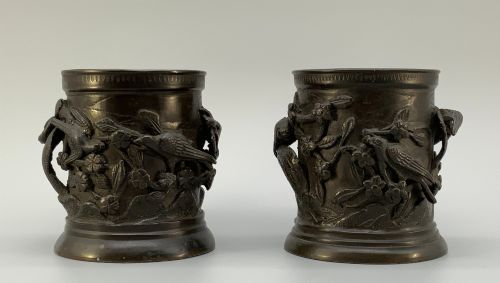
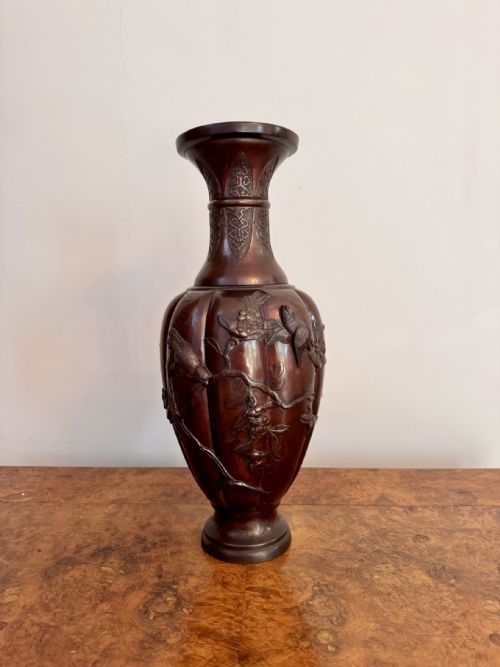
Japanese Meiji period vases were produced by skilled metalworkers in regional workshops following the reopening of trade with the West in the late nineteenth century. These items combined traditional casting techniques with intricate depictions of birds, blossoms, and dragons.
Export demand led to widespread production of patinated bronze vessels designed specifically for Western domestic interiors. The best examples exhibit refined surface chasing and inlaid metal highlights.
How should I clean a patinated bronze vase?
Patinated bronze surfaces require minimal intervention, needing only gentle dusting with a soft, dry cloth to remove particulate matter. Harsh cleaning agents, polishes, and water should be avoided as they strip away the historic chemical patination.
Preserving the original surface skin maintains both the historical integrity and the visual depth of the metal. Any accumulated grime can be lifted by a professional conservator without disturbing the underlying finish.