



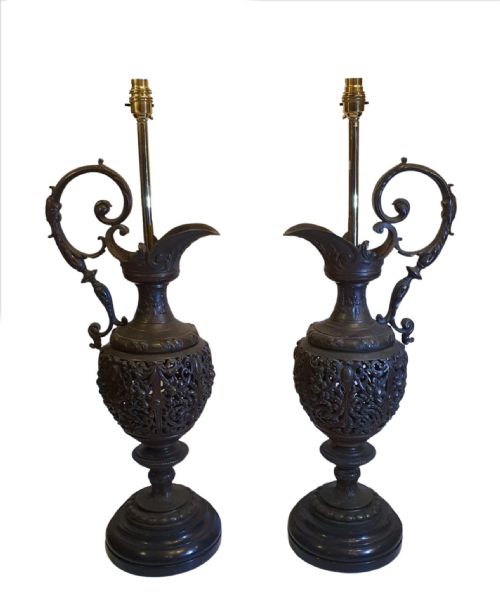


Antique Classical Ewers
Antique classical ewers are stately vessels drawing on ancient forms, prized for bringing sculptural presence and refined historical style to a room.
Antique Classical Ewers
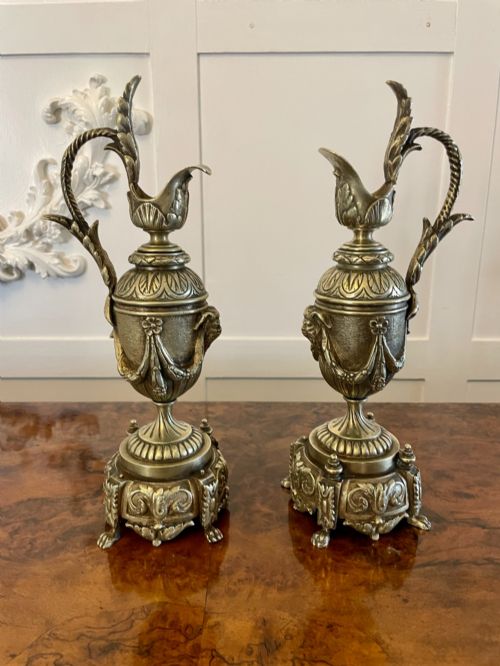
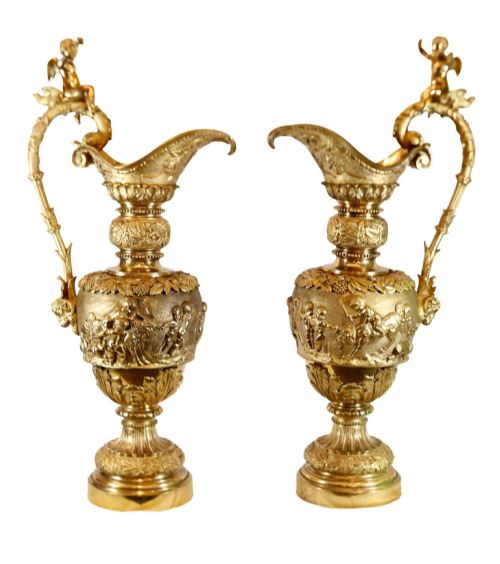
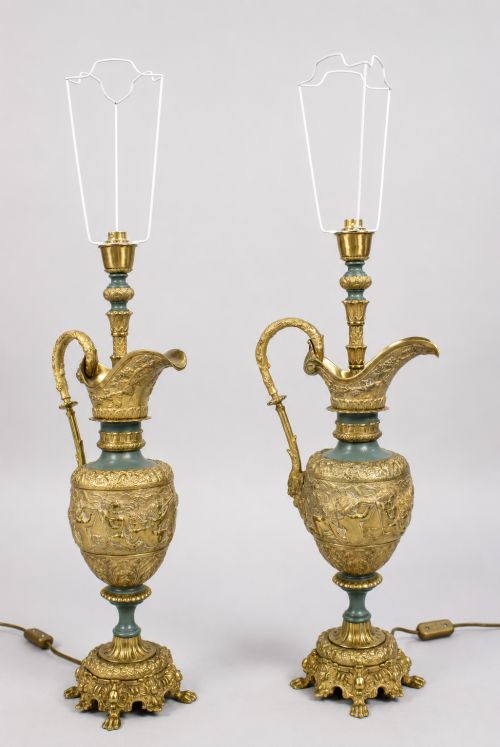
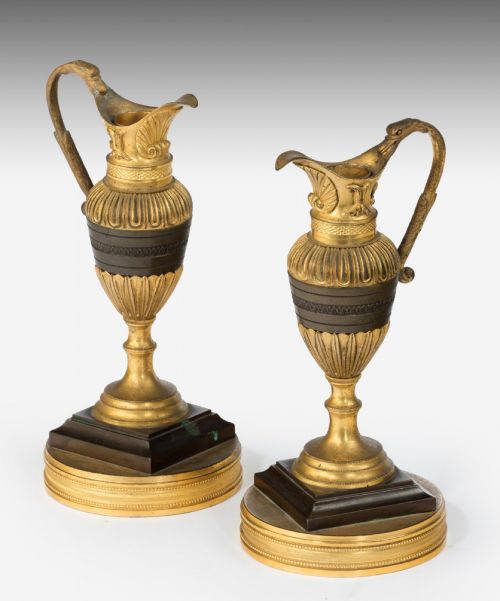
Antique classical ewers draw their inspiration from antiquity, echoing the forms of ancient water and wine vessels used in Greece and Rome. When exploring antique classical ewers, a buyer encounters a range of decorative and functional shapes, from monumental display pieces to table lamps and wine jugs.
Materials and construction
Metalworking dominates these pieces, with bronze and brass forming the structural core of many examples. Founders often applied ormolu, gilding, or silver plate to highlight specific decorative elements and create contrasting surface textures.
Ceramics also play a significant role, seen in porcelain and ceramic tile works decorated with classical imagery. Makers utilised casting and electrotyping techniques to achieve sharp detail in figural handles and relief scenes.
Antique Classical Ewers Retail Price Guide 2026
Typical asking prices for classical ewers among the pieces listed under this phrase on Sellingantiques today, from the lower quarter to the upper quarter. They describe what is for sale here now, not the wider market.
Keep an eye out for mischievous dolphins serving as handles, because nineteenth-century founders clearly enjoyed a splash of sea life in their mythology.
Evaluating craftsmanship and detail
Quality in these pieces rests upon the crispness of the casting and the depth of the chasing in the metalwork. Superior examples display finely rendered figural handles, such as dolphins or mythological figures, integrated harmoniously into the overall silhouette.
The finish also dictates value, with well-preserved patination, subtle gilding, and quality enamel work elevating a piece. In porcelain and ceramic variants, hand-painted precision and the clarity of the glaze separate standard production from finer output.
Henry Bourne·Sherwin and Cotton·Royal Worcester·John Scofield
The Antique Classical Ewers Glossary
- Ormolu
- A technique of applying finely ground high-carat gold to an object of bronze. It provides a rich, warm golden finish that enhances classical ornamentation.
- Grand Tour
- A traditional trip of Europe undertaken by upper-class Europeans, during which many of these decorative bronzes and souvenirs were acquired. These pieces often reflect Italian craftsmanship and classical sights.
- Electrotype
- A replica or object produced through electroplating copper onto a mould. This nineteenth-century method allowed for highly detailed metal vessels and jugs.
- Neoclassical
- A style reviving the art and culture of ancient Greece and Rome. It guides the symmetrical lines and mythological themes found across these ewers.
Antique Classical Ewers: Frequently Asked Questions
How do I style a classical ewer at home?
These sculptural vessels work well as focal points on sideboards, entrance tables, or open bookshelves. Their strong vertical lines and classical handles provide an intentional contrast against modern furniture.
Pairs look balanced when placed symmetrically on a mantelpiece, while single converted table lamps bring height and historical texture to a living room corner.
How can I tell the period of a bronze ewer?
Dating bronze ewers involves examining the handling of the metal, the style of the patination, and any cast signatures or registry marks. Nineteenth-century revival pieces often exhibit cleaner internal casting seams and distinct Victorian aesthetic choices.
Comparing the mythological figures and motifs to known design manuals from the Grand Tour era also helps narrow down the decade of production.
Are all these ewers made of solid bronze?
Not every piece is cast from solid bronze, as materials varied according to the maker and the intended function. Listings include brass, gilt metal, silver plate, and porcelain alongside standard bronze castings.
Some nineteenth-century items utilise electrotype techniques or spelter bases with applied bronze finishes to achieve the same visual weight at a different scale of production.