





Bronze Pitcher Pair
These bronze pitcher pair selections bring classical weight to a room, offering matched symmetry through nineteenth-century metalwork.
Bronze Pitcher Pair
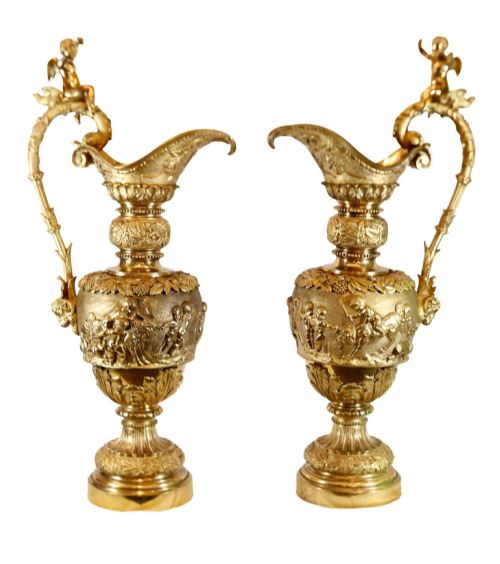
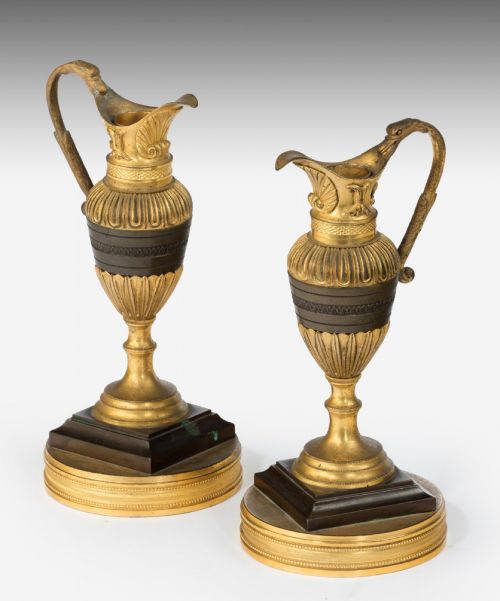
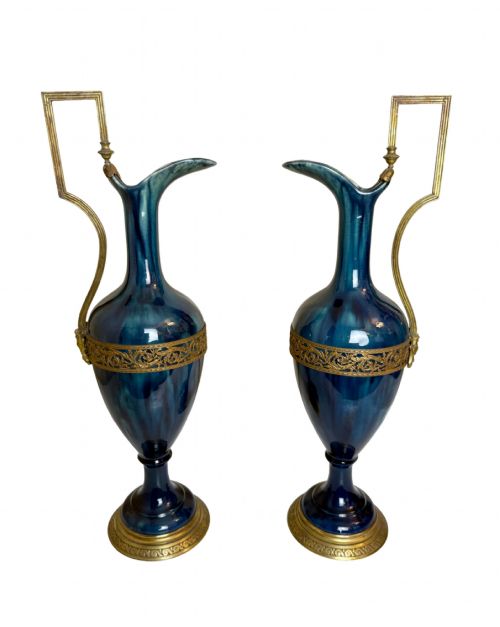
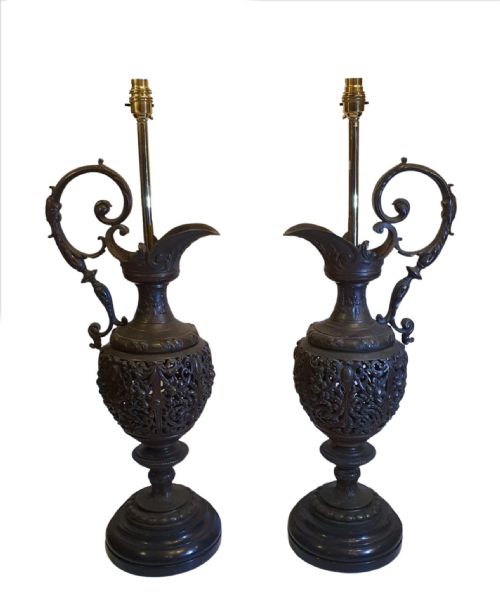
When you search for a bronze pitcher pair, you encounter matched sets of decorative ewers and ornamental vessels primarily originating from the nineteenth century. These objects frequently adopt classical, Grand Tour, and Renaissance revival styles, drawing on ancient forms for Victorian display.
The selections on this page encompass various configurations, including gilt bronze, ormolu, patinated bronze, and combinations with porcelain, marble, and cobalt glass. Several examples have undergone conversion into table lamps while retaining their foundational ewer shapes.
How they were made
Makers utilised bronze, ormolu, and gilt bronze often combined with cobalt glass, porcelain, and marble bases. Metal components were cast, chased, and patinated to achieve deep surface tones or bright gilded highlights.
The decorative schemes frequently incorporate neoclassical and Renaissance revival motifs executed in high relief. These techniques reflect nineteenth-century European metalworking traditions, particularly French and Italian production methods.
Bronze Pitcher Pair Retail Price Guide 2026
Typical asking prices for bronze pitcher pair among the pieces listed under this phrase on Sellingantiques today, from the lower quarter to the upper quarter. They describe what is for sale here now, not the wider market.
Listings feature nineteenth-century dates including 1850, 1860, 1870, 1880, and 1890, alongside Victorian and Grand Tour styles.
What varies in quality
Quality rests in the crispness of the cast ornamentation and the depth of the chasing across the metal surface. Superior examples display sharply defined classical figures and foliage rather than softened contours.
The integration of secondary materials such as porcelain bodies or marble plinths dictates the refinement of the piece. Well-matched patination and substantial weight distinguish finer production from simpler ornamental items.
Clodion
The Bronze Pitcher Pair Glossary
- Ewer
- A large jug with a wide spout and handle, traditionally used for holding water but repurposed as a decorative vessel in the nineteenth century. These forms dominate the available bronze pitcher pair options.
- Ormolu
- Finely ground high-carat gold applied to a bronze object through a mercury amalgamation process, or later electroplating. It provides a bright golden surface alongside patinated bronze details.
- Grand Tour
- A cultural journey undertaken by nineteenth-century travellers who collected classical souvenirs such as bronze ewers and decorative urns. Items in this style emulate antique artefacts.
- Patinated Bronze
- Metal treated with chemicals to produce a specific surface colour, ranging from deep brown to dark green. This finish accentuates the sculptural relief of the casting.
- Renaissance Revival
- A nineteenth-century artistic movement that revived sixteenth-century motifs including strapwork, classical deities, and elaborate handle designs. Many ewers on this page adhere to this aesthetic.
Bronze Pitcher Pair: Frequently Asked Questions
What is a bronze pitcher pair?
These pieces are matched nineteenth-century decorative ewers and pitchers created in classical and Renaissance revival styles.
Collectors typically encounter them as ornamental mantel objects or converted table lamps incorporating materials like marble and glass.
How were they used historically?
In the nineteenth century, these objects served purely decorative functions within formal interiors and Victorian display settings.
Many reflected the taste for classical antiquity acquired during European travel and the Grand Tour tradition.
How do I style them at home?
Place matched pairs symmetrically on sideboards, mantels, or large tables to anchor a room with nineteenth-century weight.
Converted lamp versions function effectively on side tables while providing ambient lighting through their classical forms.
How can I tell the period?
Examine the casting quality, patination methods, and stylistic indicators such as Victorian Renaissance revival or French neoclassical motifs.
Materials like cobalt glass, ormolu, and weighted marble bases commonly point towards nineteenth-century manufacturing techniques.