


Cast Bronze Candelabra
Cast bronze candelabra bring heavy metal weight and sculptural form to a room, offering multiple branches for candle illumination.
Cast Bronze Candelabra
When you search for cast bronze candelabra, you are looking at substantial lighting fixtures designed to hold multiple candles aloft with architectural or figural support. These pieces emerge in styles ranging from severe Gothic Revival to ornate French Rococo, reflecting the decorative tastes of the nineteenth century.
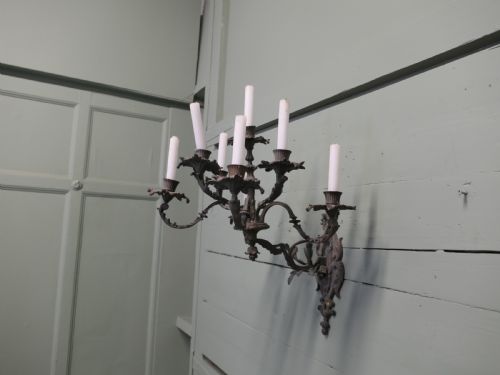
You are most likely to meet Victorian and nineteenth-century examples on this page, often appearing as matched pairs or heavier wall sconces. Their forms incorporate figures such as cherubs, mermans, and mermaids alongside classical motifs and scrolling arms.
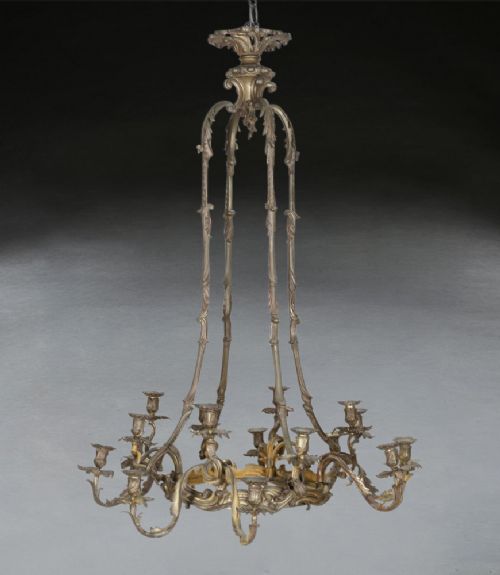
Makers utilised these durable metals to create functional art pieces that anchored grand dining tables or flanked wall spaces. The selection moves between tabletop candelabra, chandeliers, and wall-mounted sconces forged from patinated bronze, gilt brass, and cast metal.
How they were made
Foundries produced these objects primarily through traditional casting techniques, pouring molten bronze into moulds to achieve complex figural details and sturdy structural branches. Craftsmen then finished the surfaces with patination, gilding, or silver plating to alter the visual weight and texture of the metal.
Many designs incorporate contrasting materials, pairing cast bronze bodies with marble bases or combining gilt brass with patinated bronze elements. Detail work was often hand-chiselled after casting to sharpen the definition on figures, acanthus leaves, and rococo scrolls.
Listings for this phrase frequently incorporate nineteenth-century production dates, alongside materials such as cast bronze, brass, and marble.
What varies in quality
Weight and structural integrity also separate the tiers of production, with top-tier work demonstrating solid assembly across multiple branches and heavy gauge metal. The quality of the original surface treatment, whether an enduring dark patina or rich fire gilding, dictates how well the object ages over centuries.
The Cast Bronze Candelabra Glossary
- Candelabra
- A branched candlestick holding multiple candles on separate arms. They differ from single candlesticks by offering a wider spread of light and more complex sculptural bases.
- Patinated Bronze
- Bronze that has been treated with chemicals or heat to alter its surface colour, usually producing a dark brown or greenish hue. This finish protects the underlying metal and adds visual depth to cast details.
- Neoclassical
- A style rooted in the classical art and architecture of ancient Greece and Rome. It relies on symmetry, straight lines, and motifs like urns and swags.
- Ormolu
- Finely ground high-carat gold mercury-gilded onto a bronze object. The technique creates a durable, bright gold surface finish common on luxury French decorative arts.
Cast Bronze Candelabra: Frequently Asked Questions
Are these candelabra wired for electricity?
Most pieces listed under this search remain configured for traditional wax candles as originally intended by their makers. Some variations include lamp conversions or hanging light adaptations from later periods.
Check individual descriptions to see if wiring has been added or if the piece retains its original candle sockets. Reversible conversions allow modern owners to display them with or without electric fittings.
How do I date a cast bronze candelabra?
Dating relies heavily on stylistic clues, casting techniques, and surface wear visible on the bronze. Nineteenth-century examples often display the weightier proportions and specific revival motifs characteristic of Victorian production.
Maker's marks, assembly nuts, and screw types also help narrow down the decade of manufacture. Compare the casting crispness against known period pieces to confirm their age.
Can heavy candelabra be wall mounted safely?
Wall-mounted sconces and heavier candelabra require secure attachment to wall studs or appropriate masonry anchors due to their substantial bronze weight. The mounting brackets must bear both the static load of the metal and the added weight of candles.
Consult a professional installer if the wall construction is uncertain, as failing hardware can cause these heavy items to pull away from plaster.