

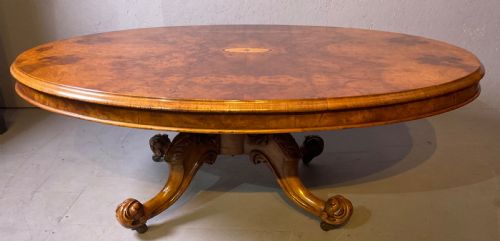
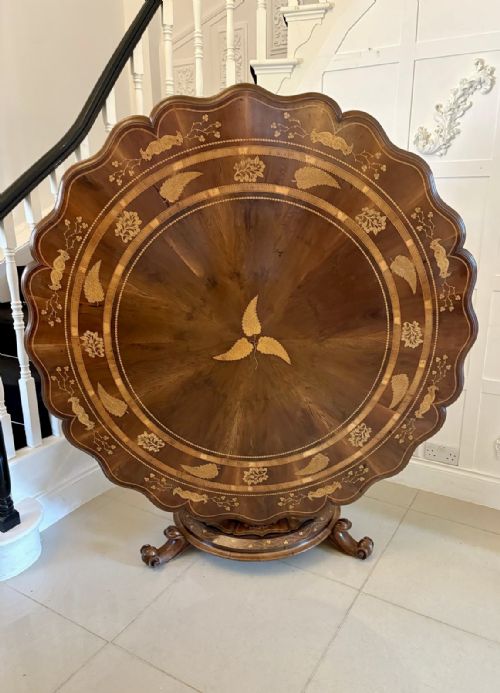
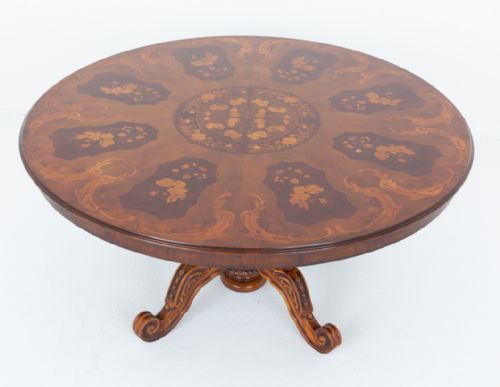
Antique Marquetry Tilt Table
An antique marquetry tilt table brings intricate botanical or geometric wood inlay and a pivoting top together for versatile daily use.
Antique Marquetry Tilt Table
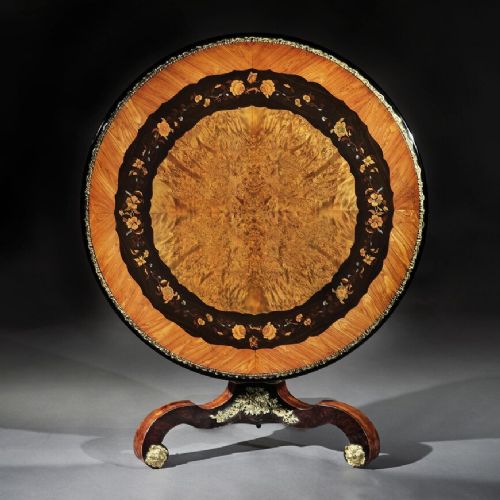
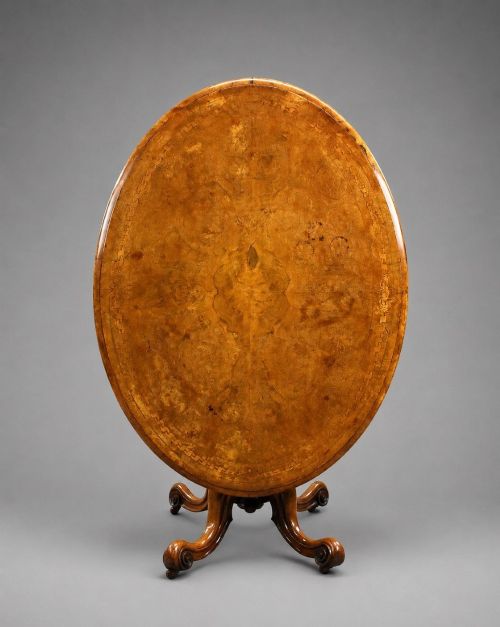
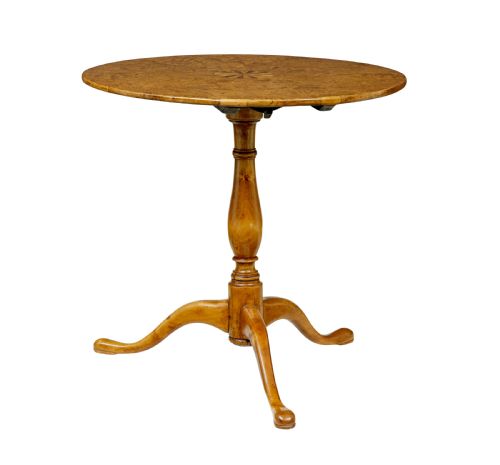
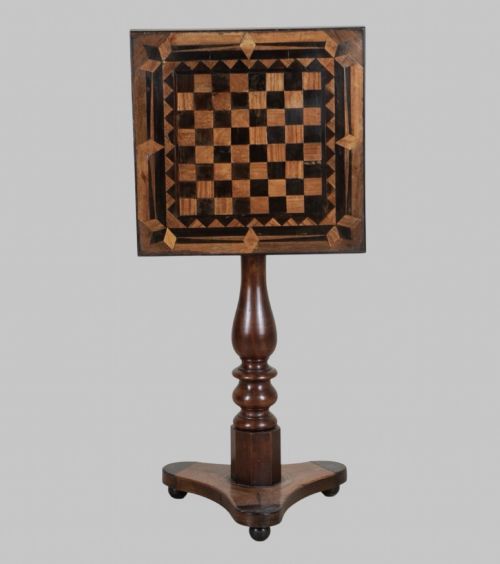
An antique marquetry tilt table combines a hinged top mechanism with patterned wood veneers, designed to stand flat against a wall when not in service. The selections available encompass Victorian examples alongside Georgian, Regency, and William IV iterations.
Most pieces met in this category date from the nineteenth century, utilising walnut, burr walnut, and rosewood foundations. Forms range from large breakfast and loo tables to smaller occasional, wine, and lamp tables.
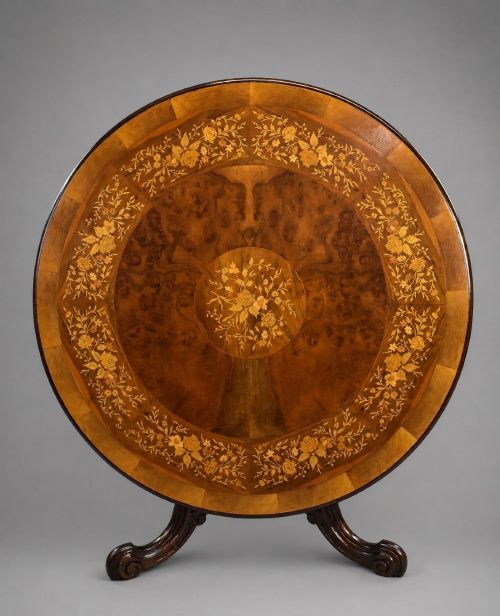
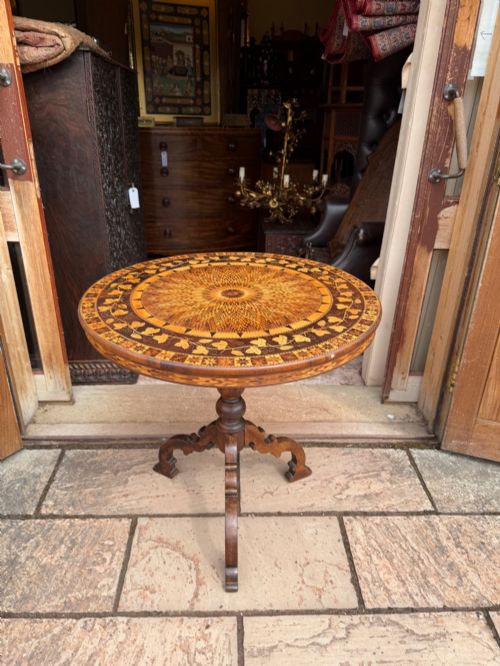
Makers and workshops across Britain, Ireland, France, Italy, and Sweden applied contrasting timbers to create pictorial or abstract surfaces. The resulting furniture balances decorative ornamentation with practical domestic utility.
Materials and construction methods
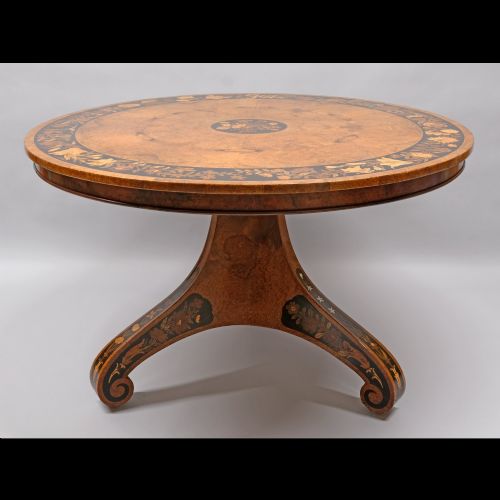
Cabinetmakers constructed the foundational carcasses using solid timbers such as mahogany, oak, or walnut, then applied fine veneers to the visible surfaces. Marquetry motifs required slicing thin sheets of fruitwood, boxwood, and exotic woods to form intricate pictorial designs.
The pivoting mechanism relied on a tilting box and a brass catch secured to a central pedestal or tripod base. This allowed the heavy wooden top to rotate and lock securely into either a horizontal surface or a vertical display position.
Swiss Black Forest artisans carved playful forest elements into occasional tables, ensuring every breakfast comes with botanical company.
Distinctions in craftsmanship
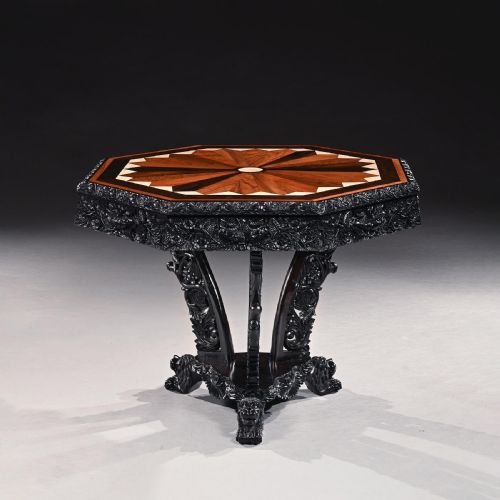
The distinction between standard production and top-tier pieces rests on the complexity and precision of the wood inlay. Elaborate floral arrangements utilising diverse specimen woods indicate workshops of higher repute.
Structural integrity of the tilt mechanism and the stability of the pedestal base determine longevity and daily usability. Pieces retaining original patination and unwarped veneered tops command greater appreciation.
Edward Holmes Baldock·Egan Workshop·Gillows
The Antique Marquetry Tilt Table Glossary
- Marquetry inlay
- Decorative patterns formed by fitting contrasting veneers into a prepared wooden ground. This technique creates pictorial scenes or geometric designs across the table surface.
- Tilt top
- A pivoting tabletop mechanism that allows the surface to rotate vertically. This design enabled tables to occupy minimal floor space when not in use.
- Burr walnut
- Timber harvested from the growth excrescences of walnut trees, yielding highly figured grain patterns. Cabinetmakers prized this material for its rich texture.
- Tripod base
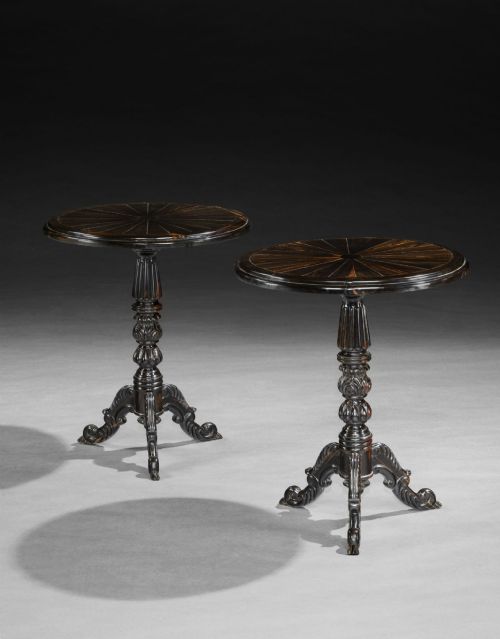
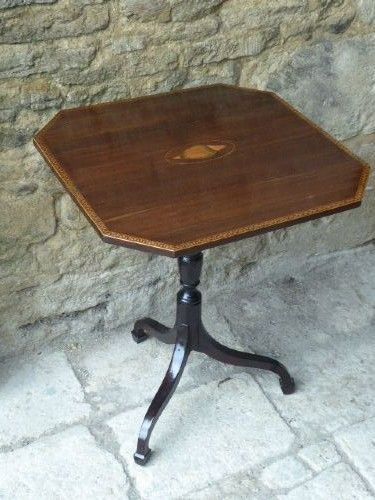
- A pedestal support terminating in three spreading feet. This configuration provides stable support beneath the central column.
- Loo table
- A large round or oval table designed for nineteenth-century card games. These examples frequently feature tilting tops to facilitate storage.
Antique Marquetry Tilt Table: Frequently Asked Questions
What is a tilt top table used for?
These tables served primarily as occasional furniture for parlours, drawing rooms, and entrance halls, holding lamps, books, or tea services. The pivoting mechanism allowed domestic staff to store the heavy pieces flat against the perimeter walls when floor space was needed.
In larger formats, such as breakfast or loo tables, the tilting function made movement between rooms manageable despite the substantial timber construction. Today, they function effectively as statement centrepieces or functional lamp tables.
How do I identify a Victorian marquetry table?
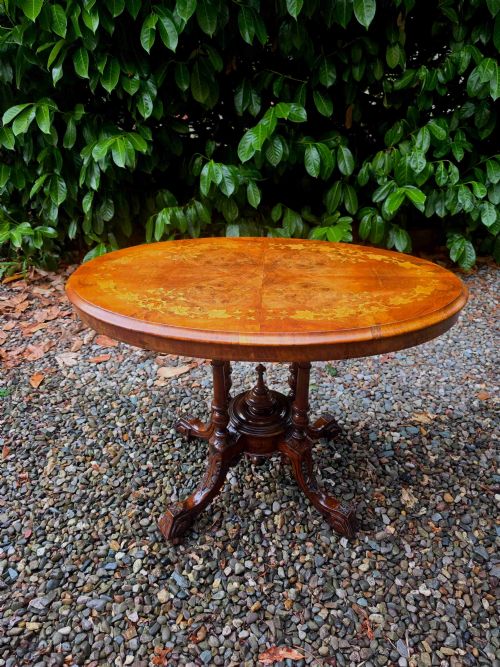
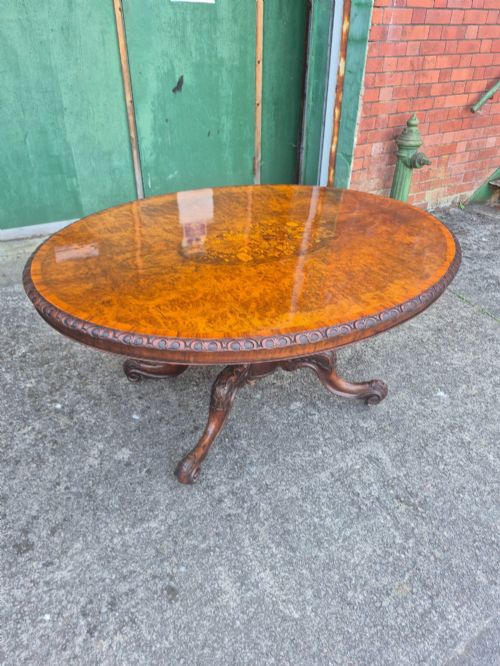
Victorian examples typically employ rich burr walnut or rosewood foundations adorned with multi-coloured floral marquetry. The decorative panels often feature shaded fruitwoods to create a three-dimensional botanical effect across the circular or oval top.
Construction details also help with identification, such as heavy pedestal bases with carved cabriole legs and brass castors. Comparing the secondary timbers beneath the top assists in confirming the nineteenth-century origin.
Are these tables stable when tilted?
Original brass catches and wooden locking blocks secure the tabletop firmly in the vertical position when properly engaged. Over decades of use, however, the internal wooden components can wear, requiring careful handling.
When displaying a table with the top tilted, ensure the locking mechanism is fully engaged to prevent accidental movement. Regular checks of the pivot pivot pins maintain safe operation.
What timber is beneath the marquetry?
Cabinetmakers laid decorative veneers over stable secondary woods such as oak, pine, or mahogany to prevent warping. The choice of underlying timber often reflects the regional origin and the workshop standard of the piece.
Examining the underside reveals the construction methods and any historical repairs to the framing. High-quality pieces maintain uniform secondary woods throughout the carcase.