

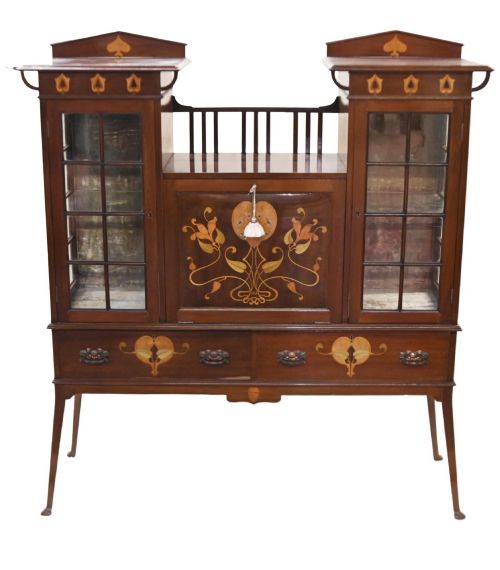
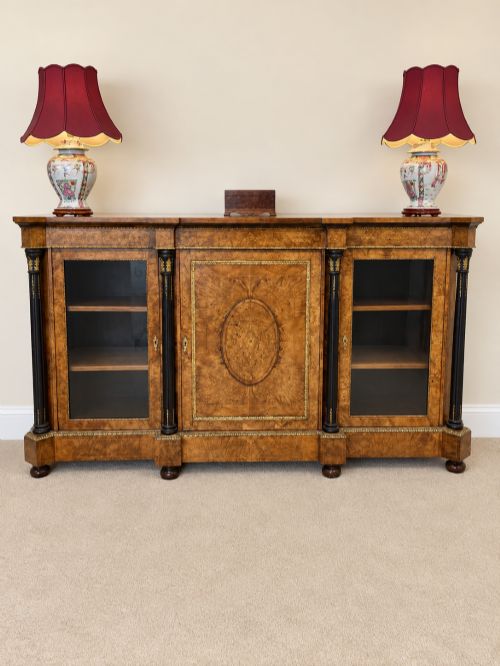
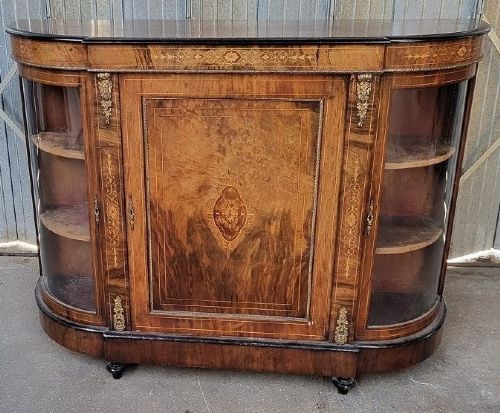
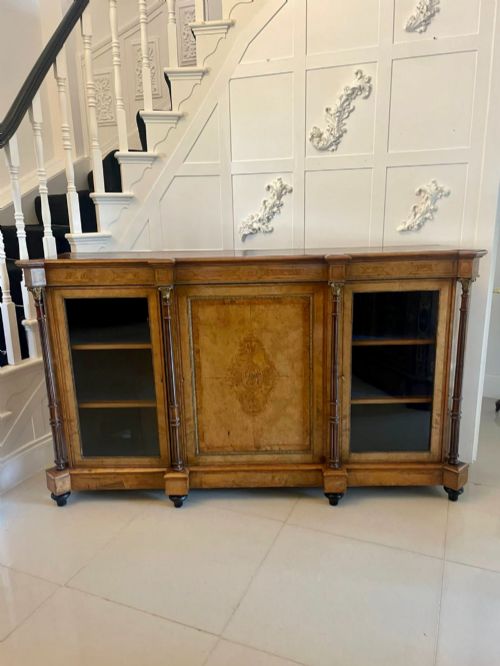
Antique Marquetry Sideboard
An antique marquetry sideboard brings intricate patterned wood veneers and capacious dining room storage into the home.
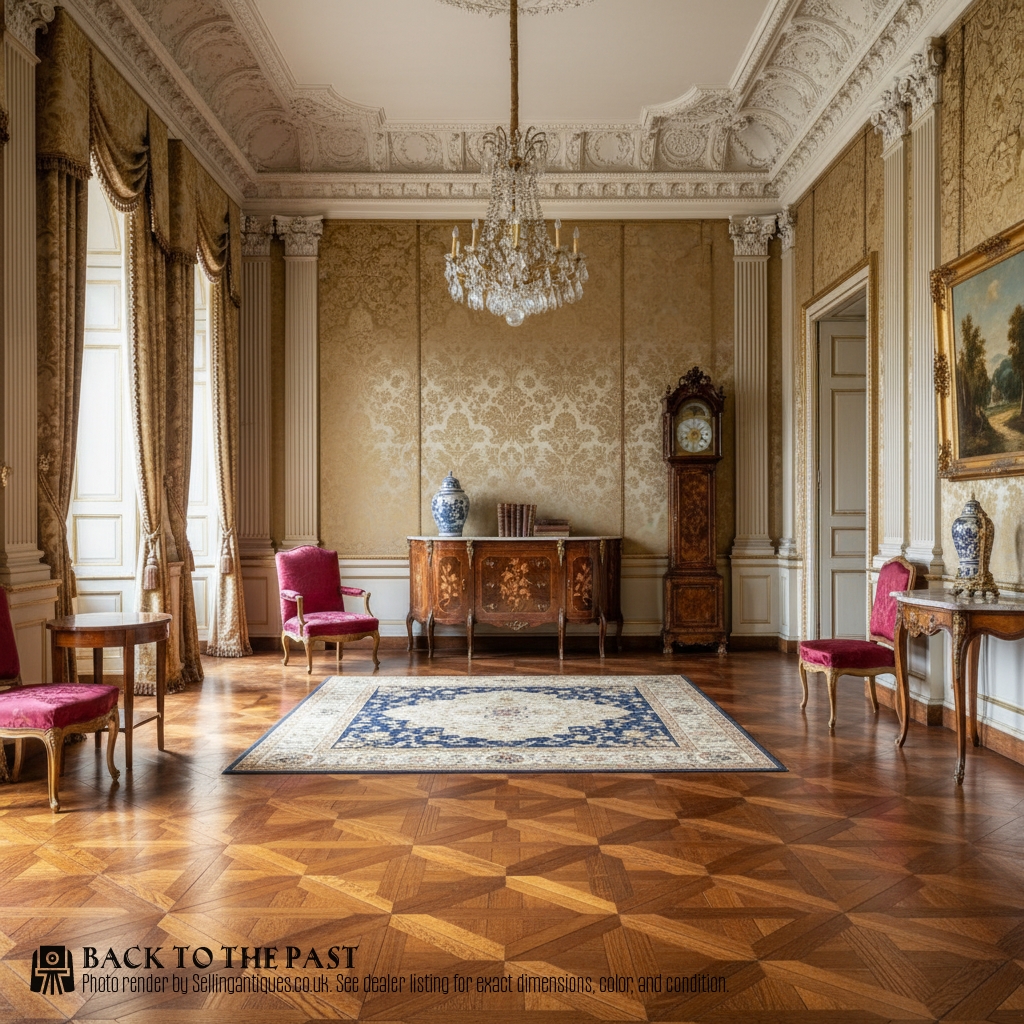
Antique Marquetry Sideboard
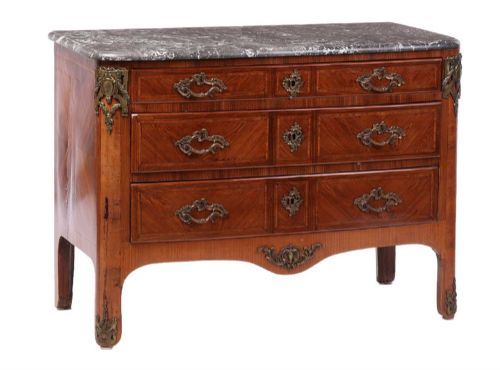
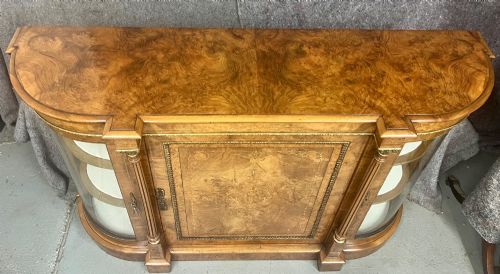
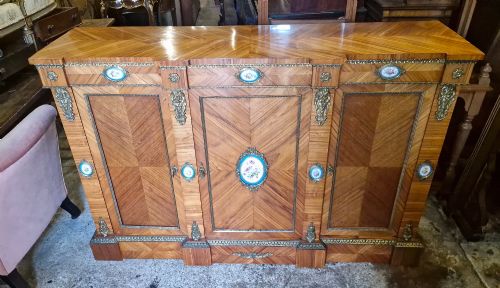
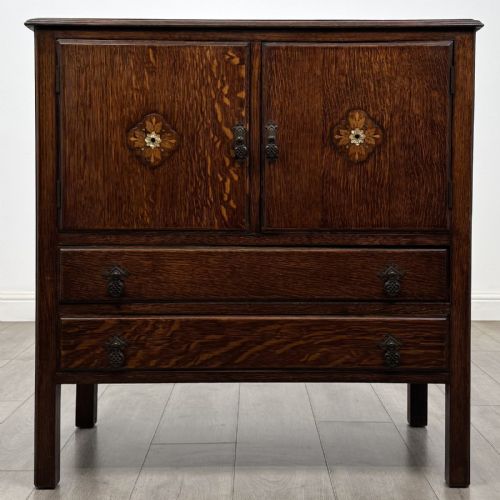
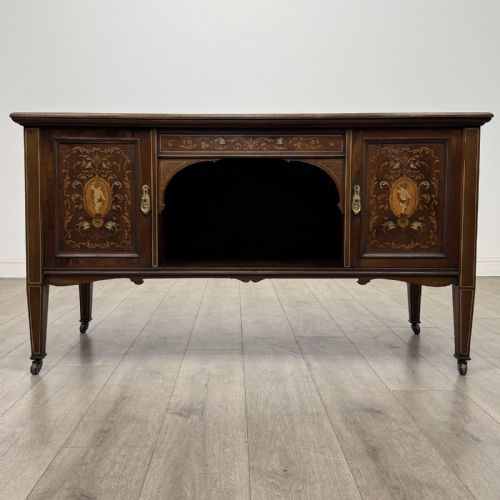
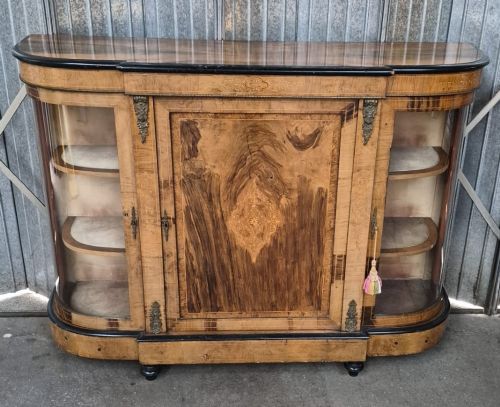
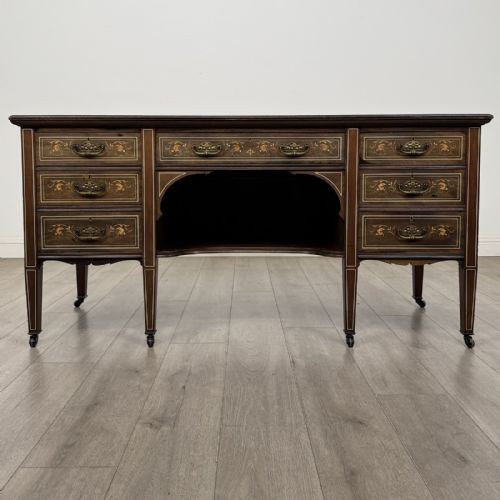
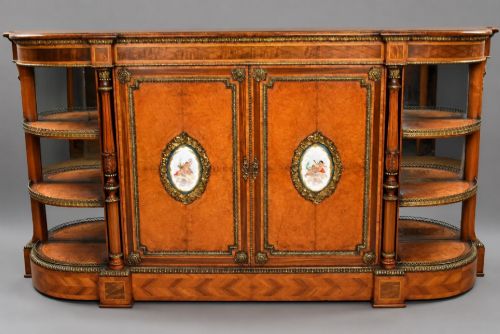
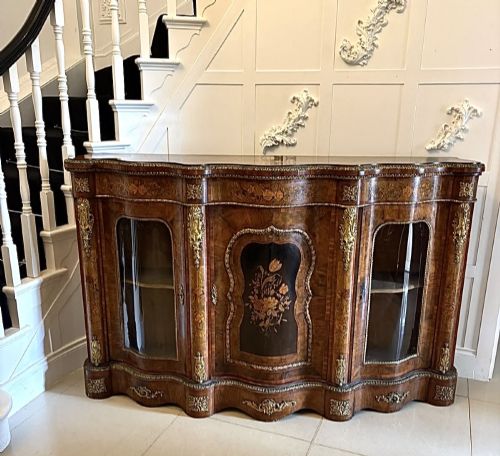
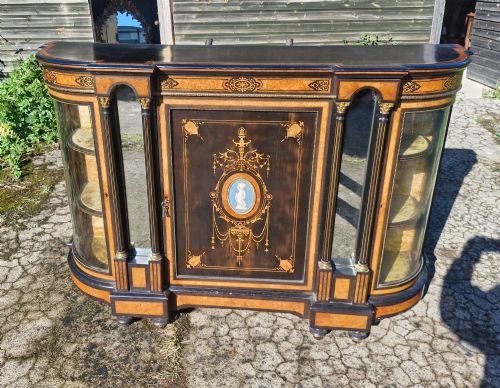
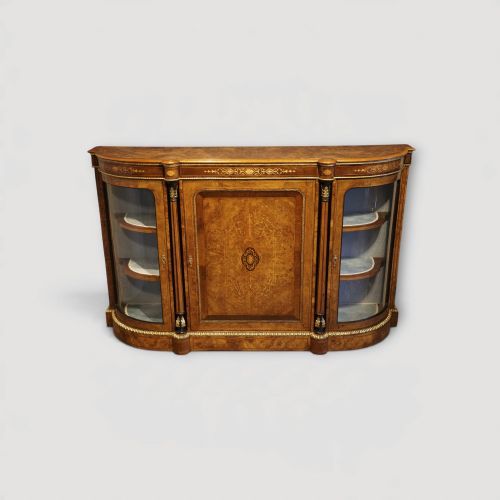
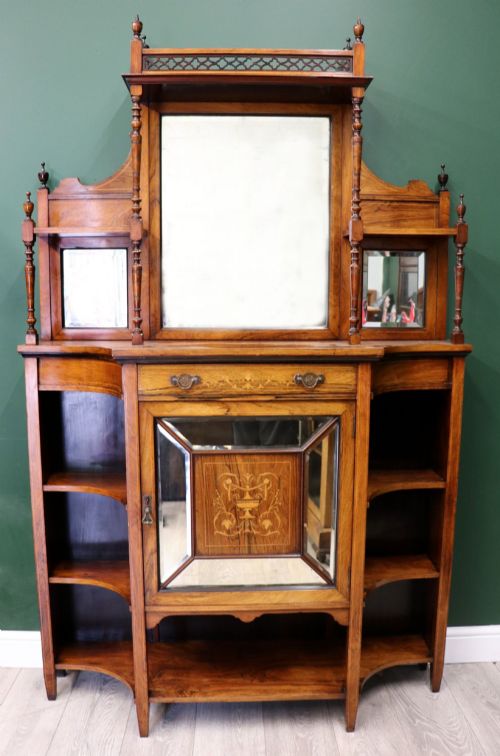
An antique marquetry sideboard serves as a substantial dining room storage cabinet and a surface for display, distinguished by elaborate pictorial wood veneers. These pieces span centuries of design, with Victorian burr walnut examples and Sheraton Revival satinwood models appearing frequently alongside French commodes and credenzas.
The form encompasses side cabinets, serpentine credenzas, and bow-fronted sideboards equipped with cupboards and drawers. Buyers encounter mid-nineteenth-century English walnut pieces alongside eighteenth-century continental consoles and commodes bearing complex floral or geometric inlays.
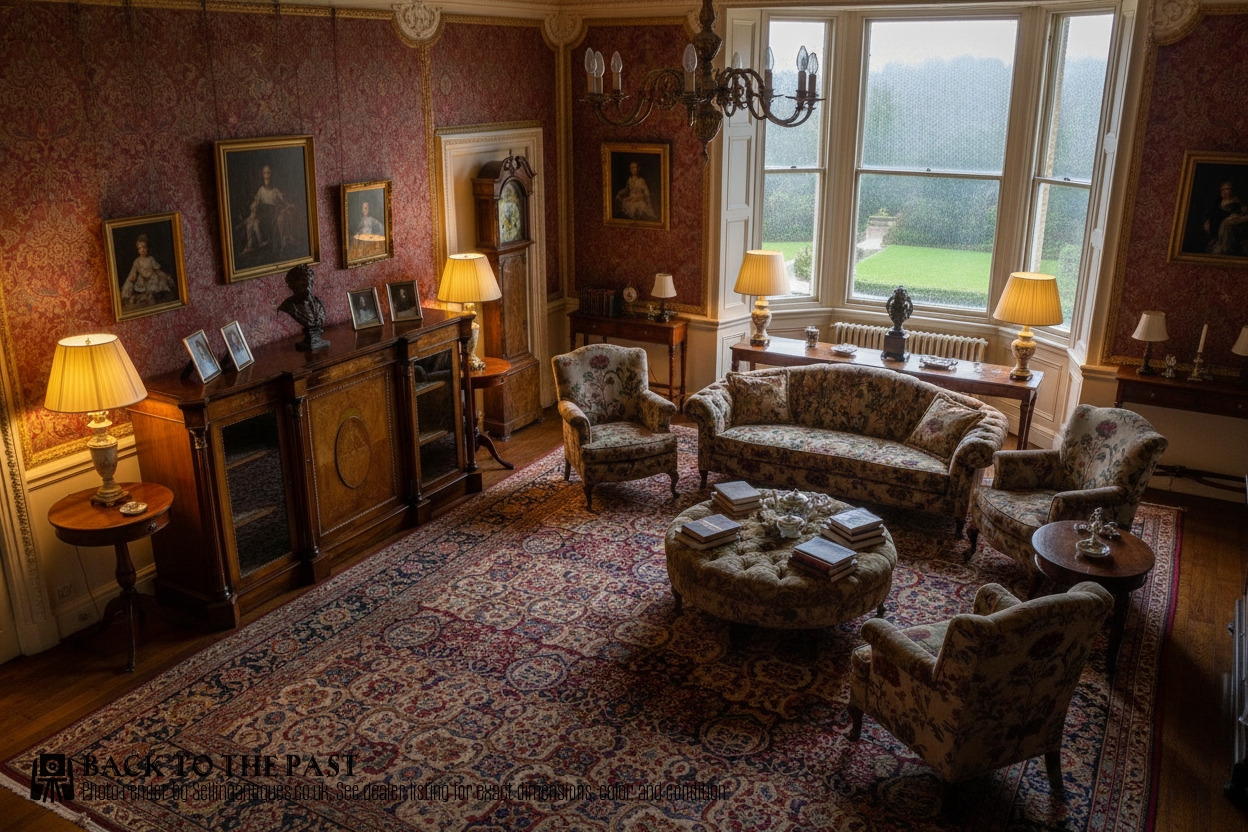
Materials and construction methods
Cabinetmakers utilised dense native timbers such as mahogany, walnut, and satinwood as foundations for decorative veneers. Burr walnut and amboyna provided rich, figured grain patterns that contrasted sharply against ebonised elements or lighter fruitwood inlays.
Marquetry involved meticulously cutting thin sections of various coloured woods, brass, and mother-of-pearl, then assembling them into pictorial motifs before application to the carcase. Ormolu mounts and marble tops frequently completed the construction on high-status nineteenth-century pieces.
Antique Marquetry Sideboard Retail Price Guide 2026
Typical asking prices for marquetry sideboard among the pieces listed under this phrase on Sellingantiques today, from the lower quarter to the upper quarter. They describe what is for sale here now, not the wider market.
Listings feature walnut, mahogany, and satinwood sideboards spanning the eighteenth, nineteenth, and early twentieth centuries.
Distinctions in craftsmanship
The sophistication of the veneer work dictates the standing of an individual piece. Master cabinetmakers achieved exceptional shading in floral marquetry by scorching veneer edges in hot sand, creating a three-dimensional depth absent in simpler production.
Structural integrity and the retention of original fire-gilt ormolu mounts and internal fittings separate standard cabinetwork from exceptional examples. The precision of the joinery in serpentine and demi-lune carcases reveals the underlying skill of the workshop.
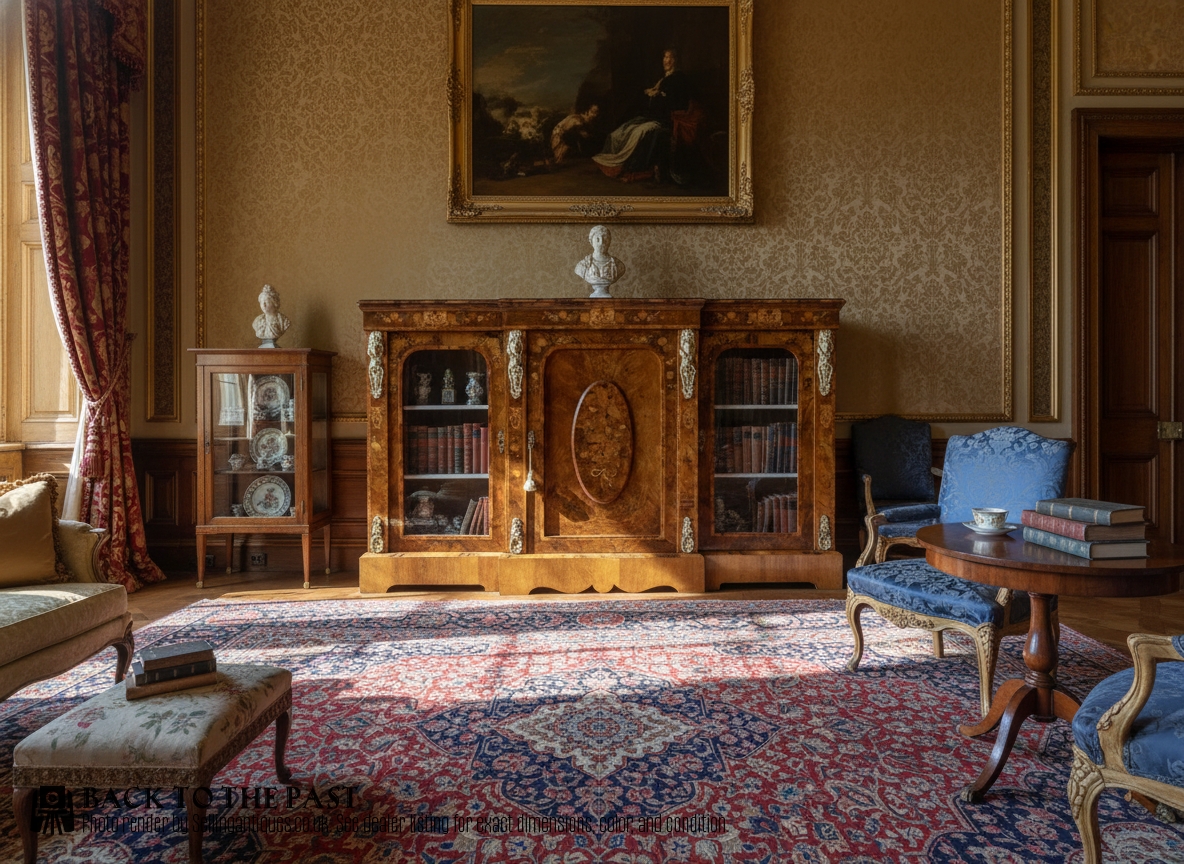
Hewetsons London·Jacques Bircklé·Collinson and Lock·Edwards and Roberts·Gillows·Maison Gagneau·August Ungethüm
The Antique Marquetry Sideboard Glossary
- Marquetry
- Decorative veneer work assembled from pieces of wood, shell, or metal to form pictorial or geometric designs. This technique transforms a plain furniture surface into a detailed canvas.
- Credenza
- A low cabinet, frequently featuring glass doors or curved side compartments, used for storage and display. Victorian examples often incorporate elaborate floral inlays.
- Ormolu
- Gilt bronze mounts applied to furniture for decorative accent during the eighteenth and nineteenth centuries. These metallic details highlight the corners and curves of fine cabinets.
- Serpentine
- A curved furniture front characterised by a convex centre flanked by concave ends. This undulating shape requires precise carpentry and veneer application.
- Parquetry
- Geometric mosaic veneer patterns arranged in repetitive grids or cubes. Unlike marquetry's pictorial scenes, parquetry relies on symmetry and angular precision.
Antique Marquetry Sideboard: Frequently Asked Questions
Where should I place an antique marquetry sideboard?
These large cabinets suit dining rooms, grand hallways, or spacious living areas where their decorative veneer work can be appreciated without obstruction. Ensure the piece sits away from direct sunlight and heat sources to protect the delicate wood veneers.
Because many examples feature finished sides or serpentine shapes, they also function effectively as freestanding focal points against primary walls rather than strictly tucked into alcoves.
How do I clean and maintain the wood?
Dust the marquetry surfaces regularly with a soft, dry cloth to prevent particulate buildup in the grain. Avoid modern aerosol polishes, utilising traditional beeswax sparingly to nourish the timber when the surface appears dry.
Keep humidity levels in the room stable to prevent the underlying woods and delicate veneer inlays from expanding, contracting, or lifting over time.
What is the difference between a sideboard and a credenza?
Traditional sideboards evolved specifically for dining rooms to store tableware and serve food, often featuring a combination of long drawers and lower cupboards. Credenzas originated as lower, legless cabinet forms designed for display and storage.
In nineteenth-century manufacturing, the terms often overlapped, with many glazed credenzas and side cabinets fulfilling similar domestic functions in formal reception rooms.
How can I identify a Victorian piece from an 18th-century one?
Eighteenth-century examples frequently employ solid carcases with finely figured mahogany, kingwood, or walnut, displaying restrained classical lines and understated brass hardware. Victorian interpretations lean towards heavier proportions, utilising burr walnut extensively alongside bold floral marquetry and gilt-bronze mounts.
Examining the secondary timbers inside drawers and behind back panels often clarifies the period of manufacture and the workshop origin.