
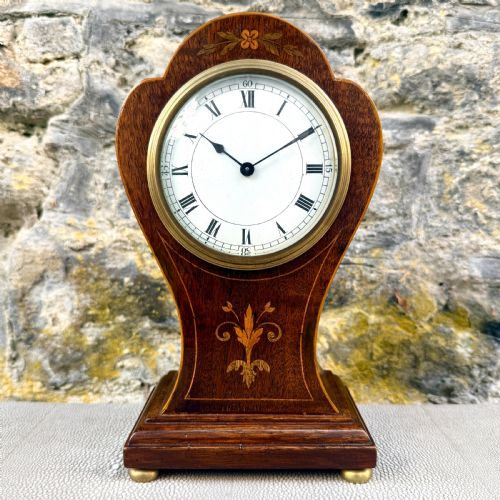
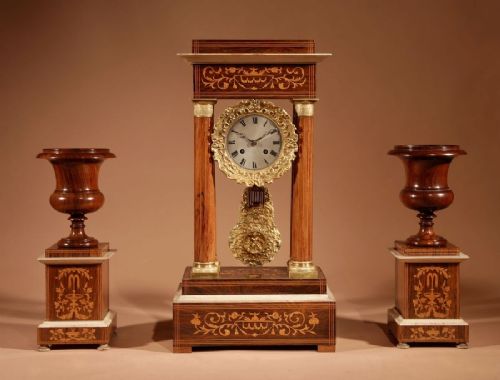
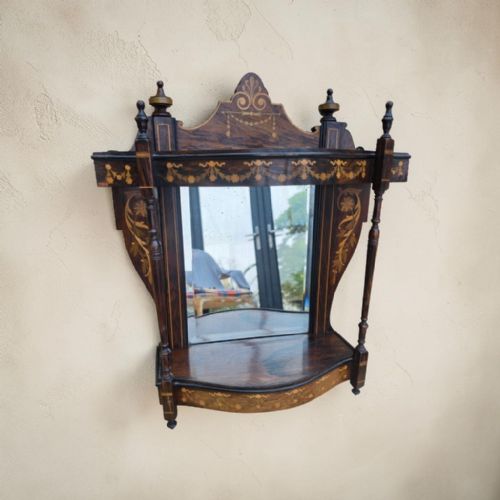
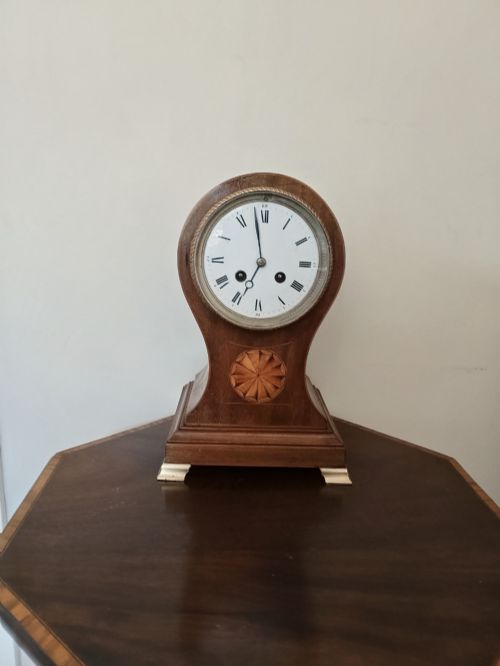
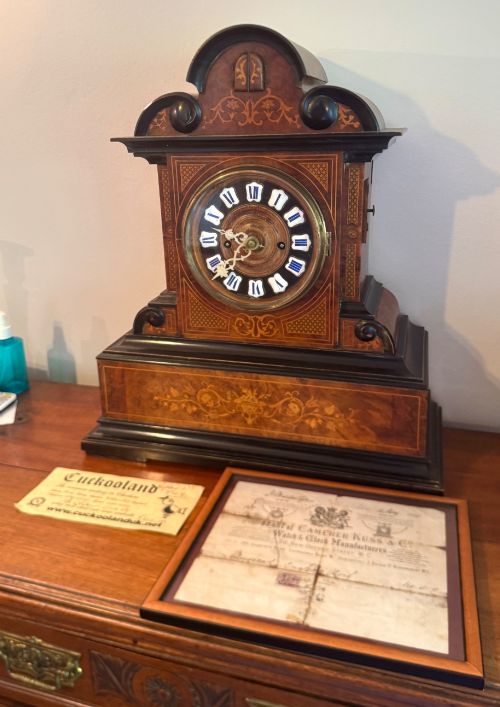
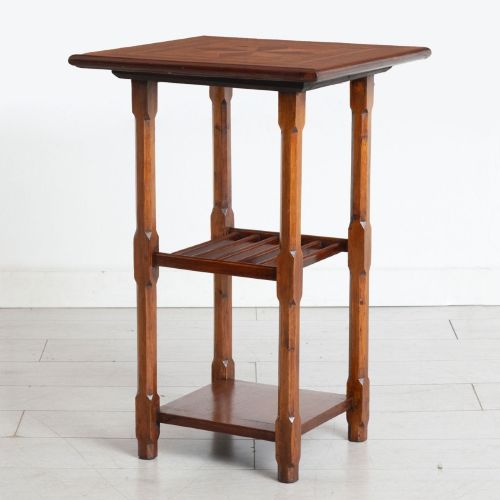
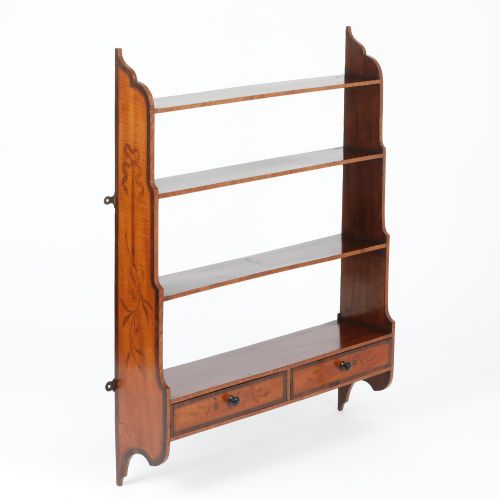
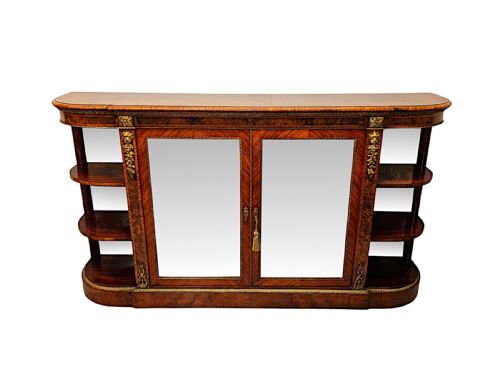
Antique Marquetry Shelves
Antique marquetry shelves bring intricate wood inlay and tiered display space into rooms, uniting decorative craft with practical storage.
Antique Marquetry Shelves
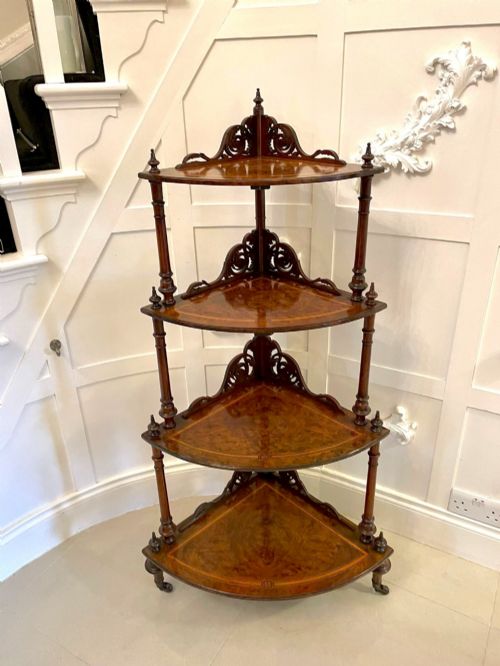
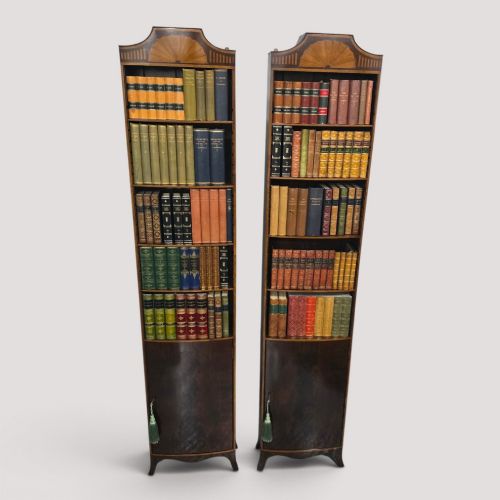
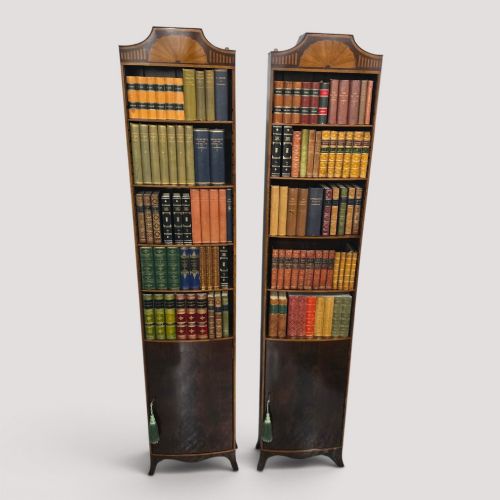
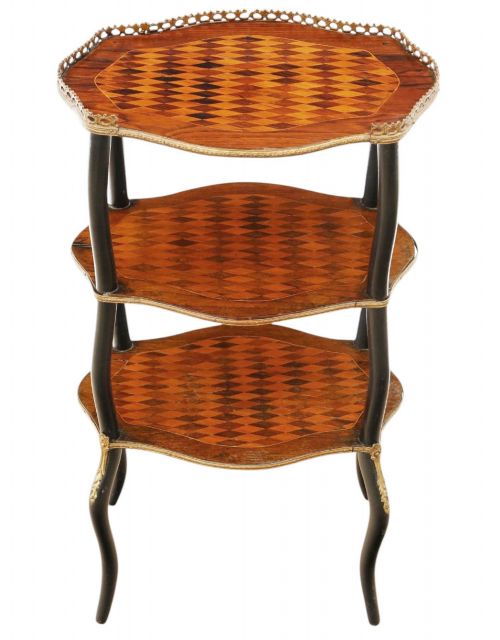
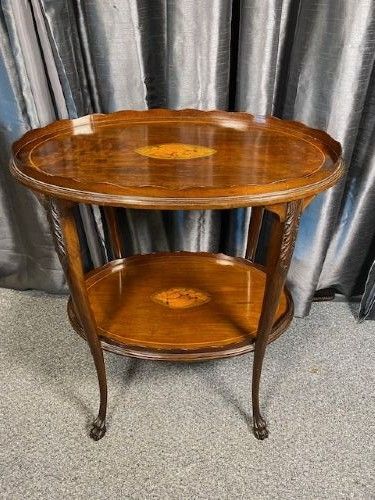
When searching for antique marquetry shelves, buyers encounter tiered display furniture such as étageres, whatnots, and hanging bookshelves designed for decorative storage. These pieces emerge predominantly from the nineteenth century, the Edwardian era, and around nineteen hundred, reflecting periods of refined cabinet-making.
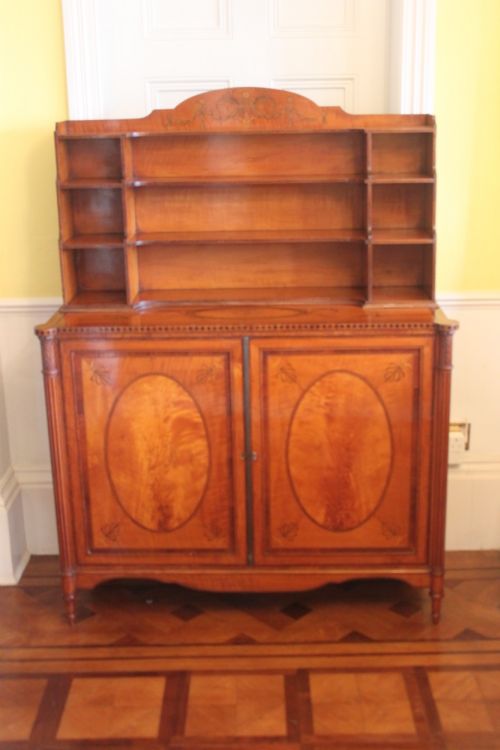
The evidence shows forms ranging from corner shelves and wall-mounted waterfall bookshelves to freestanding étageres and side cabinets. Walnut, mahogany, and satinwood provide the structural timber for these varied display tiers, often accented with delicate inlays.
How they were made
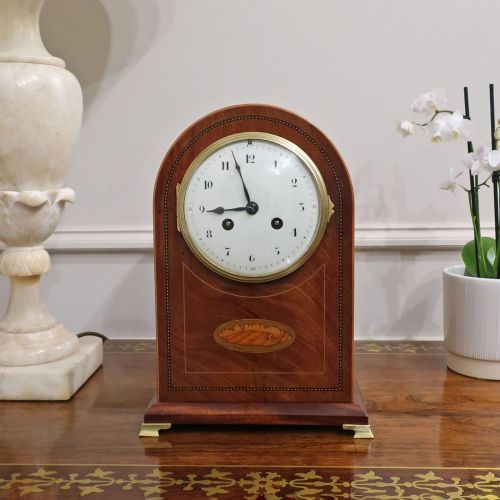
Cabinet-makers constructed these shelves using dense foundational timbers like mahogany, walnut, rosewood, and satinwood. Artisans then applied contrasting wood veneers and fine marquetry designs across the surfaces.
Metal mounts in brass and ormolu frequently reinforced the corners and edges, while glass panels and enamel details completed the finer display cabinets and étageres.
Olive wood from Sorrento travelled north to satisfy Victorian desires for sunny Italian landscapes inlaid into quiet English corners.
What varies in quality
The precision of the wood inlay dictates much of the visual standard, distinguishing crisp, tightly fitted botanical or geometric motifs from simpler, coarser patterns. The choice of underlying timber also plays a role, with burr walnut and figured satinwood denoting higher ambition in the workshop.
Integration of cast brass mounts and structural mounts influences the overall finish. Pieces that retain harmonious proportions between the tiered shelves and their supporting columns represent the upper tier of period production.
Gillows·Maple & Co.·Edwards and Roberts
The Antique Marquetry Shelves Glossary
- Marquetry
- Decorative patterns formed by fitting together small pieces of wood veneer onto a structural surface. This technique allows for complex pictorial or floral designs across table tops and shelf friezes.
- Étagère
- A set of open shelves designed for displaying small ornaments and decorative objects. These tiered stands date widely through the nineteenth century and the Edwardian period.
- Whatnot
- A piece of freestanding furniture consisting of multiple open shelves used for books or ornaments. Victorian examples frequently utilise walnut or rosewood.
- Satinwood
- A pale, lustrous timber native to India and Ceylon used extensively for fine cabinet-making. It provides a bright ground for contrasting marquetry details.
- Ormolu
- Gilded bronze used for mounts and decorative accents on nineteenth-century furniture. It highlights corners and frames inlay work.
Antique Marquetry Shelves: Frequently Asked Questions
Where were antique marquetry shelves placed?
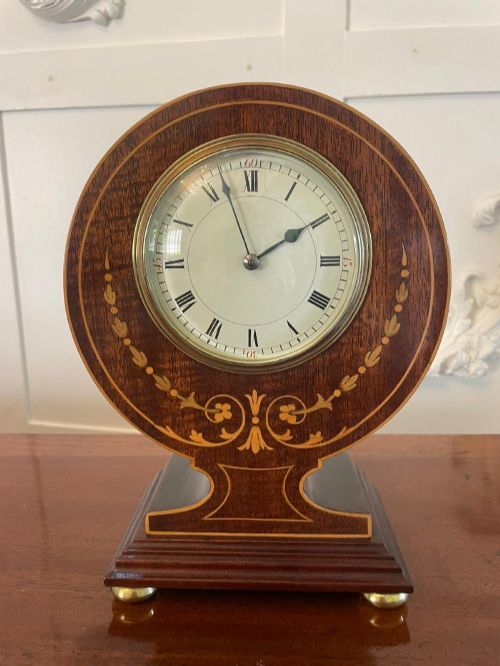
These pieces found places in Victorian and Edwardian drawing rooms, sitting rooms, and hallways as practical surfaces for displaying ornaments, clocks, and small books.
Freestanding etageres stood against walls or in corners, while lighter hanging shelves utilised wall space above tables and seating.
How do I care for antique marquetry shelves?
Keep wooden surfaces away from direct sunlight and sudden temperature shifts to protect the underlying veneers and delicate inlay work.
Apply a traditional wax polish occasionally and buff gently with a soft cloth to maintain the lustre of the timber.
Are these shelves suitable for books?
Open bookshelves and smaller tiered stands accommodate modest collections of volumes alongside decorative objects and ceramic pieces.
Heavier sets of books require sturdy construction, so smaller etageres serve better for light reading materials and display items.
How do I date antique marquetry shelves?
Examine the choice of primary timber, the style of inlay, and construction methods against known periods like the Victorian era or nineteen hundred.
Detailed satinwood work often points towards Sheraton revival or Edwardian taste, whereas heavier burr walnut marks mid to late nineteenth-century manufacture.