
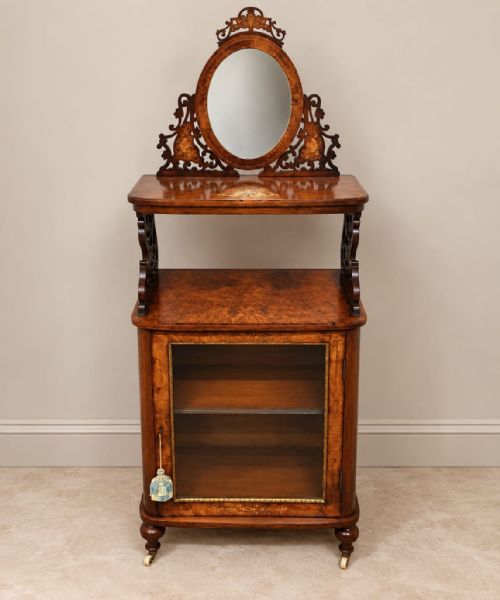


Edwardian Walnut Etagere
These edwardian walnut etagere pieces are multi-tiered display stands offering open shelving for small ornaments, and you want one for vertical surface area in a drawing room.
Edwardian Walnut Etagere
An edwardian walnut etagere is primarily represented here by tiered shelving units and whatnots spanning Victorian and Edwardian periods, including corner stands, console tables, and side cabinets. These pieces function as open display furniture designed to hold decorative objects, ceramics, and small collections across multiple levels.
The forms range from three-tier and four-tier standing shelves to six-tier displays, alongside specialised furniture like music cabinets combined with whatnot sections. Corner whatnots provide a practical layout for fitting into room angles, while console tables and side cabinets integrate flat surfaces with shelving.
Origins span nineteenth-century workshops through to the early twentieth century, showing a clear continuity of form from Victorian burr walnut examples to Edwardian inlaid pieces. Buyers encounter various tier counts and configurations, each built to maximise display space in principal rooms without dominating the floor area.
Materials and construction methods
Construction relies upon walnut, burr walnut, and wood veneer applied to structural carcases, frequently enhanced by marquetry inlay for decorative surface pattern. Timber selection prioritises figured grain, particularly in burr walnut panels, which provide strong visual texture across shelves and cabinet doors.
Additional detailing incorporates brass hardware, ormolu mounts, glass panels, and mirror backs to reflect light behind displayed items. Structural supports utilise turned pillars, hollow barley twist uprights, and precise corner framing to sustain multiple tiers of shelving.
Hollow barley twist uprights turn structural support into swirling optical art.
Distinctions in quality and execution
Quality separates standard multi-tiered shelving from pieces featuring sophisticated marquetry inlay, ormolu mounts, and mirror backs. The choice of burr walnut veneer and the crispness of turned uprights or barley twist columns dictate the overall visual refinement of the furniture.
The integration of secondary materials such as brass fittings and glass elements marks the distinction between utilitarian display stands and high-status drawing room furniture. Joinery precision in corner joints and tier supports ensures structural stability across taller five and six-tier configurations.
The Edwardian Walnut Etagere Glossary
- Etagere
- An open piece of furniture with multiple tiers for displaying small objects. These stands provide vertical storage without enclosing the items behind solid doors.
- Whatnot
- A nineteenth-century multi-shelved stand used for ornaments and books. It shares a direct functional purpose with the etagere.
- Burr Walnut
- Timber taken from the growth excrescences of walnut trees, showing intricate swirled grain patterns. It provides high decorative value on tabletops and cabinet fronts.
- Marquetry Inlay
- Decorative patterns created by fitting contrasting wood veneers into a prepared surface. This technique decorates the panels and shelves of many Victorian and Edwardian pieces.
- Ormolu
- Gilt bronze mounts applied as decorative ornaments to furniture corners and framing. It adds metallic contrast to the dark walnut timber.
Edwardian Walnut Etagere: Frequently Asked Questions
What is an etagere used for?
An etagere is designed for displaying small decorative objects, porcelain, and collectibles across several open shelves. It provides an elevated surface area that makes efficient use of vertical space in principal rooms.
These pieces allow owners to arrange collections visibly without crowding table tops. Their open construction keeps objects accessible and in plain view from any angle.
How do I clean walnut furniture?
Walnut surfaces require dusting with a soft, dry cloth to prevent particulate buildup on the polished timber and veneer. Avoid excessive moisture and modern chemical sprays that can damage historic finishes.
Periodic application of appropriate wax maintains the natural lustre of the wood without softening the underlying grain. Care must be taken around inlaid marquetry and delicate ormolu mounts.
Where should I place an etagere?
Corner whatnots fit directly into room angles to utilise unoccupied space while providing multi-tiered display capacity. Standing etageres and console tables suit drawing rooms, hallways, and living spaces against flat walls.
Placing these units away from direct sunlight and heat sources protects the walnut veneer and prevents timber movement. Proximity to natural light also enhances the reflective qualities of mirror-backed tiers.
How do I date a whatnot?
Dating relies upon examining timber choice, construction techniques, and decorative styles such as Victorian marquetry or Edwardian inlay. Mid-nineteenth-century examples often feature solid burr walnut and turned uprights, while later pieces incorporate different veneer combinations.
Hardware styles, joint construction, and secondary woods inside cabinets offer further clues to the manufacturing period. Comparing tier counts and edge mouldings against documented nineteenth-century forms helps narrow the date range.