


Walnut Three Tier Shelf
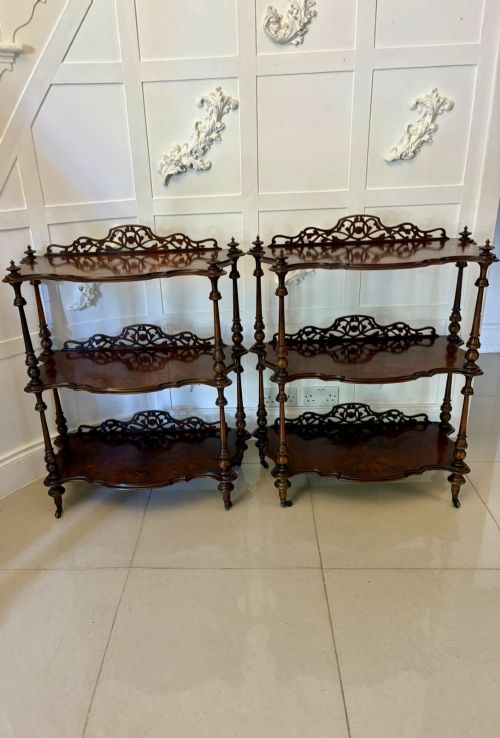
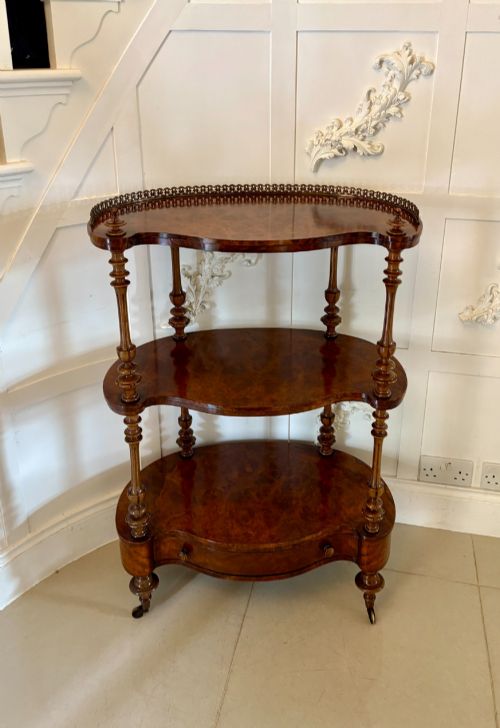
A walnut three tier shelf brings open display and rich timber grain to a room, offering multiple tiers for books, ceramics or small collections.
Walnut Three Tier Shelf
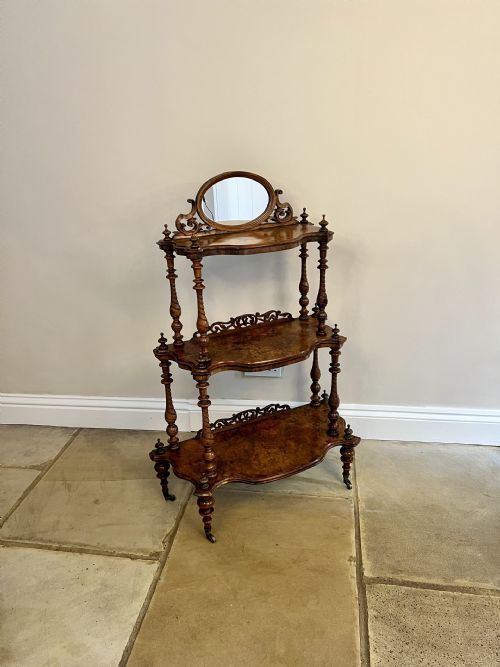
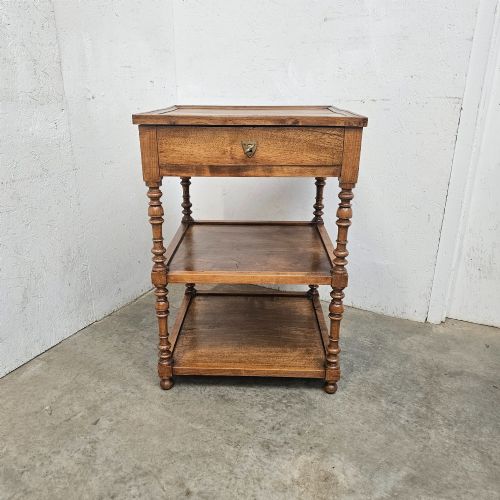
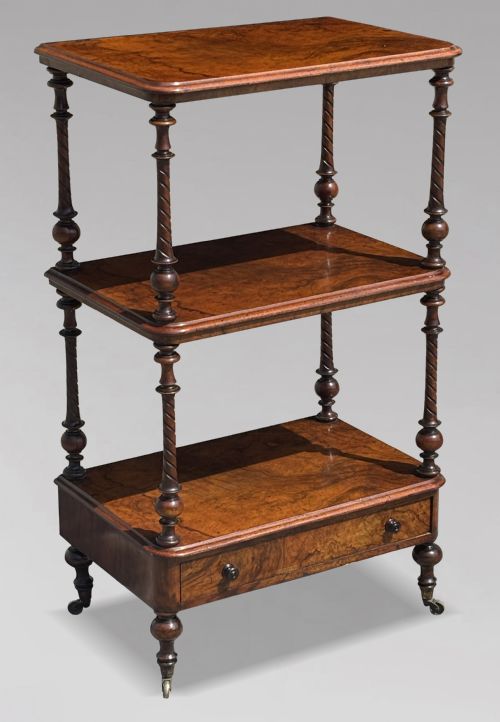
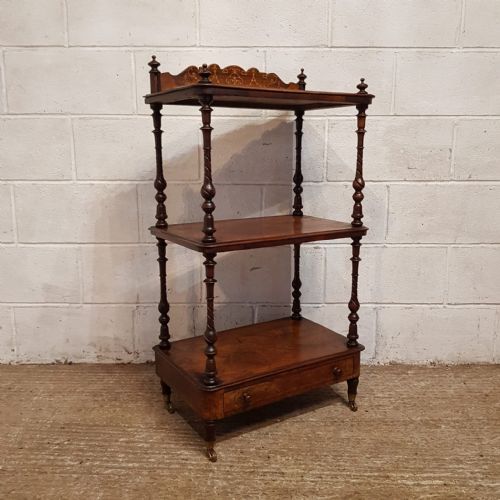
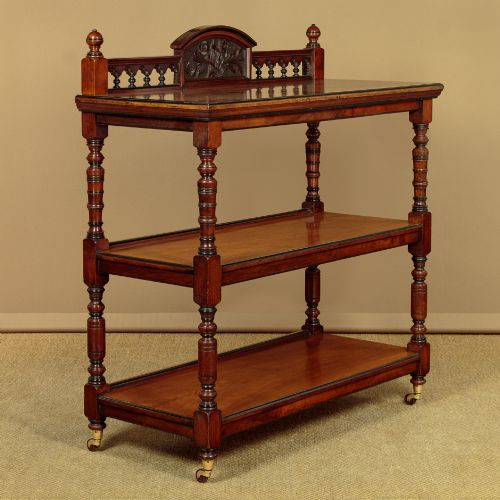
A walnut three tier shelf typically takes the form of a whatnot, etagere or tiered display stand, designed for open storage and decorative arrangement. These pieces date primarily from the Victorian and Edwardian eras, spanning the mid-nineteenth century into the early twentieth century.
The form appears in several distinct shapes, including serpentine, demi-lune, corner models and freestanding rectangular units. Makers utilised figured timbers, burr veneers and marquetry inlay to elevate these domestic display pieces.
Victorian examples dominate the selection, often incorporating turned supports, brass mounts or ceramic elements alongside the tiered wooden shelves.
Materials and construction
Craftsmen built these tiered shelves using solid walnut and applied burr walnut veneers to create rich, figured surfaces on the tier boards. Marquetry inlay and ebonised wood details frequently accent the primary timber.
Structural support relies on turned wooden columns, ormolu mounts and occasional brass detailing, securing the horizontal shelves at fixed intervals. French polishing finishes the surfaces to highlight the natural grain patterns of the walnut.
Listings feature walnut, burr walnut, mahogany, brass and ceramic elements across Victorian and Edwardian periods.
Distinctions in quality
Quality rests on the selection of the timber veneer, where dense burr walnut and crisp marquetry inlay distinguish finer examples from plain stock. The precision of the joinery at the shelf joints and the weight of the supporting columns indicate the standard of original manufacture.
Refined pieces display carved details, brass mounts or gilt metal additions that remain firmly seated and well-proportioned to the tiered structure.
Gillows·Heal's
The Walnut Three Tier Shelf Glossary
- Whatnot
- A set of open shelves used for displaying ornaments and small objects, developed in the eighteenth century and popular throughout the Victorian period.
- Etagere
- A piece of furniture consisting of a series of open shelves for displaying articles, typically of French origin.
- Burr walnut
- Timber taken from a tree growth or wart, yielding highly figured grain patterns with swirling knots, prized for veneering.
- Marquetry
- Decorative veneer work where pieces of various woods are fitted together to form geometric or floral designs.
- Serpentine
- A curved line of furniture fronting that undulates outward and inward, creating a gentle wave shape.
Walnut Three Tier Shelf: Frequently Asked Questions
What is the difference between a whatnot and an etagere?
A whatnot is traditionally an English tiered shelving unit designed for corners or walls, while an etagere stems from French cabinet-making traditions with a primary focus on decorative display.
Both terms describe similar multi-level furniture pieces used interchangeably in nineteenth-century interiors for holding ornaments and books.
How do I care for burr walnut veneer?
Burr walnut requires protection from direct sunlight and extreme humidity changes to prevent the delicate veneer from lifting or drying out.
Dust regularly with a soft, dry cloth and apply occasional high-quality beeswax to nourish the polished timber surface.
Were these shelves used for books?
While primarily designed for displaying decorative objects, ceramics and small sculptures, the lower tiers often accommodated small collections of books.
Their open construction makes them less suited for heavy library storage but ideal for lighter volumes and daily reading.
How can I tell a Victorian walnut whatnot apart from an Edwardian one?
Victorian examples tend to feature darker finishes, heavier turned supports, and intricate burr walnut veneers or elaborate marquetry.
Edwardian pieces often display lighter walnut tones, more restrained proportions, and occasionally French or neoclassical decorative influences.