



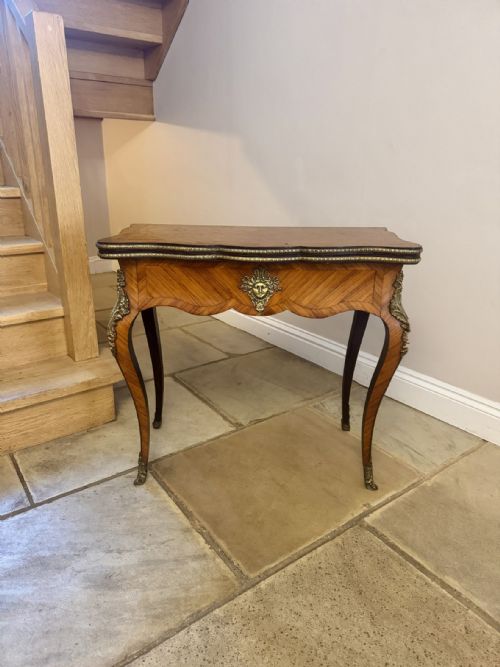
Antique Marquetry Fold Table
An antique marquetry fold table combines ingenious folding mechanisms with intricate wood inlay, offering a versatile surface for cards or display.
Antique Marquetry Fold Table
When you search for an antique marquetry fold table, you encounter a selection spanning the eighteenth, nineteenth, and early twentieth centuries. The listings here primarily comprise card tables, games tables, and occasional tables originating from British, French, and Anglo-Indian workshops.
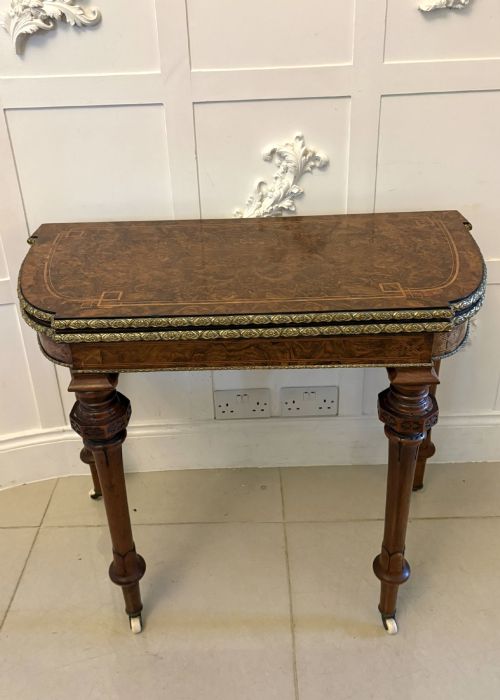
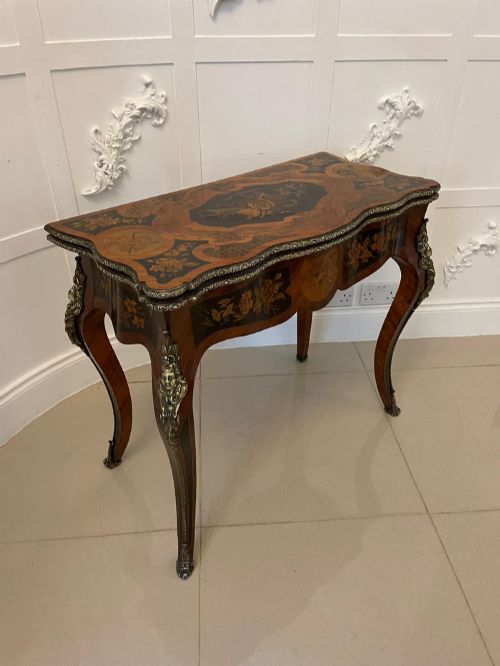
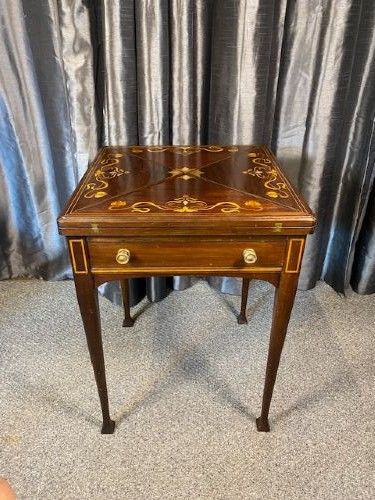
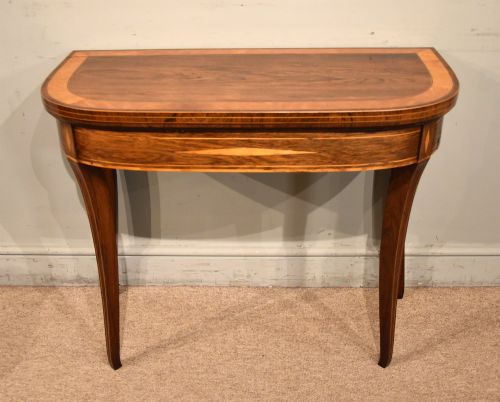
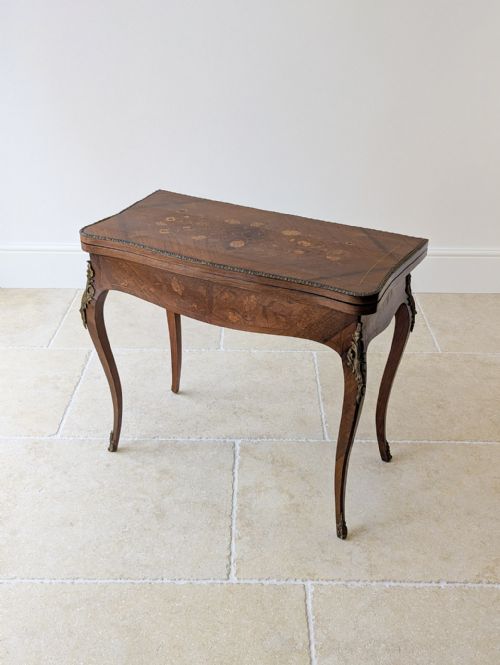
Victorian burr walnut and French kingwood examples dominate the selection, often featuring swivel tops that conceal storage wells or fold open on hinges. Card and games tables form the core of what is available, supplemented by envelope tables and Sutherland tables with folding leaves.
How they were made
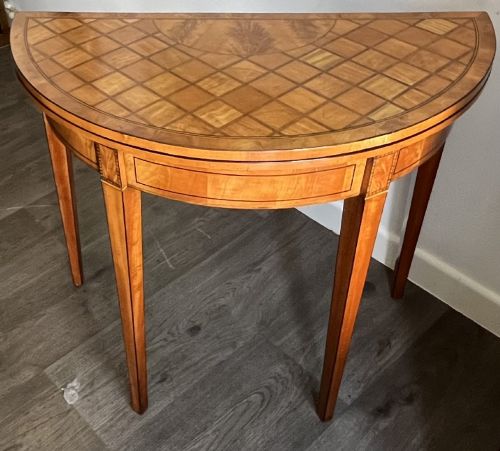
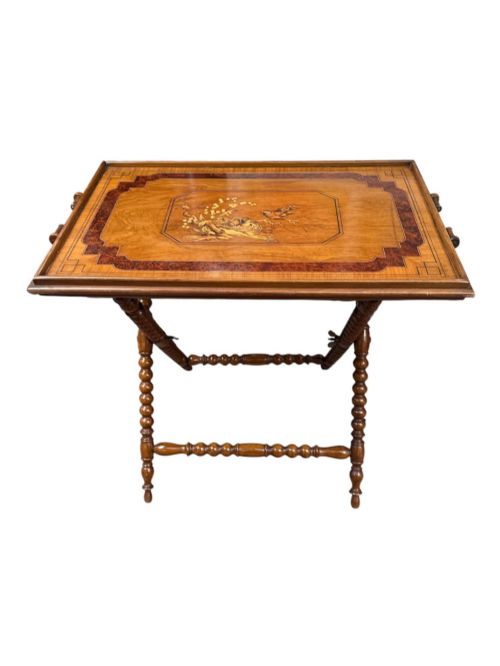
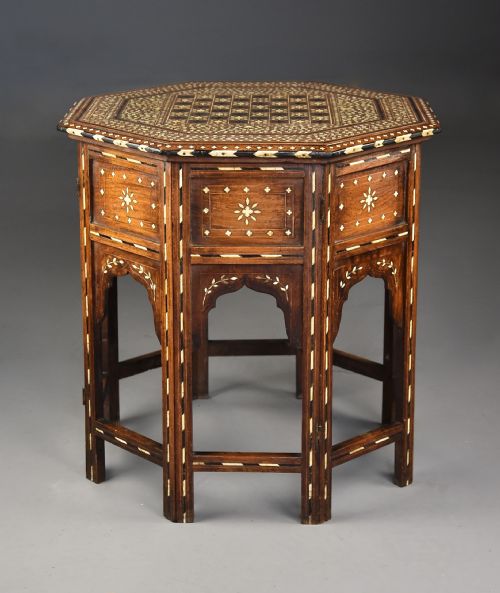
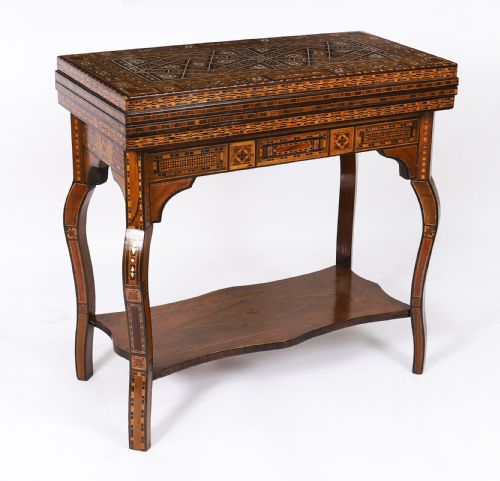
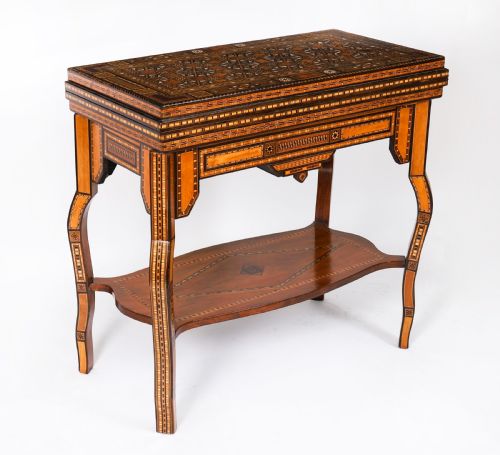
Cabinet makers constructed these pieces using solid foundational timbers like mahogany, walnut, or rosewood, which were then veneered with finer woods such as satinwood, kingwood, and burr walnut. Marquetry and parquetry designs were meticulously hand-cut from thin veneers of contrasting coloured timbers and boxwood, then embedded into the surface.
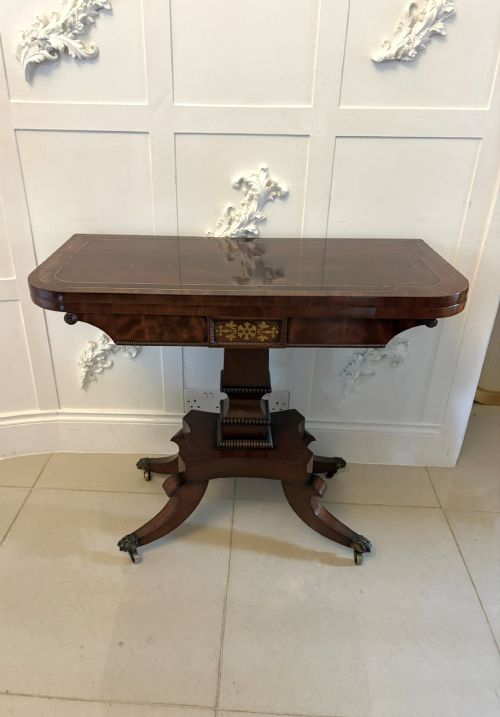
Mounts in cast or gilt brass, known as ormolu, embellished the corners and legs of French revival pieces, while brass inlay accented Regency and George Bullock models. Joinery incorporated specialised hinges and pivot mechanisms to allow the timber leaves to fold flat without warping.
Some tables hide subtle internal compartments beneath their folding tops, originally designed to keep secret letters and coins away from prying eyes.
What varies in quality
The distinction between ordinary and exceptional pieces lies in the crispness of the marquetry cutting and the choice of underlying veneers. Dense, highly figured burr walnut and richly grained kingwood command attention, particularly when the inlay utilises varied natural wood tones rather than being painted or stained.
Constructional stability in the folding mechanism separates superior workshop output from lesser examples. A well-made table maintains absolute alignment when closed and provides a rigid, level surface when opened, without sagging at the unsupported edges of the leaf.
George Bullock·François Linke·Maple and Co·Joseph-Emmanuel Zwiener
The Antique Marquetry Fold Table Glossary
- Marquetry
- Decorative veneer work forming pictorial or geometric patterns by assembling pieces of different coloured wood. This technique relies on precision cutting to ensure tight joints between the various timber segments.
- Ormolu
- Gilt bronze or brass mounts applied to furniture for decorative effect. The metal is cast and chased before receiving a gold finish.
- Sutherland table
- A narrow drop-leaf table with exceptionally small flaps supported by swinging gate legs. They fold down compactly for storage against a wall.
- Envelope table
- A card table with a square top composed of four triangular flaps that swivel and fold open like an envelope. The mechanism reveals a baize-lined playing surface when opened.
- Crossbanding
- A strip of veneer applied to the border of a tabletop with the grain running perpendicular to the centre panel. This frames the primary timber and protects the edge grain.
Antique Marquetry Fold Table: Frequently Asked Questions
How do fold tables open?
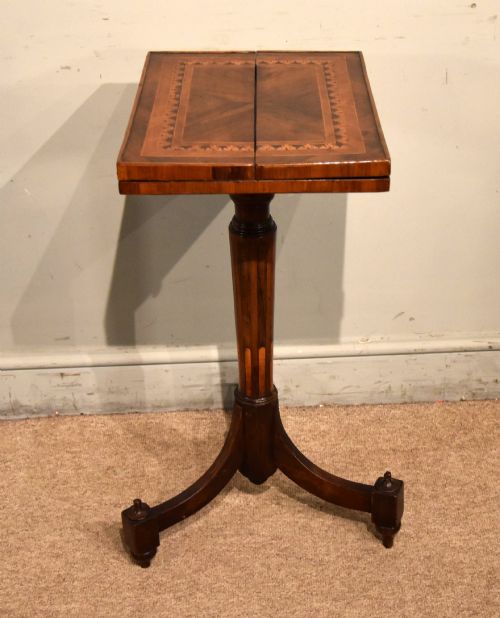
Most folding tables utilise a swivel top that rotates ninety degrees before opening out onto a hinged frame, or a fold-over leaf supported by a swinging rear leg. Some envelope designs feature interconnected triangular flaps that rotate open simultaneously.
Checking the pivot mechanism reveals how the maker balanced the weight of the top. Smooth movement indicates original hinges and well-maintained timber pivots.
Where were these tables used?
These tables served primarily in drawing rooms and parlours for entertaining guests with card games, chess, or backgammon. Between social gatherings, they stood against walls as console or side tables with their leaves closed.
In smaller rooms, envelope and Sutherland tables provided adaptable surfaces that expanded only when needed for tea or writing.
How do I care for marquetry?
Marquetry surfaces require protection from direct sunlight and extreme humidity changes, which can cause the delicate veneers to shrink or lift from the carcase. Regular dusting with a soft, dry cloth preserves the polished finish without introducing moisture.
Applying a traditional beeswax polish occasionally feeds the timber and enhances the contrast between the different woods used in the inlay.
How are periods told apart?
Regency and Georgian pieces favour mahogany and rosewood with restrained brass stringing or inlay, reflecting neoclassical proportions. Victorian and Edwardian examples lean towards burr walnut, kingwood, and elaborate floral marquetry in French revival styles.
Construction methods also aid dating, as hand-cut dovetails and traditional timber framing give way to machine-sawn components in the later nineteenth century.