

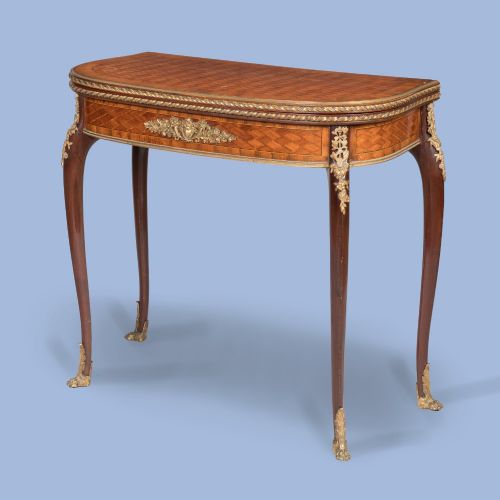
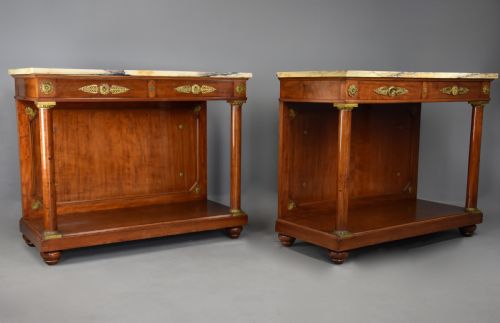


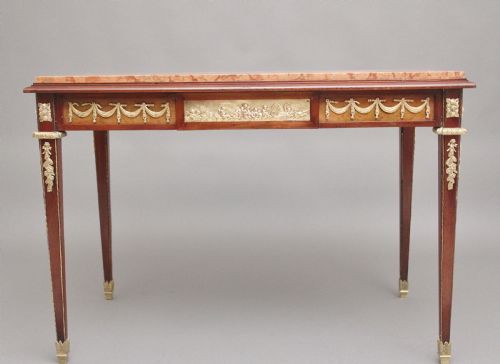
Gilt Bronze Console Table
These gilt bronze console table pieces bring architectural presence and classical French design to a room.
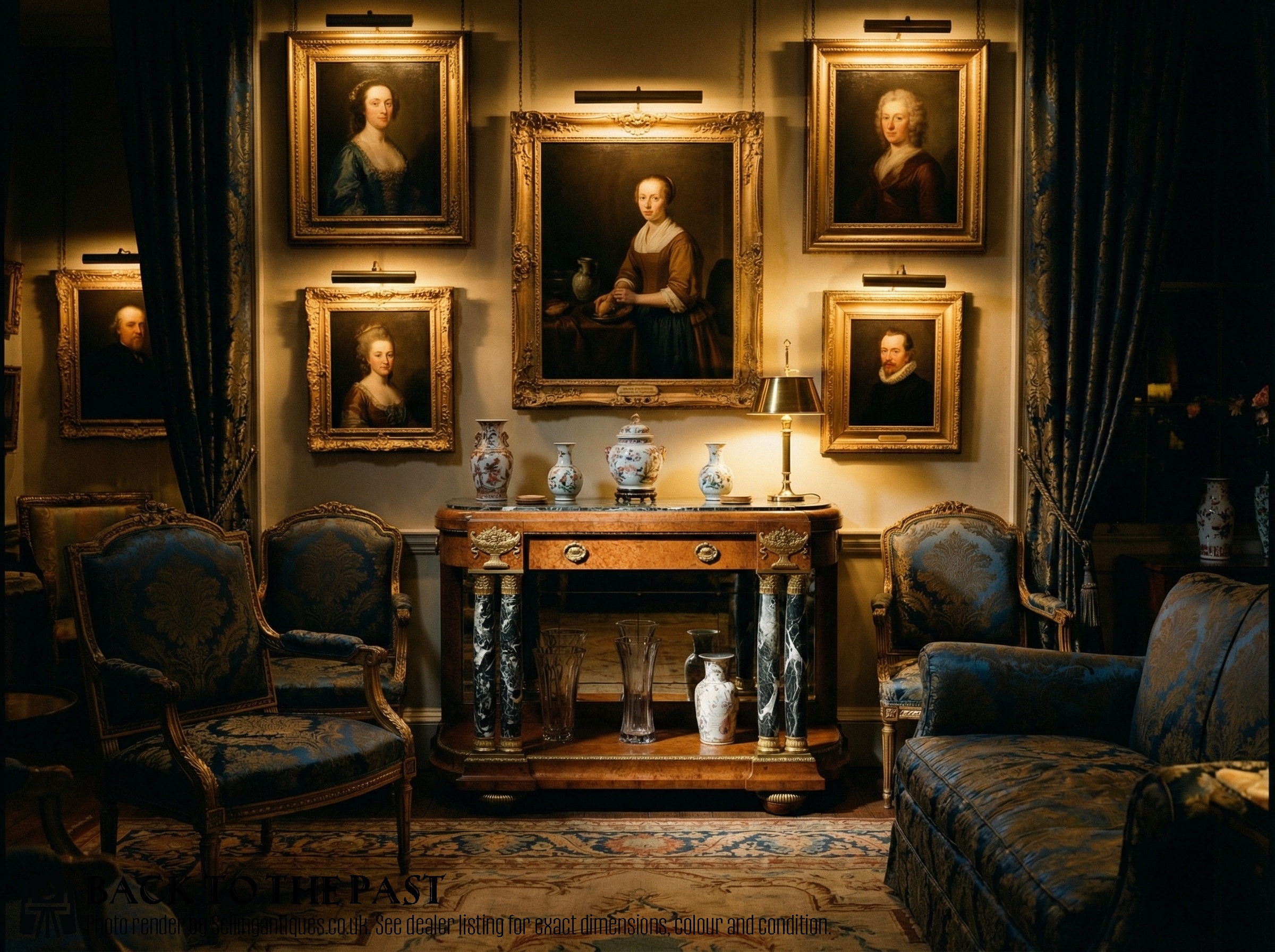
Gilt Bronze Console Table
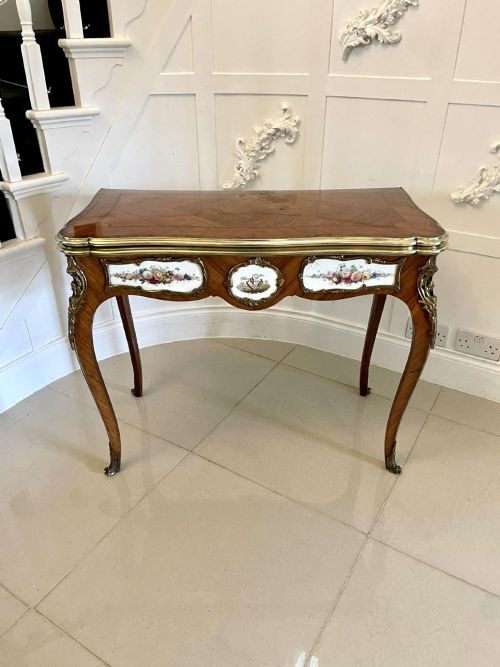
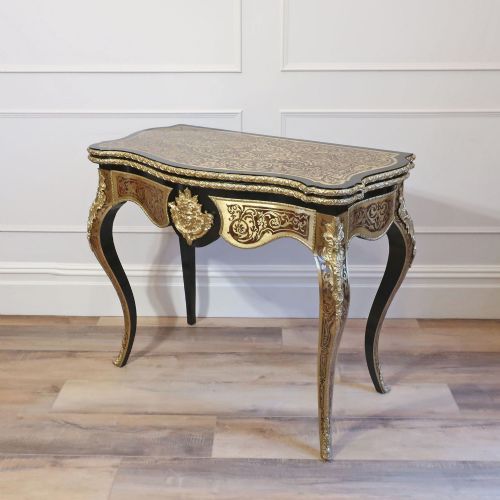
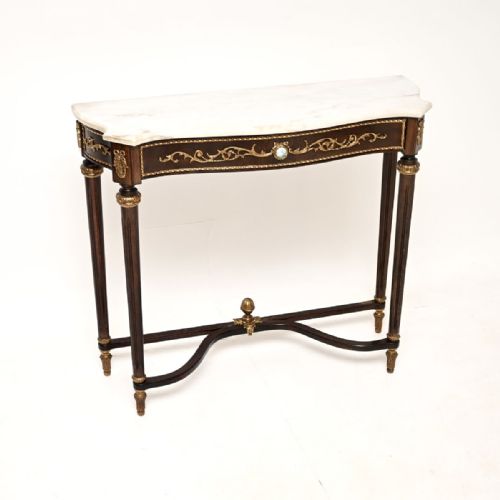
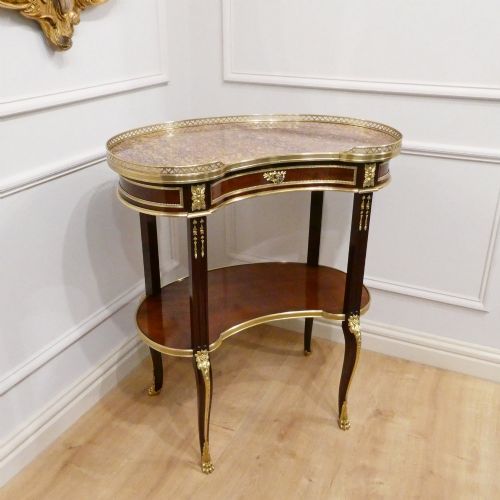
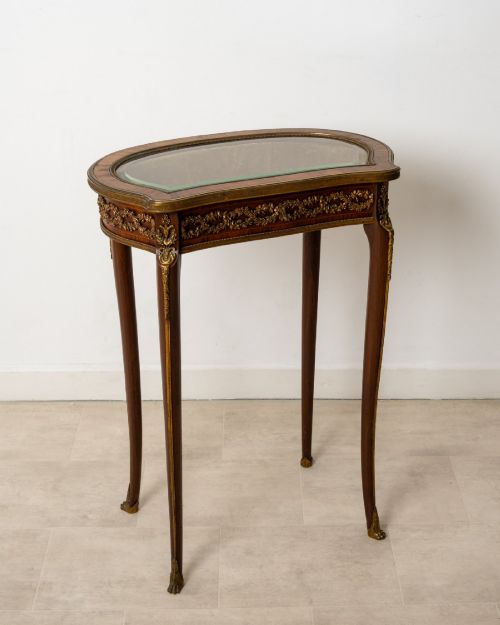
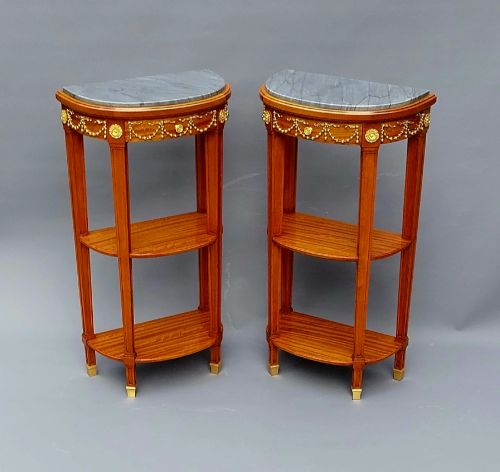
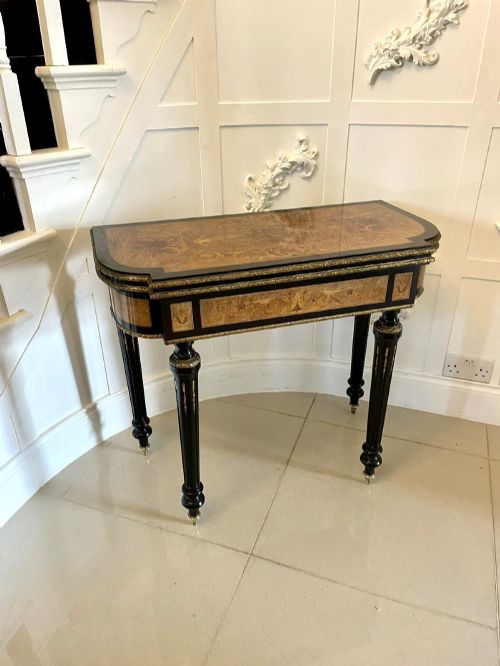
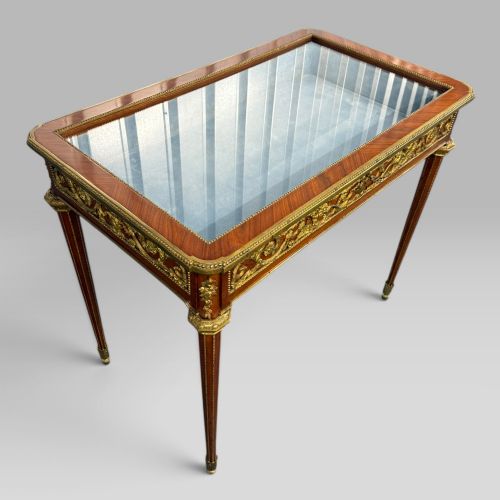
A gilt bronze console table combines structural timber with cast bronze mounts, often topped with fitted marble. The selection on this page centres primarily on nineteenth century French Empire, Louis XVI and Louis XV revival styles, alongside Victorian interpretations.
Most examples function as side tables, card tables or wall-mounting consoles. They range from grand mahogany and ormolu-mounted pieces to smaller ebonised or marquetry-inlaid forms designed for formal drawing rooms and halls.
How they were made
Maker workshops built the carcasses from dense hardwoods including mahogany, rosewood, kingwood, walnut and maple, frequently applying elaborate parquetry, marquetry or Boulle brass inlay to the surfaces. Ormolu and gilt bronze mounts were cast, chased and fire-gilt before being secured to the timber frames.
Heavy marble slabs were cut and polished to fit precisely onto the table bases, serving as durable and decorative upper surfaces. Structural elements often incorporated intricate brass stringing and hand-carved details to complement the metal mounts.
Gilt Bronze Console Table Retail Price Guide 2026
Typical asking prices for gilt bronze console table among the pieces listed under this phrase on Sellingantiques today, from the lower quarter to the upper quarter. They describe what is for sale here now, not the wider market.
The listings show nineteenth century pieces spanning French Empire, Louis XVI and Victorian periods, utilising ormolu, marble, mahogany and rosewood.
What varies in quality
The standard of a gilt bronze console table is defined by the crispness of the bronze chasing and the depth of the fire-gilding. Superior pieces exhibit sharply rendered foliage and figures that sit tight against the timber without clumsy gaps.
Cabinetwork precision similarly separates the finer examples from simpler work, visible in the alignment of the marquetry and the weight of the marble top. Pieces bearing workshop stamps or attributions to prominent cabinetmakers demonstrate higher tier execution throughout the frame.
Krieger Paris·François Linke·Gillows
The Gilt Bronze Console Table Glossary
- Ormolu
- Gilded bronze, where finely ground gold is amalgamated with mercury and applied to cast bronze before heating. This technique creates a rich, lasting metallic lustre characteristic of fine French furniture.
- Console table
- A table designed to stand against a wall, historically supported by wall brackets or decorative front legs. These pieces often feature elaborate ornamentation on the front and sides.
- Marquetry
- Decorative veneer work forming pictorial or geometric patterns using various coloured woods. Craftsmen cut thin slices of timber and fit them together precisely into the surface of the carcase.
- Boulle
- A form of marquetry developed in France using tortoiseshell and brass inlaid in contrasting patterns. This technique was revived during the nineteenth century on tables and cabinets.
- Parquetry
- Geometric wood inlay forming patterns such as cubes or chequers across a table top. It differs from marquetry by focusing on repeating shapes rather than pictorial designs.
Gilt Bronze Console Table: Frequently Asked Questions
What is a gilt bronze console table?
A gilt bronze console table is a decorative furniture piece featuring cast bronze mounts and a timber frame, often finished with a marble top. These tables were designed for formal interior reception spaces.
They appear in various revival styles including Louis XV, Louis XVI and French Empire, reflecting nineteenth century taste for classical European design.
How were these tables used historically?
These tables served as ornamental furniture placed against walls or in hallways to display decorative objects, lamps and mirrors. Some dual-purpose examples functioned as card tables with folding tops for parlour games.
Their grand scale and reflective metal mounts helped to bounce light around nineteenth century drawing rooms and state apartments.
Where should I place a console table?
A console table suits hallways, entrance spaces and living rooms where it can stand flat against a wall. Because many examples feature finished backs or wall-mounting brackets, placement depends on whether the piece is freestanding or secured.
Pairing the table with a matching mirror creates a traditional focal point within a room's interior scheme.
How do I identify nineteenth century revival styles?
Nineteenth century revival pieces borrow heavily from earlier French royal aesthetics, showing symmetrical neoclassical lines in Louis XVI styles or asymmetrical flowing curves in Louis XV and Rococo examples. The presence of machine-prepared timbers combined with hand-chased ormolu usually points to this later Victorian period.
Maker attribution stamps or distinct regional cabinetmaking signatures help confirm the exact workshop origin.