
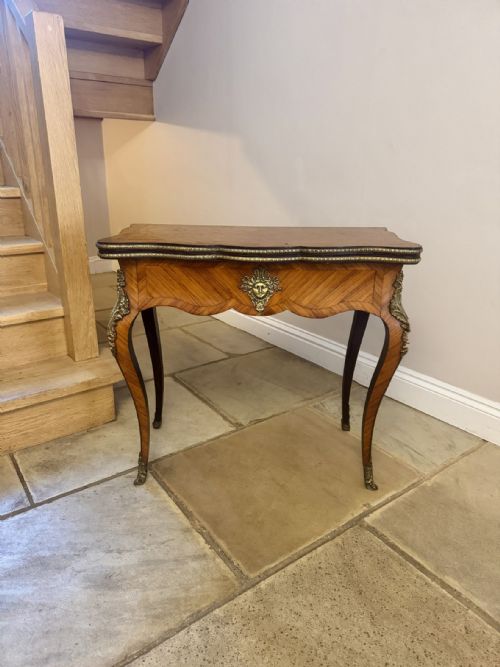
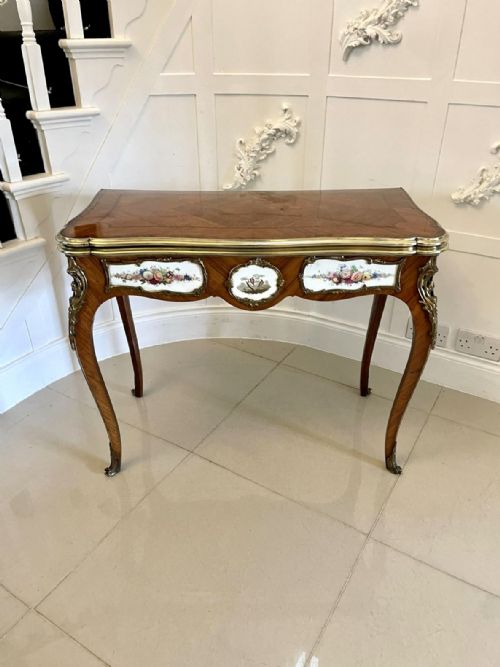
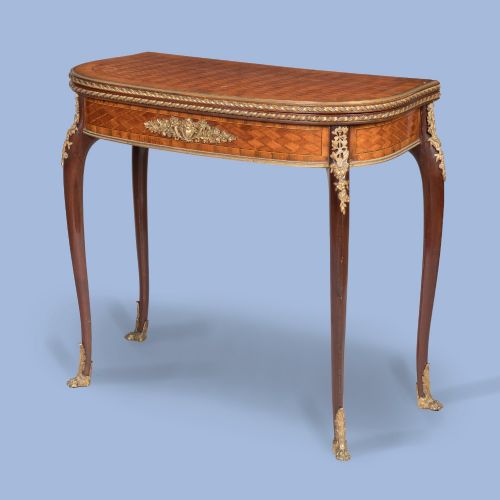
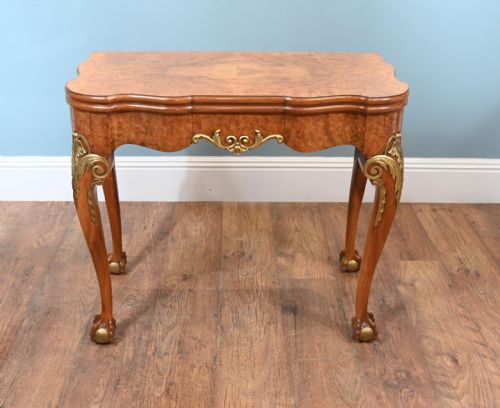


Ormolu Mounted Gaming Table
An ormolu mounted gaming table brings French revival elegance and practical folding surfaces into nineteenth-century drawing rooms.
Ormolu Mounted Gaming Table
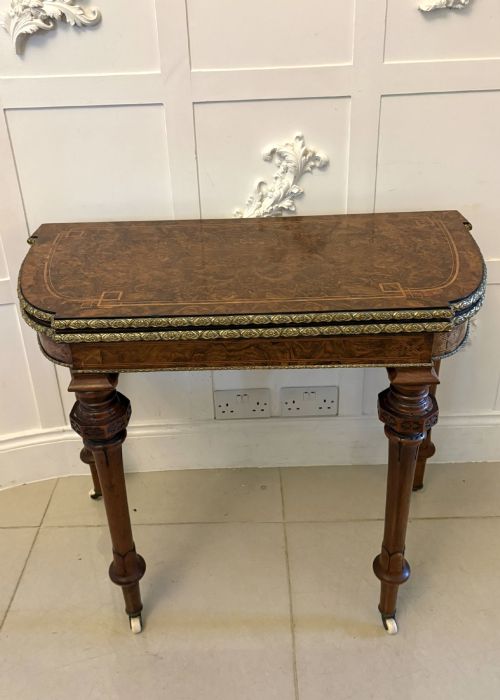
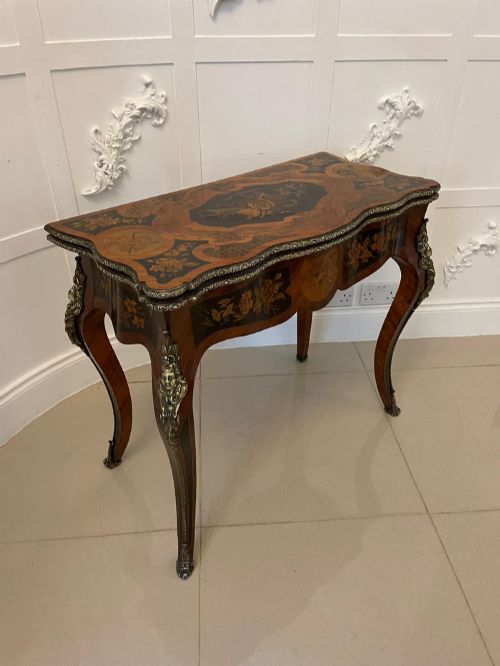
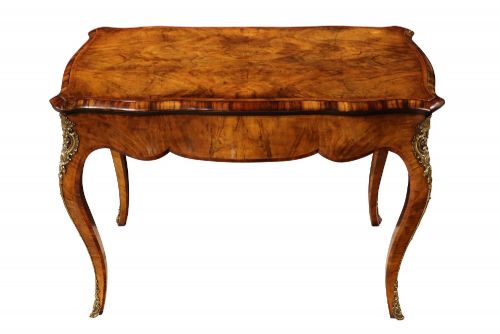
An ormolu mounted gaming table is a dual-purpose piece designed for card playing and social display, appearing most often in nineteenth-century Victorian and French Louis XV or Louis XVI revival styles.
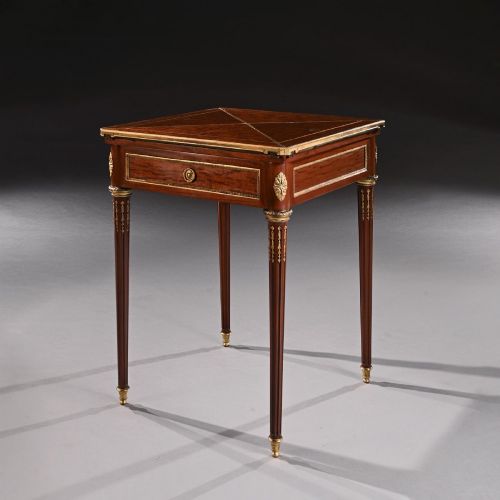
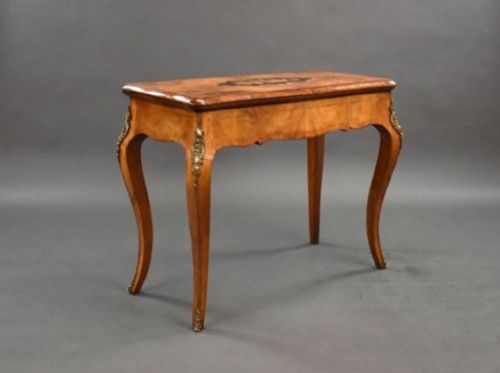
These tables typically employ a fold-over top or an envelope mechanism to conceal a baize-lined playing surface when not in use, serving as a console or side table against a wall.
Makers working in London and Paris constructed these pieces using exotic timbers and gilt bronze mounts, creating versatile furniture for nineteenth-century entertaining.
How they were made
Cabinetmakers utilised structural carcases of walnut, mahogany, or oak, applying veneers of kingwood, burr walnut, rosewood, and amboyna over the exterior surfaces.
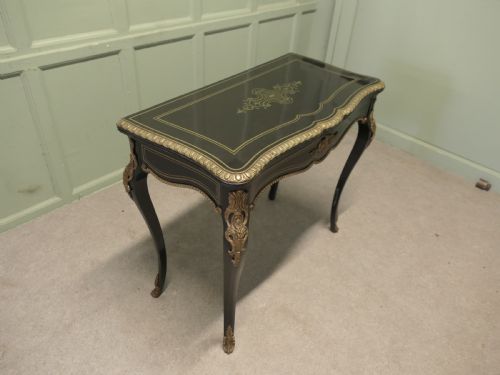
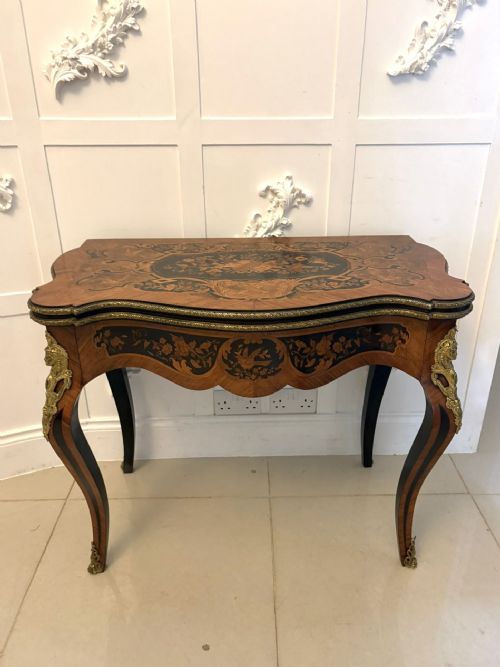
Marquetry and parquetry patterns employ geometric and floral arrangements of exotic woods, sometimes combined with brass inlay or tortoiseshell in Boulle work.
Cast and gilt ormolu mounts frame the aprons, corners, and legs, while porcelain plaques occasionally inset into the timber provide additional decoration.
Secret compartments hidden inside these tables occasionally retain nineteenth-century playing cards and bone gaming counters.
What varies in quality
The precision of the cabinetwork and the crispness of the gilt bronze casting define the upper tier of production, distinguishing workshop pieces from standard commercial output.
Selected timbers with rich natural grain and intricate floral marquetry contrast with simpler veneered surfaces found on more utilitarian examples.
Antoine Lampre·G T Morant·François Linke·Epstein and Co·Maple and Co·Joseph-Emmanuel Zwiener·Edwards and Roberts·Henry Dasson
The Ormolu Mounted Gaming Table Glossary
- Ormolu
- Gilt bronze mounts applied to furniture. This technique involves mercury gilding cast bronze elements to create a bright golden finish.
- Marquetry
- Inlaid wood designs forming pictorial or floral scenes. Craftsmen cut various coloured veneers and fit them together into a paper-thin sheet before gluing.
- Parquetry
- Geometric wood inlay patterns. Triangular, diamond, or rectangular pieces of timber create repeating mathematical designs across the table top.
- Boulle
- Brass and tortoiseshell inlay technique developed in France. Artisans cut matching sheets of metal and shell simultaneously to produce contrasting negative panels.
- Kingwood
- A dense, heavily figured Brazilian timber with dark brown and violet stripes. Cabinetmakers prized this wood for high-status nineteenth-century French revival furniture.
Ormolu Mounted Gaming Table: Frequently Asked Questions
How do you open an ormolu mounted gaming table?
Most examples feature a fold-over top that swivels on a pivot hinge or lifts to reveal a hidden compartment beneath the playing surface.
Some variations use a pivoting mechanism where the rear legs swing out to support the unfolded leaf during card games.
Where were these tables placed in a room?
Victorian and nineteenth-century interiors positioned these console tables flat against drawing room walls when closed, displaying the marquetry top and ormolu mounts.
Hosts moved the furniture into the centre of the room only when guests gathered for evening card games.
What is the difference between Louis XV and Louis XVI styles?
Louis XV revival pieces emphasise asymmetrical curves, cabriole legs, and elaborate rococo ormolu mounts with naturalistic floral motifs.
Louis XVI style furniture introduces straight tapered legs, geometric parquetry, and neoclassical symmetry with crisp architectural lines.
How do you maintain the wood and ormolu?
Gentle dusting with a dry microfibre cloth protects the polished timber and delicate marquetry from surface scratches over time.
Avoid liquid cleaners on the gilt bronze mounts to preserve the original ormolu finish without stripping the gilding.