


Antique French Folding Table
These pieces are antique french folding tables, offering adaptable surfaces and period charm for modern interiors.
Antique French Folding Table
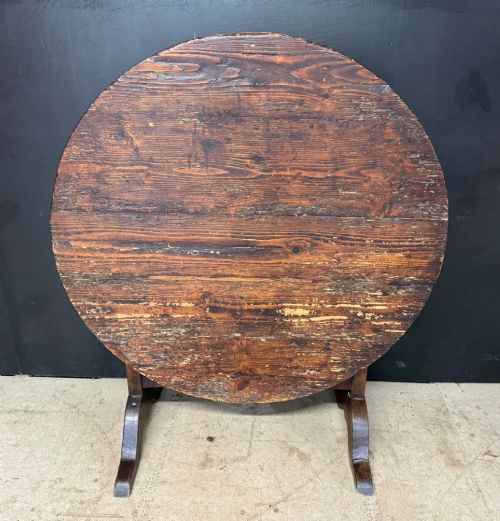
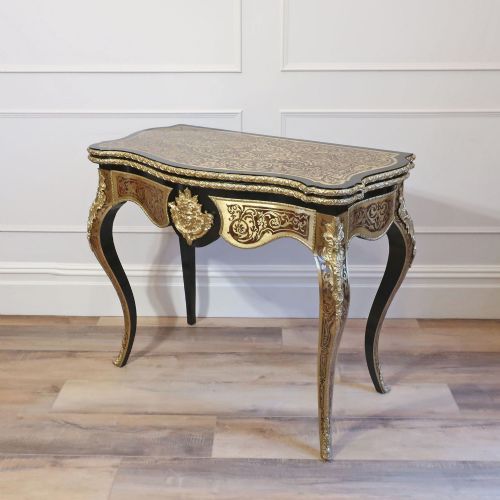
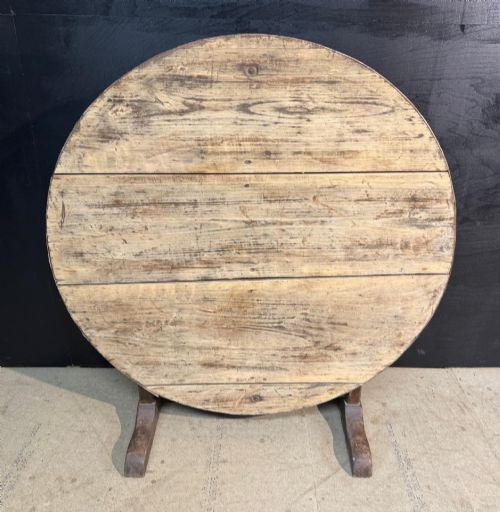
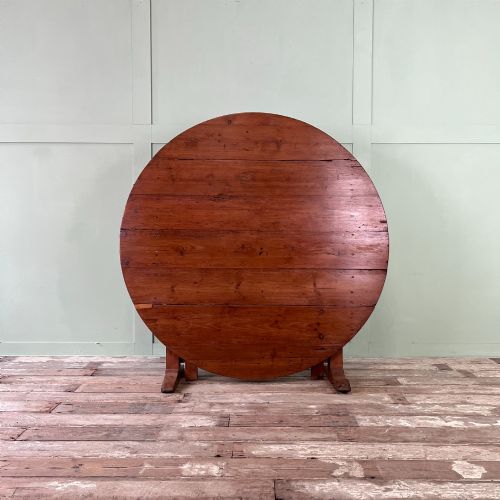
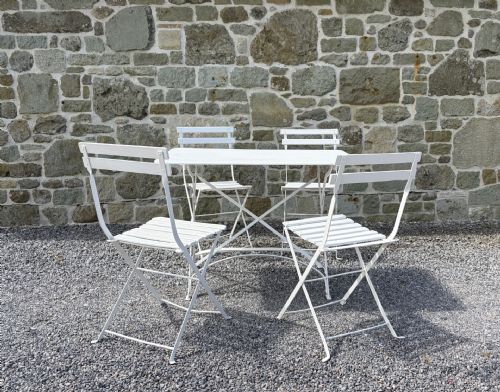
When you search for an antique french folding table, you encounter diverse forms designed for varied domestic uses. The selection includes card tables, games tables, console tables, and occasional tables that fold or swivel to reveal hidden surfaces. Vineyard and vendange tables also appear, representing rustic folding designs intended for utilitarian grape harvests.
Most examples originate from the nineteenth century, spanning Victorian interpretations through to the Edwardian era and the early twentieth century. Makers worked within established historical styles such as Louis XV Revival, Louis XVI Revival, and French Provincial, shaping walnut, oak, cherry, and kingwood into adaptable pieces for the home.
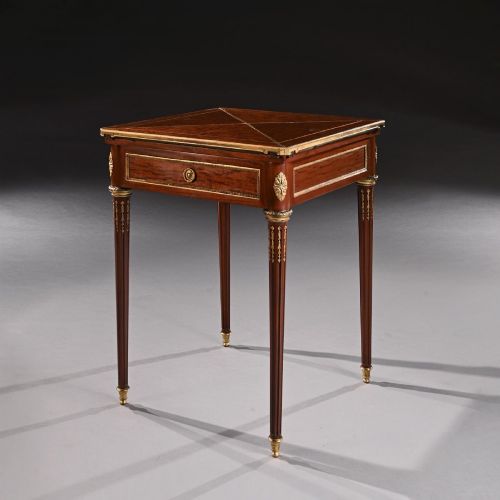
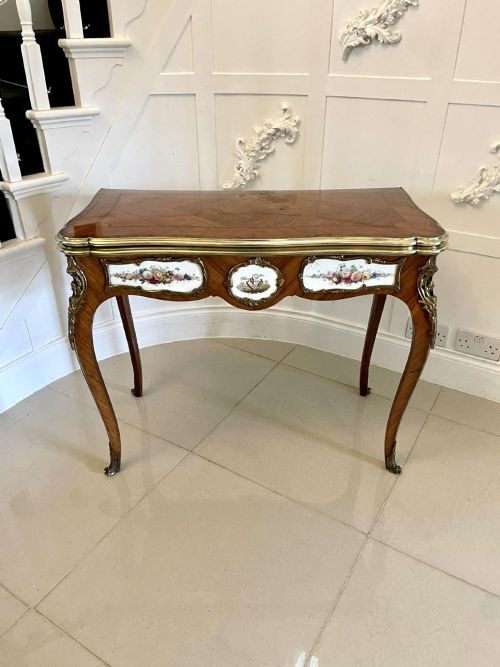
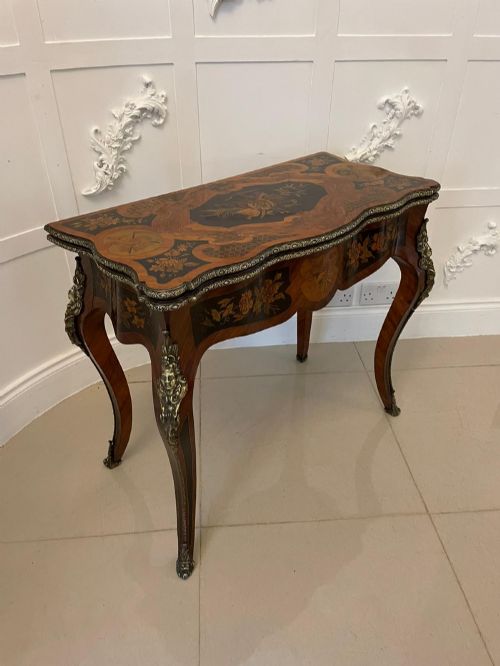
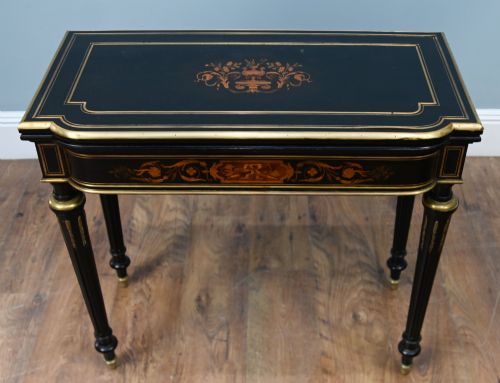
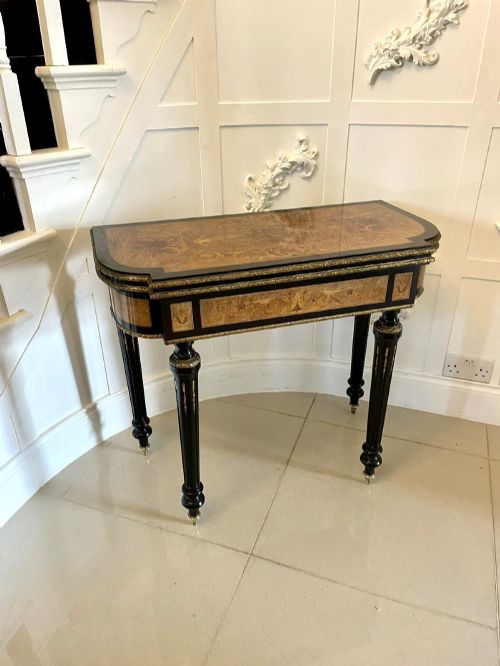
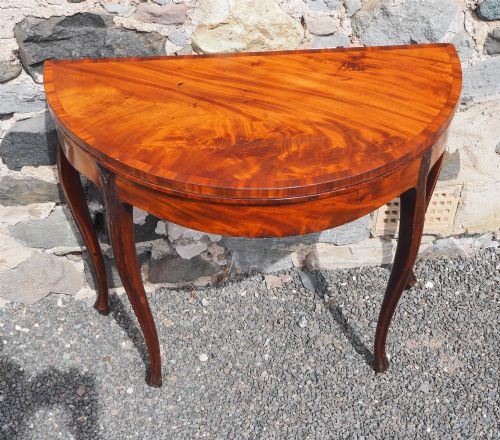
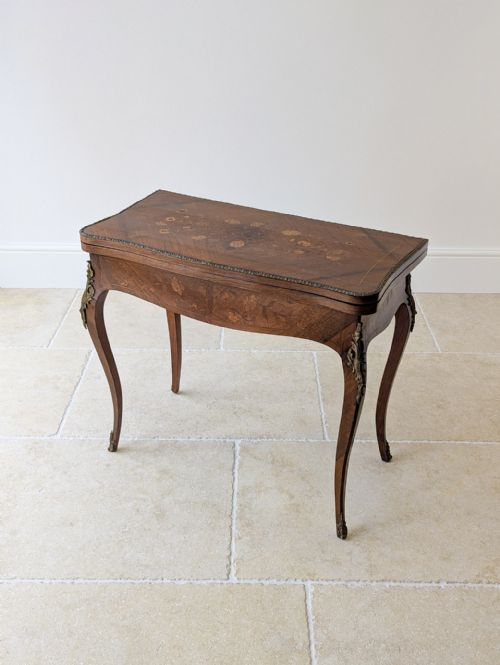
Card and games tables dominate the offerings, often featuring fold-over tops supported by clever pivoting mechanisms or hinged legs. These tables transition easily from compact side consoles into functional game boards or dining spaces, reflecting the social habits of nineteenth-century drawing rooms.
Materials and Construction
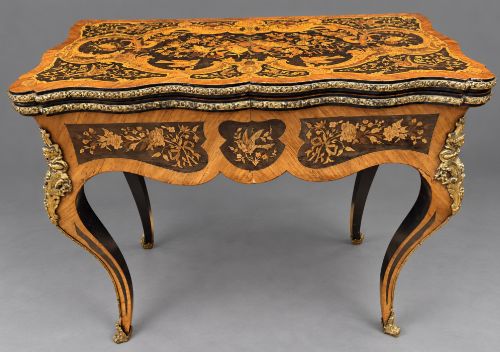
Cabinet makers utilised a rich palette of timbers, pairing structural woods like oak, mahogany, and walnut with decorative veneers including kingwood, satinwood, and rosewood. Marquetry and parquetry patterns add geometric or floral interest to table tops, often executed with meticulous cross-banding in exotic woods.
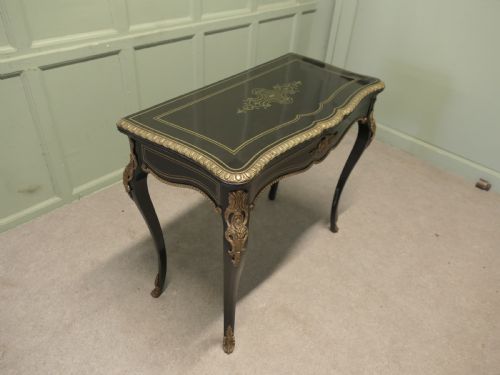
Metal mounts in brass and ormolu provide structural reinforcement and decorative flourish along edges, aprons, and cabriole legs. Where folding mechanisms are employed, robust brass hinges and pivoting timber brackets ensure smooth transformation without compromising stability.
Antique French Folding Table Retail Price Guide 2026
Typical asking prices for french folding table among the pieces listed under this phrase on Sellingantiques today, from the lower quarter to the upper quarter. They describe what is for sale here now, not the wider market.
Distinguishing Fine Workmanship
Quality rests upon the precision of the joinery and the selection of timber veneers. Superior pieces demonstrate seamless alignment when folded, with hinges and pivoting frames operating silently and flush to the apron.
The sophistication of the marquetry and the crispness of the cast ormolu mounts signal the workshop standard. Master cabinet makers integrated bronze and brass mounts that fit the timber contours exactly, whereas lesser examples rely on standard commercial castings.
Antoine Lampre·Maison Giroux·G T Morant·François Linke·Maison Mottheau·Joseph-Emmanuel Zwiener·Edwards & Roberts
The Antique French Folding Table Glossary
- Kingwood
- A dense, heavy tropical timber with dark violet-brown grain used extensively for high-end French veneer work. It brings rich colour contrast to marquetry panels.
- Ormolu
- Gilt bronze mounted onto furniture edges and corners for decorative effect. The technique involves applying a gold amalgam to cast bronze.
- Marquetry
- The art of applying small pieces of veneer to form decorative pictures or patterns. Cabinet makers cut various exotic woods to create floral or geometric motifs.
- Vendange table
- A large folding table traditionally used during grape harvests in France. These rustic oak or cherry pieces fold flat for seasonal storage.
- Parquetry
- Geometric mosaic woodwork resembling brickwork or parquet flooring. Artisans arrange small wood tiles symmetrically across the table top.
Antique French Folding Table: Frequently Asked Questions
How do card tables work?
Card tables feature a hinged or swivel top that folds out to double the surface area for gaming or dining. A pivoting rear leg or folding gate-leg swings out to support the extended leaf.
Beneath the surface, many incorporate a hidden compartment designed to store playing cards, counters, and dice when the table is closed against the wall.
What is a vendange table?
A vendange table is a rustic French folding table originally utilised during the autumn grape harvest. Their folding trestle bases allowed workers to pack them flat for transport between vineyards.
Today, their robust cherry and oak construction makes them popular as kitchen dining tables or garden furniture with distinct historical character.
How do I identify Louis XV style?
Louis XV style pieces are characterised by flowing asymmetrical lines, curved cabriole legs, and naturalistic scrollwork. Furniture from this revival period avoids straight lines in favour of organic serpentine shapes.
Ornate floral marquetry and delicate ormolu mounts often accentuate the flowing contours of the walnut or kingwood frames.
Where were these tables used?
These tables served multiple functions across different rooms in nineteenth-century homes. Card tables stood against drawing room walls until guests gathered for evening entertainment.
Smaller occasional and folding tables moved easily between parlours and dressing rooms to provide temporary surface space as required.