
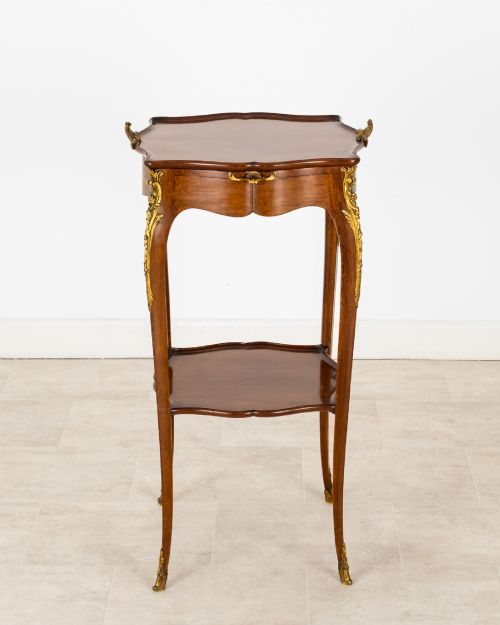


French Revival Accent Table
These pieces known as a french revival accent table bring decorative elegance and historical continental charm into domestic interiors.
French Revival Accent Table
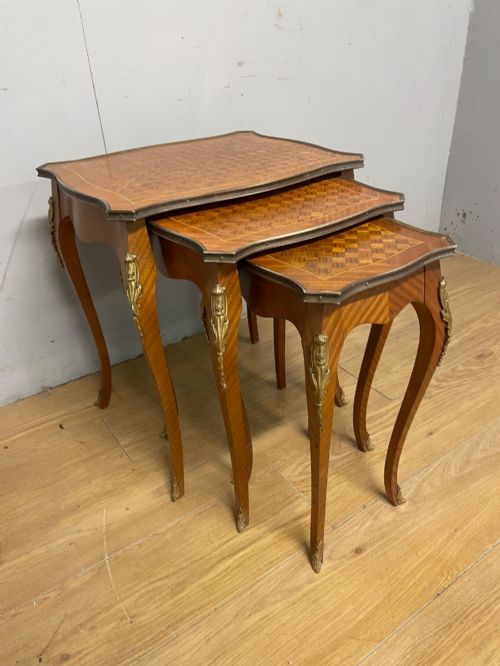
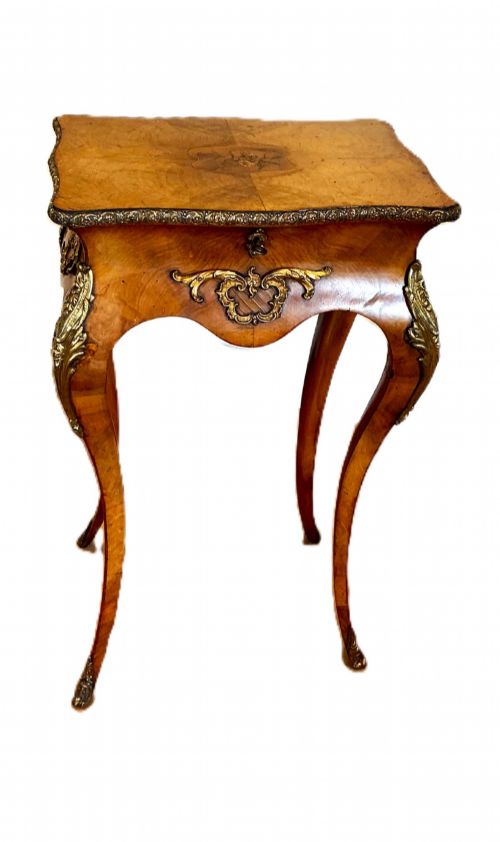
A french revival accent table typically takes the form of an occasional, side, or gueridon table created during the nineteenth and early twentieth centuries. These furnishings draw stylistic inspiration from earlier periods such as Louis XV and Louis XVI, incorporating organic curves and classical symmetry. Buyers searching this term encounter compact occasional surfaces designed to sit alongside seating or within smaller reception spaces.
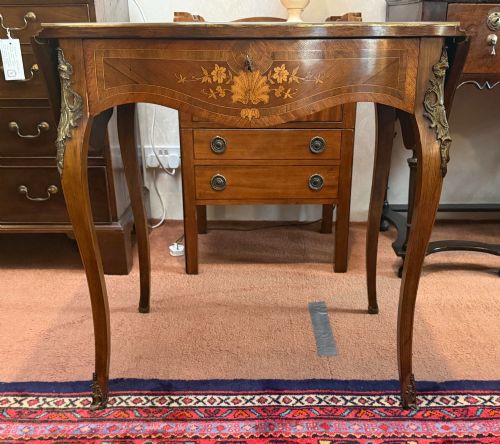
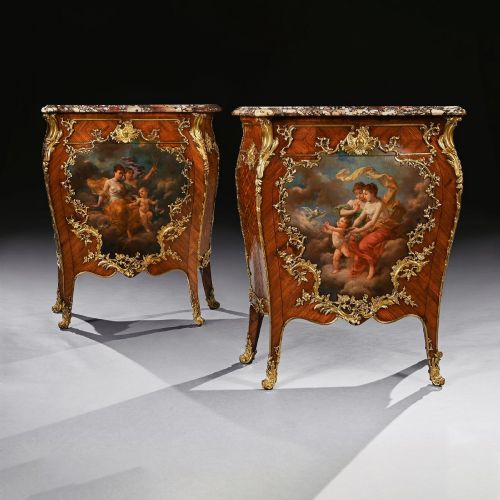
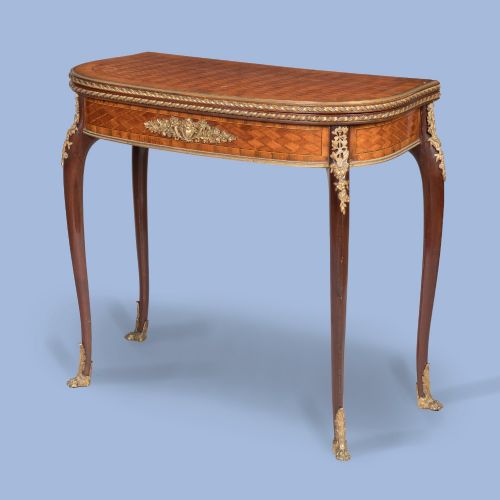
The selection ranges from simple walnut or mahogany side tables to elaborate pieces featuring marquetry inlay and gilt bronze mounts. Alongside standard occasional tables, related forms such as bedside chests, card tables, and guéridons appear frequently across the periods. Nineteenth-century examples dominate the offerings, spanning from mid-century productions up to Edwardian and early twentieth-century variations.
How they were made
Cabinetmakers utilised dense timbers including walnut, kingwood, mahogany, rosewood, and satinwood as foundations for parquetry and marquetry surface patterns. Artisans shaped these woods into circular, shaped, or rectangular tops, often incorporating hinged leaves or lower tiers.
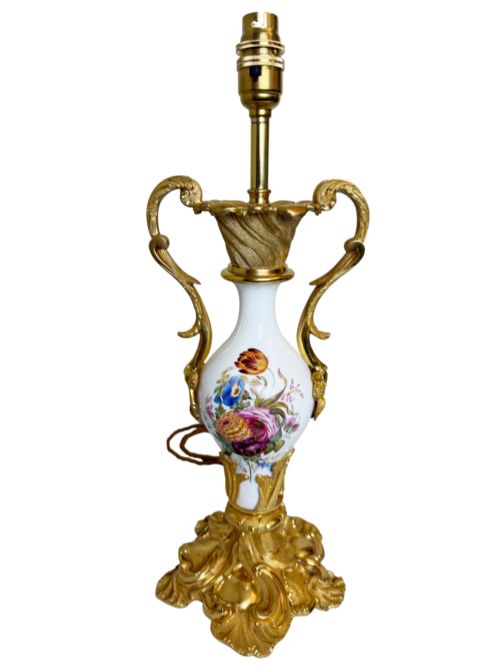
Cast bronze and ormolu mounts provide structural enrichment and decorative borders, frequently complemented by inset marble slabs on guéridons and commodes. Hand-painted details and porcelain plaques appear on specific lamp and table combinations, showing the integration of multiple decorative workshops.
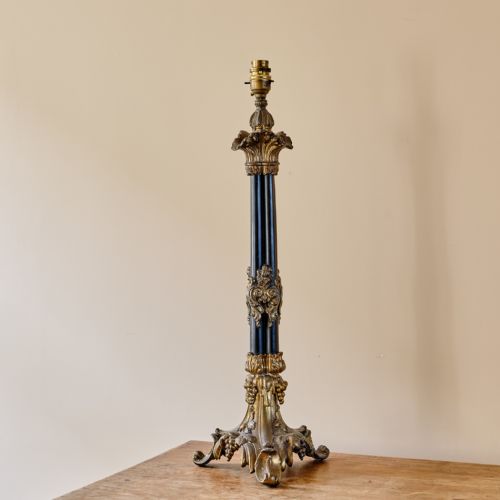
Several tables moonlight as lighting fixtures, carrying heavy bronze ewer lamps and porcelain centrepieces atop their marquetry surfaces.
What varies in quality
The standard of execution in the cast ormolu mounts separates ordinary production from exceptional workshop output. Finer tables display crisply chased bronze detailing with deep relief, whereas lesser pieces show softer cast definition and minimal hand-finishing.
The precision of the marquetry and parquetry work dictates the grade of the piece. Superior examples integrate varied grain timbers with exact geometric or floral alignment, while simpler items rely on plain veneers without inlaid enrichment.
Joseph-Emmanuel Zwiener·François Linke·Haentgos Freres·Gillows
The French Revival Accent Table Glossary
- Ormolu
- Gilded bronze used for decorative mounts and feet. This technique involved applying a gold amalgam to cast bronze before heating.
- Marquetry
- Inlaid wood veneers forming decorative pictures or patterns. Cabinetmakers utilised contrasting timbers to create floral or geometric designs across tabletops.
- Guéridon
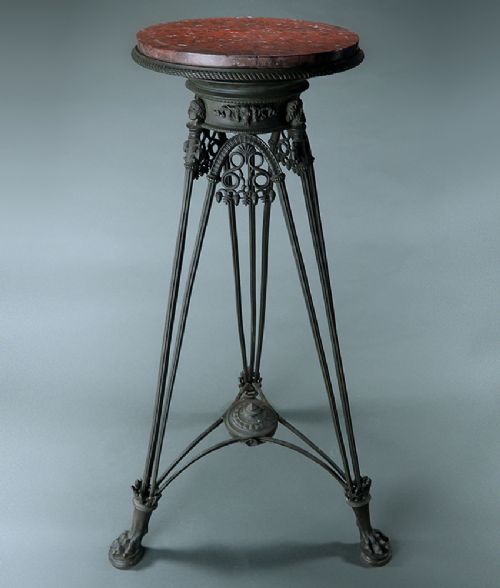
- A small circular occasional table supported on a central pillar or tripod base. These often feature inset marble tops and bronze mounts.
- Parquetry
- Geometric wood inlay forming patterned surfaces such as cubes or chequers. This technique differs from marquetry by using angular repeating shapes.
- Vernis Martin
- A type of simulated Japanese lacquer developed in France. Artisans applied successive coats of varnish to achieve a translucent decorative finish.
French Revival Accent Table: Frequently Asked Questions
What is a French revival accent table?
A French revival accent table is a decorative occasional surface produced in the nineteenth or early twentieth century. These furnishings emulate earlier royal French aesthetics from the reigns of Louis XV and Louis XVI.
Craftsmen built them using hardwoods and ornamented them with gilt bronze mounts and inlaid veneers. They served as functional display surfaces in period drawing rooms and boudoirs.
How do I identify Louis XV and Louis XVI styles?
Louis XV style pieces are defined by asymmetrical curves, cabriole legs, and rococo floral motifs. The overall lines remain organic and flowing.
Louis XVI style shifts toward classical symmetry, straight tapered legs, and geometric marquetry patterns. Friezes often incorporate straight lines and neoclassical ornamentation.
Where should I place an accent table?
These tables suit placement beside sofas, armchairs, or against drawing room walls as display surfaces. Their compact dimensions allow them to function effectively in entrance halls and bedrooms.
Marble-topped guéridons work well as independent centrepieces or plant stands. Smaller bedside chests fit appropriately beside low period beds.
How do I care for polished wood and ormolu?
Dust surfaces regularly with a soft, dry cloth to prevent particulate buildup on the wood and metal. Avoid placing tables near direct heat sources or strong sunlight to protect the polish.
Clean gilt bronze mounts gently without abrasive chemicals that could strip the original gilding. Apply a quality wax periodically to nourish walnut, mahogany, and exotic veneer surfaces.