

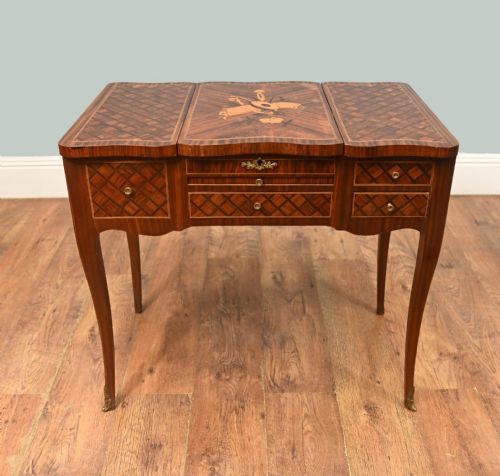


Louis XVI Parquetry Table
A louis xvi parquetry table brings geometric timber patterns and neoclassical symmetry into a room through surviving nineteenth-century revival craftsmanship.
Louis XVI Parquetry Table
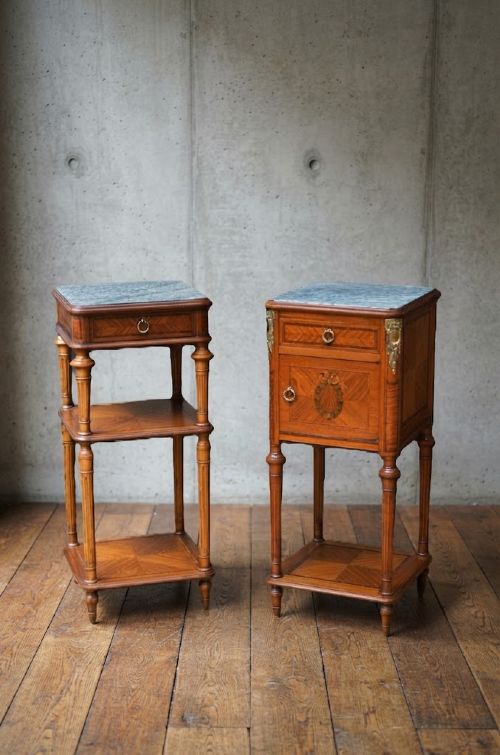
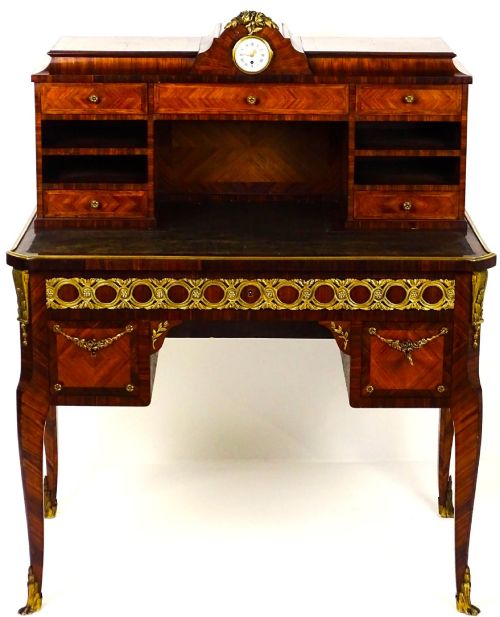
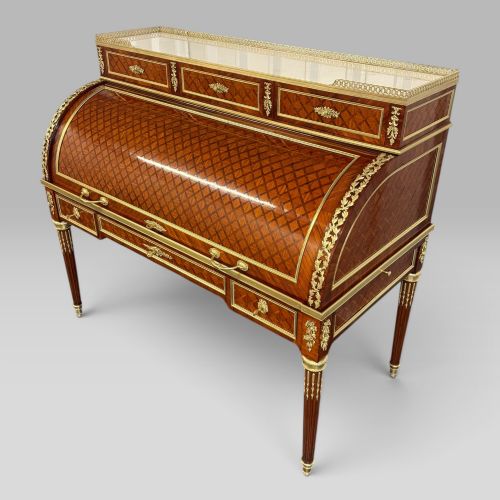
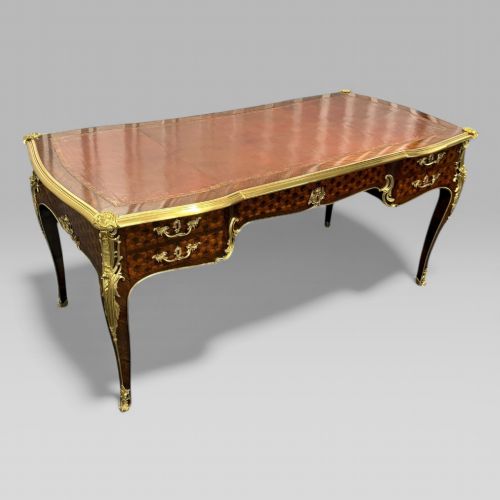
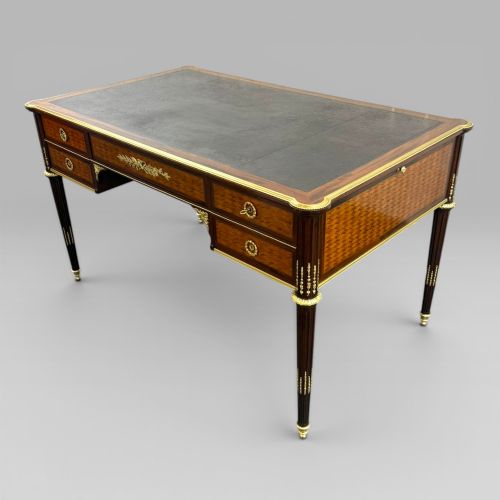
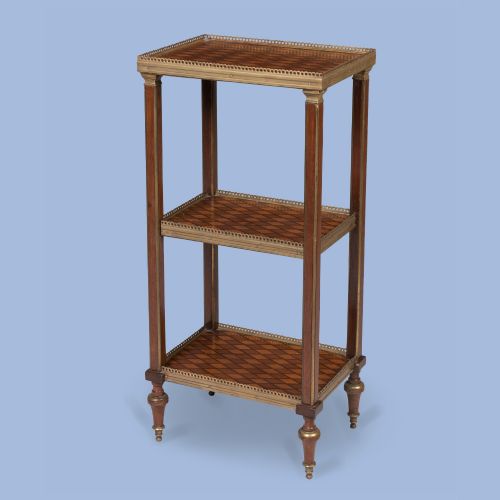
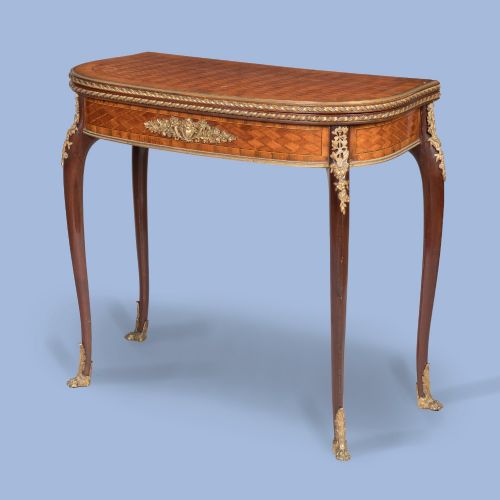
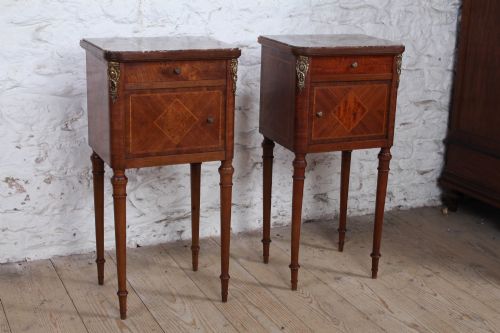
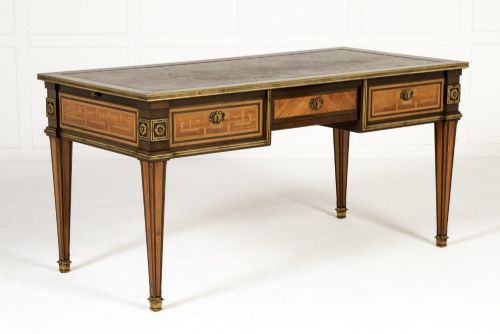
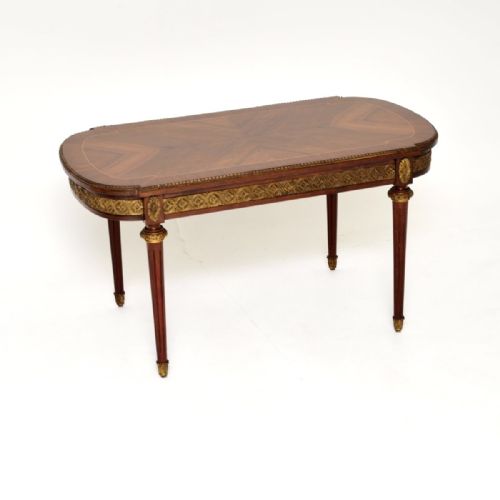
A louis xvi parquetry table appears primarily across nineteenth-century and early twentieth-century revivals, drawing on French neoclassical design vocabulary. These pieces take diverse domestic forms, ranging from side tables and occasional centre tables to dedicated writing desks, card tables and bedside cabinets.
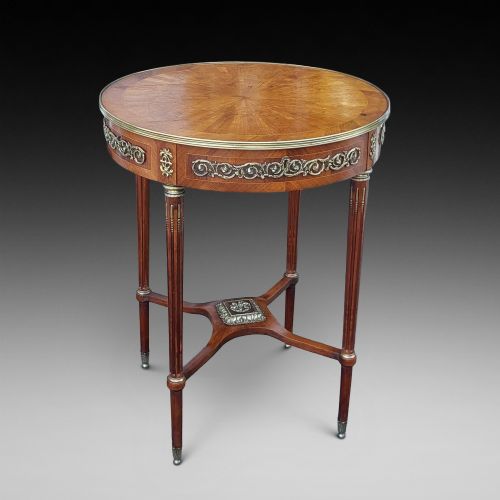
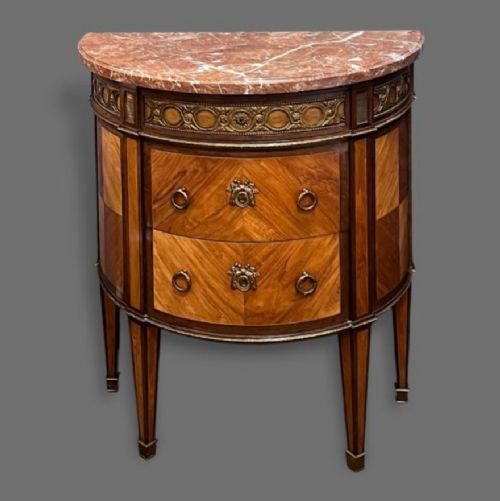
The selection encountered here leans heavily toward French workshop production from the eighteen-eighties onward, alongside Victorian interpretations. Buyers will find rectangular, demi-lune, and circular tops designed for specific functions within reception rooms and bedrooms.
Craftsmanship and design
Quality rests upon the precision of the timber parquetry and the crispness of the cast ormolu mounts framing the structure. Finer pieces demonstrate seamless veneer alignment across complex curved surfaces and drawer fronts.
Workshop attribution plays a role, with documented pieces by notable makers showing superior structural execution and metalwork compared to unsigned revival alternatives.
Listings feature walnut, satinwood, kingwood, mahogany, and marble across nineteenth-century and early twentieth-century periods.
Paul Sormani·François Linke·A Hugnet Paris·Donald Ross·Maison Mottheau·Charles Topino
The Louis XVI Parquetry Table Glossary
- Parquetry
- Geometric wood mosaic work formed by fitting small veneer pieces together. This technique creates patterned tabletops.
- Ormolu
- Gilt bronze mounts applied to furniture for decoration and edge protection. These cast elements define neoclassical styling.
- Kingwood
- A dense, heavily figured timber prized for fine cabinetmaking. It provides rich dark tones in parquetry designs.
- Bureau plat
- A freestanding double-sided writing desk featuring a flat top. These often include leather inserts and gilt mounts.
- Guéridon
- A small circular occasional table supported by a central pillar or multiple legs. They frequently feature marble tops.
Louis XVI Parquetry Table: Frequently Asked Questions
Where were these tables used originally?
These pieces served functional roles in reception rooms, boudoirs, and bedrooms as writing desks, card tables, or bedside cabinets. Their compact sizes allowed flexible placement.
Surviving forms include centre tables designed to sit away from walls and side tables for ornamental display.
How do I care for marble top surfaces?
Clean the stone using a soft, damp cloth and avoid acidic liquids that can etch the polished surface. Regular dusting protects the surrounding wood veneer.
Keep the timber away from direct heat sources to prevent the parquetry from drying out or lifting.
Are signed tables more desirable?
Signed pieces or those attributed to major makers command stronger interest due to documented workshop standards. Marks appear stamped into the wood or cast onto the bronze mounts.
Unsigned revival examples still offer high-quality cabinetmaking characteristic of the period.