



Antique Marble Clock Set
An antique marble clock set brings together a heavy stone timekeeper and matching side pieces, creating a balanced, monumental presence for a mantelpiece.
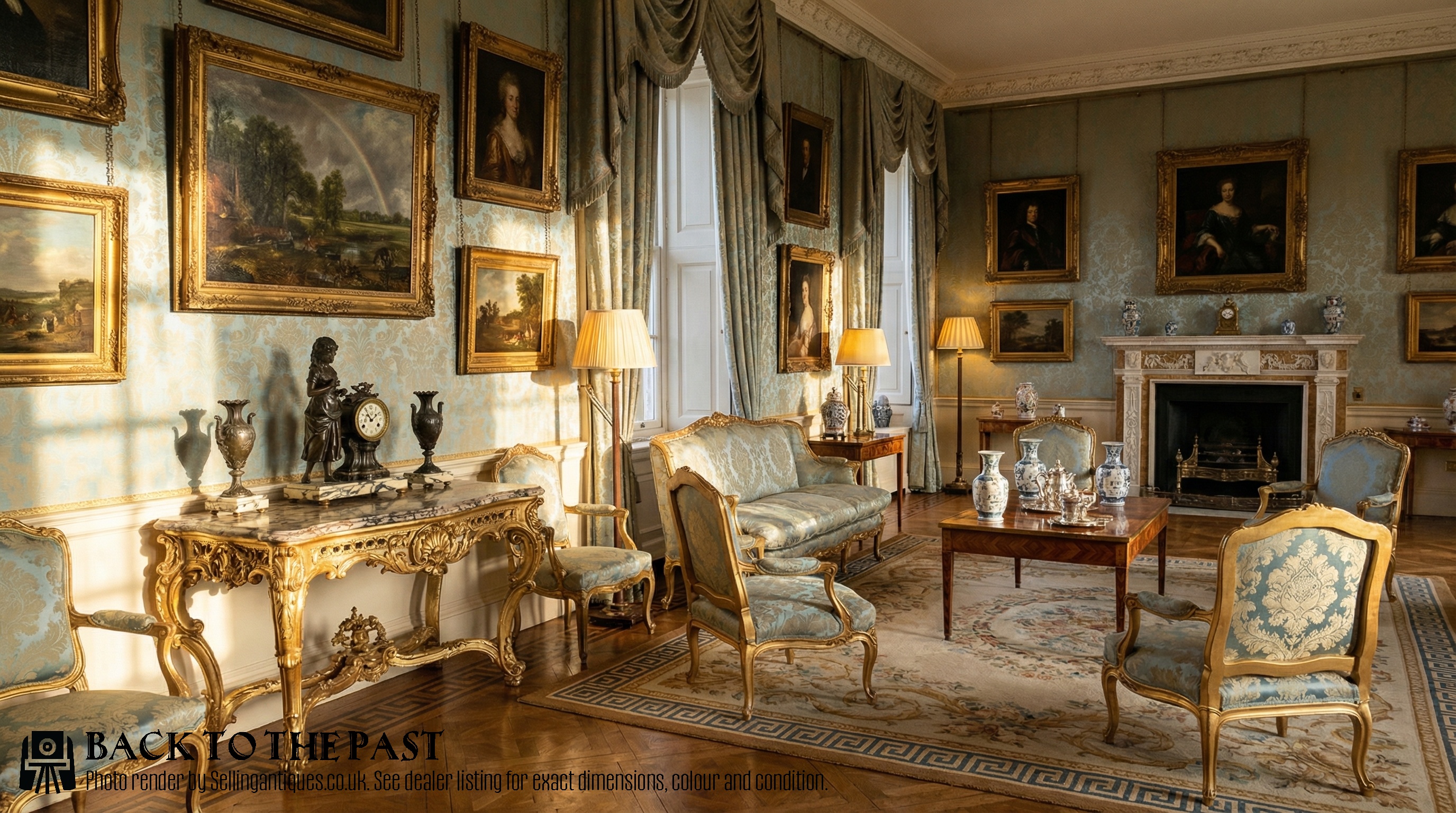
Antique Marble Clock Set
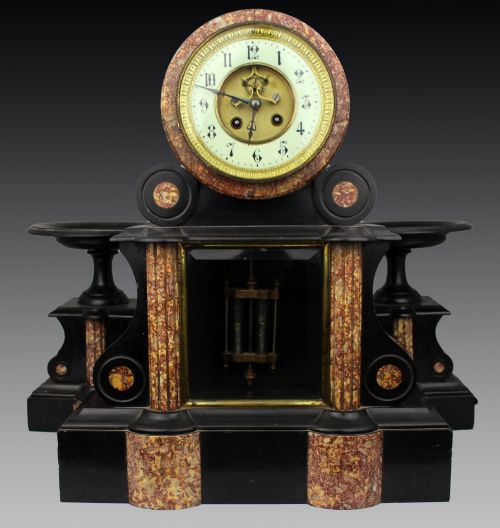
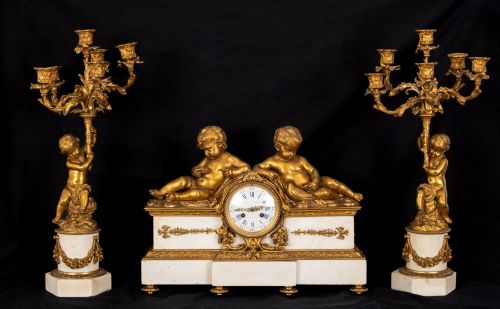
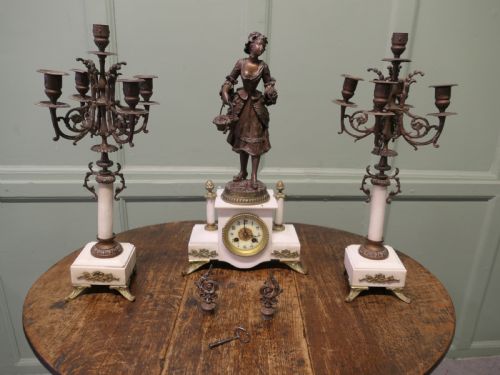
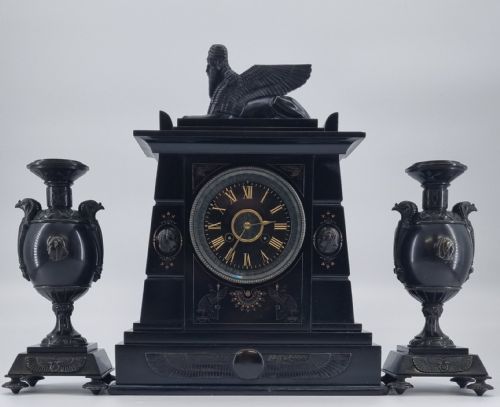
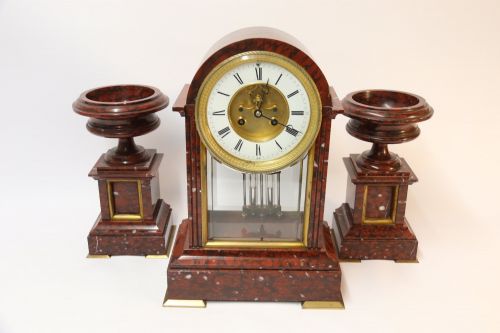
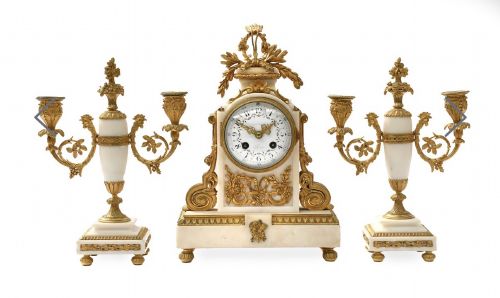
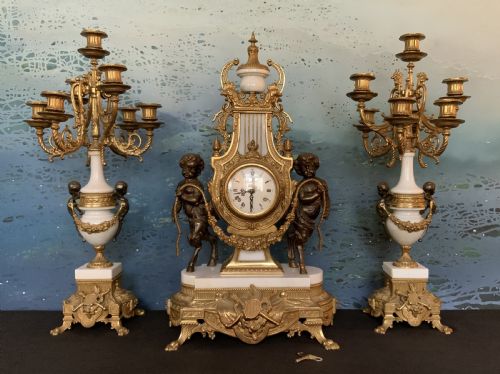
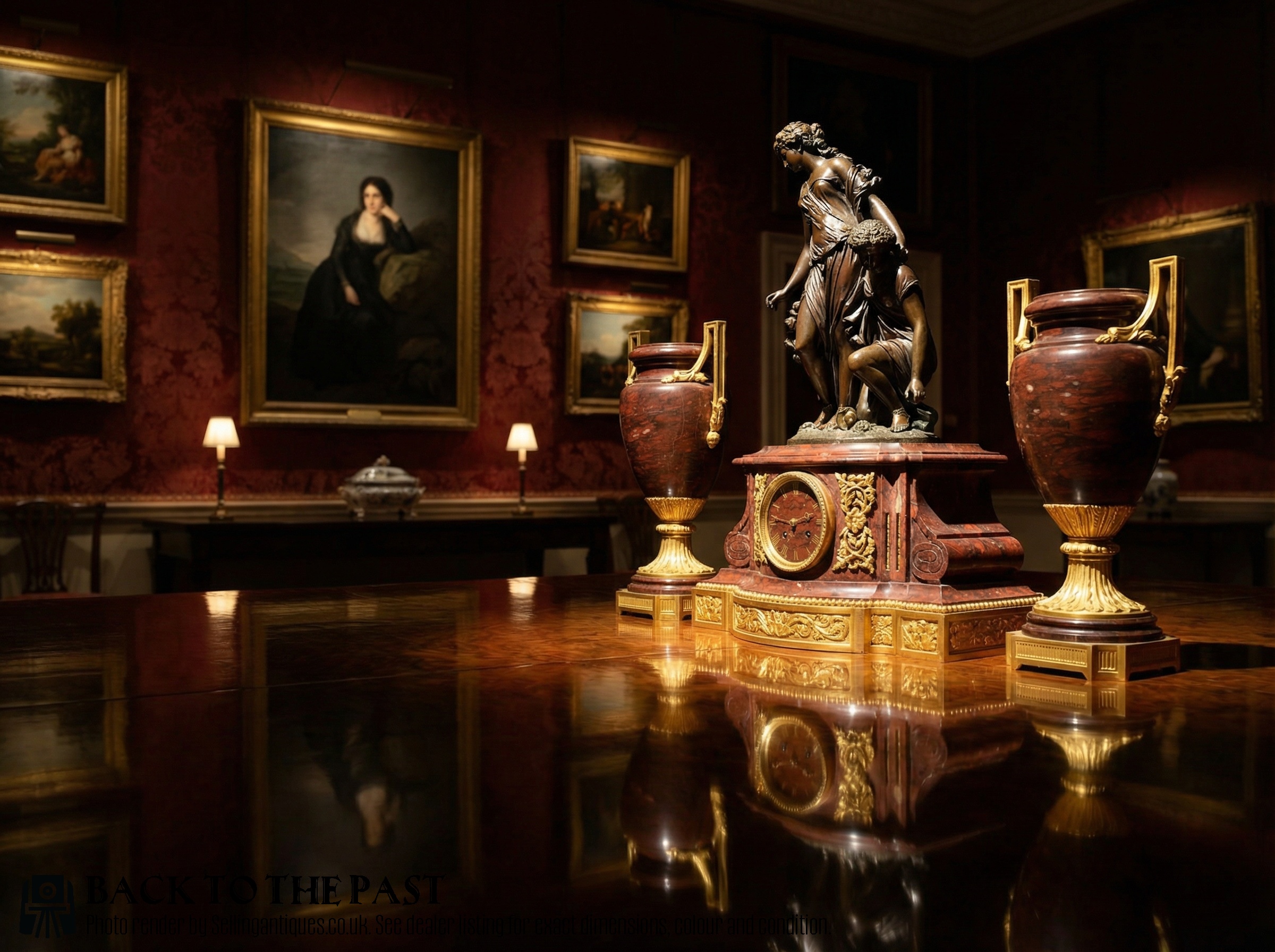
An antique marble clock set typically comprises a central mantel clock accompanied by a matching pair of side pieces, such as candelabras or urns, forming a unified three-piece arrangement. When exploring this selection, buyers encounter everything from austere nineteenth-century block stone models to elaborate French Louis XVI style iterations featuring figural sculpture.
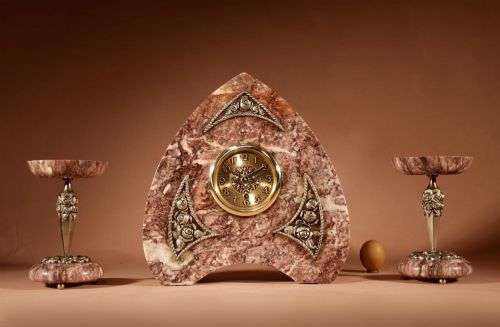
The configurations span various eras, including Victorian, Edwardian, and Art Deco periods, shifting from classical architectural revival designs to streamlined geometric shapes of the early twentieth century. Many examples incorporate side garnitures that echo the materials and decorative motifs of the main dial housing, resulting in a cohesive display for a grand interior surface.
Origins heavily lean towards continental workshops, with French makers dominating the archival record alongside British and Italian interpretations. The central mantel clock anchors the arrangement, driven by mechanical movements designed to keep time and sound the hours across domestic spaces.
Materials and construction methods
Craftsmen shaped solid blocks of natural stone into architectural cases, frequently utilising black slate, white marble, green marble, or sienna variants alongside cast metal mounts. Metal ornamentation, including ormolu, gilt bronze, and brass, was cast, chased, and applied to the stone housings to accentuate corners, bezels, and feet.
Clock faces typically feature enamel chapters protected by glass doors, driven by internal brass mechanisms often engineered for eight-day striking intervals. Sculptural elements cast in bronze or spelter depict cherubs, animals, or human figures, integrated directly into the stone base or flanking the central timekeeper.
Listings feature a wide chronological range, moving from nineteenth-century Victorian marble works to early twentieth-century Art Deco designs.
Distinctions in execution and finish
The grade of an antique marble clock set rests heavily on the crispness of the cast metal mounts and the quality of the stone cutting. Superior examples display finely chased ormolu with deep, hand-finished detailing, whereas lesser pieces rely on simpler, softer brass stampings with minimal hand work.
The weight and selection of the stone itself also divide the range, from uniform commercial black marble blocks to richly figured specimen marbles and intricate portico architectures. Signed movements by recognised makers elevate a piece, demonstrating superior mechanical precision and original matching components across all three garniture elements.
Japy Freres·Samuel Marti·H Luppens Paris·Michel Decoux·Charles Hour
The Antique Marble Clock Set Glossary
- Garniture
- A matching set of ornamental objects designed to be displayed together on a mantelpiece or sideboard, usually consisting of a central clock flanked by two matching vases or candelabras.
- Ormolu
- Gilt bronze created by applying a finely ground high-carat gold-mercury amalgam to a bronze object, which is then heated to drive off the mercury and leave a rich golden coating.
- Portico clock
- A distinct architectural clock style featuring a dial suspended within a frame supported by four or more columns, resembling a classical temple facade.
- Spelter
- An alloy of zinc and lead used as a cheaper substitute for bronze in casting figural and decorative mounts, typically painted or electroplated to resemble heavier metals.
- Bezel
- The metal ring that holds the glass cover in place over the clock face, often hinged to allow access for setting the hands or winding the movement.
Antique Marble Clock Set: Frequently Asked Questions
What is a clock garniture?
A clock garniture is a matched assembly designed for symmetrical placement, uniting a functional mantel clock with twin decorative ornaments like urns or candelabras.
These supplementary pieces share the exact materials, feet, and stylistic vocabulary of the central clock to provide visual balance across a mantelpiece.
How do I wind an antique clock?
Winding requires a dedicated key inserted into the dial holes to tension the internal springs or lift the weight-driven lines, depending on the specific mechanical movement.
Care must be taken not to over-wind the mechanism, stopping the moment resistance is felt to preserve the integrity of the vintage spring steel.
How do I identify Art Deco clocks?
Art Deco pieces substitute classical columns and cherubs for streamlined geometry, stylised animal figures, and contrasting banded marbles.
These twentieth-century designs favour stepped silhouettes, chrome or gilt highlights, and bold numeric layouts that reflect the modernism of the interwar period.
Where should I place my clock set?
These heavy stone assemblies require a deep, sturdy surface capable of supporting considerable weight, such as a large fireplace mantel, sideboard, or heavy console table.
Placement should avoid direct sunlight, damp walls, and heat sources to protect the marble finish and ensure the mechanical pendulum remains plumb.