



Antique Mantelpiece Vases
These antique mantelpiece vases bring heavy bronze, bright glass lustres and painted porcelain straight to the hearth.
Antique Mantelpiece Vases
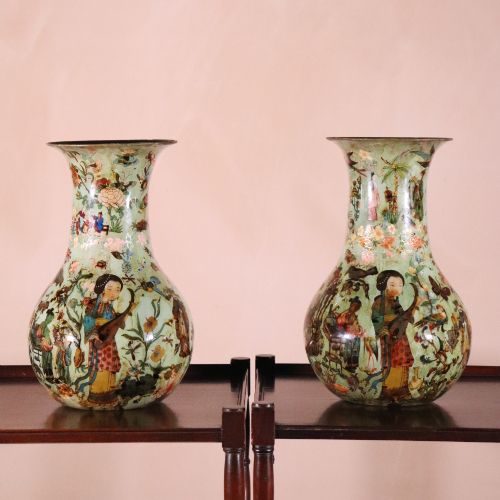
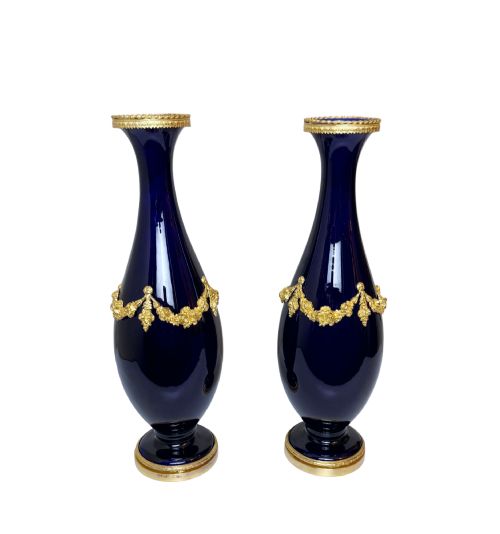
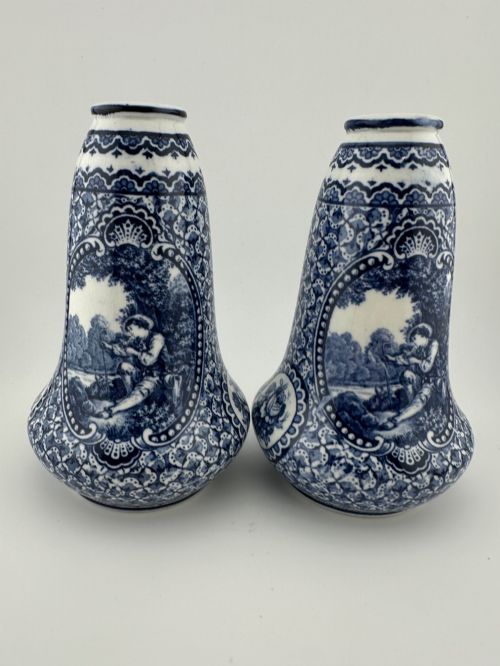
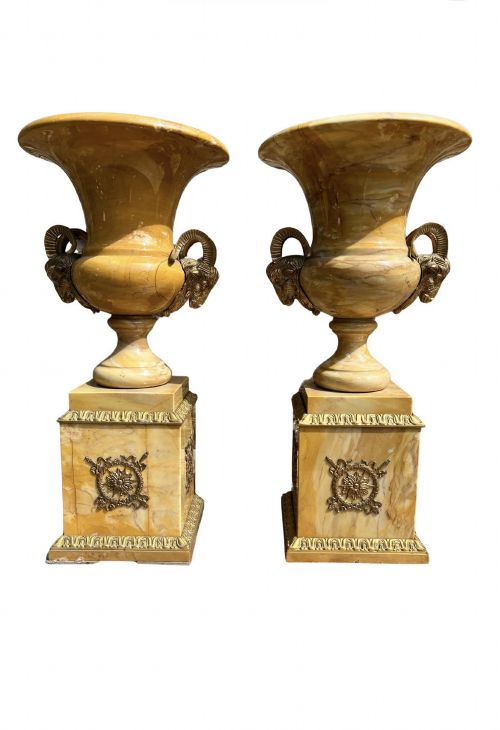
These pieces are decorative vessels meant to stand upon a chimney shelf, often made as matched pairs or larger garniture sets. The selection here covers everything from earthenware spill vases modelled as animals to grand bronze urns in the classical taste.
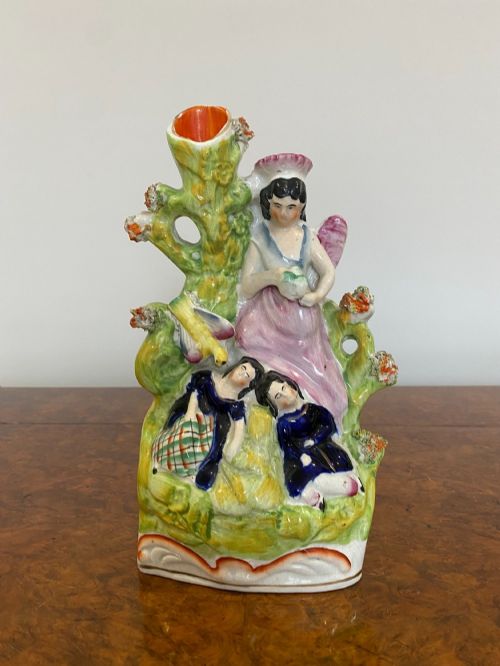
The Victorian period supplies much of the porcelain and glass seen here, alongside Staffordshire figures and stoneware from makers like Royal Doulton. French and Italian workshops contribute bronze and marble campana urns reflecting the Grand Tour influence.
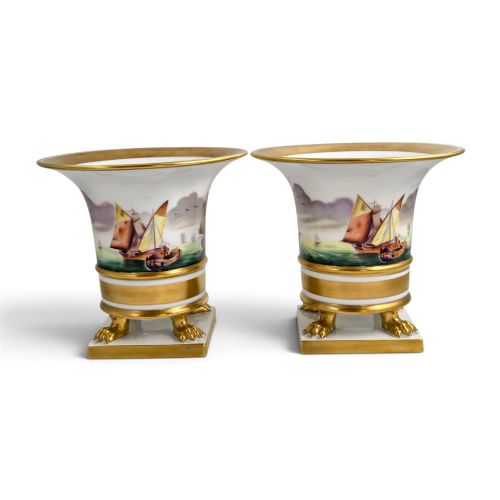
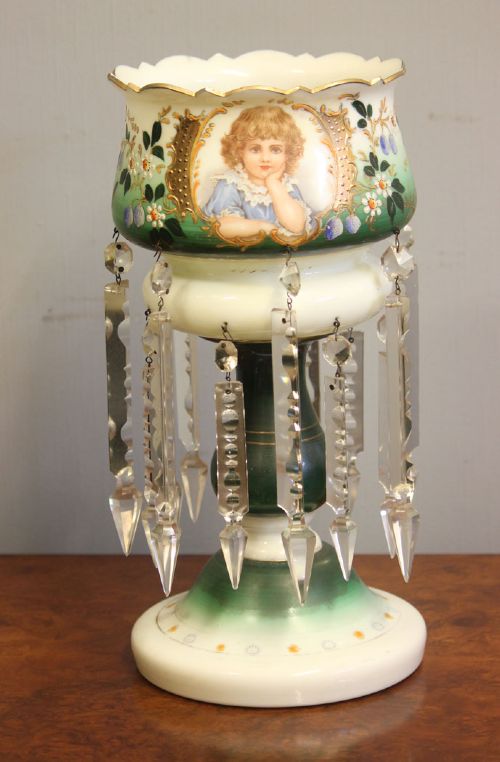
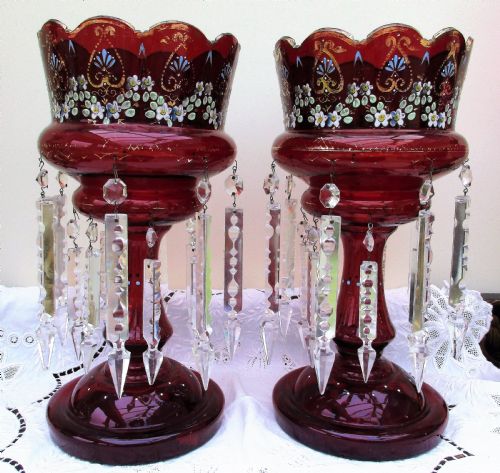
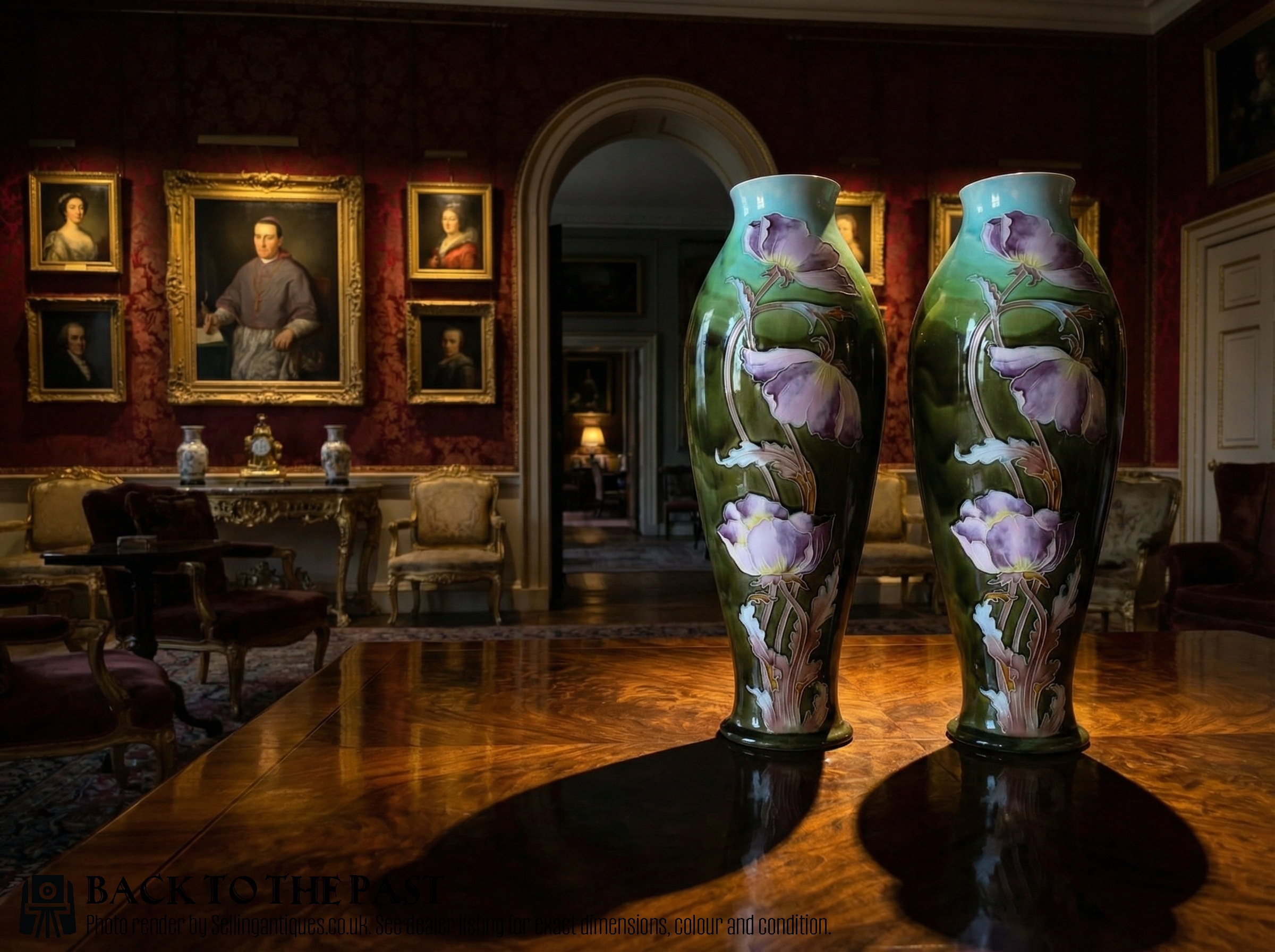
Earlier Regency examples appear in porcelain and ironstone, while later nineteenth-century makers turn towards Japanese Satsuma earthenware and Art Nouveau stoneware. Glass lustres set with crystal drops also populate the category, designed to catch the flickering light of a room.
How they were made
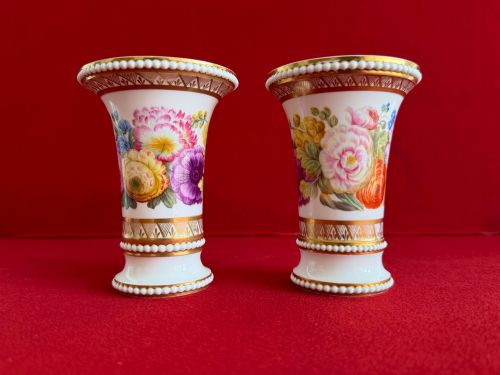
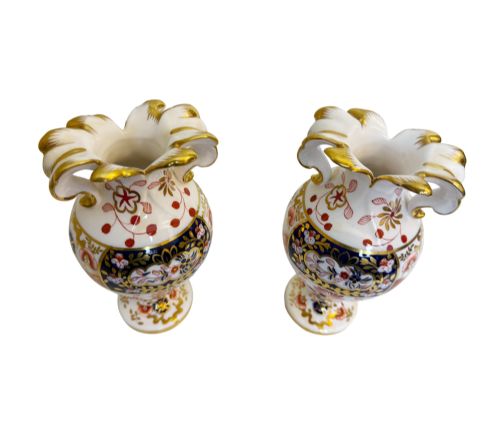
Pottery and porcelain pieces rely on moulded or thrown clay bodies finished with hand-painted enamels, gilding, and transfer-printed motifs before kiln firing. Stoneware versions achieve their texture through salt-glazing or specialised slip applications during production.
Metal vessels combine cast bronze, brass, spelter, or ormolu mounted upon marble bases, often assembled from multiple sections held together by threaded rods. Glass items utilise blown or overlay techniques, sometimes cut back to reveal contrasting underlying colours.
Lustres incorporate glass or crystal pendants hung from the rim by wire loops, paired with hand-enamelled floral or geometric decoration across the body.
Antique Mantelpiece Vases Retail Price Guide 2026
Typical asking prices for mantelpiece vases among the pieces listed under this phrase on Sellingantiques today, from the lower quarter to the upper quarter. They describe what is for sale here now, not the wider market.
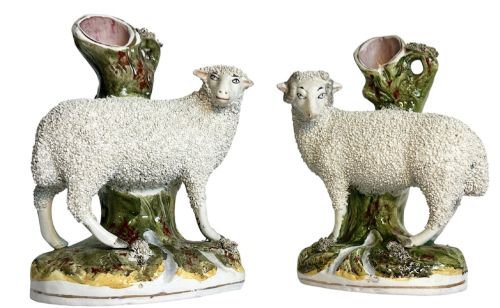
Several Staffordshire pottery pairs depict woolly sheep and wide-eyed deer standing patiently amid painted green turf.
What varies in quality
The refinement of the casting and chiselling separates standard metal urns from superior French or Italian works, where crisp detail defines foliage, handles, and classical figures. Marble bases show variation through the depth of their veining and the precision of their turned plinths.
Porcelain quality rests on the clarity of the glaze, the precision of hand-painted enamel work, and the crispness of applied gilding. In glass lustres, the weight of the glass, the depth of overlay colours, and the completeness of the original crystal drops determine the overall standard.
Royal Doulton Lambeth·Spode·Flight, Barr and Barr Worcester·Miles Mason·Mettlach·Tashiro·Baccarat
The Antique Mantelpiece Vases Glossary
- Mantel lustre
- A decorative glass or porcelain vase fitted with a ring of hanging crystal prisms designed to catch the light. They frequently appear in pairs for fireplace display.
- Garniture
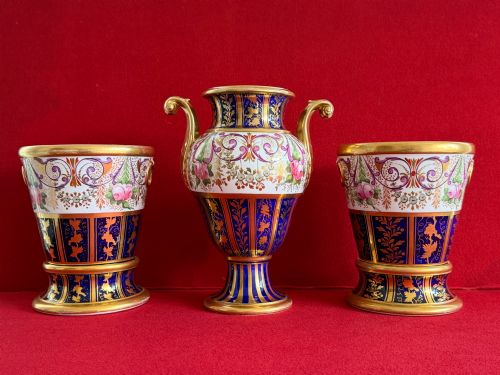
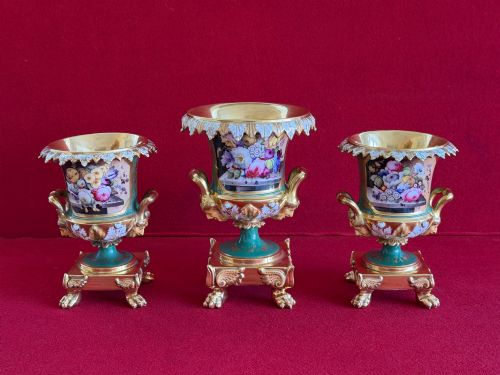
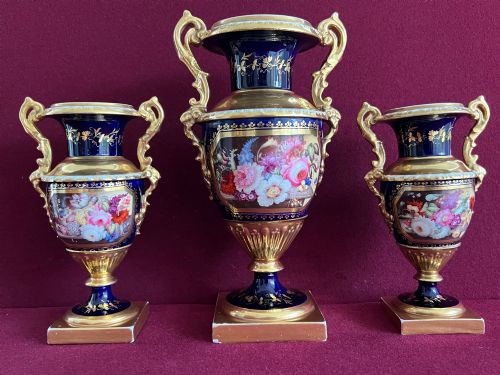
- A set of three or more matching decorative vases or urns made to sit together on a mantelpiece or sideboard. They typically comprise a central taller piece flanked by smaller matching companions.
- Campana urn
- A bell-shaped classical vessel with an everted rim and upturned handles, commonly cast in bronze or shaped from marble during the nineteenth century. The design mimics ancient Roman marble vases.
- Spill vase
- A small hollow ceramic or wooden vessel designed to hold slender wooden spills used for lighting candles and fires. English examples often depict rural animals or figures.
- Overlay glass
- Glass formed by fusing two or more distinct layers of different colours, where the outer layer is partially cut away to expose the contrasting colour beneath. This technique creates high-relief patterns.
- Grand Tour
- A cultural journey across Europe undertaken by wealthy young men during the eighteenth and nineteenth centuries, inspiring the acquisition of classical bronze and marble architectural souvenirs.
Antique Mantelpiece Vases: Frequently Asked Questions
What is a mantel lustre?
A mantel lustre is a decorative glass or porcelain vase featuring a circle of hanging crystal prisms around the rim. These prisms catch and refract the light from lamps or fires.
They were typically made in pairs to stand at either end of a chimney shelf. Many retain their original cut glass drops, which chime softly with air movement.
How do I style mantelpiece vases?
These pieces work best when arranged symmetrically on a deep chimney shelf, often framing a mirror or clock garniture set. Matching pairs create a formal balance suited to period rooms.
Heavier bronze urns anchor large stone fireplaces, while brightly coloured glass lustres or delicate porcelain vases add lighter decorative accents to wooden surrounds.
What is a garniture set?
A garniture set is a matching group of three or more decorative vessels designed to be displayed together as a unified arrangement. The central piece is usually taller, flanked by symmetrical smaller companions.
Originating in the export porcelain markets, the style was widely adopted by European factories in porcelain, bronze, and glass during the nineteenth century.
How do I date antique vases?
Dating relies on combining the stylistic period, such as Regency or Art Nouveau, with factory marks stamped or painted on the base. Material composition and manufacturing techniques also provide clear chronological markers.
For unmarked pieces, the weight of the bronze, the composition of the glass, and the hand-painted palette point toward specific decades within the nineteenth century.