


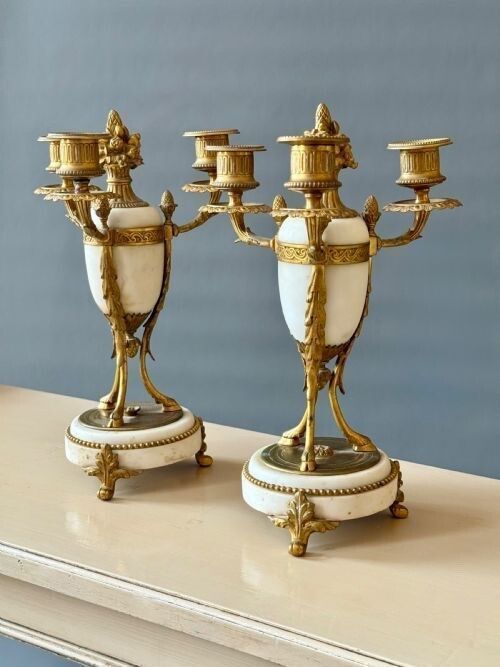
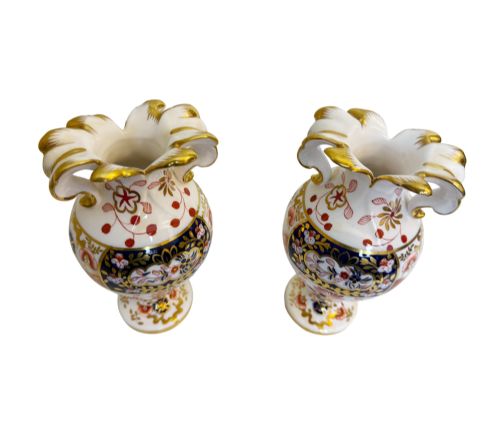
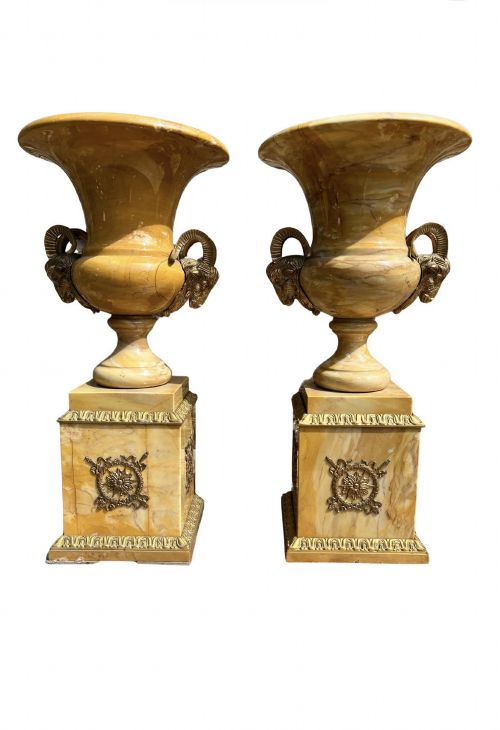
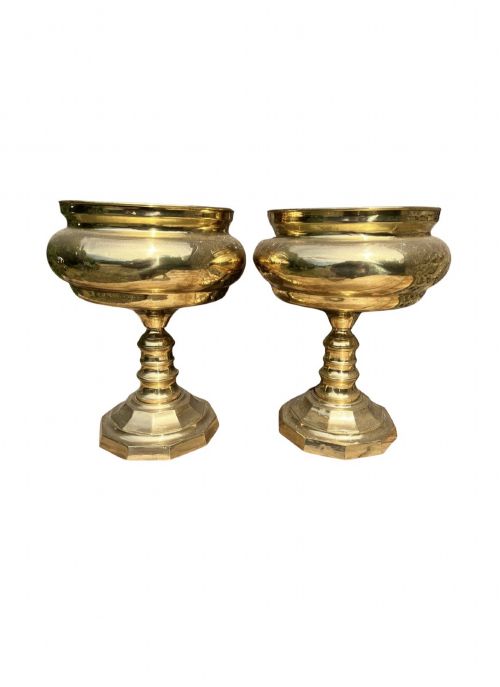

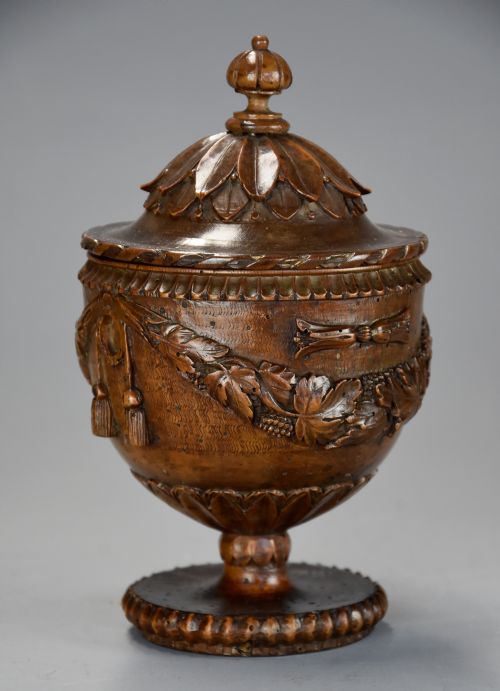

Antique Mantelpiece Urns
These antique mantelpiece urns bring classical symmetry and rich material detail to a room, offering the balanced focal point collectors seek for a hearth.

Antique Mantelpiece Urns
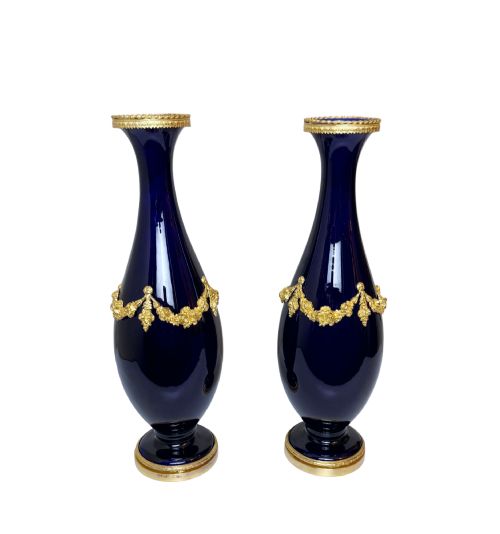
When you search for antique mantelpiece urns, you encounter decorative vessels designed primarily for display upon a chimney shelf or as part of a garniture set flanking a clock. The pieces most likely to meet you on this page originate from the nineteenth century, drawing heavily on French Empire, Regency, and Grand Tour aesthetics.
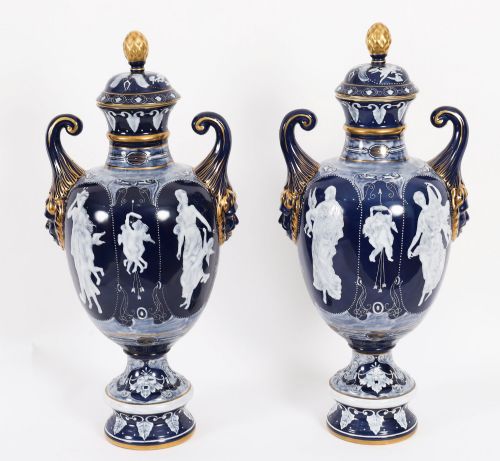
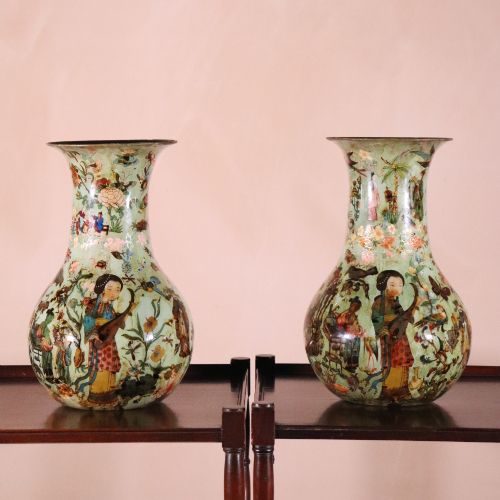
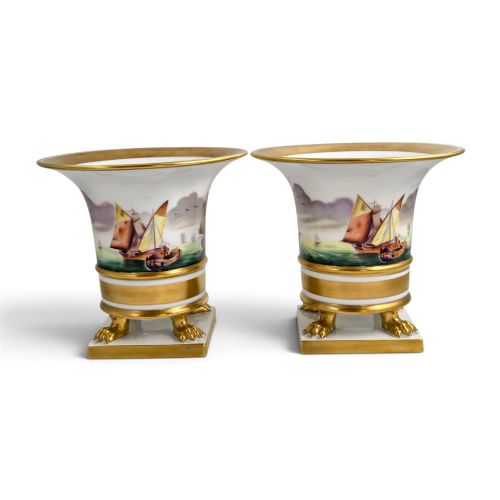
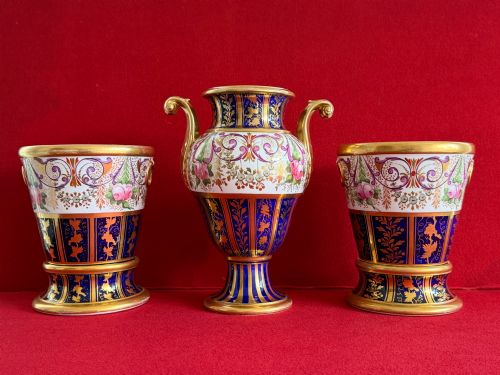
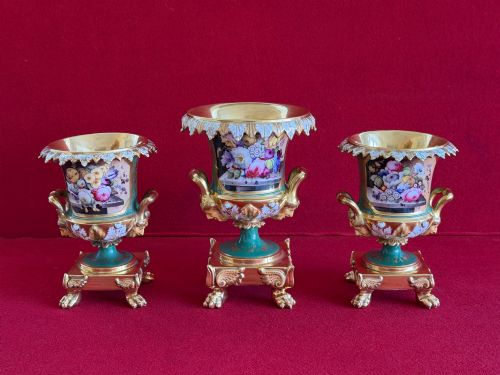
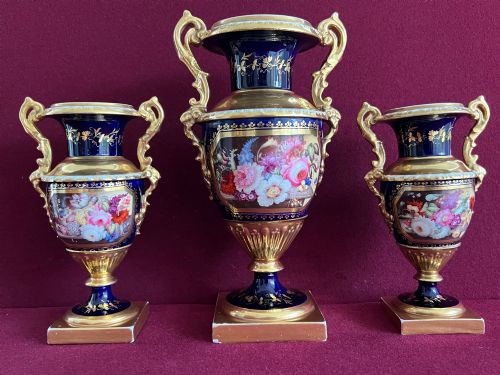
The selection frequently includes paired vases and cassolettes fashioned into classical profiles such as the campana shape. Alongside standalone decorative urns, you will find mantel clock garnitures that integrate matching side vessels to complete a formal display.
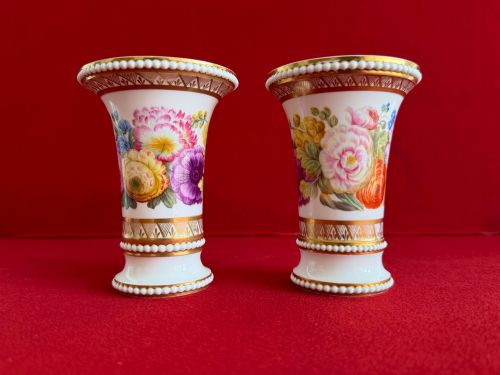
Origins stretch across European and international workshops, taking in English porcelain, French gilt bronze, Italian marble, and Japanese Satsuma ware. These objects reflect a persistent nineteenth-century taste for classical antiquity and exotic decorative arts.
How they were made
Maker workshops combined cast metals such as bronze, ormolu, brass, and spelter with carved natural supports like white and siena marble. Cast elements often received hand-chased surface details and gilding to heighten their sculptural presence.
Ceramic examples utilise hard-paste porcelain, ironstone, and earthenware bodies finished with enamel paint, gold leaf, and transfer or hand-painted motifs. Glass and turned wood such as lignum vitae also appear, demonstrating the variety of media employed by period artisans.
Antique Mantelpiece Urns Retail Price Guide 2026
Typical asking prices for mantelpiece urns among the pieces listed under this phrase on Sellingantiques today, from the lower quarter to the upper quarter. They describe what is for sale here now, not the wider market.
Listings feature items from the 18th, 19th, and early 20th centuries, spanning periods from Regency and Victorian to Art Nouveau and Japanese Meiji.
What varies in quality
The refinement of the casting and carving separates standard production from superior pieces, particularly in the crispness of acanthus leaves, handles, and classical figures on bronze and marble models. Heavier metal gauge and precise weight distribution indicate better underlying construction.
On ceramic and porcelain bodies, the precision of the enamel work, the richness of the gilding, and the delicacy of hand-painted scenes determine the grade of the piece. Matched pairs that retain their original corresponding bases and companion covers command greater attention from discerning collectors.
Royal Doulton Lambeth·Spode·Flight Barr and Barr·Miles Mason·Mettlach Pottery
The Antique Mantelpiece Urns Glossary
- Campana urn
- A bell-shaped vessel with a flared rim and footed base, heavily favoured in classical and Neoclassical design. This form derives directly from ancient Roman garden and decorative pottery.
- Garniture set
- A balanced grouping of three or more matching decorative objects, typically comprising a central clock flanked by matching urns or vases. They were created to sit together symmetrically on a mantelpiece.
- Ormolu
- Gilded bronze, produced by applying a mercury-gilding mixture to cast bronze and heating it to leave a gold layer. The technique yields a warm, enduring metallic lustre.
- Cassolette
- A decorative vessel with a reversible lid that functions either as a vase or a perfume burner. One side displays an aperture for scent, while the reverse presents a solid decorative surface.
- Grand Tour
- A cultural journey undertaken by nineteenth-century elites across Europe, acquiring classical antiquities and souvenirs. Bronzes and marbles in this style emulate the classical artefacts collected during these travels.
Antique Mantelpiece Urns: Frequently Asked Questions
What is a garniture set?
A garniture set consists of matching decorative objects designed to be displayed together on a mantelpiece. Usually, this comprises a central clock accompanied by two matching urns or vases.
Created as a cohesive decorative scheme, these sets provide balanced symmetry when placed upon a fireplace shelf. Individual pieces within the set share identical materials, motifs, and stylistic details.
How were bronze urns displayed?
Bronze urns were placed prominently on mantelpieces, often resting on stepped plinths, marble bases, or wood supports. They served as formal ornaments that reflected classical tastes.
During the nineteenth century, paired urns frequently accompanied mantel clocks or stood alone to frame a fireplace mirror. Their dense metal construction allowed them to anchor larger decorative arrangements.
Are cassolettes different from vases?
Cassolettes feature a dual-purpose lid that turns over to switch between a solid decorative top and a perforated burner. Vases remain fixed vessels without reversible lids.
This functional adaptability distinguished cassolettes in period interiors, where they could emit fragrance or simply display decorative surfaces depending on the orientation of the lid.
How do I identify Grand Tour pieces?
Grand Tour pieces typically replicate famous ancient Roman or Greek monuments, architectural models, and campana urns. They utilise materials like patinated bronze, ormolu, and carved Italian marble.
Travellers collected these smaller-scale reductions during cultural expeditions across Europe. Their quality depends on the precision of the metal casting and the fineness of the marble base.
What distinguishes porcelain from ironstone?
Porcelain is a fine, vitreous ceramic fired at high temperatures, known for its translucency and delicate painted decoration. Ironstone is a dense, heavy earthenware developed for durability.
While porcelain items like those from Worcester or Sevres-style factories emphasise refined artistic painting, ironstone pieces offer robust construction combined with glossy enamel glazes and Chinoiserie motifs.