


Antique Makeup Vanity
An antique makeup vanity gathers glass, mirror and timber to hold the small rituals of the morning.
Antique Makeup Vanity
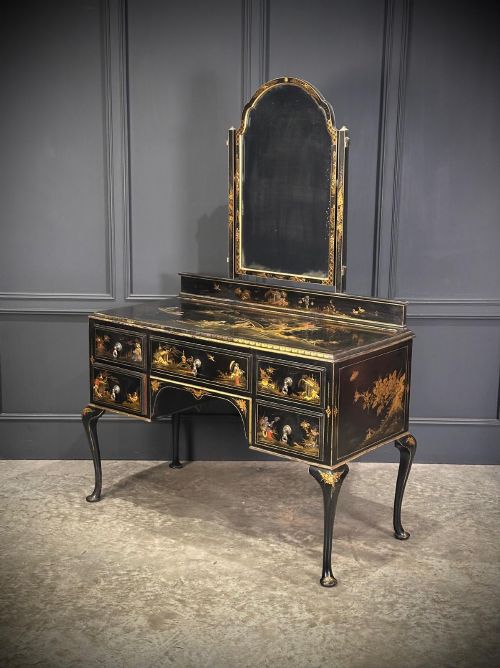
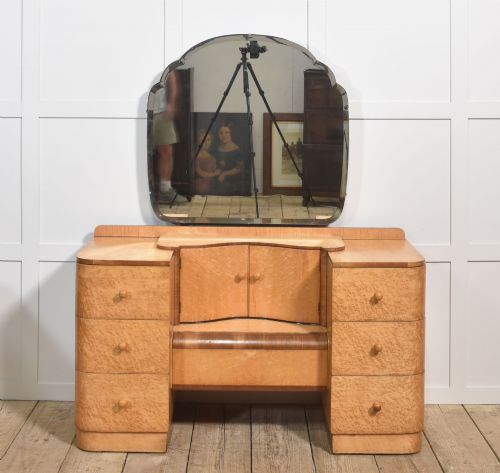
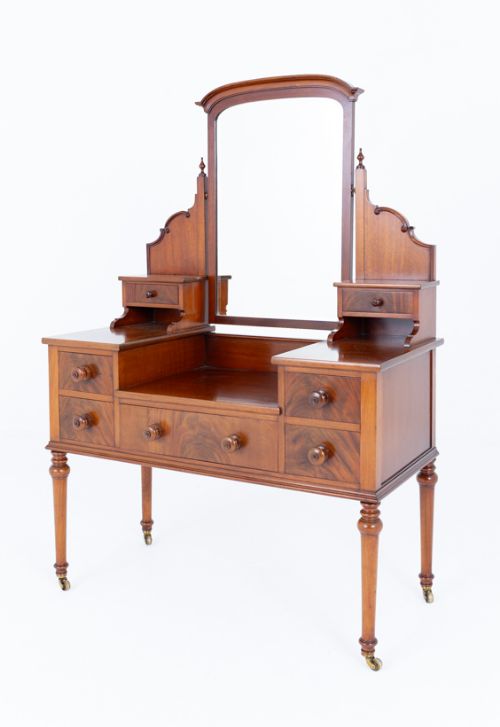
When you search for an antique makeup vanity, you find a range of dressing tables, powder compacts, and mirrors designed for personal grooming across the nineteenth and twentieth centuries.
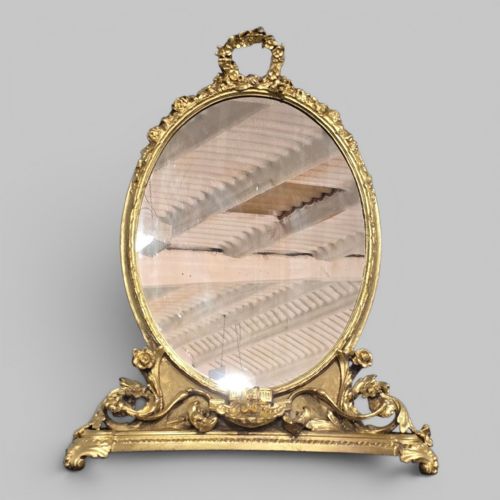
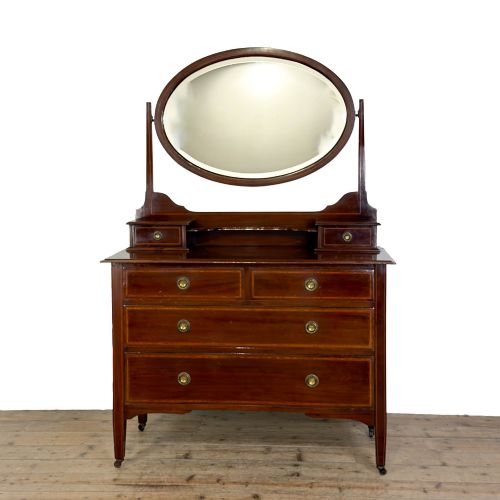
The pieces on this page most often take the form of substantial wooden dressing tables with attached mirrors, alongside smaller tabletop mirrors and silver pocket compacts.
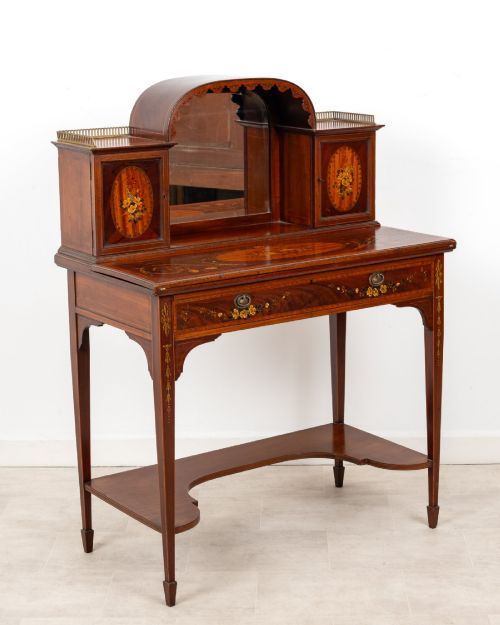
Origins stretch from English workshops in mahogany and walnut to French boudoirs in marquetry and gilt, spanning the Victorian, Edwardian, and Art Deco periods.
How they were made
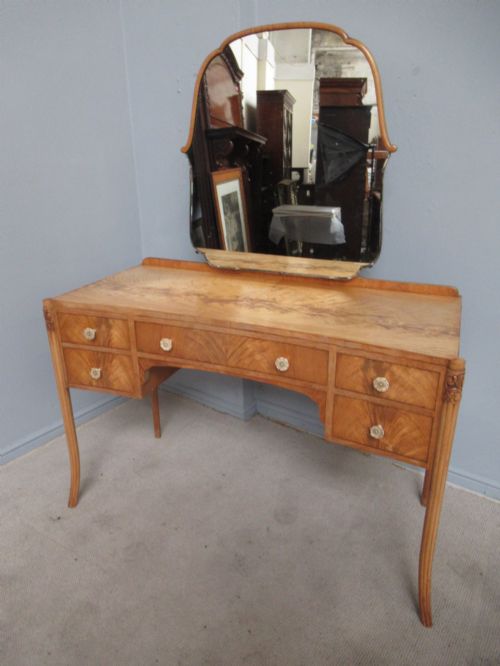
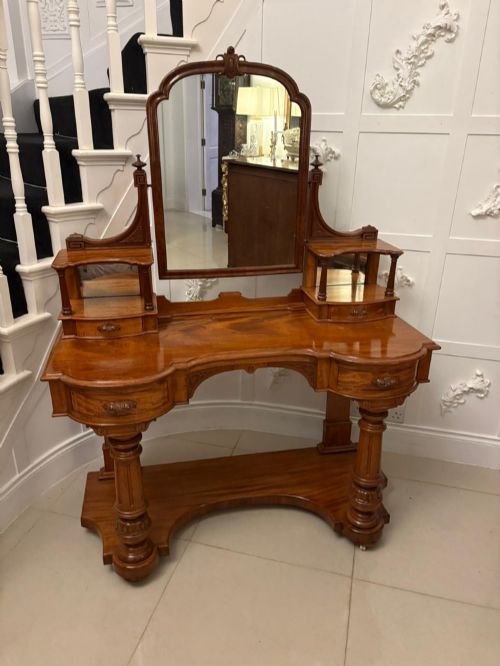
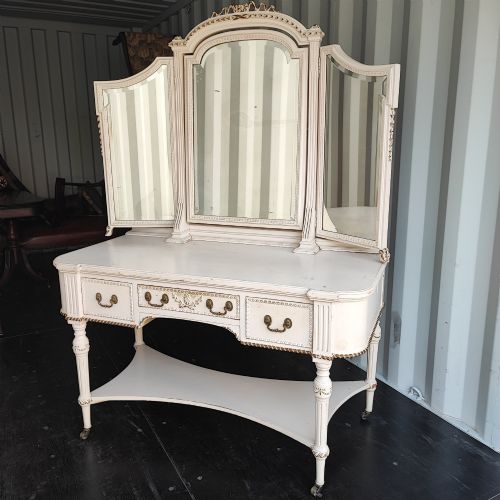
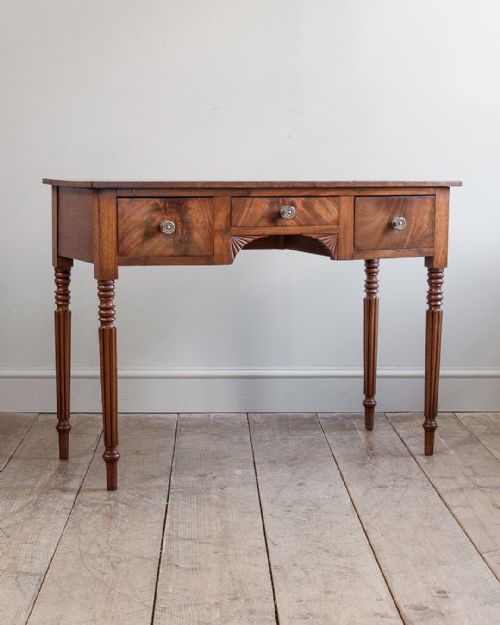
Cabinetmakers built dressing tables using solid and veneered timbers such as mahogany, burr walnut, maple, and satinwood, often shaping surfaces to highlight natural grain patterns.
Decorative finishes include hand-painted details, marquetry inlay, and Chinoiserie lacquering, paired with hardware in brass and bronze.
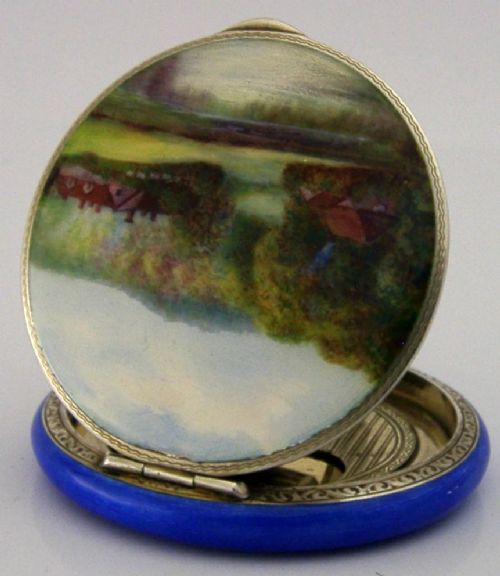
Compact mirrors and vanity cases combine sterling silver, gold, and vibrant enamel work with fitted interior linings.
Silver compacts hold traces of scented face powder locked behind tiny enameled lids since the Jazz Age.
What varies in quality
The calibre of a piece rests on the selection of timber veneers and the precision of the cabinet work, particularly in the construction of small drawers and compartment interiors.
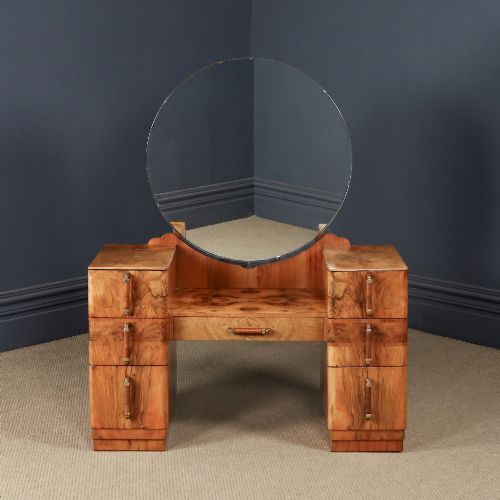
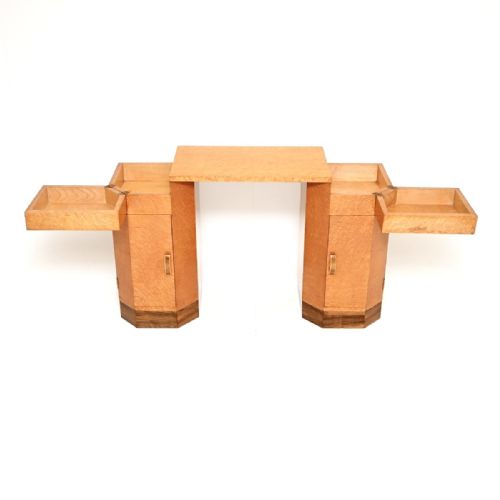
Design ambition separates standard regional furniture from pieces by notable makers, visible in curved pedestal forms, adjustable mirror frames, and integrated vanity boxes.
In smaller objects like compacts, quality shows in the crispness of hand-painted enamel and the secure fit of silver filigree lids.
Mappin and Webb·Maurice Adams·Harry and Lou Epstein·Maples of London
The Antique Makeup Vanity Glossary
- Poudreuse
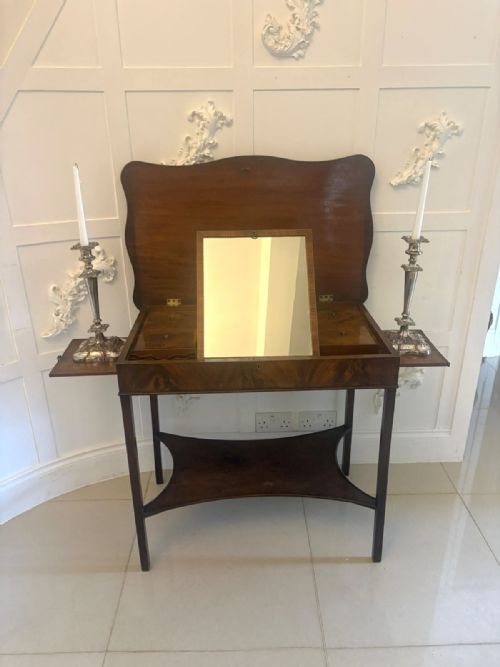
- A French dressing table featuring folding lids that conceal a mirror and compartments for cosmetics. These tables became popular in the eighteenth century and continued through the nineteenth century.
- Burr walnut
- Timber taken from a growth on the walnut tree, yielding a swirling, highly figured grain pattern. Cabinetmakers prized this wood for veneering prominent surfaces on Victorian and Art Deco furniture.
- Powder compact
- A small metal case fitted with a mirror and a compartment for face powder. Examples often feature enamel decoration, sterling silver construction, or gemstone settings.
- Pedestal dressing table
- A table design with banks of small drawers supporting the main writing or grooming surface on either side. This form provides substantial storage beneath the mirror.
Antique Makeup Vanity: Frequently Asked Questions
How do I date an antique makeup vanity?
Dating relies on combining the timber, hardware, and mirror style with any maker marks or structural hallmarks. Victorian pieces often use solid mahogany or burr walnut with heavy carved frames, whereas Art Deco examples lean towards birdseye maple and geometric pedestal shapes.
Secondary woods inside drawers and the method of mirror silvering offer further clues to the decade of manufacture. Comparing these elements against known design periods clarifies the timeline.
What is the difference between a dressing table and a poudreuse?
A standard dressing table usually stands upright with an open surface and a fixed or tilting mirror attached to the back. A poudreuse is a specialised French form where the top surface lifts or folds open to reveal a mirror and hidden cosmetic wells.
While both serve the same grooming purpose, the poudreuse offers a more enclosed, discreet storage arrangement when not in use.
Can I use an antique vanity as a desk?
Many dressing tables and writing desks share similar proportions and kneehole spaces, making them adaptable for daily writing or laptop use. Edwardian and nineteenth-century examples often provide sufficient depth for a chair.
However, you must check the internal drawer clearance and height to ensure comfortable legroom before daily use.