


Antique Swing Mirror Desk
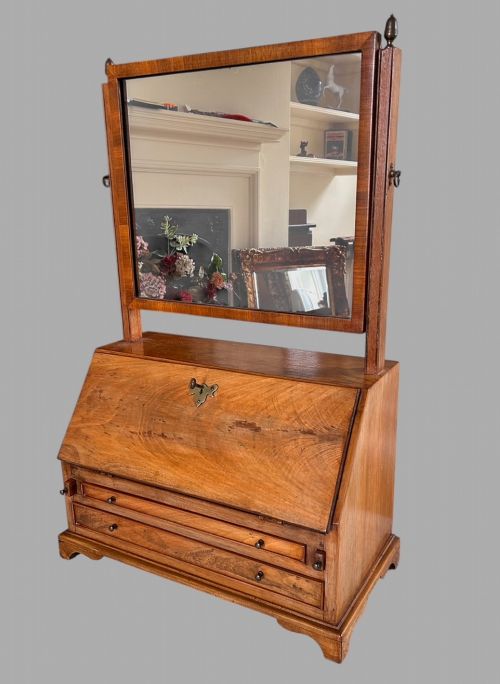
An antique swing mirror desk combines a writing surface with a tilting glass, spanning Georgian mahogany to Victorian burr walnut.
Antique Swing Mirror Desk
When you search for an antique swing mirror desk, you find dressing tables, toilet mirrors, and tabletop bureaux fitted with adjustable glass plates. These pieces serve personal grooming and correspondence, merging surface workspace with pivoted mirrors.
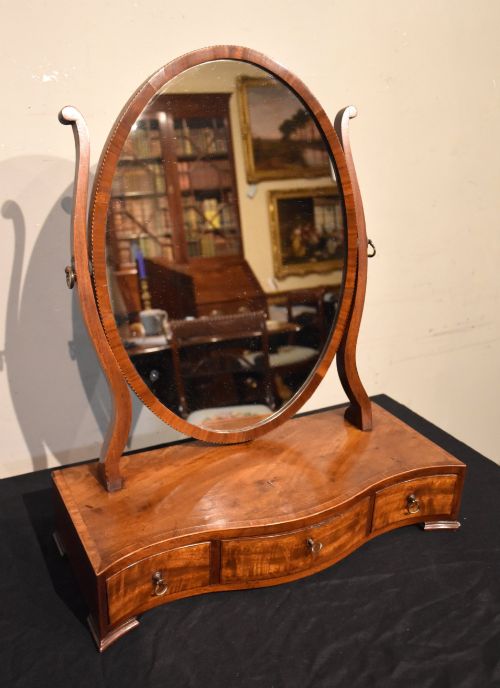
The selections on this page range from compact table-top bureau mirrors in satinwood and walnut to large Victorian dressing tables with integrated swing mirrors in mahogany and burr walnut. Georgian and 18th-century forms often feature serpentine fronts and small drawer bases.
Edwardian and mid-19th-century examples appear frequently, alongside French Empire and Italian Rococo styles that introduce giltwood, gesso, and marquetry to the traditional wooden forms.
Materials and construction
Cabinetmakers constructed these pieces primarily using solid mahogany, walnut, and satinwood, frequently employing figured veneers like burr walnut to create patterned surfaces on drawer fronts and desk lids.
Functional metal elements rely on brass for pivoting screw mechanisms, hinges, and drawer pulls, while secondary woods support internal framework and drawer linings.
Mirror plates consist of glass set into wooden frames, often supported by upright standards that allow the glass to tilt on threaded brass pins.
Judging quality and craftsmanship
The standard of a piece rests on the selection of timber grain, particularly how symmetrically figured burr walnut or satinwood veneers are matched across the bureau flap or drawer fronts.
Fine construction shows in the joinery of the drawers, the weight and finish of the cast brass hardware, and the stability of the mirror standards supporting the glass plate.
Stylistic refinement separates standard utility furniture from sophisticated examples, seen in carved giltwood details, marquetry inlay, and serpentine contours shaping the wooden base.
Wright and Hunter of Belfast
The Antique Swing Mirror Desk Glossary
- Serpentine
- A curved line of furniture fronting that sweeps inward centrally and outward at the sides. This contour requires precise woodworking skills to shape solid mahogany or walnut.
- Bureau fitment
- An interior arrangement of small pigeonholes and drawers concealed beneath a sloping writing flap. These compartments organise correspondence and small writing instruments.
- Giltwood
- Wood that has been coated with gold leaf or gold paint over a prepared gesso ground. It appears on decorative frames and continental table mirrors.
- Marquetry
- Decorative veneer patterns formed by fitting together small pieces of different coloured woods or bone. Dutch examples utilise this technique extensively on toilet mirror bases.
- Duchess dressing table
- A large Victorian dressing table type featuring a large swing mirror flanked by smaller trinket drawers and a semi-circular or demi-lune base. These grand pieces dominate larger bedrooms.
Antique Swing Mirror Desk: Frequently Asked Questions
What is a swing mirror desk?
A swing mirror desk is a piece of furniture that combines a writing surface or bureau compartment with an adjustable pivoting mirror. These dual-purpose items function for writing letters and personal grooming.
They appear in various forms, from small tabletop bureau mirrors to large freestanding dressing tables with attached swing glasses.
How do I date a Georgian mirror desk?
Dating a Georgian piece involves examining the timber species, construction methods, and cabinet hardware. Mahogany and walnut predominate in this era, often shaped with serpentine fronts.
Interior drawer construction and hand-cut dovetails provide further clues to the manufacturing period of the woodwork.
Are toilet mirrors and dressing tables the same?
Toilet mirrors are smaller tabletop versions designed to sit on top of an existing chest of drawers or table. Dressing tables are larger freestanding items that incorporate the mirror and a working surface into one united frame.
Both types utilise pivoting glass plates to adjust the angle of reflection.
How do I care for antique wood and glass?
Maintenance requires keeping wooden surfaces away from direct sunlight and fluctuating humidity to prevent veneer cracking. Regular dusting with a dry, soft cloth preserves the polished finish.
Glass mirrors should be cleaned with gentle cleaners applied to a cloth rather than sprayed directly onto the glass near old wooden frames.