

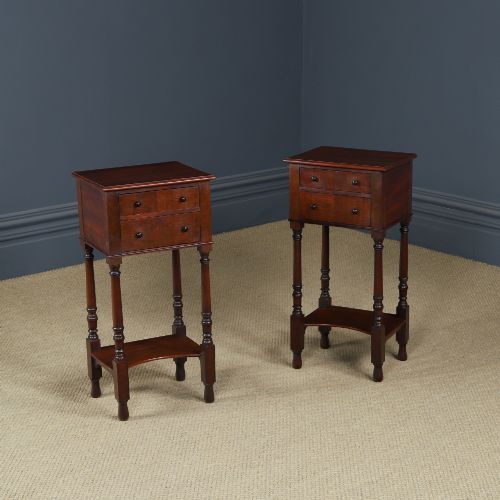
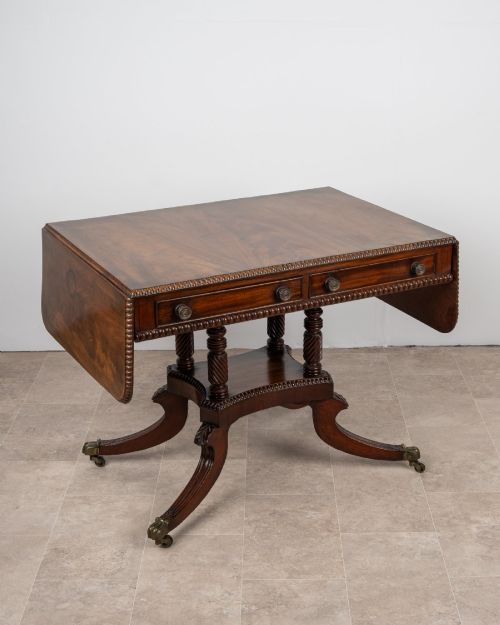
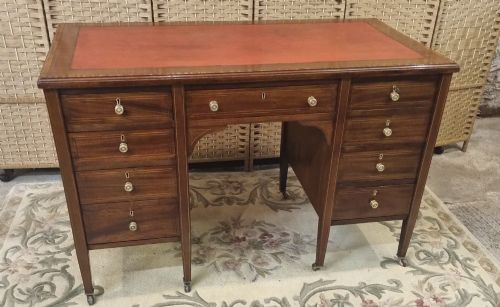
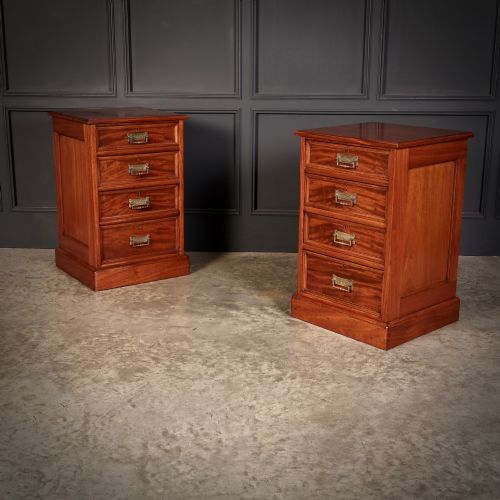
Antique Mahogany Pedestal Drawers
These antique mahogany pedestal drawers bring practical surface space and tidy compartmentalised storage into a room.
Antique Mahogany Pedestal Drawers
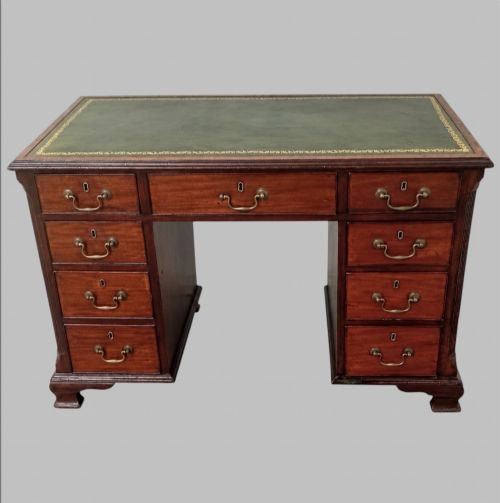
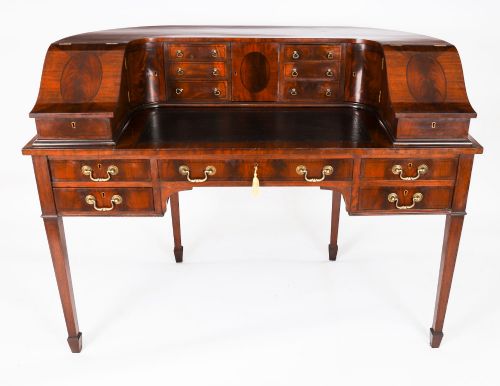
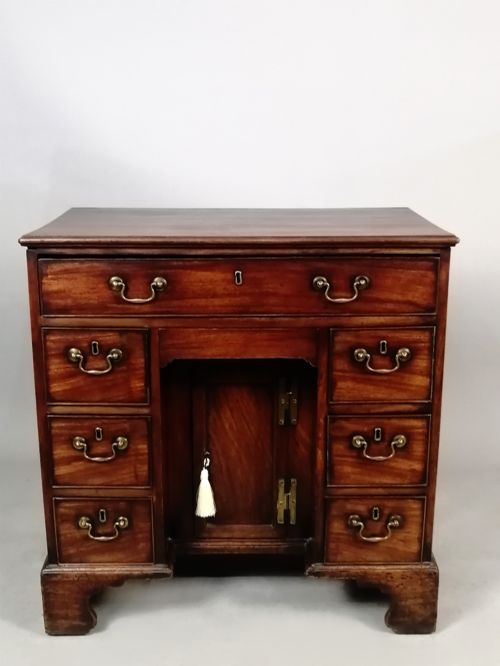
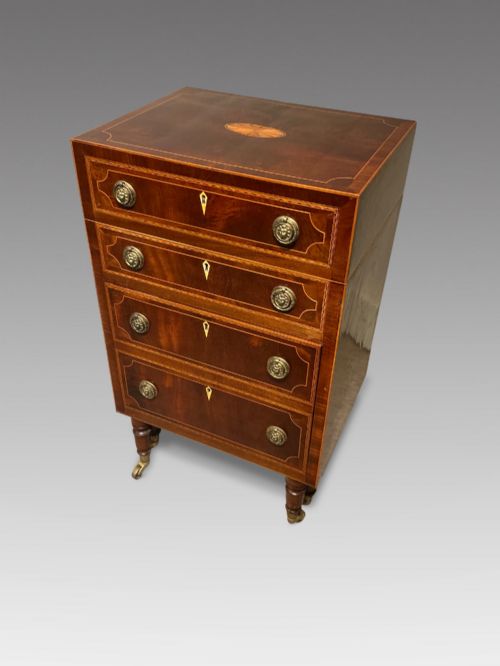
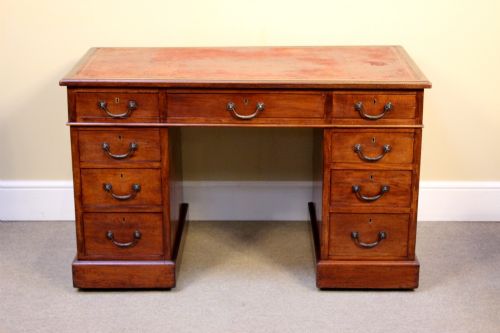
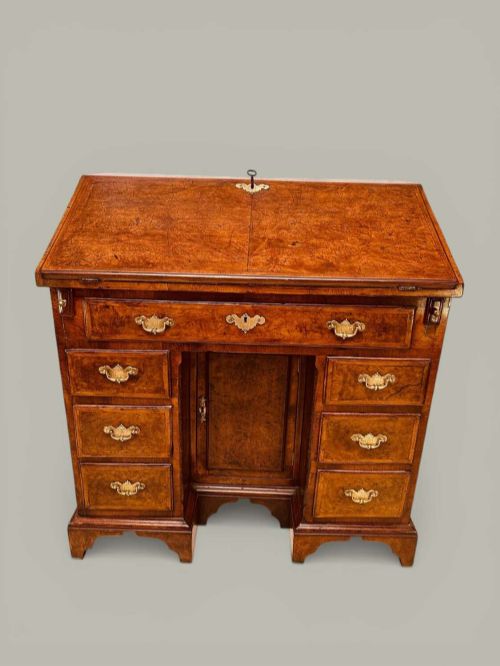
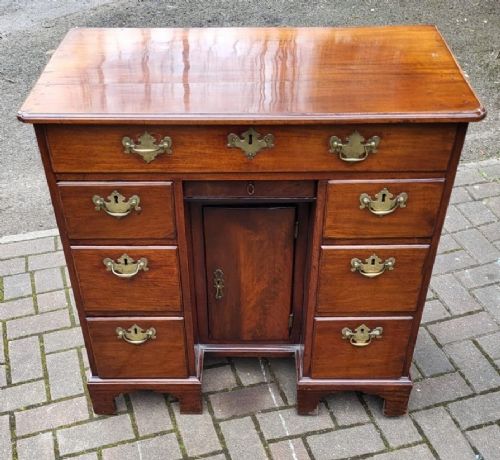
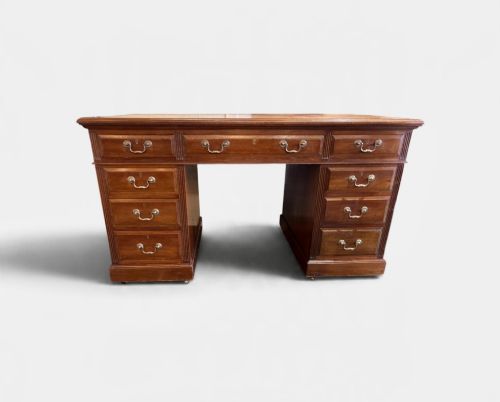
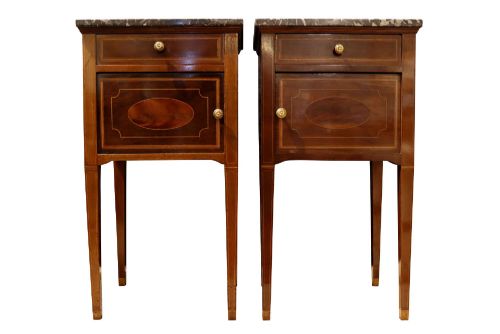
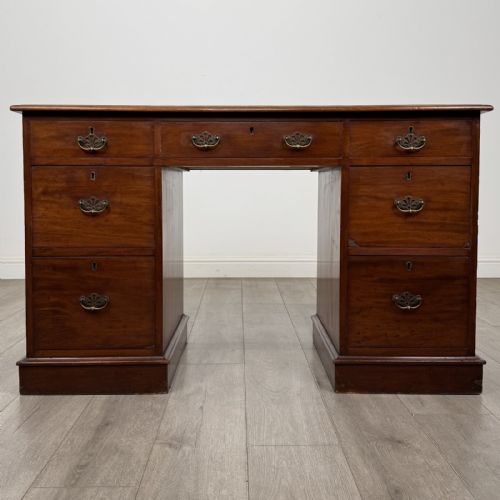
When you search for antique mahogany pedestal drawers, you encounter substantial furniture pieces designed primarily for study and office work, alongside smaller bedside companions. The inventory ranges from substantial nineteenth-century pedestal desks to compact Georgian kneehole desks and various bedside chests featuring stacked drawers.
Victorian examples dominate the selection, often taking the form of twin-pedestal writing desks with banks of drawers flanking a central opening. You also find Edwardian iterations and earlier Georgian pieces, stretching from the mid-eighteenth century into the twentieth century.
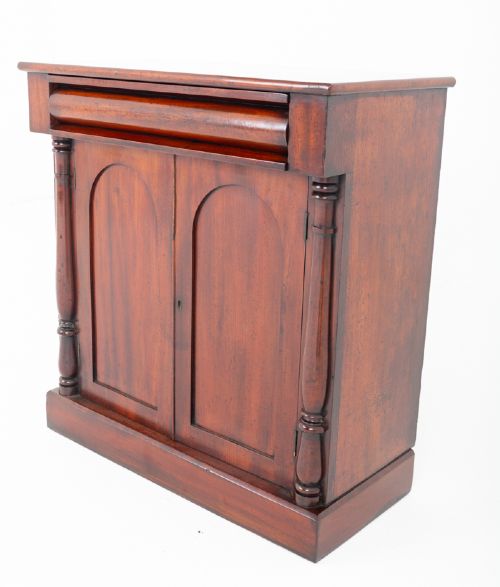
Forms vary from large freestanding desks equipped with leather writing surfaces and stationery drawers to narrower bedside cabinets and cupboards. The primary function remains storage and writing space, delivered through robust timber construction.
How they were made
Cabinetmakers built these pieces using solid mahogany and mahogany veneers, frequently incorporating secondary timbers such as pine in hidden structural areas. Timber selection prioritised rich grain figures, sometimes enhanced by contrasting satinwood or walnut inlay work.
Metal hardware played an essential functional and decorative role, featuring cast brass handles, swan neck pulls, and occasional original brasses. Leather inserts provided durable writing surfaces, while marquetry and painted details appeared on select tables and cabinets.
Antique Mahogany Pedestal Drawers Retail Price Guide 2026
Typical asking prices for mahogany pedestal drawers among the pieces listed under this phrase on Sellingantiques today, from the lower quarter to the upper quarter. They describe what is for sale here now, not the wider market.
Materials appearing across these desks and tables include solid mahogany, brass hardware, leather writing surfaces, satinwood inlay, walnut, and burr oak.
What varies in quality
Construction methods and timber selection set the baseline for quality across these pieces, distinguishing robust workshop output from simpler country-made items. The depth of the mahogany grain and the crispness of inlaid satinwood or marquetry details indicate the original maker's skill.
Hardware integrity matters significantly, particularly whether brass handles, swan neck pulls, and leather writing surfaces are original to the piece or later replacements. Well-fitted drawers that run smoothly within their pedestals reflect superior initial manufacturing standards.
Hobbs & Co.
The Antique Mahogany Pedestal Drawers Glossary
- Pedestal desk
- A large freestanding desk comprising two supporting columns of drawers beneath the main writing surface. These units usually feature a central kneehole space and integrated stationery drawers.
- Kneehole desk
- A compact desk or bureau featuring a central recess for the user's legs, flanked by narrow banks of drawers. Georgian examples often include a concealed central cupboard door within the recess.
- Pembroke table
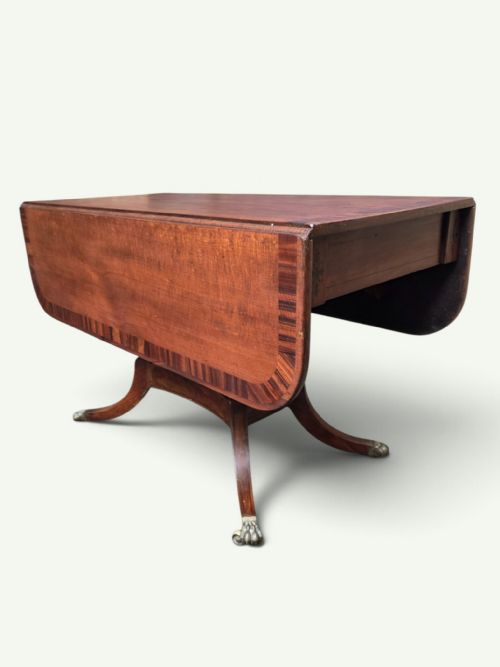
- A drop-leaf occasional table fitted with hinged flaps on either side and a concealed single drawer. These versatile tables date from the eighteenth and nineteenth centuries.
- Satinwood
- A lustrous, hard timber native to Ceylon and India, used extensively for contrasting stringing and geometric inlay work on mahogany furniture. It creates a pale, golden visual accent.
- Swan neck handle
- A traditional drawer pull shaped like a graceful bird's neck, fastened to backplates on standard eighteenth and nineteenth-century case furniture.
Antique Mahogany Pedestal Drawers: Frequently Asked Questions
How do I identify a pedestal desk?
A pedestal desk consists of a rectangular top resting on two separate columns or pedestals containing multiple stacked drawers. These units provide dedicated workspace and substantial compartmentalised storage.
Most examples feature a central opening or kneehole between the two drawer stacks, sometimes complemented by pull-out sliding writing surfaces.
What is a kneehole desk?
A kneehole desk is a smaller form of writing furniture where a central recess allows a chair to tuck underneath. Narrow banks of drawers flank this space on both sides.
Historically, these pieces served as dressing tables or private writing desks in Georgian and Victorian homes, often pairing mahogany with secondary timbers.
Are these desks suitable for daily work?
These pieces accommodate modern writing tasks and laptop use while providing deep, sturdy drawer storage for office supplies. Many incorporate original or replacement leather writing surfaces suited for everyday utility.
Freestanding nineteenth-century versions offer finished panelled backs, allowing placement in the centre of a room rather than against a wall.
How do I date a mahogany desk?
Dating relies on stylistic markers, construction techniques, and hardware types, spanning periods from George II through to the Edwardian era. Georgian items often display simpler proportions and fine timber figuring, while Victorian pieces lean towards heavier proportions and leather inserts.
Secondary woods, dovetail construction tightness, and drawer lining materials provide further clues to the manufacturing decade.