
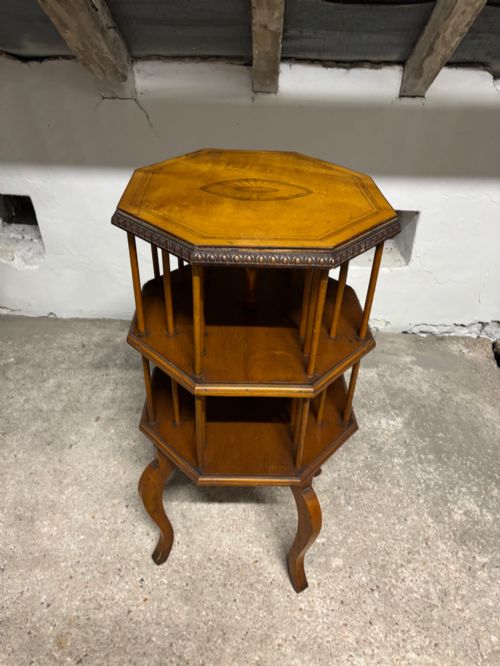
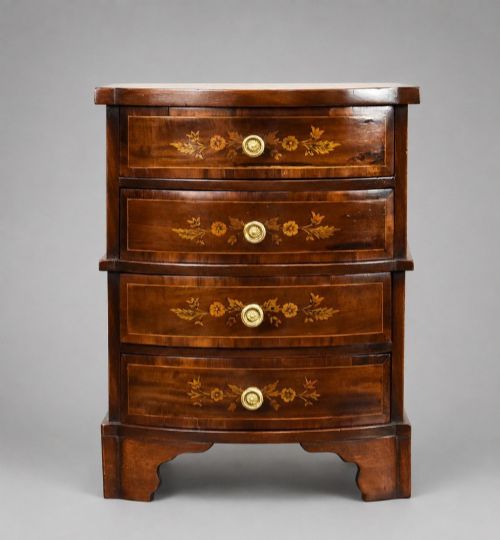
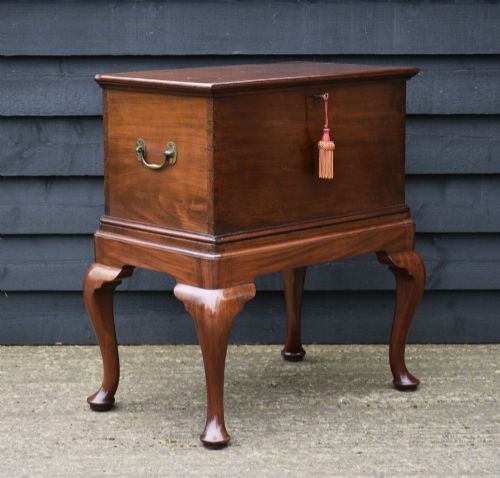

Antique Mahogany Caddy
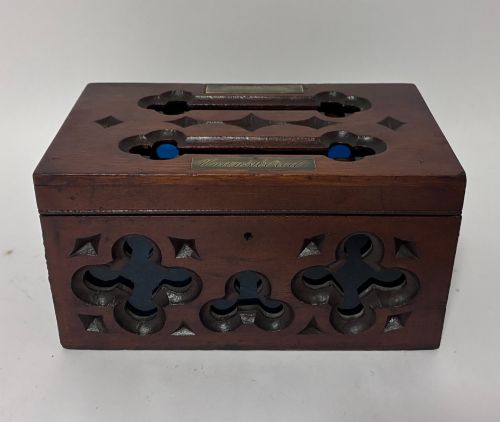
An antique mahogany caddy is a small lidded wooden box designed to store tea leaves safely away from damp and light.
Antique Mahogany Caddy
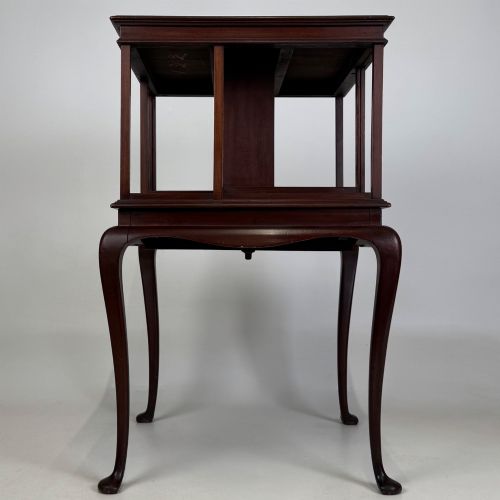
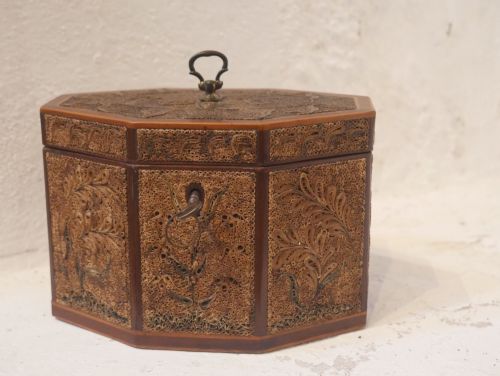
When you search for an antique mahogany caddy, you are looking at timber storage chests originally made to hold tea when it was a costly commodity. The examples you are most likely to meet on this page date from the Georgian, Regency, and Victorian periods.
How they were made
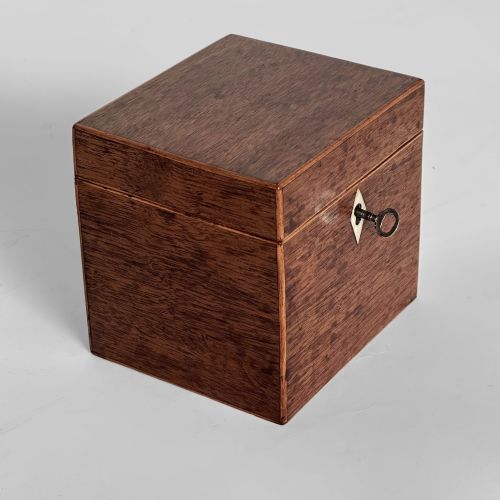
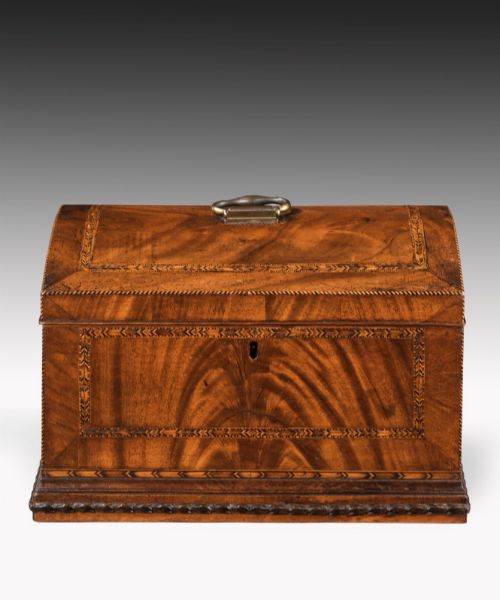
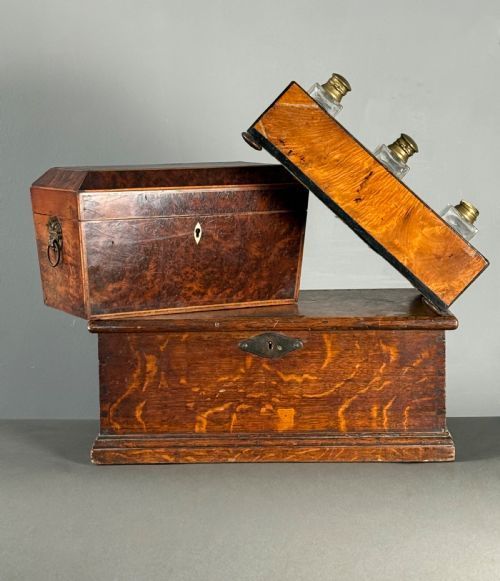
Cabinet makers constructed these pieces primarily from solid or veneered mahogany, often selecting figured grains for visual depth. Workshops integrated contrasting secondary timbers such as boxwood, satinwood, and ebony for stringing and decorative inlay.
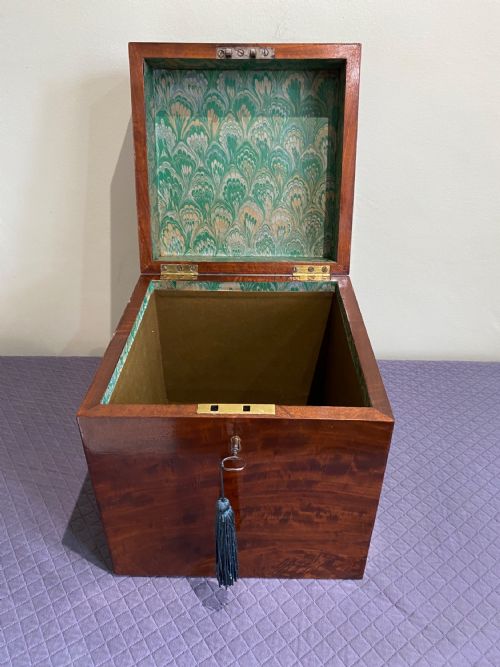
Many boxes feature cast brass carrying handles, escutcheons, and working locks with tiny keys. Interior compartments frequently retain remnants of foil lining or fitted wooden lids designed to keep loose leaves dry.
Antique Mahogany Caddy Retail Price Guide 2026
Typical asking prices for mahogany caddy among the pieces listed under this phrase on Sellingantiques today, from the lower quarter to the upper quarter. They describe what is for sale here now, not the wider market.
Some tiny tea boxes still hold microscopic traces of ancient dust, whispering of long-ago afternoons when the mistress of the house doled out precious leaves.
What varies in quality
The standard of an antique mahogany caddy depends heavily on the choice of timber and the precision of its joinery. Superior items display symmetrical flame mahogany veneers and intricate, flush wood inlays rather than simple painted decoration.
Internal architecture marks the difference between standard production and high craftsmanship. Better pieces retain original interior lids, functioning brass hardware, and secondary compartments with hand-cut dovetail joints.
Mappin and Webb
The Antique Mahogany Caddy Glossary
- Escutcheon
- A small plate of brass surrounding the keyhole to protect the surrounding wood from wear. This hardware component often matches other metal accents on the box.
- Sarcophagus
- A distinctive box shape featuring a domed or steep-sloped lid, popular during the Regency period. These substantial containers frequently rest on carved wooden paw feet.
- Stringing
- Thin lines of contrasting timber inlaid into the surface of the mahogany. Makers used boxwood or ebony to create delicate geometric borders.
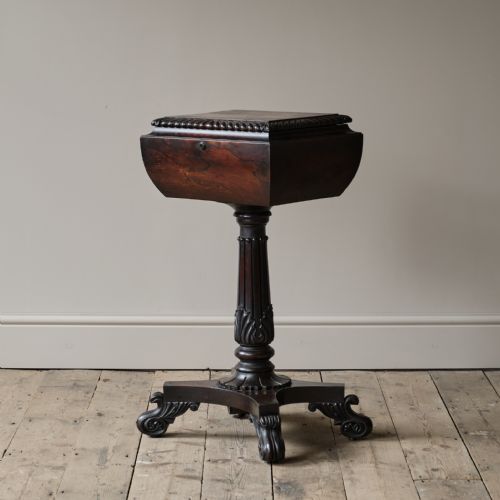
- Teapoy
- A larger tea caddy mounted upon a central pillar and pedestal base rather than resting on a table. These pieces served as standalone tea stations in principal rooms.
- Dovetail
- A traditional interlocking joint used at the corners of drawers and boxes. Fine hand-cut examples indicate superior cabinet work.
Antique Mahogany Caddy: Frequently Asked Questions
What were antique mahogany caddies used for?
These boxes were built to store loose tea leaves securely under lock and key in the dining room or parlour. Because tea was an expensive dry commodity, household staff kept the leaves locked away until brewing time.
Inside, the containers often featured divided compartments to separate green and black teas, sometimes paired with a central mixing bowl made of glass.
How can I tell a Georgian caddy from a Victorian one?
Georgian and Regency examples generally rely on clean architectural lines, architectural brasses, and fine string inlay or cockbeading. They often take straightforward rectangular, hexagonal, or sarcophagus forms with understated elegance.
Victorian pieces tend to introduce heavier ornamentation, such as mother-of-pearl inlay, conch shell motifs, or more elaborate carving. The mahogany grain on earlier pieces is also frequently deeper and warmer in tone.
How do I care for an antique wooden caddy?
Keep wooden tea chests away from direct sunlight and away from radiators or damp corners. Sudden changes in temperature can cause old mahogany veneers to split or lift from the carcase.
Apply a gentle microcrystalline wax occasionally to nourish the dry timber, and buff it lightly with a soft cloth. Avoid using modern liquid polishes or harsh chemical sprays on antique surfaces.
Do antique caddies still have their original keys?
Original keys are uncommon because locks were frequently engaged and keys misplaced over centuries of domestic use. Many surviving boxes retain matching period locks even if the functional key has been replaced.
A missing key does not detract from the decorative appeal of the box, as the brass escutcheon remains an attractive feature on the front panel.