




Antique Lacquer Tea Tray
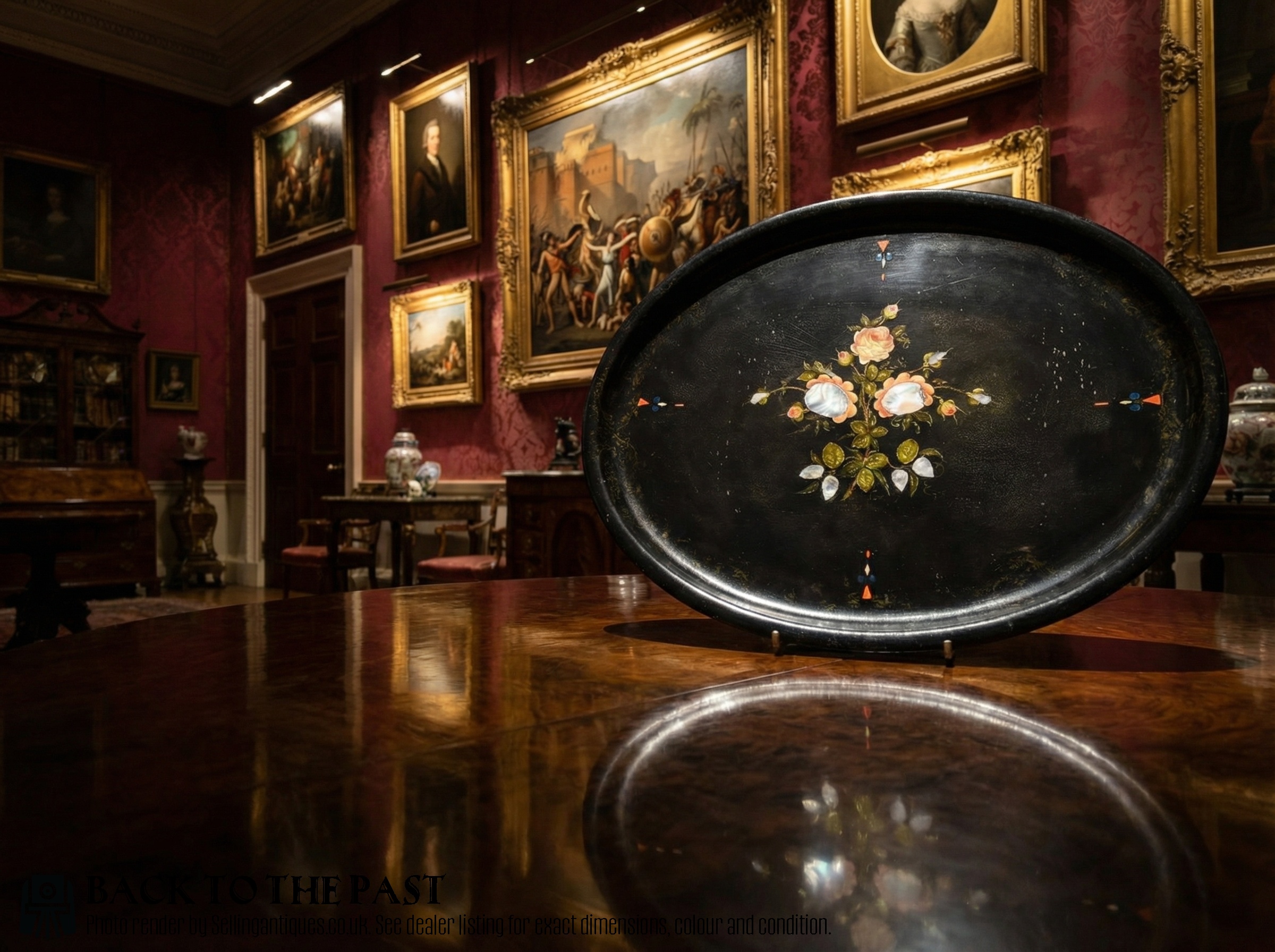
An antique lacquer tea tray brings depth, dark sheen and gilt detail to a room, serving as a drinks surface or a table top.
Antique Lacquer Tea Tray
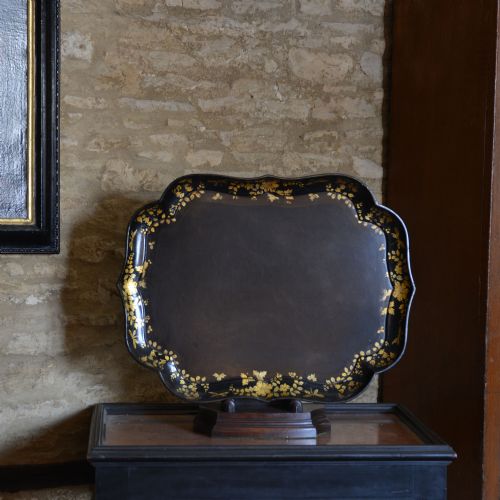
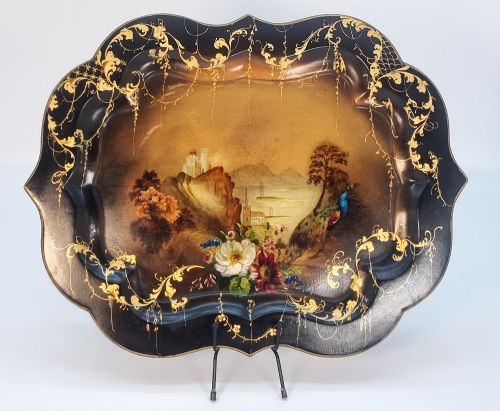
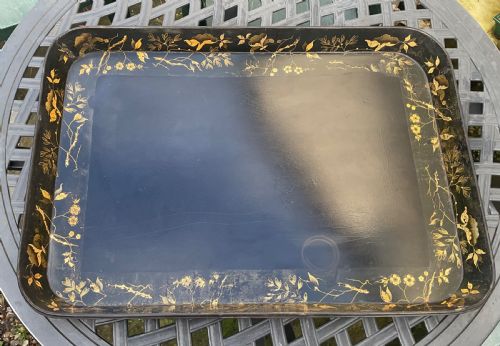
When you search for an antique lacquer tea tray, you encounter pieces designed for hospitality, presentation and display across Georgian, Regency and Victorian eras. These objects range from portable serving surfaces with scalloped edges to large ovals and kidney-shaped forms intended for butler service.
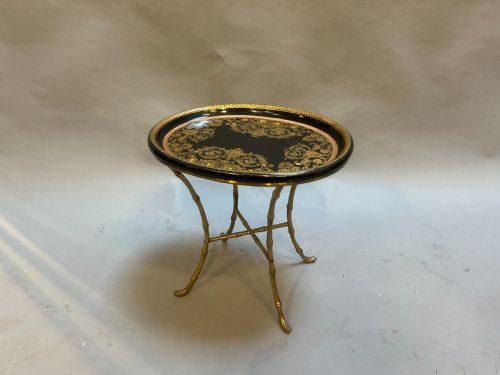
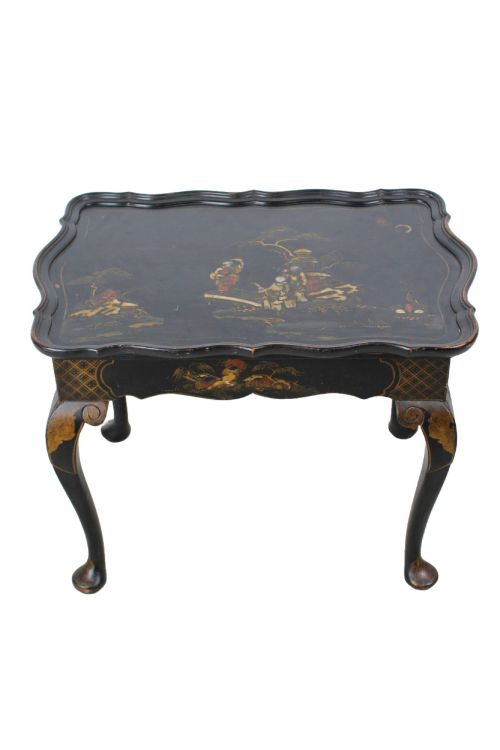
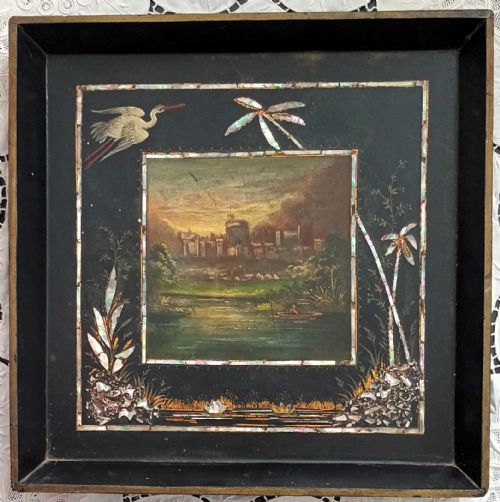
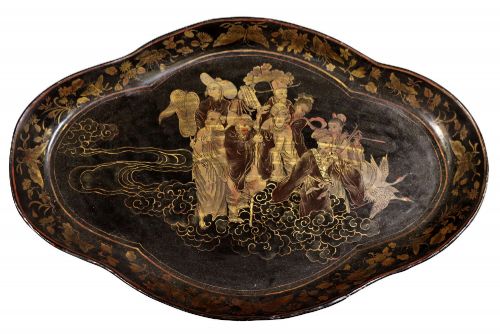
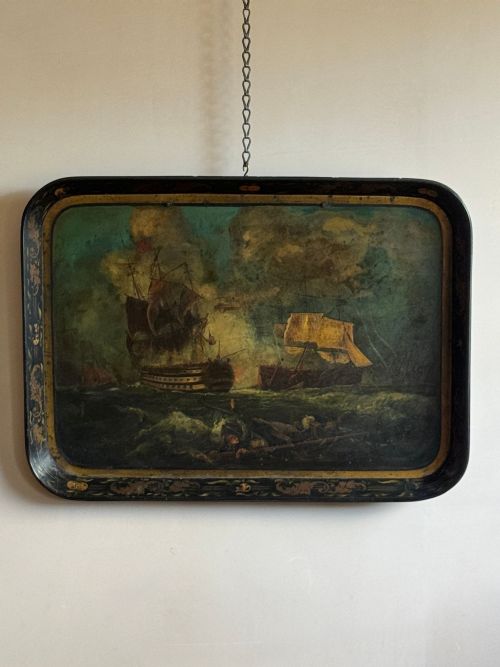
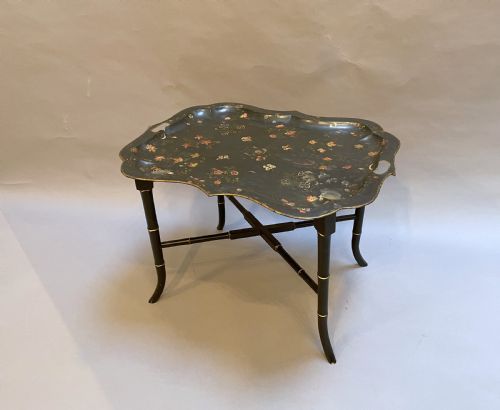
Many of these surfaces survive mounted on stands to function as coffee tables, occasional tables or side tables. The designs span simple black ebonised finishes to elaborate Chinoiserie decoration, floral motifs and pictorial scenes.
Origins represented in the evidence include English, Swedish and Japanese export workshops. You find rectangular, circular, octagonal and hanging variations produced across the eighteenth, nineteenth and early twentieth centuries.
Materials and Construction
The foundation of these pieces is frequently papier-mâché, wood or toleware metal, shaped into robust trays and serving plates. Makers applied layered lacquer and ebonised finishes to create smooth, dark grounds capable of receiving intricate ornamentation.
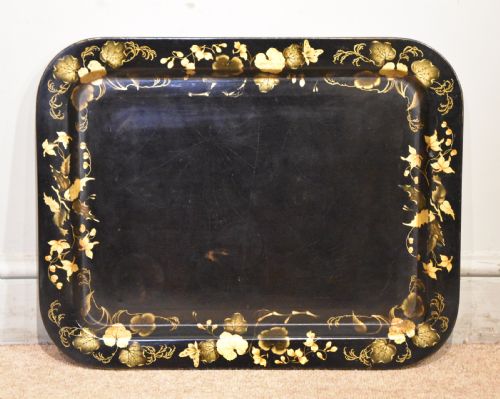
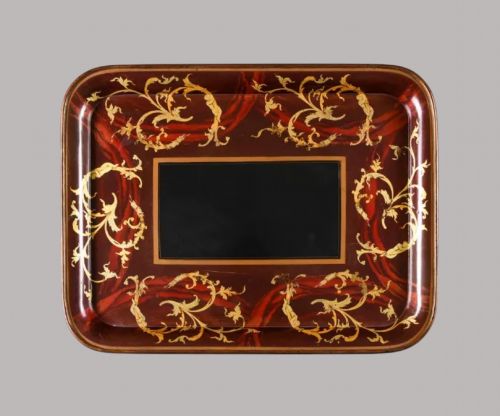
Decoration relied upon gold leaf, gilt embellishment, silver plate and hand-painted pigments to render intricate Chinoiserie landscapes, figures and floral borders. Brass fittings and iron or wood stands were frequently added to adapt portable trays into permanent tables.
Listings feature papier-mâché, wood, toleware, gold leaf and brass across Georgian, Regency and Victorian periods.
Standards of Execution
Quality in an antique lacquer tea tray lies in the depth of the painted surface and the crispness of the gilding. Superior examples display carefully preserved original decoration, intricate hand-painted detail and robust structural integrity in the papier-mâché or wood body.
The refinement of the Chinoiserie motifs and the fidelity of the lacquer finish distinguish the work of prominent makers from standard production pieces. Later modifications, such as the addition of stands, influence how a piece maintains its original character.
Jennens and Bettridge·Henry Clay
The Antique Lacquer Tea Tray Glossary
- Papier-mâché
- A composite material made from paper pulp or layers of paper reinforced with glue or resin, pressed and dried to form a sturdy base for lacquer. It allowed makers to mould large, resilient serving trays.
- Chinoiserie
- European decorative style reflecting Chinese artistic influences, commonly seen in pastoral scenes, figures and pavilions rendered in gold on dark lacquer. It dominated Victorian and Regency tray decoration.
- Japanned
- European work imitating Japanese and Chinese lacquer finishes, typically using dark varnish applied in successive layers. The technique created a glossy ground for gilt ornamentation.
- Toleware
- Metalware, usually tinplate, painted and lacquered for domestic use. These trays offer durable serving surfaces often embellished with gilt borders.
- Gilt
- Covered with a thin layer of gold leaf or gold paint to highlight borders and pictorial details. It provides contrast against black ebonised backgrounds.
Antique Lacquer Tea Tray: Frequently Asked Questions
How do I use an antique tray safely?
These trays function well as coffee table tops on sturdy stands or as decorative serving surfaces for dry items. Avoid placing hot vessels directly onto the lacquer surface to protect the finish.
Use protective coasters and clean the surface only with a soft, dry cloth. Moisture can damage vulnerable lacquer and old painted decoration over time.
Were these trays made to sit on tables?
Original serving trays were portable items carried by butlers or used to serve tea in parlours. Many surviving examples have been paired with custom wood or iron stands to serve as coffee tables.
Stands are often contemporary to the tray or added later in the nineteenth and twentieth centuries. Both original portable trays and table conversions appear frequently in collections.
How do I distinguish Regency from Victorian pieces?
Regency trays often feature crisp classical or early Chinoiserie motifs on deep papier-mâché bodies produced around the early nineteenth century. Makers such as Henry Clay and Jennens and Bettridge worked during these foundational periods.
Victorian pieces tend towards denser floral ornamentation, elaborate ebonised finishes and heavy Chinoiserie scenes dating from the mid to late nineteenth century. Toleware metal variants also appear alongside papier-mâché across the Victorian era.
What is the difference between lacquer and toleware?
Lacquer pieces utilise a papier-mâché or wooden core built up with layered resin and varnish to create a deep, smooth black or coloured sheen. They often feature detailed hand-painted Chinoiserie or gilt landscapes.
Toleware consists of metal, usually tinplate, painted and lacquered for domestic use. Toleware trays provide a metallic base rather than pressed paper pulp.