






Black Floral Serving Tray
A black floral serving tray brings centuries of craft to the table, offering a durable surface adorned with hand-painted botanical motifs.
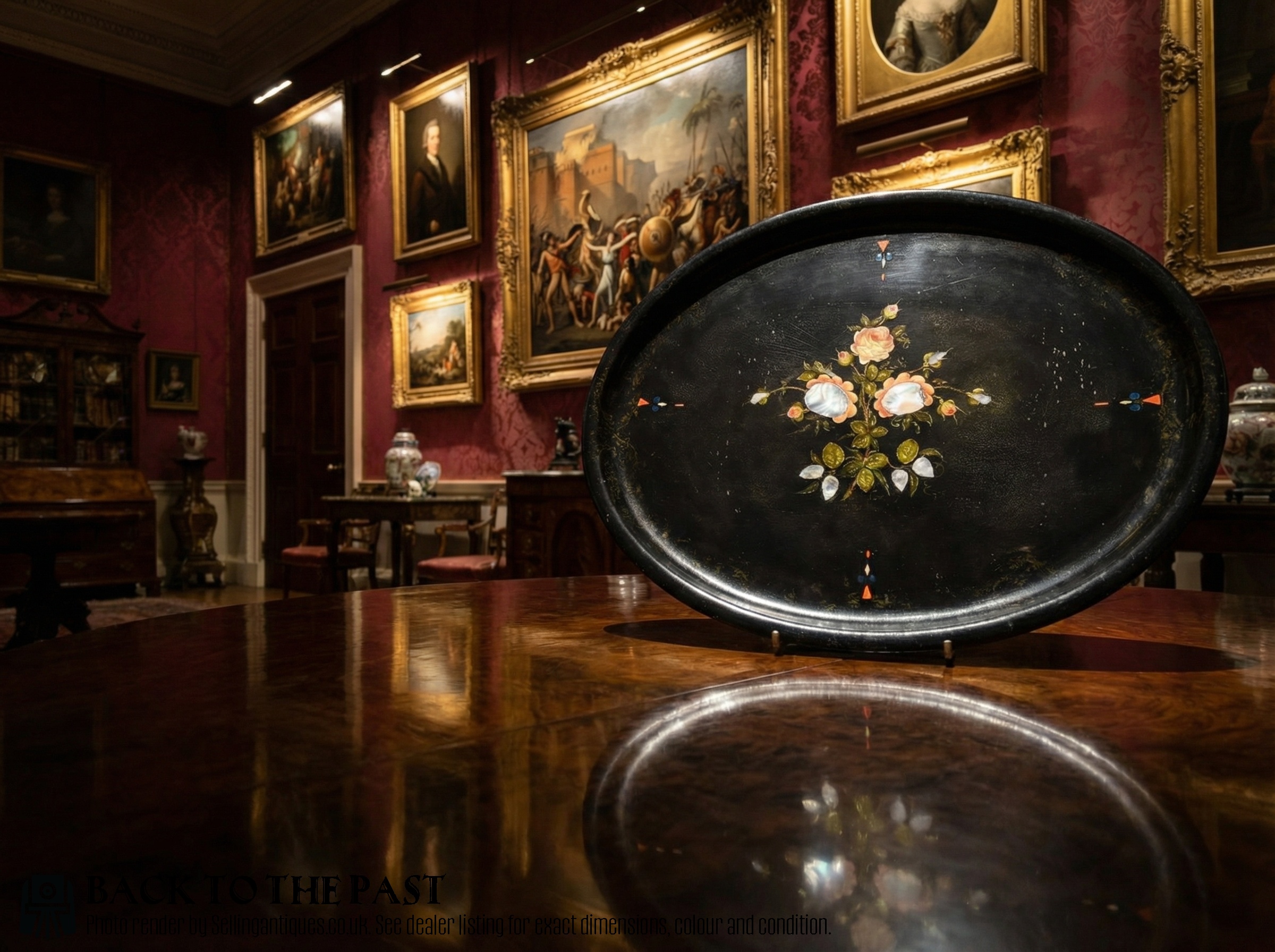
Black Floral Serving Tray
A black floral serving tray unites dark grounds with painted or gilded botanical decoration, appearing primarily across the nineteenth century. These pieces take forms ranging from small dishes to large serving trays and tray tables, shaped in oval and rectangular profiles.
The materials span papier-mâché, ebonised wood, toleware, and hard-paste porcelain, reflecting both Regency elegance and Victorian revivalism. English, Swedish, and continental workshops produced these items for domestic use in serving or display.
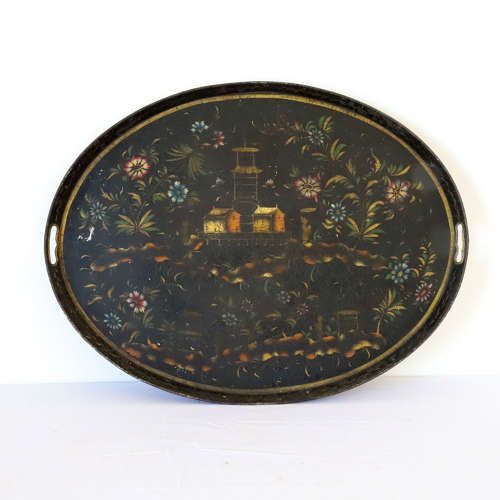
Victorian examples often incorporate chinoiserie styles alongside floral arrangements, whilst earlier Regency versions lean towards gilt embellishment on metal or papier-mâché bases. The listings on this page centre on these nineteenth-century forms and materials.
Materials and construction
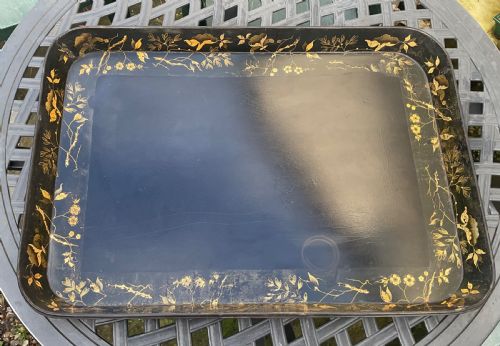
Makers formed the rigid bases of these trays using compressed layers of paper pulp in papier-mâché or shaped sheet metal in toleware, applying dark lacquer or paint to create a deep black ground. Artisans then built up the surface using gold leaf, enamel, and hand-painted pigments for the floral scenes.
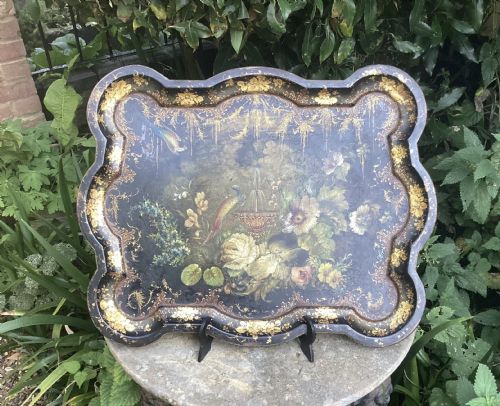
Certain pieces integrate mother-of-pearl inlay within the lacquer design to catch the light, while others utilise ebonised wood or hard-paste porcelain. Pontypool workshops specialised in the metal toleware tradition, employing skilled painters to finish each tray by hand.
Some trays come equipped with folding stands, transforming a simple serving board into an occasional table when tea is served.
Assessing quality and execution
The distinction between standard utility items and finer examples rests in the execution of the hand-painted floral details and the depth of the lacquer finish. Superior pieces demonstrate precise brushwork and careful integration of gold leaf or mother-of-pearl.
The integrity of the underlying papier-mâché or metal base dictates the durability of the tray, with better examples maintaining structural rigidity across larger formats. The precision of the moulding and the richness of the ebonised or black ground separate workshop standards.
The Black Floral Serving Tray Glossary
- Papier-mâché
- A composite material made from paper pulp or layers of paper mixed with glue and pressed into moulds. It provides a lightweight yet strong foundation for lacquered trays.
- Toleware
- Painted or enamelled sheet metal items produced in workshops such as Pontypool. These metal trays combine utility with decorative finishes.
- Chinoiserie
- A European artistic style reflecting Chinese motifs and landscapes. This aesthetic frequently appears alongside floral subjects on nineteenth-century trays.
- Ebonised
- Wood finished to resemble ebony through staining and polishing. This dark treatment creates the uniform background seen on many Victorian trays.
- Hard-paste porcelain
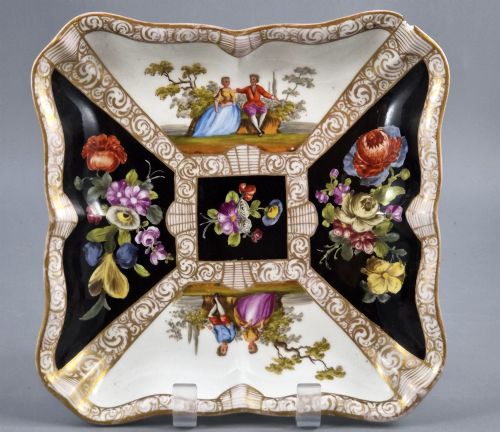
- A durable ceramic material fired at high temperatures. Meissen workshops utilised this body for square decorative dishes with black grounds.
Black Floral Serving Tray: Frequently Asked Questions
How do I clean a papier-mâché tray?
Use a dry or slightly damp soft cloth to remove dust from the surface. Avoid soaking the piece or applying harsh chemical cleaners.
Excess moisture can damage the lacquer and soften the papier-mâché base over time. Gentle handling preserves the painted floral details.
Can I use these trays for serving drinks?
Many examples function well for serving drinks, particularly larger nineteenth-century serving trays and pieces mounted on stands. Care should be taken with heat and moisture.
Trays featuring delicate mother-of-pearl inlay or extensive gold leaf are better suited to display. Ebonised and metal toleware versions offer robust surfaces for light domestic use.
What is the difference between toleware and papier-mâché?
Toleware consists of painted or enamelled sheet metal, offering a rigid and heavy metallic base. Pontypool items represent this metalworking tradition.
Papier-mâché utilises compressed paper pulp to create a lighter, moulded board that takes a smooth black lacquer finish. Both materials served as grounds for floral artwork.
How do I date a black floral tray?
Dating relies on material construction, style indicators, and recorded manufacturing periods such as the Regency era or the late nineteenth century. Papier-mâché and gilt embellishments often point to Victorian production.
Examine the style of the floral painting and the composition of the base materials. Pontypool metalware and Meissen porcelain pieces carry distinct regional and period characteristics.