


Black Mother of Pearl Tray
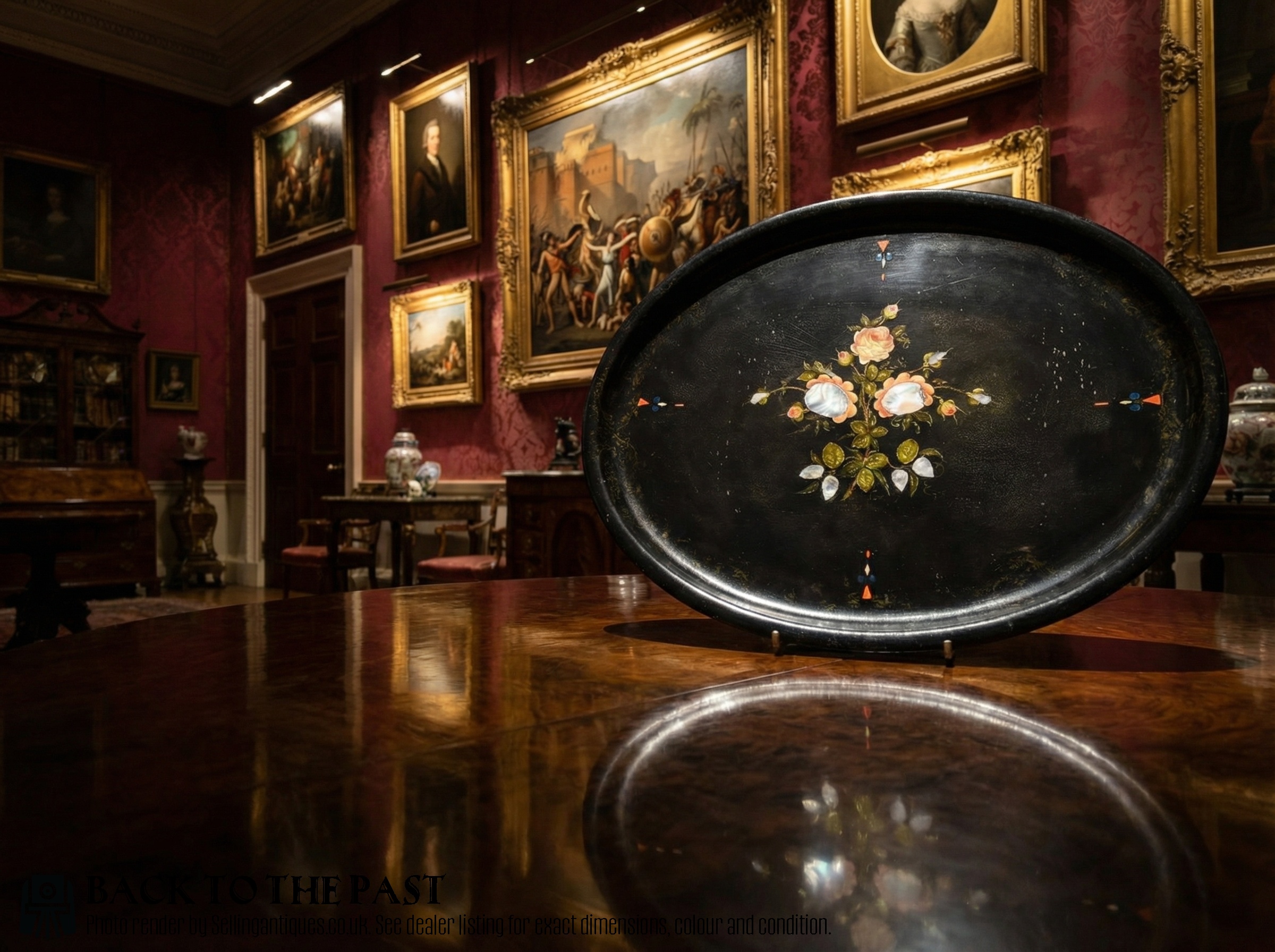
A black mother of pearl tray brings dark, glossy depths and iridescent shimmer to a room.
Black Mother of Pearl Tray
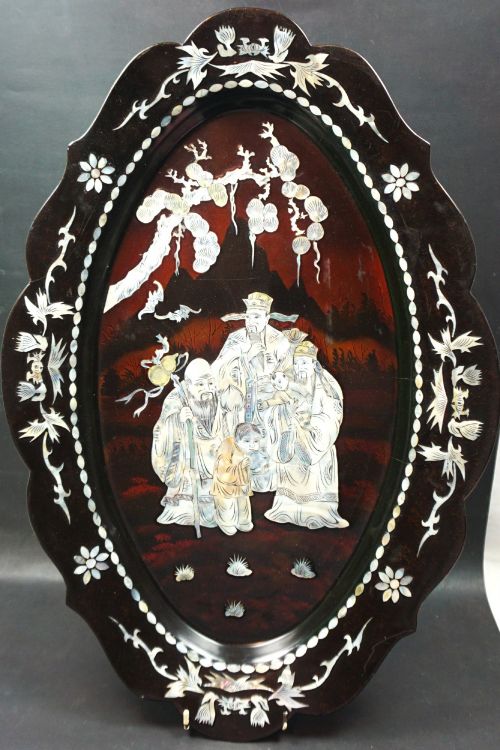
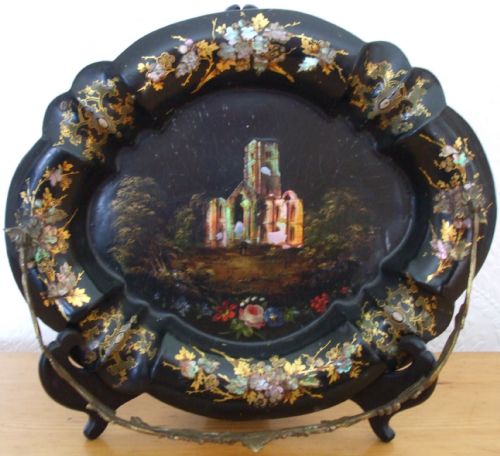
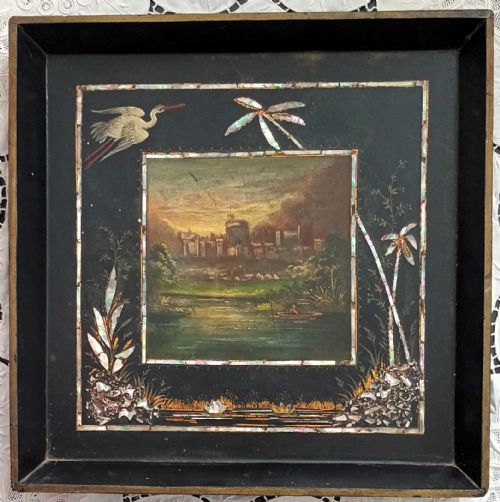
A black mother of pearl tray comprises serving trays, decorative platters, card baskets, and desk sets found in styles such as Victorian, Victorian Chinoiserie, Victorian Gothic, and Chinese Qing Dynasty. These objects span periods from the Georgian era and the nineteenth century up to nineteen hundred.
The version most commonly met on this page is the nineteenth-century Victorian papier-mâché tray, often taking a large oval form or functioning as a desk accessory. Buyers also encounter lacquered wood platters originating from the Chinese Qing Dynasty around nineteen hundred alongside Georgian butler's trays.
How they were made
Maker's workshops built papier-mâché bases using paper pulp and binders, shaping them into trays, card baskets, and desk sets before applying dark lacquer surfaces. Artisans then inlaid iridescent shell pieces into the finish.
Craftsmen enriched these surfaces using gold leaf, paint, and glass elements. Certain pieces incorporate brass mounts, while others rely entirely on the contrast between the dark ground and the luminous inlay.
Listings on this page span the Georgian period, the nineteenth century, and the year nineteen hundred, incorporating lacquered wood and papier-mâché.
What varies in quality
The distinction between standard examples and superior pieces rests upon the crispness of the papier-mâché moulding and the depth of the lacquer finish. Finer items display meticulous placement of the pearl inlay alongside refined gold leaf and painted details.
Scale and function also define the range, moving from modest card baskets to large, impressive platters and fitted desk sets. Superior examples maintain structural integrity across broader surfaces and more complex forms.
The Black Mother of Pearl Tray Glossary
- Papier-mâché
- A composite material made from paper pulp, mixed with binders and pressed into moulds before drying. It forms the rigid body for many nineteenth-century trays and desk accessories.
- Lacquer
- A durable protective and decorative finish applied in thin coats and polished to a high gloss. It provides the deep black ground characteristic of these pieces.
- Mother-of-pearl
- The iridescent inner layer of certain mollusc shells, cut into thin sections for inlay work. It catches the light with shifting tones of pink, green, and blue.
- Toleware
- Metalware finished with lacquer or painted decoration. These pieces appear alongside papier-mâché items in nineteenth-century collections.
Black Mother of Pearl Tray: Frequently Asked Questions
What are these trays made of?
These pieces are constructed primarily from papier-mâché or lacquered wood, providing a dark, sturdy base for decorative work.
Artisans integrated mother-of-pearl inlay, paint, and gold leaf into the surface to create decorative contrast and visual depth.
How do I date a tray?
Dating relies on stylistic markers and material combinations, linking pieces to the Georgian era, the nineteenth century, or circa nineteen hundred.
Victorian examples often feature papier-mâché construction with Gothic or Chinoiserie ornament, while Qing Dynasty pieces utilise lacquered wood.
How were they used originally?
Original uses included serving drinks, holding visiting cards in a basket, and organising writing equipment on a desk.
Larger oval platters functioned both for service and as decorative display items within period rooms.
How do I care for lacquer?
Keep these items away from direct sunlight and excessive moisture to protect the delicate lacquer and paper base.
Dust gently with a dry, soft cloth and avoid chemical cleaning agents that might damage the surface.