



Antique Kurdish Runner
An antique kurdish runner brings durable tribal craftsmanship and striking village geometry to long corridors and narrow spaces.
Antique Kurdish Runner
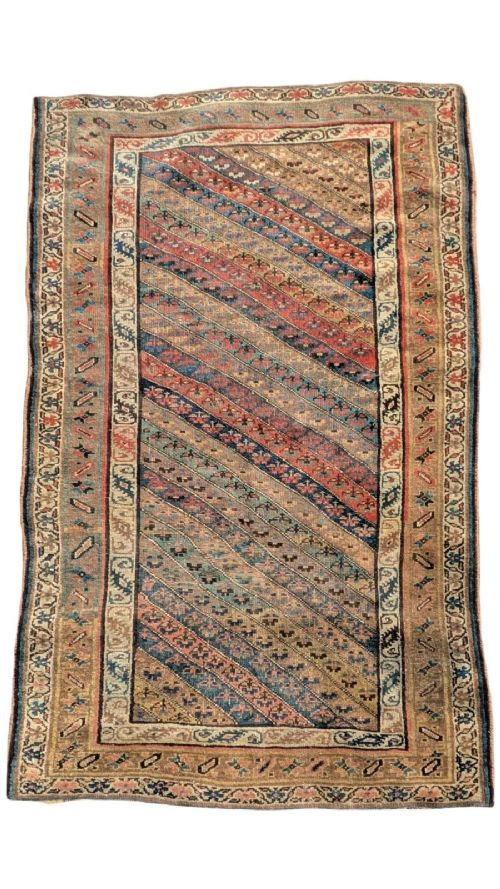
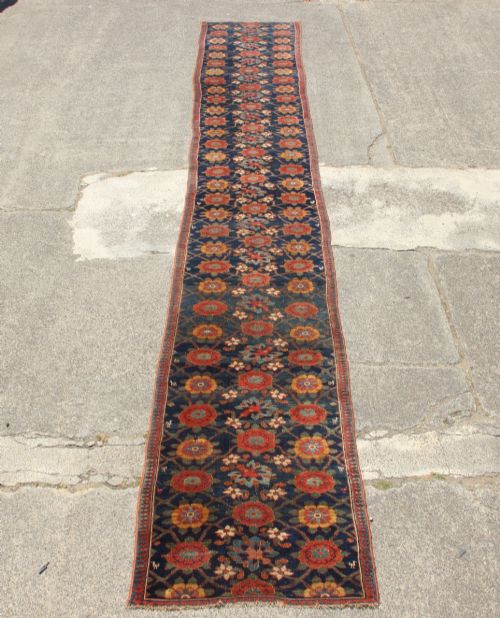
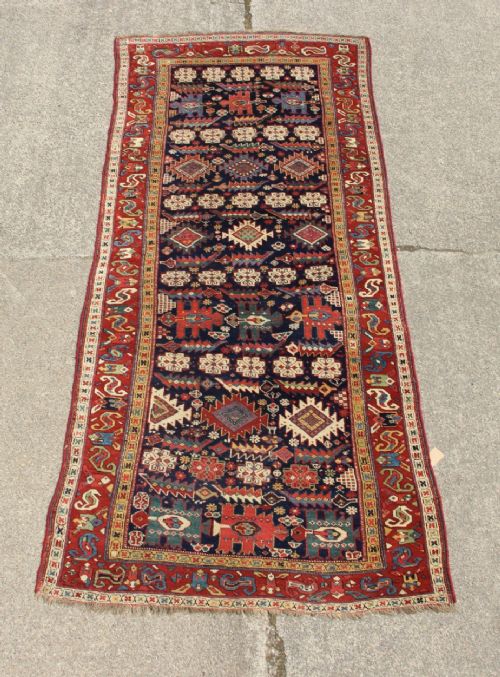
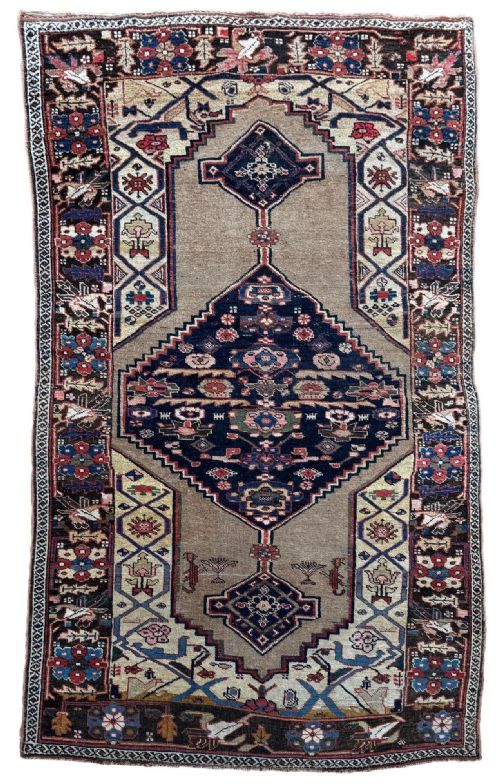
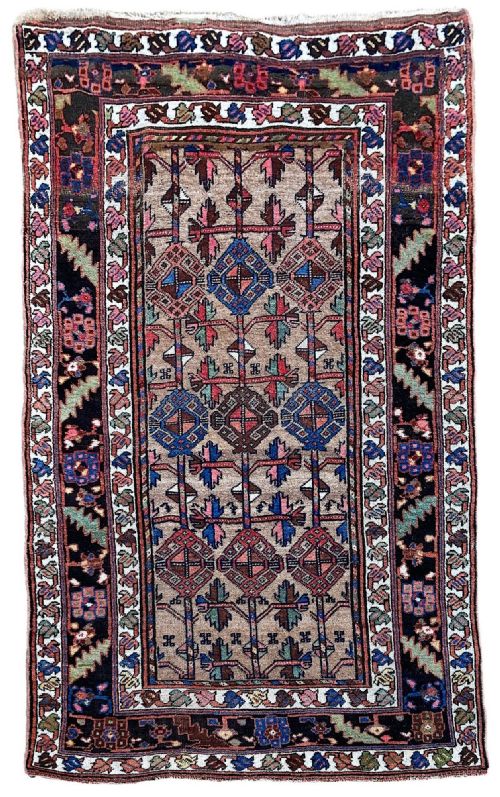
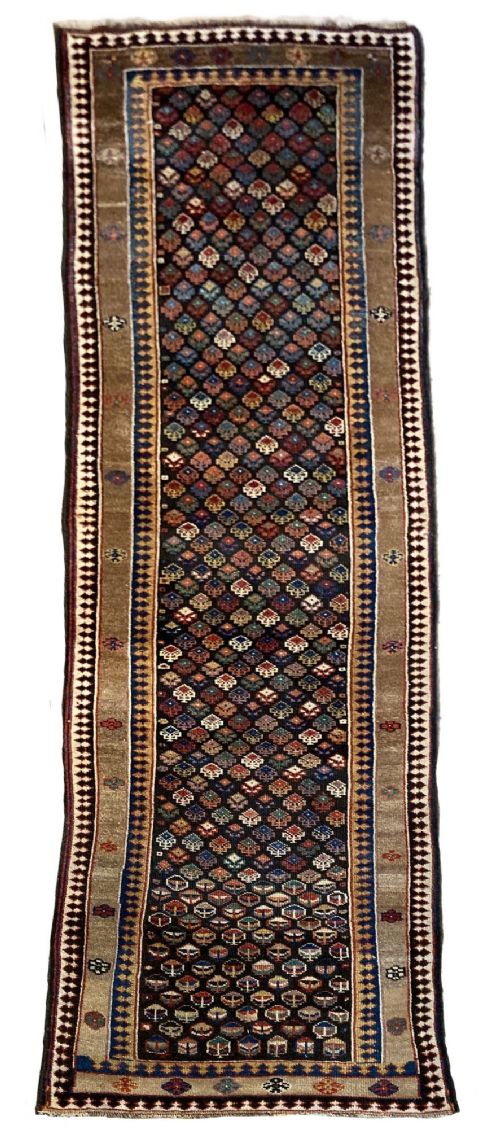
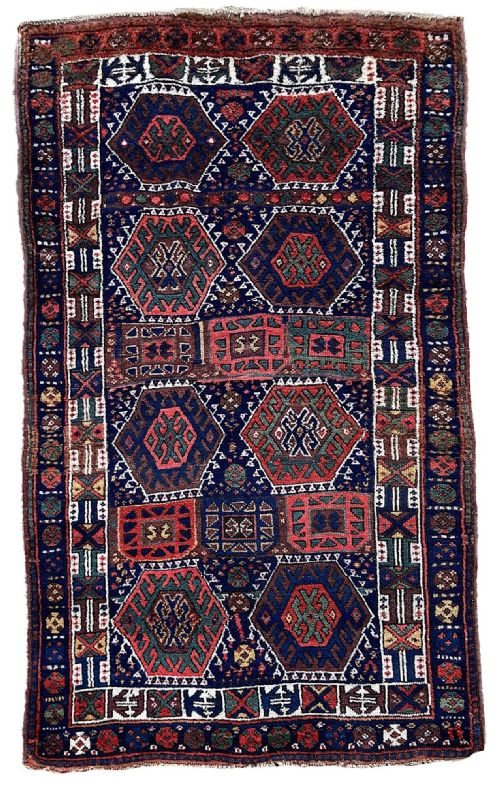
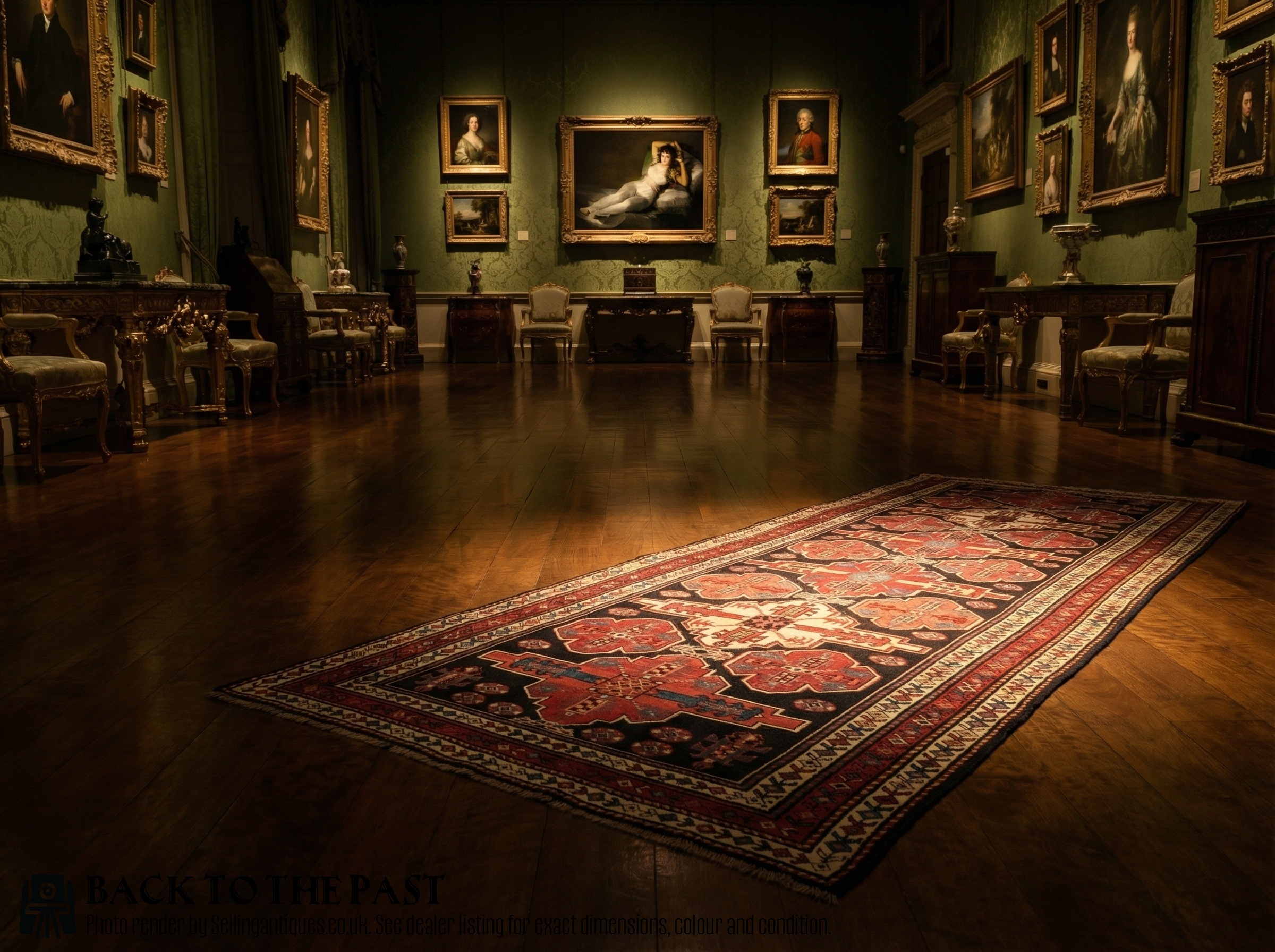
An antique kurdish runner is a long, narrow floor covering created by weaving communities in Persian Kurdistan, the Caucasus, and surrounding regions. These pieces were made to serve practical roles in corridors, halls, and long rooms within village homes and country houses. They frequently display elongated formats, geometric motifs, and repeating patterns such as all-over shrubs, boteh, or boxed medallions.
Buyers looking at this page will most commonly find nineteenth-century and early twentieth-century examples shaped by tribal and nomadic traditions. The selection spans narrow formats measuring under a metre wide alongside broader corridor carpets. Many pieces reflect regional village aesthetics originating from production centres like Bidjar, Senneh, and Hamadan.
Materials and Construction
Weavers relied on locally sourced materials, predominantly utilising wool, hand-spun wool, and cotton foundations to build dense, hard-wearing floor coverings. The hand-spun wool used in these textiles accepts traditional natural dyes with deep saturation, producing rich ground colours such as ivory, yellow, salmon pink, rust, and camel.
Structures include both knotted pile carpets and flat-woven kelim techniques, depending on the specific tribal group and regional origin. The construction produces heavy, resilient textiles designed to withstand generations of heavy foot traffic in domestic corridors.
Antique Kurdish Runner Retail Price Guide 2026
Typical asking prices for kurdish runner among the pieces listed under this phrase on Sellingantiques today, from the lower quarter to the upper quarter. They describe what is for sale here now, not the wider market.
Materials recorded across the archive include standard wool, hand-spun wool, and cotton foundations.
Evaluating the Weave
Quality in an antique kurdish runner rests on the handling of wool, the precision and density of the knotting, and the clarity of the design. Finer examples display tightly packed foundations and crisp geometric drawing, whereas rustic pieces show looser village execution and idiosyncratic local variations.
The vitality of the colour palette and the uniqueness of the field design elevate particular examples. Pieces featuring unusual animal motifs, quirky birds, or complex shrub layouts separate standard utility runners from more collectible tribal works.
The Antique Kurdish Runner Glossary
- Kelleh
- A large format carpet or long rug proportioned distinctly longer than it is wide. It is often found in Persian village weaving.
- Boteh
- A traditional almond-shaped or paisley motif representing a floral shoot or cypress tree. This symbol appears frequently across runner fields.
- Kelim
- A flat-woven textile produced without a pile by tightly interweaving warp and weft threads. These runners offer a lighter, reversible floor covering.
- Herati
- A repeating floral lattice pattern composed of a central rosette enclosed by leaves and flanked by curved lancet leaves. It forms a balanced, all-over field design.
Antique Kurdish Runner: Frequently Asked Questions
Where were these runners made?
These pieces originated in the rug-weaving regions of Persian Kurdistan, the Caucasus, and surrounding tribal territories. Weavers worked within nomadic and village communities, incorporating local design traditions into their floor coverings.
Production spanned various districts, including northwestern Persia, Hamadan, and Senneh. Each area imparted distinct structural characteristics and colour combinations to the finished textiles.
How do I use a narrow runner at home?
Narrow runners function effectively in hallways, corridors, staircases, and long transitional spaces where standard area rugs prove too wide. Their elongated proportions guide movement through a home while adding warmth and texture to bare floorboards.
Placing a suitable underlay underneath helps secure the textile on smooth surfaces and prevents unnecessary sliding. Regular rotation ensures even wear patterns accumulate over decades of domestic use.
How do I date an antique runner?
Dating relies on examining the wool characteristics, dye palettes, structural materials, and design execution. Nineteenth-century examples often display variable hand-spun wool and organic dye variations that differ from later commercial production.
Structural analysis of the foundation threads and selvedges also provides clues to age and origin. Stylistic markers connect specific pieces to nineteenth-century and early twentieth-century tribal workshops.
Are these runners durable enough for daily use?
These textiles were constructed for practical daily life in domestic settings and country houses. The dense wool pile and sturdy foundation materials absorb foot traffic effectively.
Gentle care, including regular low-suction vacuuming without a rotating brush roll, preserves the wool pile. Professional cleaning suited to antique textiles maintains the integrity of the natural fibres.