



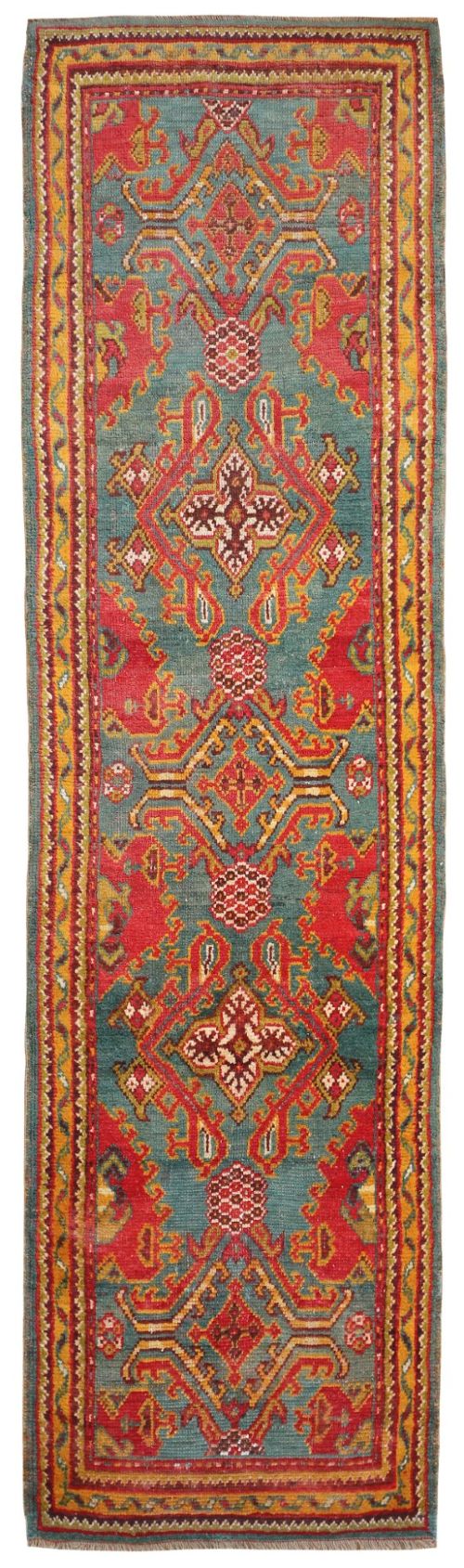

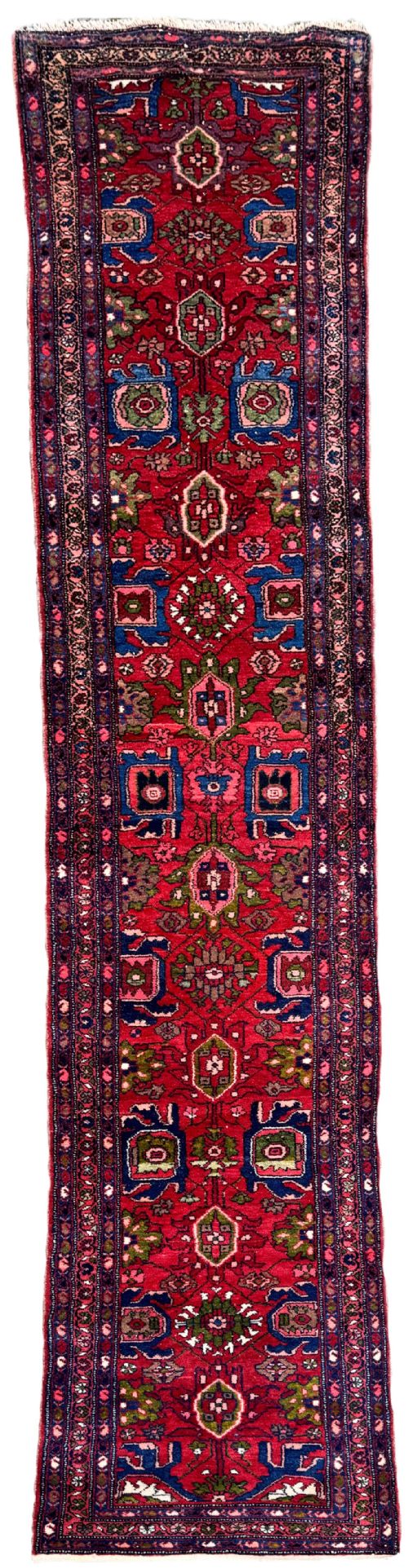
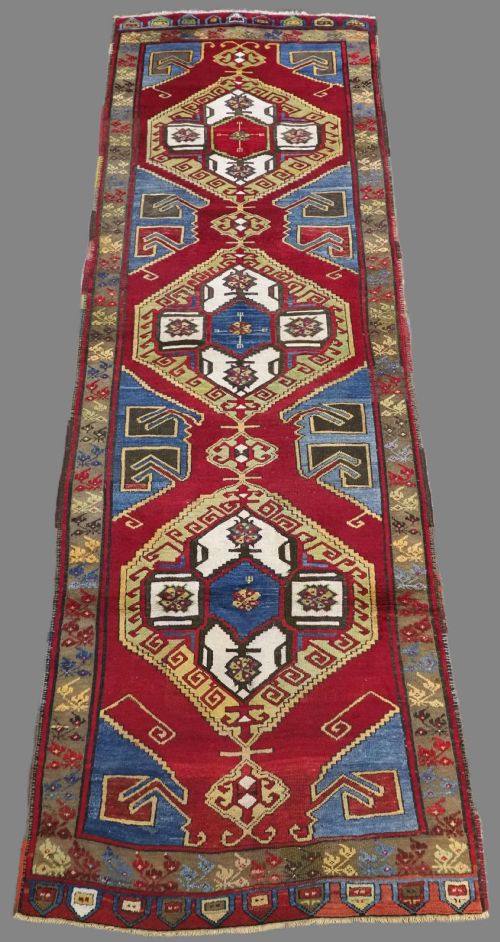
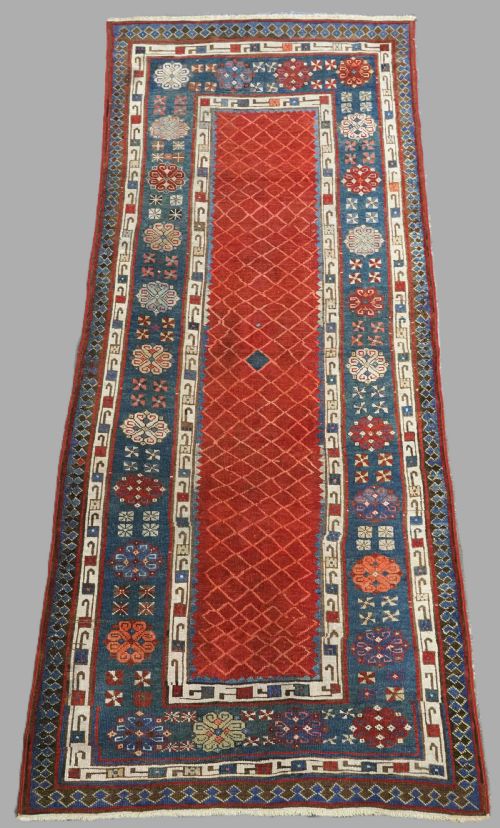

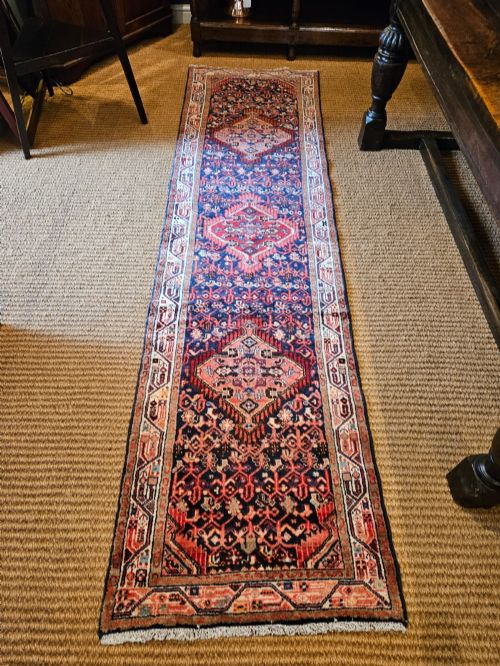
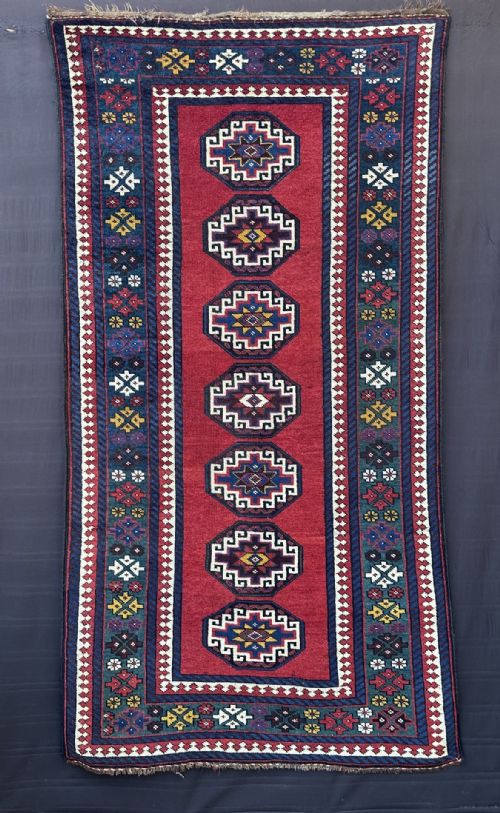
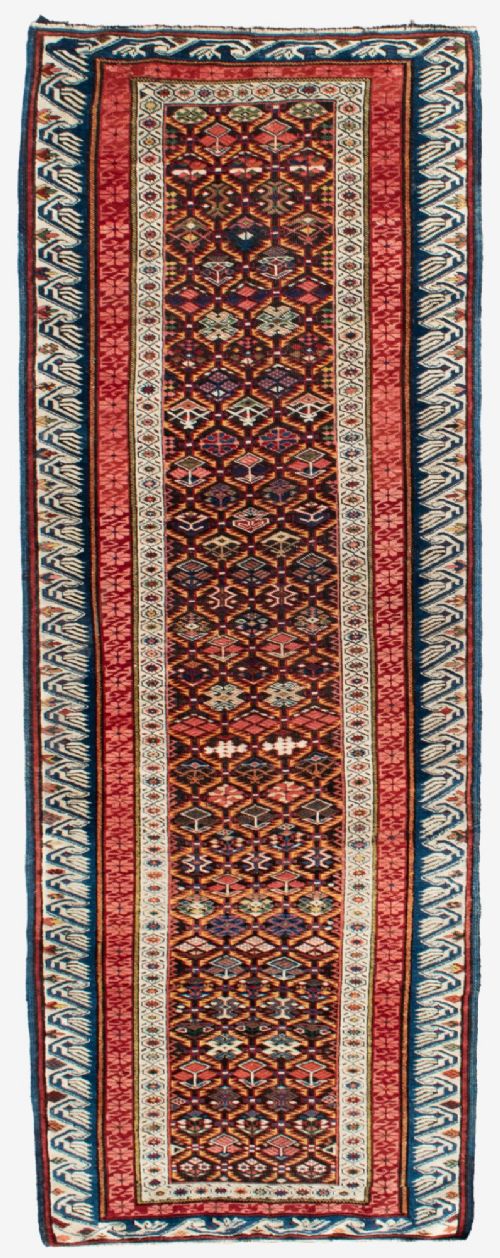
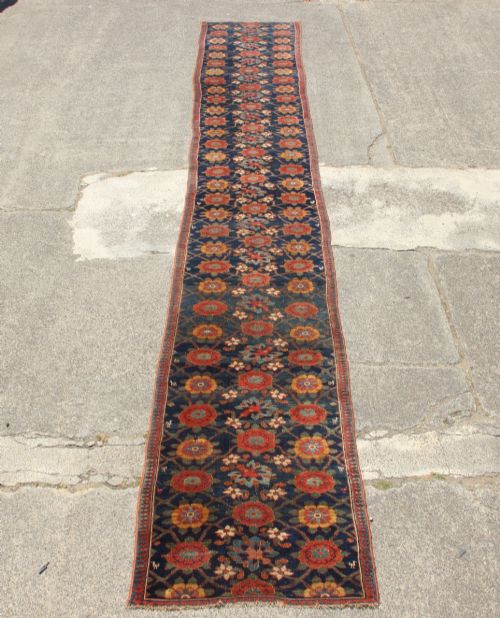
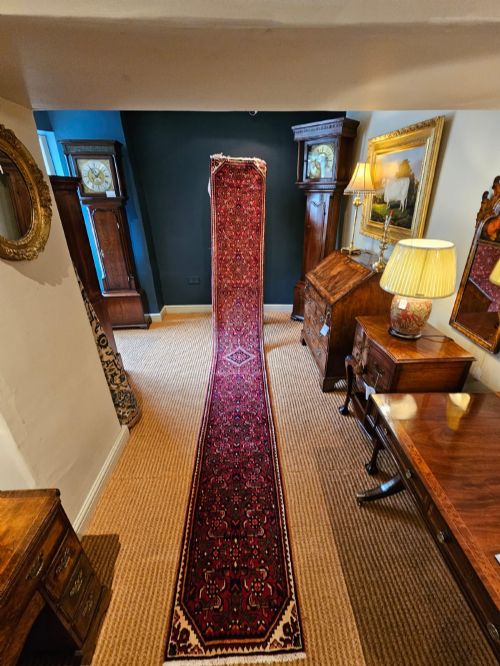
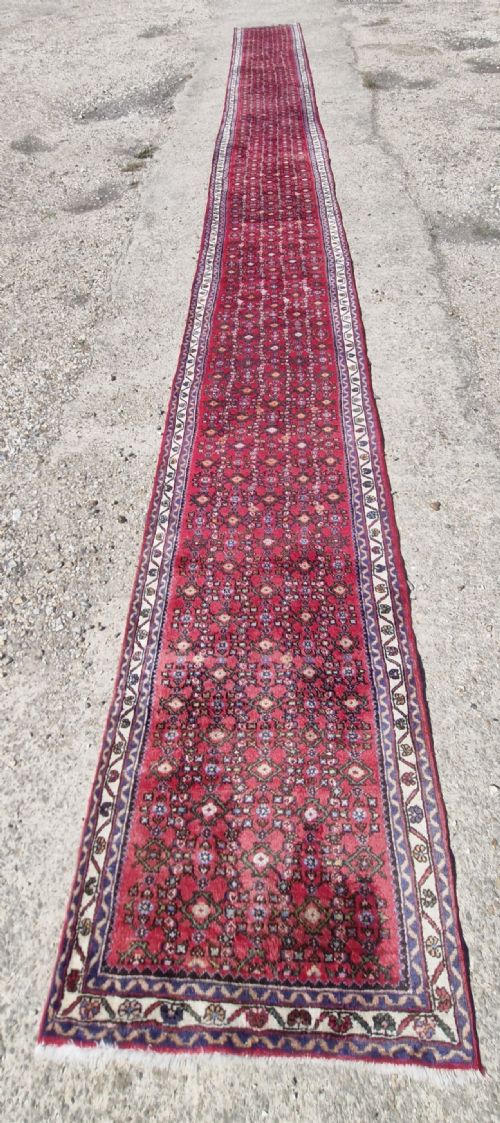
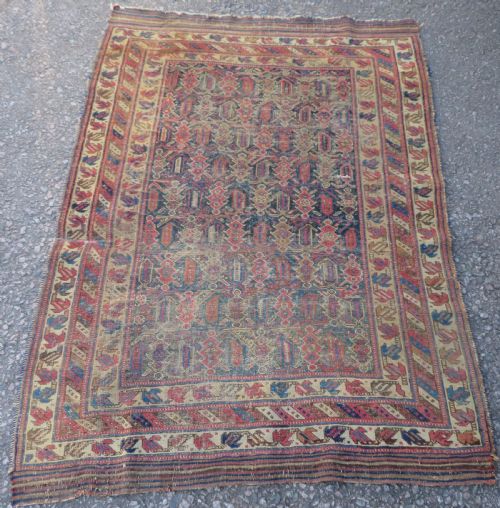
Red Wool Hallway Carpet
A red wool hallway carpet brings warmth and enduring pattern to long passages, grounding a corridor with historic woven character.
Red Wool Hallway Carpet
A red wool hallway carpet typically takes the form of an antique runner, long and narrow in proportion to fit traditional corridors and landings. These pieces emerge from nineteenth- and early twentieth-century weaving traditions, spanning origins from Persia, Turkey, and the Caucasus.
The selection centres on regional village and tribal work, including Heriz, Hamadan, Kurdish, and Caucasian pieces. Such floor coverings suit high-traffic domestic spaces, combining robust utility with time-worn decorative appeal.
Materials and construction
The foundation rests on natural fibres, utilising wool pile woven onto cotton or wool warps and wefts. Hand-spun wool provides the primary substance for the thick pile, absorbing natural dye stuffs with rich variation.
Traditional hand-knotting techniques secure the pile, creating dense structures designed to withstand decades of footfall. Artisans employed local wool and natural colourants, resulting in sturdy textiles built for longevity.
Several rugs arrive with slightly crooked geometries, reminding us that human hands tied every single knot without digital aid.
Judging quality and character
Quality rests in the handle of the wool and the clarity of the design structure, where tighter knotting yields crisper geometric and floral motifs. Finer pieces demonstrate careful dye distribution and balanced proportions along the length of the runner.
Condition and integrity dictate the standing of an individual piece, balancing the natural patina of age against structural wear. Hand-spun wool retains resilience over time, rewarding those examples that preserve their original selvedges and end finishes.
The Red Wool Hallway Carpet Glossary
- Runner
- A long, narrow carpet format specifically proportioned for corridors, hallways, and staircases. This shape directs movement through domestic spaces.
- Warp
- The vertical threads stretched on a loom that form the structural skeleton of the carpet. Weft threads cross these at right angles to lock the knots in place.
- Selvedge
- The bound or reinforced edge running along the long sides of a carpet. It prevents the sides from fraying and maintains the rectangular geometry.
- Pile
- The upright cut or looped ends of yarn that form the usable surface of the carpet. Dense pile provides cushioning and protects the structural foundation underneath.
- Natural dye
- Colourants derived from plants, insects, and minerals used before the introduction of synthetic alternatives. These dyes tend to age with harmonious variation across the wool.
Red Wool Hallway Carpet: Frequently Asked Questions
How do I choose the right length?
Measure your hallway while leaving a uniform border of exposed flooring around the perimeter of the rug. Ensure doors can swing freely over the thickness of the pile.
Allow extra clearance near thresholds and entry points so the runner lies flat without bunching under foot traffic.
Are these carpets suitable for daily use?
Traditional village and tribal carpets are constructed from durable wool designed to endure generations of heavy domestic footfall. Their dense knotting naturally resists crushing in high-traffic corridors.
Underlay provides essential support, preventing slip and reducing friction between the floorboards and the historic wool foundation.
How do I care for wool runners?
Regular gentle suction vacuuming without a beater bar removes trapped grit from the base of the pile. Lift the rug periodically to clean and air the floor beneath.
Blot spills immediately with a clean, dry cloth without rubbing, and consult a specialist for professional cleaning when required.
How do I identify different regional styles?
Regional attribution relies on characteristic palette choices, border arrangements, and specific geometric or floral motifs. Persian, Caucasian, and Anatolian weavers each employed distinct structural signatures.
Examining the weave density, back construction, and wool quality helps pinpoint the likely workshop or tribal origin of the piece.