
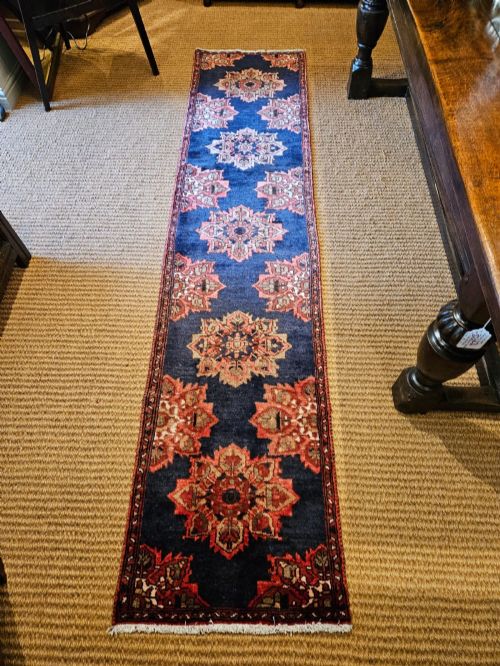
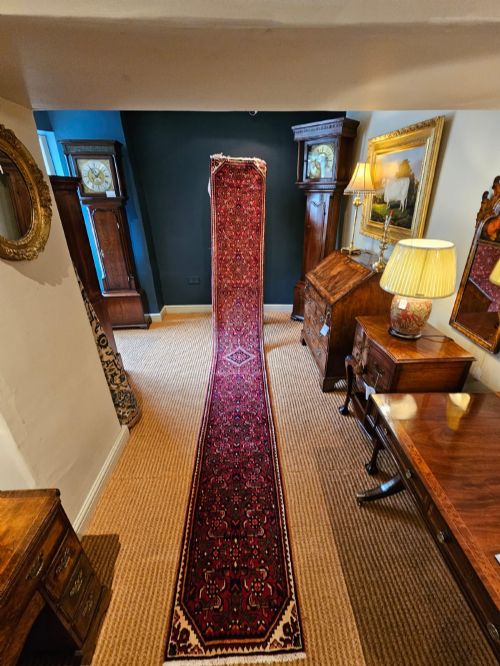
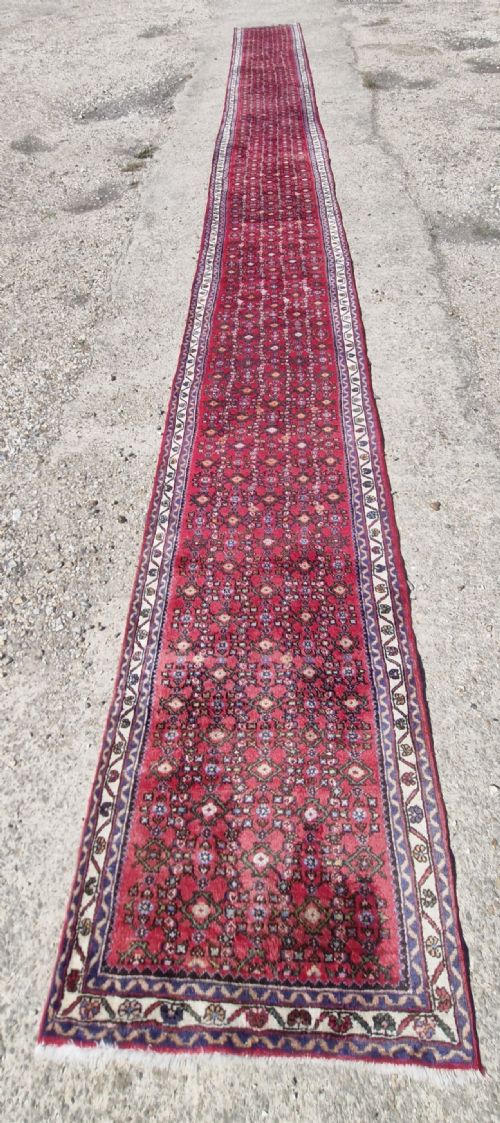
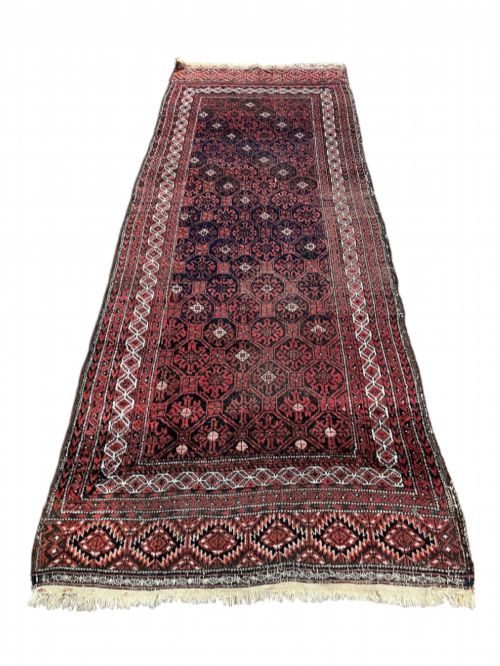
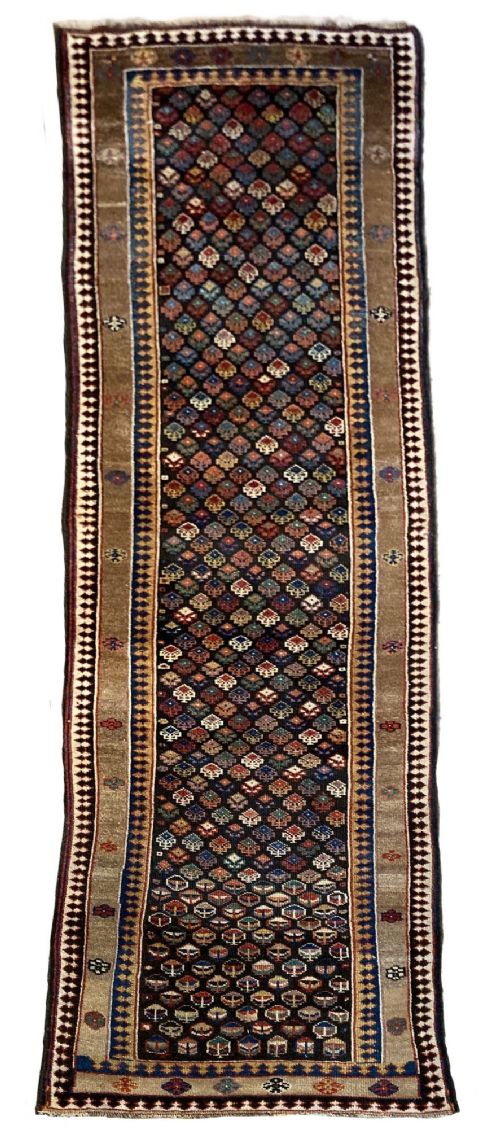


Long Narrow Runner Rug
When you search for a long narrow runner rug, you are looking at floor coverings designed to line corridors, halls, and landings.
Long Narrow Runner Rug
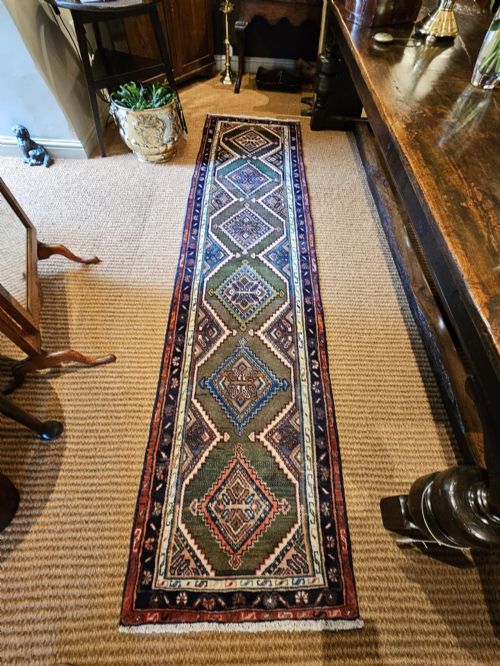
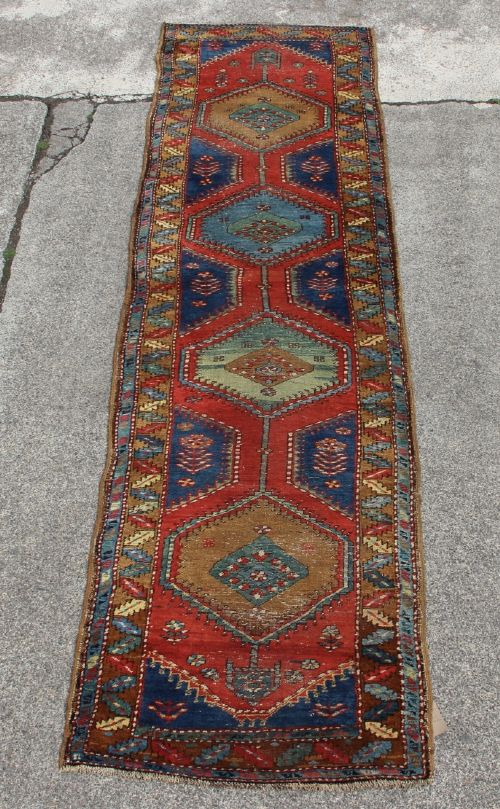
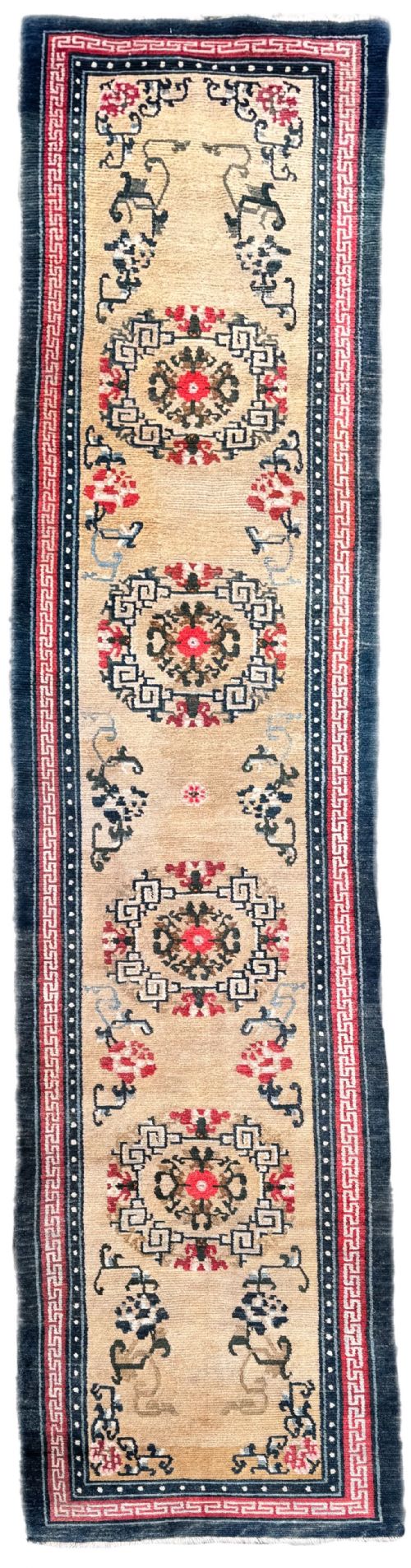
A long narrow runner rug spans extended floor spaces in hallways, landings, and large rooms, serving both decorative and practical purposes. These textiles originate from diverse regions including Persia, Turkey, Morocco, Tibet, and the Caucasus, spanning periods from the late nineteenth century through to the mid twentieth century.
Most examples found here belong to traditional tribal or village weaving traditions such as Hamadan, Heriz, Kurdish, and Baluch. These pieces bring distinct geometric patterns, medallion designs, and regional colour palettes into narrow domestic layouts.
How they were made
Weavers constructed these pieces using hand-spun wool, standard wool, cotton, and camel hair. These natural fibres formed the foundation warps, wefts, and thick pile surfaces capable of withstanding heavy foot traffic.
Dyes derived from natural sources provided lasting colour tones across the red, blue, green, and neutral spectrums. Skilled hands knotted or flattened the yarn into structured floor runners, incorporating kilim flatweave techniques in specific Turkish and Caucasian examples.
Long Narrow Runner Rug Retail Price Guide 2026
Typical asking prices for long narrow runner rug among the pieces listed under this phrase on Sellingantiques today, from the lower quarter to the upper quarter. They describe what is for sale here now, not the wider market.
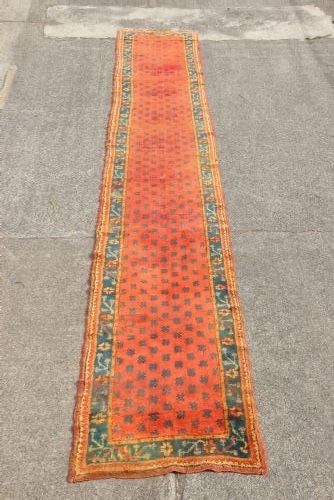
Some runners stretch over thirty-two feet, requiring considerable hallway space.
What varies in quality
The fineness of the knotting and the density of the wool foundation dictate the structural integrity of each piece. Tighter construction yields a firmer handle that preserves the geometric definition of the pattern over decades of use.
The complexity of the regional design and the depth of the natural dye palette separate standard village production from finer workshop output. Variations in wool quality directly affect how the pile responds to foot traffic and cleaning.
The Long Narrow Runner Rug Glossary
- Runner
- A long, narrow floor covering proportioned specifically for hallways, corridors, and stairs. These pieces direct movement through domestic spaces while protecting exposed floorboards.
- Pile
- The vertical or diagonal loop of yarn that forms the soft surface of a woven rug. Shorter pile variations reveal tighter knot structures underneath.
- Kilim
- A flatweave textile produced without a pile by tightly interweaving warp and weft strands. These items often feature sharp geometric motifs.
- Warp
- The stationary vertical threads stretched across a loom that hold the structural tension of the rug. Weft threads pass horizontally through these foundational strands.
- Medallion
- A central ornamental design motif placed in the field of a rug. This symmetrical element anchors the surrounding border patterns.
Long Narrow Runner Rug: Frequently Asked Questions
Where should I place a runner rug?
These pieces suit narrow thoroughfares like hallways, corridors, staircases, and long landings where floor protection and visual warmth matter. Their extended proportions bridge adjoining rooms while defining circulation routes through the home.
Ensure the chosen length leaves an even margin of exposed flooring around the perimeter of the space. Measure the width carefully to clear doors swinging along the path.
How do I care for antique wool runners?
Regular gentle vacuuming without a rotating brush roll prevents dust accumulation within the wool pile. Professional cleaning suited for antique textiles preserves the natural lanolin in the fibres.
Avoid placing these items in direct, prolonged sunlight to prevent fading of natural dyes. Rotate the position periodically to distribute wear evenly along high-traffic zones.
What materials were used in these rugs?
Traditional weavers relied primarily on wool, hand-spun wool, cotton foundations, and occasionally camel hair for durability. These organic materials respond well to foot traffic while developing a soft patina over time.
Foundation threads typically consist of sturdy cotton or wool, which supports the dense pile surface above. Natural dyes sourced from plants and minerals provide the characteristic regional tones.
How do I identify regional rug styles?
Regional identification relies on specific geometric motifs, border arrangements, and structural characteristics unique to weaving communities like Heriz, Hamadan, or Kurdish areas. Colour choices also point to local traditions and available dye sources.
Examining the back of the piece reveals knot density, warp depression, and finishing techniques tied to particular tribal or workshop origins.