
Antique Kneehole Bureau
An antique kneehole bureau offers structured workspace and hidden drawers, drawing collectors who value period craftsmanship and compact storage.
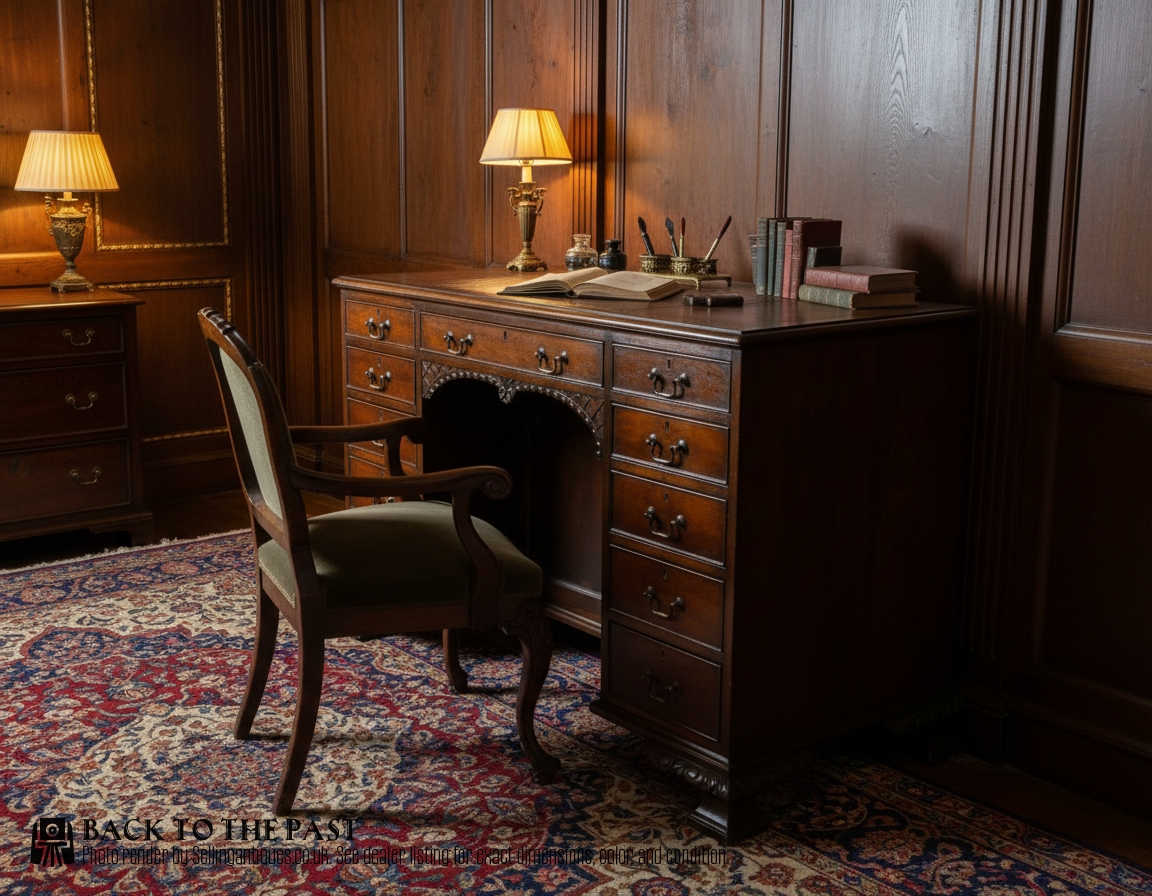
Antique Kneehole Bureau
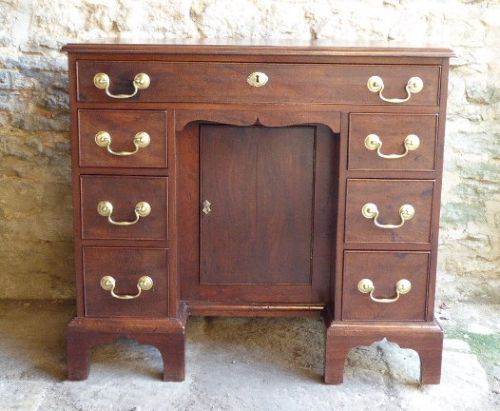
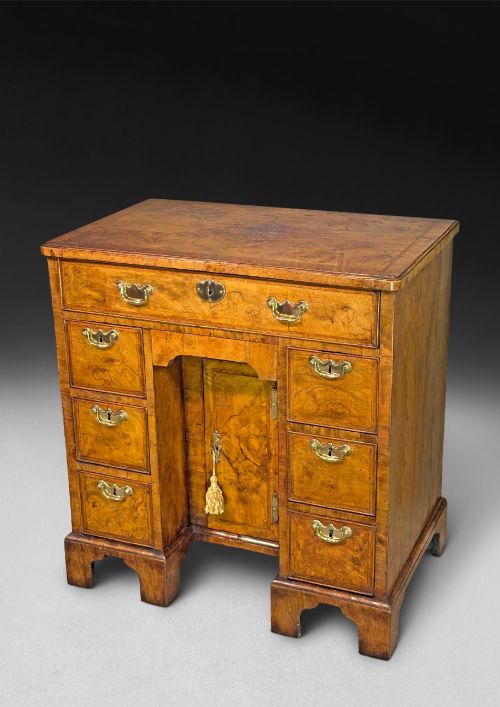
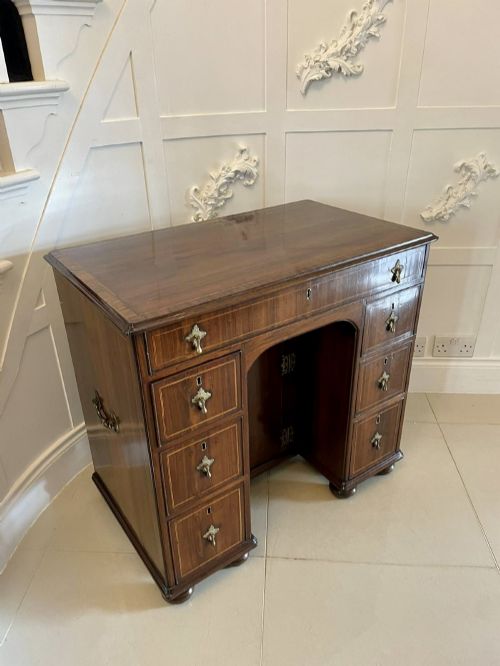
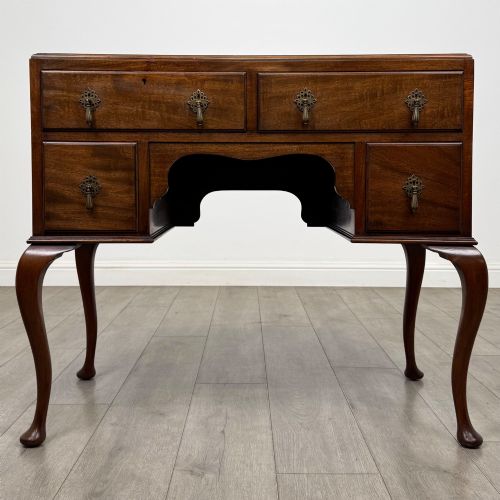
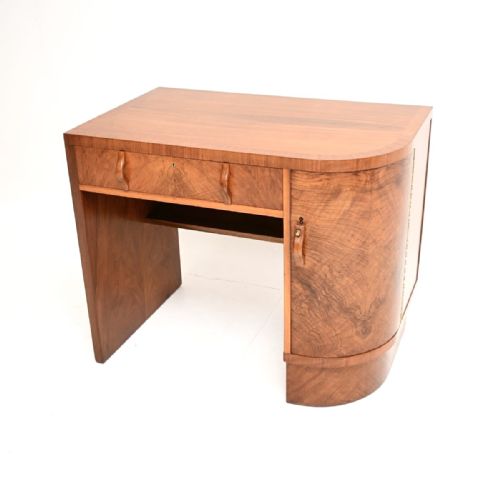
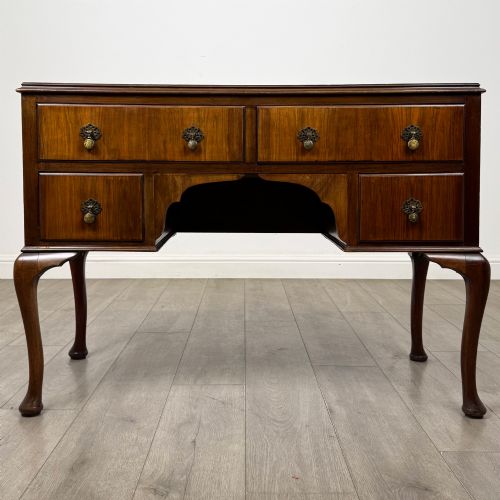
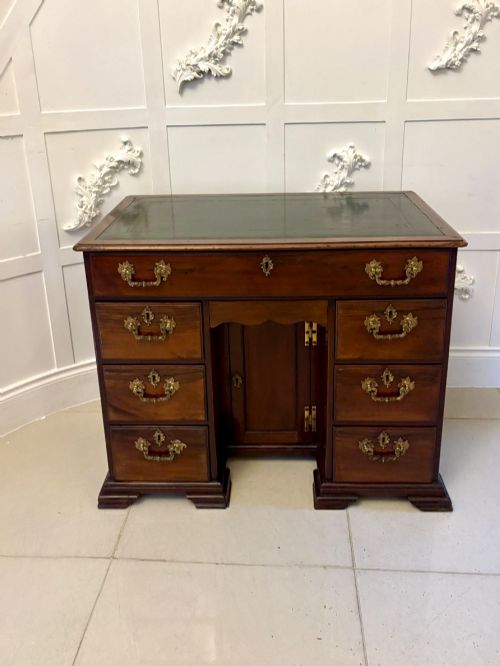
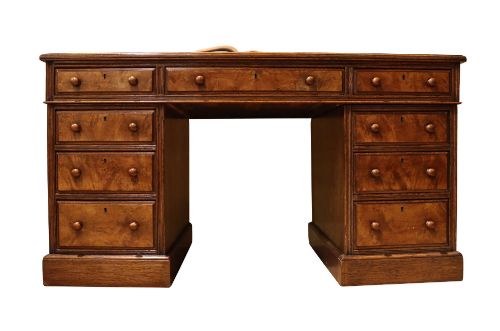
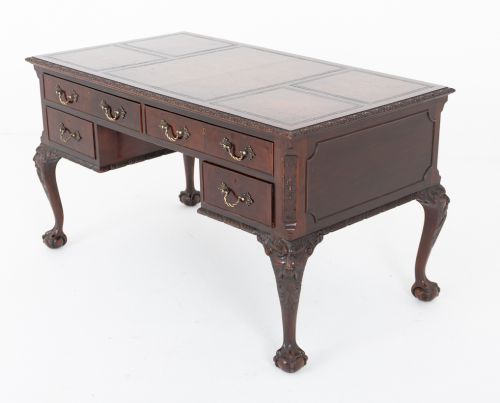
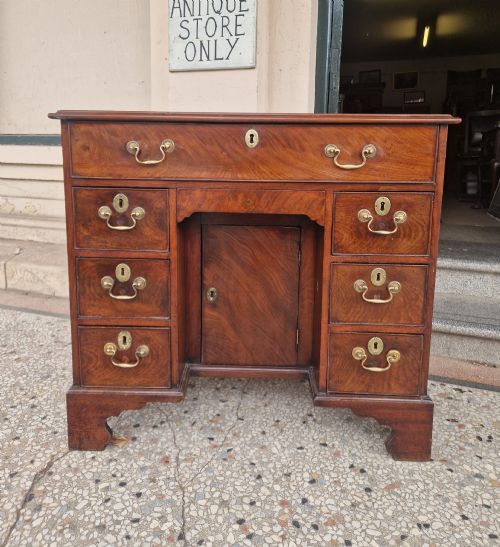
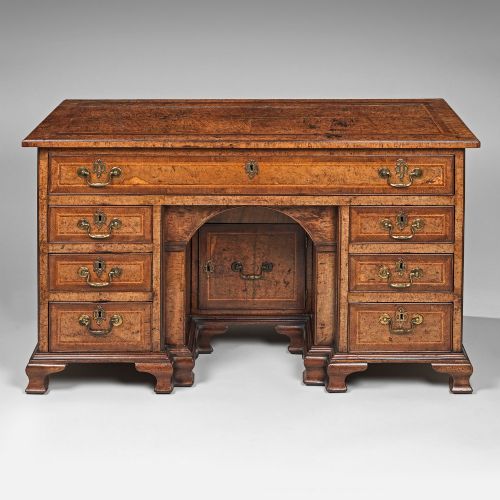
An antique kneehole bureau is a dedicated writing piece featuring a central recessed space flanked by pedestals of drawers, combining compact proportions with ample storage. Buyers hunting for this specific form encounter numerous examples originating from the Georgian and Victorian eras, alongside later Edwardian and Art Deco iterations.
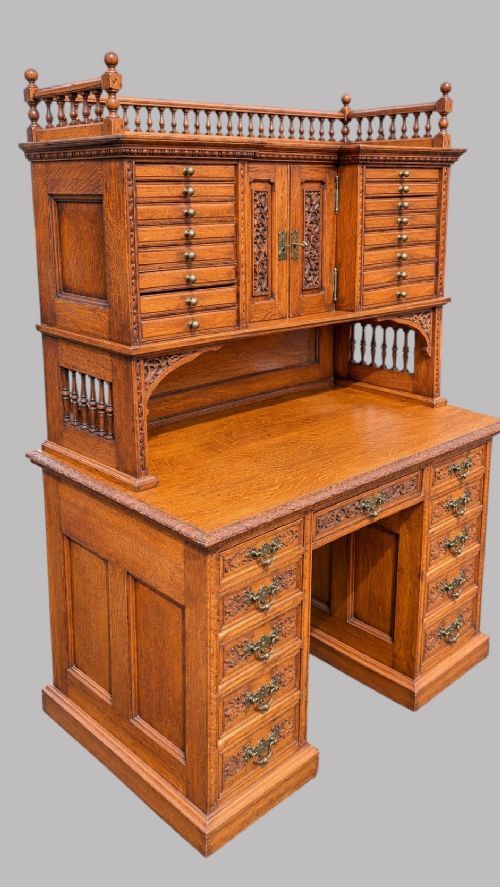
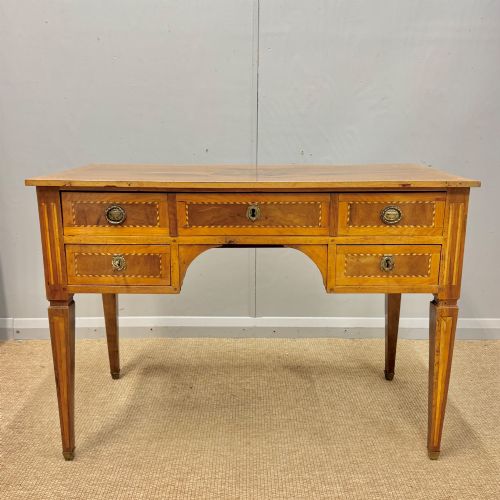
The desks listed here span centuries of British and continental design, ranging from small 18th-century walnut and mahogany formats to substantial 19th-century pedestal desks. While formal Georgian pieces showcase figured veneers and fine cabinetmaking, later Victorian and Edwardian interpretations adapt the form using oak, mahogany, and burr walnut.
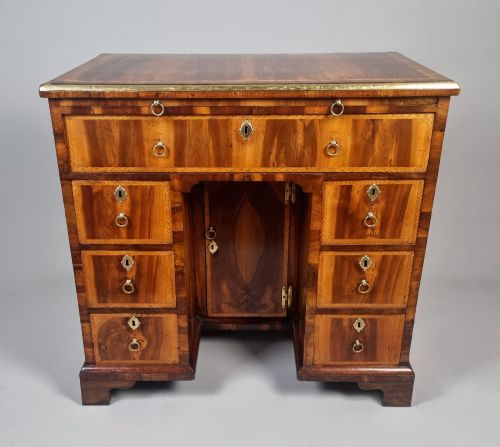
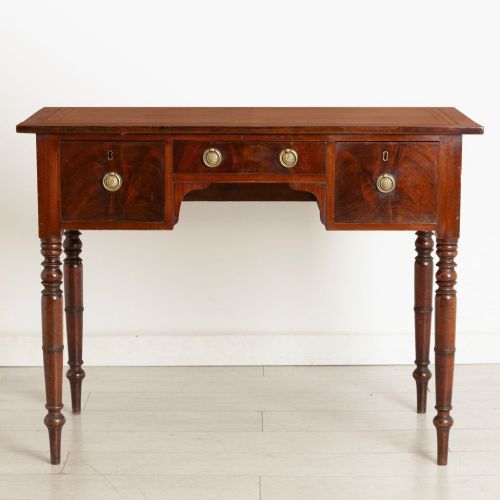
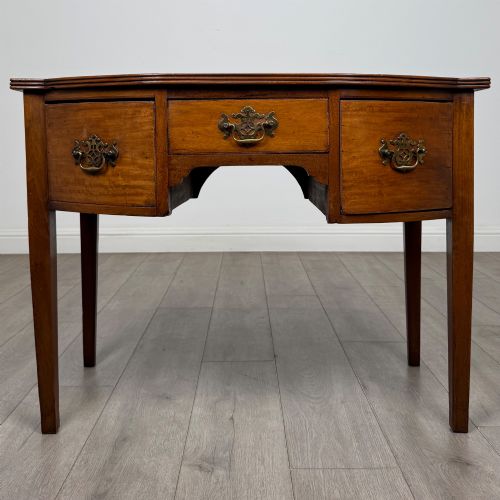
Makers and regional workshops utilised varied timber selections, producing everything from formal pedestal desks to smaller kneehole writing tables and dressing tables. Buyers will find that the classic configuration - a central cupboard or drawer beneath the writing surface, flanked by banks of small drawers - remains the defining characteristic across all periods.

Materials and construction
Cabinetmakers constructed these desks using dense hardwoods like mahogany, oak, and walnut, frequently applying burr walnut or yew wood veneers to create striking surface patterns. These timbers were selected for their durability and grain, forming sturdy carcases that house multiple dovetailed drawers.
Brass hardware, including drop handles and escutcheons, provides functional contrast to the dark timber surfaces, often fixed with original brasses that indicate period authenticity. Leather writing surfaces, sometimes tooled in gold, were inset into the top panels of later Victorian and 20th-century variations.
Antique Kneehole Bureau Retail Price Guide 2026
Typical asking prices for kneehole bureau among the pieces listed under this phrase on Sellingantiques today, from the lower quarter to the upper quarter. They describe what is for sale here now, not the wider market.
Several desks manage to cram nine separate drawers into a remarkably small floor footprint, proving that Georgian cabinetmakers possessed an obsessive love for tiny hidden compartments.
What separates the finest examples
Quality rests in the choice of timber veneer and the precision of the cabinetwork, particularly in how figured walnut, fiddleback walnut, or burr elm wraps around the drawer fronts. Finer desks display continuous grain matching across the facade, whereas lesser pieces rely on simpler solid timbers or standard mahogany without distinct figure.
The integrity of the internal construction, the survival of original brass handles, and the crispness of carved details dictate the standing of a desk. Original secondary timbers inside the drawer linings and untouched patination elevate a piece far above one with replaced elements or altered surfaces.
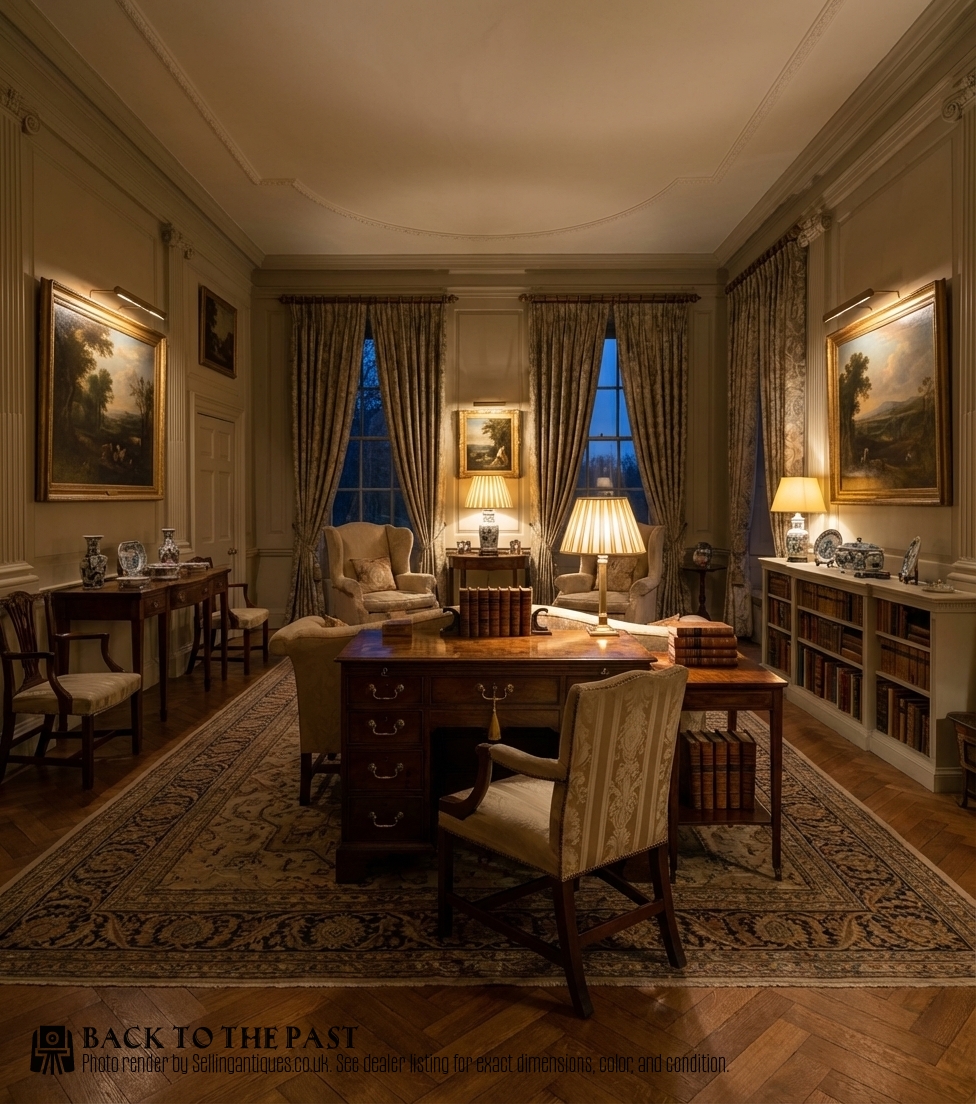
Maple & Co.·Wylie & Lochhead Glasgow
The Antique Kneehole Bureau Glossary
- Kneehole
- A recessed central space beneath a desk designed to accommodate the user's legs. This arrangement allows for banks of drawers on either side.
- Pedestal desk
- A heavy freestanding writing desk built with two supporting pedestals of drawers beneath the main top. These typically offer extensive storage capacity.
- Burr walnut
- Timber taken from a tree growth or burl, yielding swirling, highly decorative grain patterns. Cabinetmakers prized this material for high-status drawer fronts and tops.
- Fiddleback
- A type of wood grain marked by fine, rippled transverse lines resembling the back of a violin. It is most commonly found in figured walnut.
- Dovetail
- A joint formed by interlocking wedge-shaped fingers, used to join drawer sides to drawer fronts. Hand-cut dovetails indicate traditional pre-industrial construction.
Antique Kneehole Bureau: Frequently Asked Questions
How do I date an antique kneehole desk?
Dating relies on examining the construction methods of the drawers, the choice of secondary timbers, and the overall style of the hardware. Hand-cut dovetails and native timber usage point firmly to earlier periods.
Stylistic cues such as bracket feet, cockbeading around drawers, and veneer choices help narrow the decade of manufacture. Comparing the desk against documented examples from the same era clarifies its age.
Are these desks suitable for daily laptop use?
Many antique kneehole desks provide adequate surface area and sturdy construction for modern writing or laptop tasks. Their compact footprints suit contemporary home studies remarkably well.
Buyers should verify internal drawer dimensions and kneehole clearance before purchase to ensure comfortable daily seating. Leather-topped surfaces offer a durable writing plane that withstands regular use.
How should I care for walnut veneer?
Walnut veneer requires protection from direct sunlight and dramatic shifts in room humidity to prevent splitting or lifting. Regular dusting with a soft, dry cloth preserves the polished surface.
Applying occasional specialist wax feeds the timber and maintains the natural lustre of the grain. Avoid placing damp items or heavy heat sources directly on the antique wood.