


Antique Khorjin Face
An antique khorjin face is the front panel of a tribal storage sack, woven by nomadic groups to carry belongings across Persia.
Antique Khorjin Face
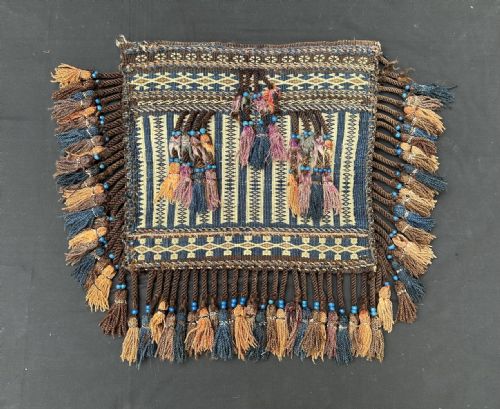
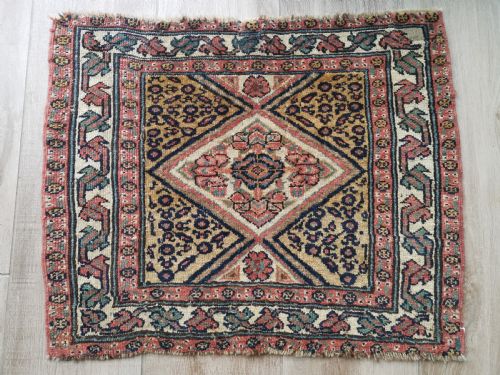
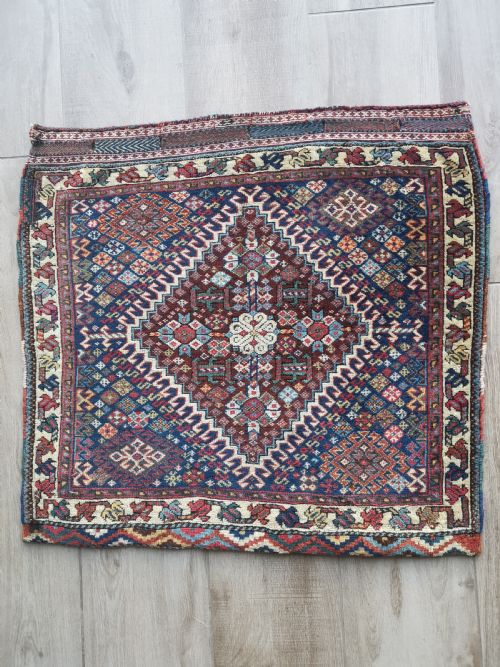
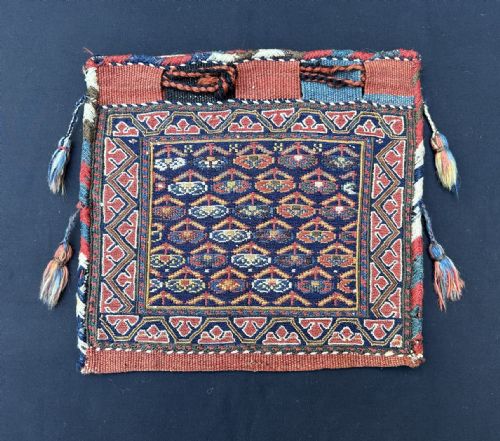
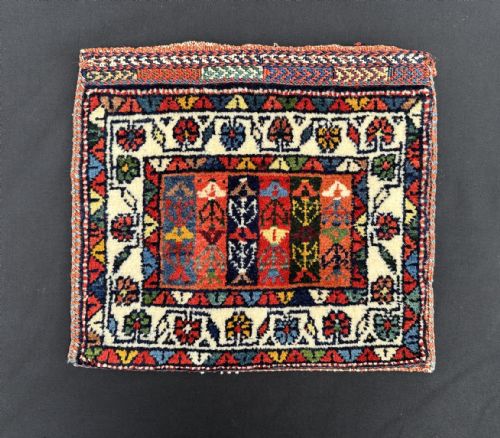
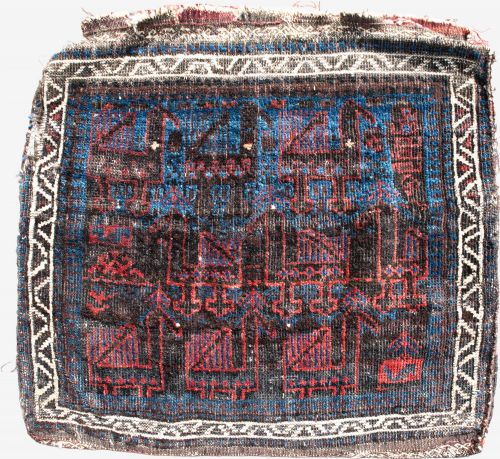
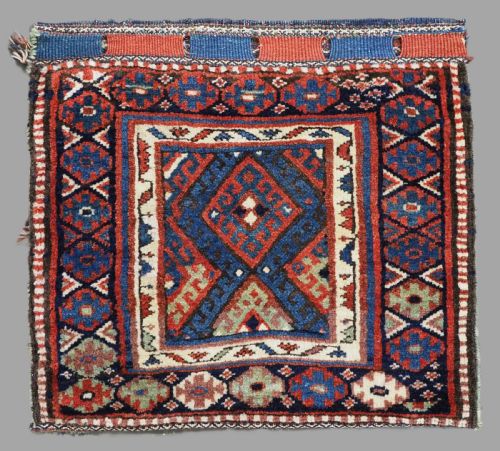
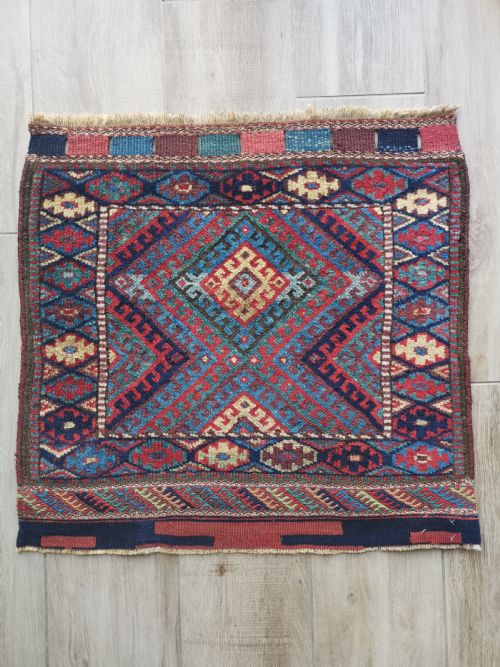
An antique khorjin face represents the severed front panel of a traditional Persian saddlebag, woven by nomadic and tribal groups for transport and household storage. When people search for an antique khorjin face, they encounter practical textiles repurposed over time into decorative wall hangings or small floor rugs.
The pieces on this page emerge from nineteenth and early twentieth-century nomadic traditions across Persia, including Baluch, Qashqai, Afshar, Shahsavan, Jaf Kurd, and Luri weavers. These items take the form of square or rectangular panels displaying characteristic tribal motifs tied or woven on upright looms.
Materials and methods of construction
Weavers constructed these textiles using hand-spun wool for the pile and foundation, often incorporating cotton for structural warp threads and occasionally glass beads for minor detail. Natural dyes supplied the palette, derived from regional plant and mineral sources to colour the wool before hand knotting or flat weaving.
Makers utilised techniques such as hand-knotting for pile sections and precise flat-weave structures like Soumac for geometric precision. Many examples preserve plain weave backs or side edges attached directly to the decorated face panel.
Some resilient bags still retain tiny glass beads stitched by weavers to ward off bad luck during long journeys.
Factors determining quality
Quality depends upon the fineness of the knotting and the tightness of the weave, which dictate the crispness of the geometric and figurative patterns. Dense hand-spun wool and deeply saturated natural dyes elevate certain examples above simpler utility pieces.
The condition of the wool pile and the retention of original plain weave backs or complete side structures influence the integrity of each textile. Pieces demonstrating exceptional precision in tribal motifs reflect superior artisan skill within specific regional traditions.
The Antique Khorjin Face Glossary
- Khorjin
- A traditional Persian double saddlebag used by nomadic tribes for carrying goods during migrations. The face panels are frequently separated from the back to be used independently.
- Soumac
- A warp-wrapping flat-weave technique producing a durable surface with a braided texture on the front and loose floats on the reverse. It allows for sharp diagonal pattern lines.
- Chanteh
- A small personal bag or vanity bag woven by nomadic weavers for carrying small daily items. These are distinct from larger saddlebag faces.
- Boteh
- A stylised almond or paisley motif representing a floral spray or cypress tree, commonly found in Persian tribal weaving. It appears frequently in Afshar and other regional designs.
- Medallion
- A central ornamental design element placed in the middle of the field, anchoring the surrounding tribal patterns.
Antique Khorjin Face: Frequently Asked Questions
What is a khorjin face?
A khorjin face is the decorative front panel of a nomadic saddlebag, originally woven on portable looms by tribal groups in Persia.
These panels were separated from their storage backs as the bags wore out or when collectors sought out the decorative weaving alone.
How were these bags used?
Nomadic tribes slung pairs of these large bags across pack animals to transport personal belongings, provisions, and household goods during seasonal migrations.
Inside the tents, similar bags served as upright storage containers for grain, bedding, and smaller items of daily use.
How do I identify tribal groups?
Tribal attribution relies on specific structural traits, knotting styles, and characteristic colour palettes associated with regions like Fars, Luristan, or Kerman.
Motifs such as tile designs, boteh patterns, and central medallions offer further clues to the specific nomadic confederation that produced the textile.
How should I care for an antique textile?
Keep these wool and cotton pieces away from direct sunlight to protect the natural dyes from fading over time.
Gentle vacuuming without a rotating brush helps remove dust from the wool pile without damaging the antique foundation structure.