



Antique Ironstone Platter
An antique ironstone platter is a durable ceramic serving piece designed for heavy table use, prized for its robust weight and vivid transfer-printed or enamelled patterns.
Antique Ironstone Platter
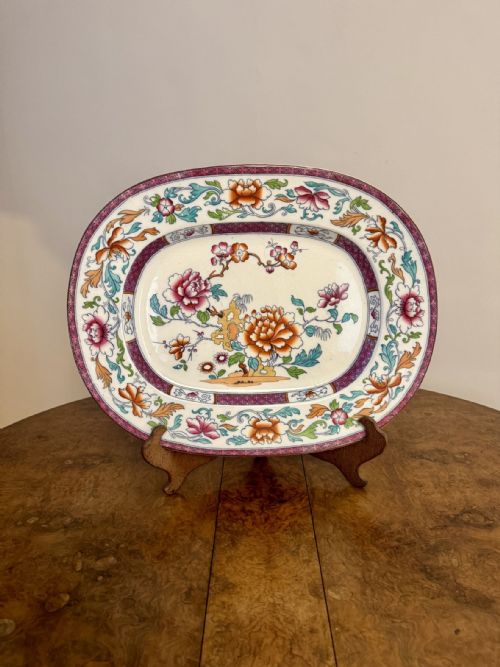
When you search for an antique ironstone platter, you encounter heavy serving dishes and large meat ashets produced primarily across the nineteenth century. These pieces range from plain utilitarian white earthenwares to richly decorated service plates featuring exotic birds, landscapes, and oriental motifs. You are most likely to meet large meat platters and chargers bearing nineteenth-century registry marks or maker attributions from periods spanning the Georgian, Regency, and Victorian eras.
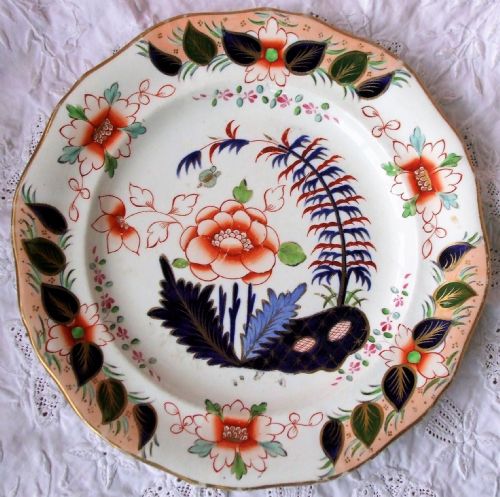
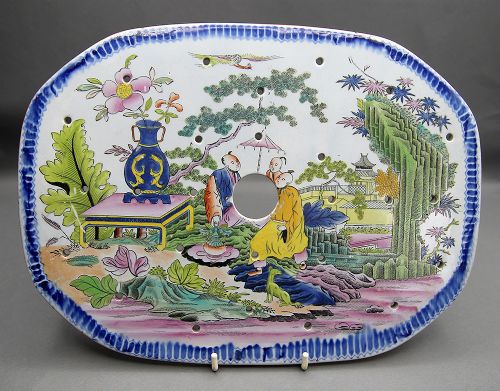
The selection here encompasses serving platters, platter drainers, and large well and tree dishes designed for carving joints at the dining table. Many examples display transfer-printed scenes in blue and white, while others exhibit vibrant orange, yellow, and gold leaf hand-painted enamel highlights. These wares served as the backbone of grand country house dining, built to withstand daily service while presenting food with considerable visual impact.
Judging Quality and Execution
Quality in these heavy ceramic pieces rests upon the crispness of the transfer printing and the richness of the hand-applied enamel palette. Superior examples display precise registration of multi-coloured patterns, vivid orange or yellow ground colours, and intact gold leaf detailing without excessive rubbing.
The weight, crispness of moulded edges, and sophistication of the chosen pattern distinguish standard utilitarian kitchenwares from grand dining room chargers and service pieces. Pieces retaining original matching drainers or well-and-tree configurations command attention for their completeness and intricate form.
Some nineteenth-century meat platters include clever interior ceramic trees so the joint of beef could literally stand above its own gravy.
John Davenport of Longport·John Ridgway·Mason’s Patent Ironstone·Minton
The Antique Ironstone Platter Glossary
- Ironstone china
- A patented type of heavy, durable ceramic developed in the nineteenth century to imitate Chinese porcelain while offering superior strength. It forms the solid foundation for large serving dishes and meat platters.
- Ashet
- A regional British term for a large serving platter or meat dish used at the centre of the table. These substantial ceramic trays held roasted joints and poultry.
- Transfer printing
- A decoration technique where an engraved copper plate transfers a design onto tissue paper, which is then pressed onto the ceramic body before glazing. This method allowed for complex repeatable landscapes and floral motifs.
- Well and tree
- A specialised platter design featuring an interior channel system and a recessed well that collected juices from carved meats. This functional innovation kept roasts elevated above their drippings.
- Platter drainer
- A perforated ceramic insert that fits inside a meat dish to keep food clear of accumulated liquids. These pierce-decorated pieces match the pattern of the main platter.
Antique Ironstone Platter: Frequently Asked Questions
What is an antique ironstone platter?
An antique ironstone platter is a heavy ceramic serving dish created during the nineteenth century for family dining and grand feasts.
These durable vessels combine the strength of stoneware with the refined appearance of porcelain, often featuring transfer-printed or hand-painted decoration.
How were ironstone platters used?
These large dishes served roast meats, poultry, and game at the dining table, often incorporating special wells and drainers to manage juices.
Their robust construction allowed them to travel repeatedly from the bustling country house kitchen to the formal dining room.
How do I date an antique platter?
Dating relies on maker marks, pattern names, registration stamps, and stylistic shifts spanning the Georgian, Regency, and Victorian eras.
Heavier potting techniques and specific oriental or Chinoiserie pattern transfers typically indicate the manufacturing period.
Can I use these platters for serving food?
These ceramic pieces remain fully functional for serving dry foods, roasted meats, and side dishes at contemporary dining tables.
Hand washing preserves the historic glaze and any delicate hand-applied enamel or gold leaf decoration.