
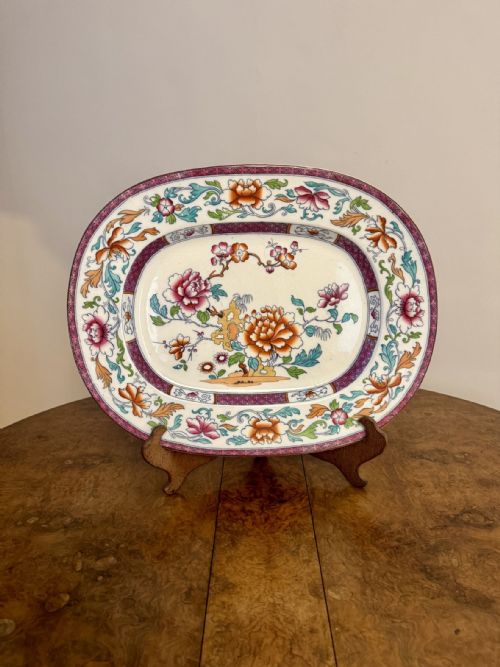


Victorian Floral Meat Platter
These Victorian floral meat platters are robust ceramic serving pieces designed for grand nineteenth-century dining, combining practical utility with decorative floral transfer-printing.
Victorian Floral Meat Platter
A victorian floral meat platter is a substantial ceramic dish created for presenting joints of meat at the nineteenth-century table. You will frequently encounter large blue and white earthenware examples alongside heavy ironstone dishes dating from the eighteen-eighties and earlier decades.
These serving vessels take rectangular or oblong forms, sometimes accompanied by integrated drainers to catch juices. The designs range from traditional blue and white transfer-prints to vibrant polychrome styles like Victorian Imari and Chinoiserie.
Originating across the nineteenth century, these platters reflect the domestic dining habits of the period when large family joints required grand presentation. The pieces on this page span from early Victorian ironstone to later transfer-printed earthenware.
How they were made
Potters shaped these heavy serving dishes using durable earthenware and dense ironstone china, materials chosen to withstand the weight of large joints of meat. Makers applied transfer-printed floral motifs in blue and white or layered rich enamel colours and gold leaf over the glaze.
The decorative surfaces often feature intricate hand-painted additions over printed outlines, particularly on styles influenced by Eastern aesthetics. Firing at high temperatures ensured the ceramic body and protective glaze fused into a hard, resilient surface suitable for heavy daily use.
Periods represented span from the early nineteenth century through the eighteen-eighties and eighteen-nineties.
What varies in quality
Quality in a victorian floral meat platter rests upon the crispness of the transfer print and the balance of the composition across a large surface. Finer examples display sharp, deep cobalt blues or rich, well-registered enamel colours without blurring or smudge marks from the kiln.
The weight and density of the ceramic body also distinguish standard earthenware from superior ironstone china. Superior pieces maintain a bright, even glaze that resists staining, whilst lesser examples show heavier crazing and kiln firing blemishes.
Minton·Mason’s·Elkin Knight & Bridgwood
The Victorian Floral Meat Platter Glossary
- Ironstone
- A dense, heavy type of earthenware patented in the nineteenth century for its durability and resistance to chipping. It provides a robust body for large serving platters.
- Ashet
- A regional Scottish and northern English term for a large meat platter or serving dish. It derives from the French assiette.
- Transfer-printing
- A process of applying decorative patterns to ceramics by engraving the design on a copper plate, printing it on tissue paper, and pressing it onto the biscuit ware before glazing. This technique allowed intricate floral patterns to be produced consistently.
- Imari
- A decorative style inspired by Japanese export porcelain, featuring a distinctive palette of underglaze blue, iron red, and gilt highlights. Victorian interpretations adapted these vibrant motifs onto British earthenware platters.
Victorian Floral Meat Platter: Frequently Asked Questions
What were meat platters used for?
These large serving dishes held roasted joints of meat, poultry, and game at the centre of the nineteenth-century dining table. Their generous proportions and shallow wells accommodated carved meat and its accompanying juices.
Many heavier ironstone examples included internal drainer inserts to separate the meat from the pan juices during carving. They formed an essential part of large dining services in Victorian homes.
How do I date a Victorian platter?
Dating relies upon a combination of ceramic body composition, transfer-print style, and any impressed or printed factory marks on the reverse. Early nineteenth-century pieces often use heavier earthenware and darker blue transfer patterns.
Later Victorian examples from the eighteen-eighties and nineties frequently utilise denser ironstone and brighter polychrome enamels. Shape variations and potting techniques also help narrow down the period of manufacture.
Are these platters safe for food?
While these antique pieces were originally created for serving food, nineteenth-century ceramic glazes may contain trace materials. Modern usage often leans towards decorative display rather than daily culinary service.
Hand washing is essential for preserving the historic glaze, enamel details, and gold leaf. Sudden temperature changes should be avoided to prevent crazing or cracking the aged ceramic body.
How do I display a large platter?
Large meat platters suit wall mounting using appropriate plate hangers or standing securely on sturdy dressers and sideboards. Their substantial weight requires strong support if hung vertically.
Displaying them in well-lit spaces highlights the depth of the transfer-print and the gloss of the nineteenth-century glaze. Grouping different patterns creates a striking visual arrangement in a dining room.