




White Ironstone Platter
A white ironstone platter is a heavy, durable ceramic serving dish built for the demands of the nineteenth century dining table.
White Ironstone Platter
A white ironstone platter serves as the centrepiece of a traditional table setting, designed to present large joints of meat or game during grand Victorian and Georgian dinners. These pieces appear in substantial dimensions, often featuring deep wells to collect juices or internal drainers to keep food elevated.
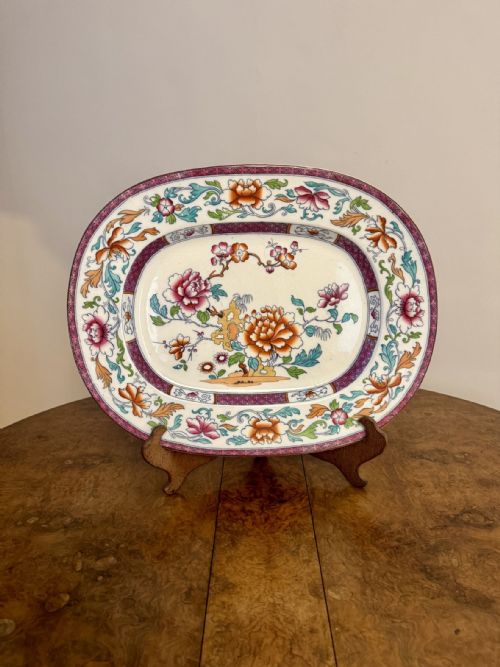
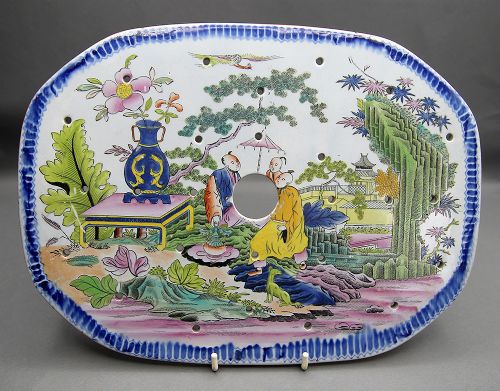
The selections available here span the nineteenth century, including Victorian examples alongside earlier Regency and Georgian pieces. Most items arrive as plain white ceramic or earthenware, though decorated variants display Chinoiserie, Imari, and blue and white transfer-printed patterns.
Buyers encounter serving dishes in various forms, ranging from standard meat platters to specialised well and tree platters and matching cheese dishes. The heavy ceramic body ensures high durability, which explains why so many examples survive in usable condition today.
Materials and manufacture
Potters utilised dense ironstone and stoneware bodies to create vessels capable of withstanding heavy daily use in nineteenth-century country houses. These ceramic mixtures combined ball clay, china stone, and flint, producing a heavy earthenware that resisted chipping far better than standard porcelain.
A smooth glaze coated the fired ceramic body to provide a hygienic surface for meat service. Potters applied enamel colours and gold leaf by hand on decorative models, while transfer-printing techniques transferred intricate patterns like Chinese Villa or Blue Pheasants onto the clay before glazing.
Early nineteenth-century dinner guests relied on a ceramic tree carved into their serving dish to keep the mutton dry.
Assessing quality
Quality rests upon the crispness of the moulded details and the weight of the ceramic body. Superior platters maintain sharp relief around handles and rims, whereas lower-grade pieces exhibit softened edges from worn moulds.
The uniformity of the glaze and the clarity of transfer-printed patterns distinguish the finest examples from standard utilitarian wares. Ironstone with a brilliant, unblemished white surface commands attention for its visual clarity on the dining table.
John Ridgway·Mason's Ironstone·Minton·Elkington
The White Ironstone Platter Glossary
- Ironstone
- A heavy, durable type of ceramic patented in the nineteenth century to imitate Chinese porcelain while offering greater strength. It forms the solid body of most large serving dishes.
- Well and tree platter
- A serving dish featuring a carved channel system around a raised central area to drain meat juices away from the joint. This design kept the roast elevated during carving.
- Platter drainer
- A perforated ceramic insert placed inside a dish to support meat above accumulated liquids. These removable pieces match the contours of the outer platter.
- Transfer printing
- A decoration method where an engraved copper plate transfers a printed design onto tissue paper, which is then pressed onto the ceramic body before glazing. This technique allowed intricate landscapes and oriental motifs to be applied consistently.
- Chinoiserie
- A decorative style reflecting European artistic interpretations of Chinese and East Asian motifs. It appears frequently on nineteenth-century ceramic serving pieces.
White Ironstone Platter: Frequently Asked Questions
How were white ironstone platters used?
These large ceramic vessels served as the primary vehicles for presenting roasted meats, poultry, and game at the dining table. Servants brought heavy joints to the table resting upon these robust platters.
Specialised versions included built-in drainers and channels to manage juices during the carving process. They remained essential equipment in large country house kitchens throughout the nineteenth century.
Can I use an antique platter for serving food?
Most nineteenth-century ceramic platters remain structurally sound for presenting dry foods and cold meats at the modern table. The dense ironstone body resists moisture absorption effectively.
Hand washing remains essential to preserve the historic glaze and any delicate enamel or gold leaf decoration. Modern dishwashers can damage the aged ceramic surface.
What is the difference between ironstone and earthenware?
Ironstone is a specific, highly vitrified type of earthenware containing feldspar and china stone. This composition creates a much heavier, denser material than standard porous pottery.
Potters developed ironstone in the nineteenth century to provide the durability of stoneware combined with the refined appearance of white porcelain.
How do I date a nineteenth-century platter?
Dating relies on maker marks stamped or printed into the ceramic base, alongside stylistic clues such as pattern names and border designs. Victorian and Georgian pieces often display specific registry marks or factory ciphers.
The weight of the body and the tone of the white glaze also provide indications of whether a piece dates from the early Regency period or the later Victorian era.
What is a well and tree dish?
A well and tree dish is a specialised meat platter featuring a system of grooves converging on a central well. The raised tree pattern supported the meat while juices drained into the lower basin.
This functional layout ensured that large roasts did not sit in their own liquids during long Victorian dinner services.